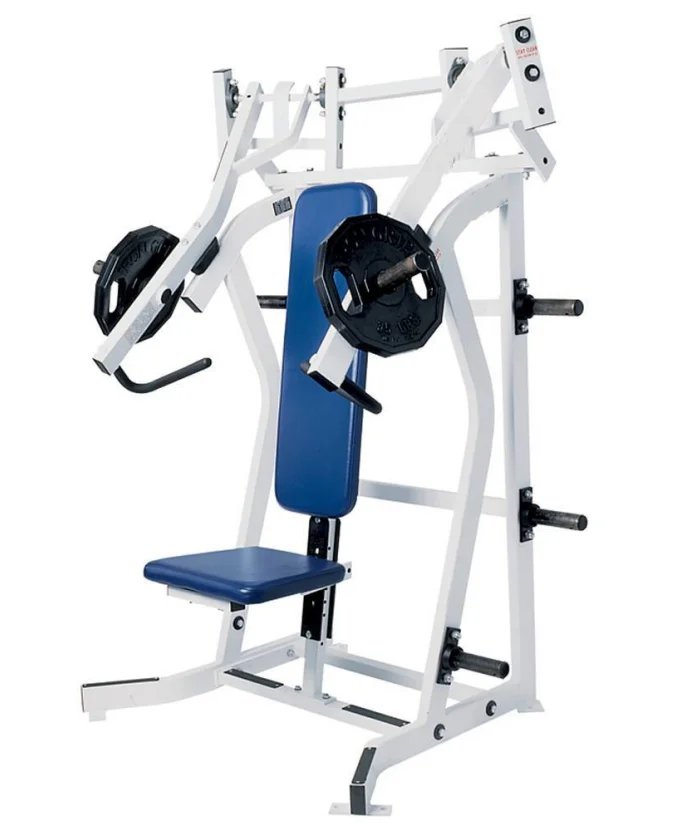
![Commercial Flat Bench Waist Machine for Gym and Club Use [WARN] draft identifier mismatch](https://bicksport.com/wp-content/uploads/2026/08/commercial-flat-bench-waist-machine-for-gym-and-club-use-warn-draft-identifier-mismatch-84a58a.webp)
Engineered Stability — Reinforced steel frame tested under continuous high-frequency loads without flex or weld fatigue.
Technical Specifications
| Parameter | Value |
|---|---|
| Product Type | Flat Bench (Strength Equipment) |
| Exercise Part | Flat Bench |
| Power Source | Manual |
| Material | Steel |
| Main Frame Color | Available per customer requirements |
| Cushion Color | Available per customer requirements |
| Folded | Unfolded |
| Max User Weight | 180 kg |
| Product Dimensions | 1353 × 595 × 532 mm |
| Net Weight | 32 kg |
| Certification | ISO 9001, CE |
Application Suitability
| Deployment Scenario | Typical Use |
|---|---|
| Professional gym and health club strength zones | Compound pressing and waist-targeted resistance work across peak member hours |
| Community fitness center | General strength circuits accommodating diverse user demographics |
| Corporate wellness room | Low-maintenance manual training for employees during short break windows |
| High-end residential home gym | Fixed-frame flat pressing in private strength areas with minimal footprint |
Why Bench Frames Fail Before the Warranty Expires
Commercial-grade steel eliminates the mid-cycle replacement trap.
Facilities that spec light-duty benches into high-traffic strength zones consistently face frame flex complaints within the first year of deployment. The weld joints fatigue under repeated loading from compound movements, and the frame begins to deflect noticeably during heavy presses. Maintenance logs show these units pulled from rotation long before projected lifespans [NEED_CITE: frame fatigue classification for commercial strength equipment]. Member complaints escalate when the bench wobbles mid-set, creating both a safety concern and a credibility issue for the facility operator. This commercial flat bench waist machine strength equipment addresses the problem at the structural level rather than patching it with thicker padding.
Positioning Within the Strength Zone Configuration
This unit fills the flat-press and waist-isolation slot in a commercial strength layout, complementing incline benches, cable stations, and free-weight racks. It suits deployment positions where members cycle through high-repetition sets without requiring adjustment between users, reducing equipment bottlenecks during peak hours. The 180 kg max user weight capacity accommodates the full range of body types encountered in professional gym and community fitness environments. Its compact footprint allows placement along walls or between larger stations without disrupting member flow patterns.
Fixed-Frame Deployment and Floor Load Considerations
The unfolded, non-folding design provides the lateral rigidity required for heavy compound movements where any frame play compromises user confidence. Facilities deploying this unit should confirm floor leveling across the contact points, as uneven surfaces induce torsional stress on the weld seams over extended use cycles. No electrical connection is required, simplifying placement decisions and eliminating conduit routing constraints [NEED_CITE: electrical clearance requirements for manual strength equipment]. The 32 kg net weight provides inherent stability during loaded exercises without requiring floor anchoring in most commercial environments.
Manual Resistance and Structural Load Path
The manual power source means there are zero motor components, drive belts, or electronic controllers to fail under continuous operation. Load transfers directly through the steel frame from cushion to floor, so the critical engineering variable is weld integrity and tube wall thickness rather than any electronic tolerance. The steel construction supports repetitive loading cycles without the material creep seen in aluminum or composite frames. Cushion density becomes the primary maintenance variable, as foam compression under heavy users determines replacement intervals rather than any mechanical wear component.
What Light-Duty Specs Cost in Replacement Cycles
Benches specified without commercial load ratings enter a predictable failure pattern: frame deflection triggers member complaints, the unit gets tagged out, and the facility orders replacements before the fiscal year closes. The procurement cost appears low initially, but cumulative replacement expenditure and member dissatisfaction compound across multiple units. Purchasing teams that prioritize upfront savings on strength accessories often find total cost of ownership exceeds that of commercial-rated alternatives within two replacement cycles [NEED_CITE: total cost of ownership models for commercial gym accessories]. Noise is not a factor here, but structural noise — the metallic rattle of a flexing frame — registers clearly in quiet strength zones.
Why This Product Line Holds Up in 24/7 Facilities
Biketon Sport engineers every unit around the same 10,000-hour durability standard applied across the full cardio range, meaning steel selection and weld protocols follow continuous-use testing rather than light-commercial assumptions. The ISO 9001 manufacturing process ensures batch consistency across orders, critical for multi-location gym chains rolling out standardized strength zones. Full OEM and ODM customization covers frame color, cushion color, and branding so facility operators maintain visual identity across deployments. The compact 1353 × 595 × 532 mm footprint integrates into 3D zone layouts alongside cardio equipment with documented sightline and airflow planning. Technical support and spare parts availability operate on a 24/7 response model matching the facility’s operating schedule.
Documentation & Test Records
- CE declaration of conformity for strength equipment structural integrity
- EN 957 test report covering load bearing and stability requirements
- ISO 9001 certificate confirming manufacturing quality management system
- Steel frame material specification and weld inspection documentation
- Cushion foam density and compression durability test records
- Spare parts list with replacement cushion and hardware identifiers
Installation, Commissioning & Maintenance
- Position with minimum clearance on all sides for safe loading and unloading during compound movements
- Confirm floor levelness across all four contact points to prevent torsional stress on weld joints
- Inspect cushion foam compression quarterly and schedule replacement when deflection exceeds tolerance
- Wipe down steel frame and cushion surfaces daily to prevent sweat corrosion on powder-coated finishes
- Verify all fastener torque values after the first 30 days of deployment and at six-month intervals
Request a Zone Layout and Equipment Match
Provide your strength zone square footage and target equipment count to receive a 3D layout with sightline and member flow planning. Specify deployment environment type so load ratings and cushion density can be matched to expected usage frequency. Confirm whether frame and cushion colors need to align with existing facility branding across multiple locations. Indicate target market voltage standards for any adjacent powered equipment included in the same procurement cycle.
Frequently Asked Questions
Q: What steel grade and frame thickness ensure commercial durability?
A: Commercial strength benches require structural steel with sufficient wall thickness to prevent deflection under repeated loading cycles approaching the 180 kg max user weight. Frame specifications should be validated through load testing records rather than material claims alone, ensuring weld integrity matches the stated capacity for high-frequency gym environments.
Q: How does manual resistance compare to motorized equipment in maintenance costs?
A: Manual resistance eliminates motor, drive belt, and electronic controller failure points entirely, reducing scheduled maintenance to cushion inspection and fastener torque checks. Facilities see notably lower lifetime service costs because there are no electrical components requiring calibration, firmware updates, or replacement under continuous commercial operation.
Q: What cushion density prevents bottoming-out under heavy loads?
A: High-density foam with appropriate compression ratings prevents the cushion from collapsing against the steel frame during heavy pressing movements. Facilities should request foam density test documentation to confirm the cushion maintains structural support across thousands of loading cycles without permanent deformation or user discomfort complaints.
Q: Can frame and cushion colors match existing facility branding?
A: Full OEM and ODM customization covers both main frame powder-coat color and cushion upholstery color to align with facility design standards. Multi-location gym chains can specify consistent colorways across orders, and branding elements can be integrated during production to maintain visual identity throughout deployment.