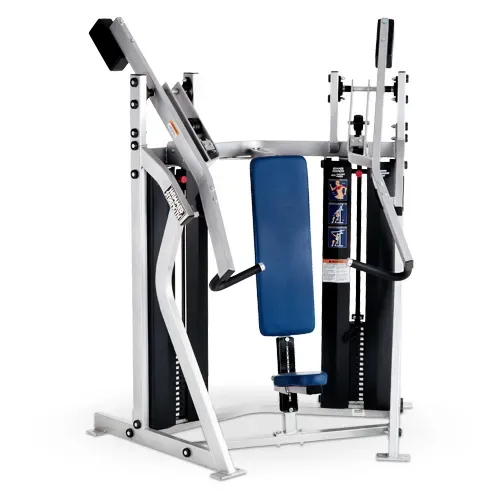
Continuous Duty Verified — Every weld and joint on this unit endures 10,000+ hours of high-frequency load testing before leaving the factory floor.
Technical Specifications
| Parameter | Value |
|---|---|
| Product Type | Integrated Gym Trainer |
| Product Name | Bench Wt. Storage |
| Main Frame Material | Steel |
| Power Source | Manual |
| Product Dimensions | 200011501150mm |
| Net Weight | 78kg |
| Main Frame Color | Available according to customer requirements |
| Cushion Color | Available according to customer requirements |
| Folded | Unfolded |
| OEM/ODM | Acceptable |
| Fit Area | Professional Gym and Club |
| Age Group | Adult |
| Exercise Part | Leg |
| Gender | Unisex |
| Certification | ISO 9001, CE |
Application Suitability
| Deployment Scenario | Typical Use |
|---|---|
| Chain gym free weight zone | High-traffic plate storage to keep walkways clear and loading efficient |
| Hotel fitness center | Compact, stable storage that aligns with interior branding and aesthetic standards |
| Corporate wellness facility | Organized weight management in shared multi-use training spaces |
| Professional sports training center | Quick-access plate staging for athlete strength sessions and circuit rotations |
| Community recreation center | Durable, tamper-resistant storage for shared equipment across peak evening hours |
Why Frame Gauge Matters When Plates Hit the Rack
Reinforced steel framing absorbs repeated loading cycles without structural deflection or audible rattle.
Facility operators routinely discover that weight storage units built with light-gauge tubing begin to wobble within months of continuous plate loading. Weld seams fatigue, powder coating chips at contact points, and the unit develops an audible clatter every time a member drops a bumper plate onto the horns. In a crowded free weight zone, that rattle carries across the floor and becomes a persistent background irritant [NEED_CITE: EN 957 requirements for commercial strength equipment structural integrity].
A commercial bench weight storage machine gym operators rely on must handle the reality of peak-hour traffic: members loading and unloading plates rapidly, sometimes dropping them onto the storage horns from waist height. The frame must absorb that impact energy without transferring it into floor vibration or lateral sway.
Positioning Within the Free Weight Zone Layout
This unit anchors the plate storage perimeter of a free weight area, typically positioned against walls or between bench stations to create a logical loading flow. It complements flat and adjustable benches, squat racks, and plate-loaded machines by centralizing plate access so members do not carry heavy discs across busy walkways. The 200011501150mm footprint provides substantial storage surface without encroaching on the swing radius of adjacent training stations. A commercial bench weight storage machine gym managers deploy here serves members across all strength levels, from those loading light technique plates to athletes stacking multiple heavy bumpers, with the unfolded permanent stance ensuring stability regardless of load asymmetry.
Continuous Load Cycles and Floor Deployment Considerations
An unfolded steel storage unit carries static weight loads that can exceed several hundred kilograms when fully loaded, concentrated on its base contact points. Floor leveling becomes critical: an uneven surface introduces torsional stress into the frame over time, accelerating weld fatigue [NEED_CITE: commercial gym floor load distribution standards for static equipment]. Rubber matting beneath the unit serves dual purposes — it dampens the impact sound when plates are placed onto storage horns and prevents the steel base from migrating across smooth concrete during peak traffic. Unlike motorized cardio equipment, this manual unit requires no dedicated electrical circuit, eliminating voltage compatibility concerns entirely and allowing placement flexibility across any zone of the facility without cable routing constraints.
Steel Gauge, Weld Patterns, and Load Path Analysis
The structural integrity of any weight storage unit depends on how forces travel from the loading horns through the frame to the floor contact points. A rectangular steel tube frame distributes bending moments differently than round tubing — rectangular sections resist torsion more effectively when loads are applied asymmetrically, which is the everyday reality of a partially loaded rack. Weld quality at the horn-to-upright junction determines whether repeated impact loading causes crack propagation over months of use. Full-perimeter welds at these stress concentration points outperform tack welds significantly in high-traffic environments. The powder coat finish on the main frame protects against corrosion from humidity and incidental contact with sweaty hands, while also providing a visual quality indicator — chipping or flaking coating often signals underlying metal fatigue [NEED_CITE: powder coating adhesion standards for commercial fitness equipment]. The manual power source eliminates all electrical maintenance variables: no motor brushes to replace, no control boards susceptible to voltage spikes, no firmware updates required.
What Light-Gauge Frames Cost After Six Months
Storage units built with thin-wall tubing and partial welds appear functional at installation but reveal their compromises as traffic accumulates. Frame wobble develops first, followed by horn deflection under heavy plate loads, and eventually weld cracks that render the unit a liability. Operators then face the choice of pulling the unit from the floor mid-cycle or risking member injury. The replacement cost compounds: removal, disposal, re-procurement, and the downtime during which members have no organized plate access in that zone [NEED_CITE: commercial equipment lifecycle cost analysis for strength accessories]. Noise complaints follow a similar pattern — a rattling storage unit in a hotel gym adjacent to guest rooms generates front desk calls that maintenance teams cannot resolve without full replacement.
Why This Product Line Holds Up Under Facility Traffic
Every frame in this product range undergoes 10,000+ hours of continuous load-cycle testing that simulates real-world plate handling patterns. The unfolded permanent stance eliminates folding hinge mechanisms — a common failure point on lighter storage solutions. Full OEM and ODM capability means the frame color and cushion color can be matched to your facility’s interior palette, so the unit integrates visually rather than looking like an afterthought. For operators planning a complete free weight zone, the six-series cardio family from the same manufacturing source allows consolidated sourcing across disciplines. The 3D layout planning service extends to strength zones as well, covering equipment spacing, member flow paths, and sightline considerations so that the commercial bench weight storage machine gym planners specify fits the floor plan before the container ships. Twenty-four-seven technical support covers structural questions and spare part inquiries long after commissioning.
Documentation & Test Records
- CE declaration of conformity covering structural safety requirements
- EN 957 test report validating static and dynamic load performance
- ISO 9001 certificate confirming manufacturing process control
- Noise level test record documenting impact sound during plate loading
- Durability test record from 10,000-hour continuous load cycling
- Spare parts list with horn, cushion, and frame component breakdown
Installation, Commissioning & Maintenance
- Verify floor level within tolerance before anchoring the 200011501150mm base footprint
- Place high-density rubber matting beneath the unit to dampen plate-loading impact sound
- Inspect all weld seams and horn attachment points upon delivery before placing into service
- Check frame bolt torque at 90-day intervals under continuous commercial loading conditions
- Wipe steel surfaces with pH-neutral cleaner weekly to prevent sweat-driven corrosion
- Rotate cushion position periodically to distribute wear evenly across contact surfaces
Equipment Selection and Inquiry Direction
Provide your free weight zone square footage and equipment list to receive a 3D layout that accounts for plate storage positioning, member flow, and sightlines. Specify expected daily traffic volume so that frame gauge and weld specifications align with your facility’s duty cycle. Confirm the deployment floor — ground-level concrete versus elevated suspended slab — to determine whether additional vibration isolation is needed. Indicate your target frame and cushion color palette so that OEM customization scoping begins alongside the quotation.
Frequently Asked Questions
Q: What is the maximum weight capacity for stored plates on this unit?
A: The steel frame is engineered for continuous commercial loading with full-capacity plate storage across all horns simultaneously. Exact capacity ratings depend on the specific plate distribution and horn configuration selected during the OEM scoping process. Request the load rating documentation during the quotation stage to confirm alignment with your facility’s heaviest plate inventory and peak-hour stacking patterns.
Q: Can the frame and cushion colors be matched to our facility branding?
A: Yes, full OEM and ODM customization is available for both main frame color and cushion color to match your interior design specifications. Provide your RAL or Pantone references during the inquiry stage so that color samples can be prepared and approved before production begins. Lead times for custom color runs vary depending on order volume and current production scheduling.
Q: What is the lead time for customized color options?
A: Customization lead times depend on the scope of color matching, order quantity, and current production line scheduling. Standard colors from the available palette typically ship within normal production windows, while bespoke color matching may require additional time for sample approval and paint-line allocation. Confirm your required delivery timeline during the quotation stage so that production can be scheduled accordingly.
Q: Is assembly required upon delivery, and are instructions provided?
A: The unit ships partially assembled with a detailed installation and commissioning guide covering frame assembly, leveling procedures, and safety inspection checkpoints. The 78kg net weight and 200011501150mm dimensions mean two-person handling is recommended during positioning. Technical support is available around the clock to assist with any assembly questions or alignment adjustments needed during commissioning.
Q: What warranty coverage is included for commercial use?
A: Warranty terms are structured for continuous commercial deployment and cover structural frame integrity and manufacturing defects under normal facility operating conditions. Specific coverage periods and exclusions are detailed in the quotation documentation provided during the sales process. Request the full warranty schedule alongside your proforma invoice so that coverage scope is confirmed before order placement.
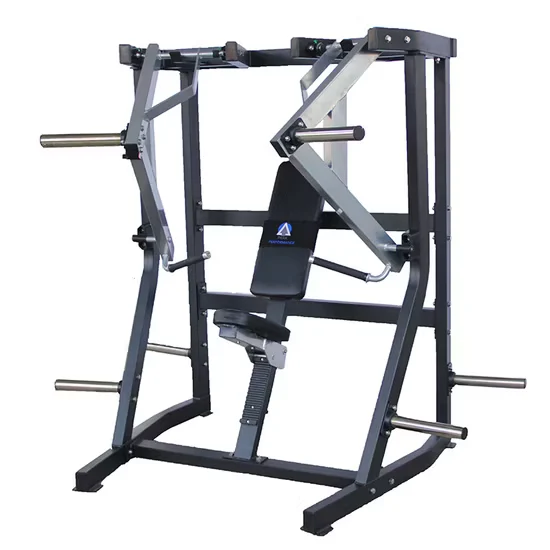
![Plate Loaded Hammer Strength ISO Lateral Decline Bench for Commercial Gym [WARN] draft identifier mismatch](https://bicksport.com/wp-content/uploads/2026/08/plate-loaded-hammer-strength-iso-lateral-decline-bench-for-commercial-gym-warn-draft-identifier-mismatch-450678.webp)