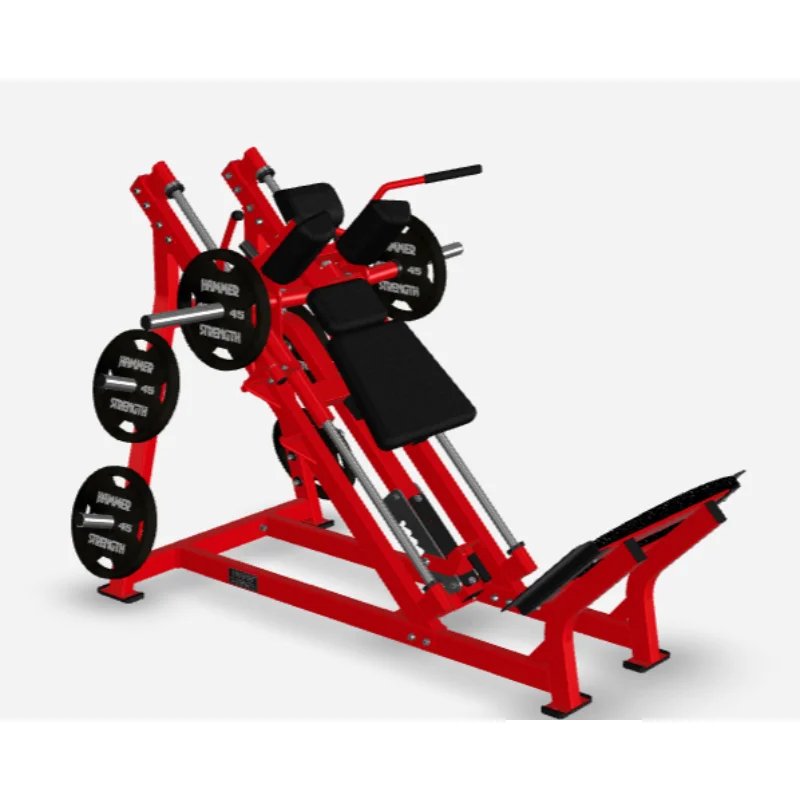
Structural Rigor — 48 kg all-steel frame engineered to withstand continuous adjustment cycles and heavy loading in high-traffic commercial strength zones without deformation or fastener fatigue.
Technical Specifications
| Parameter | Value |
|---|---|
| Product Type | Adjustable Abdominal Board |
| Model NO. | 5060 |
| Material | Steel |
| Product Dimensions | 1480 × 680 × 600 mm |
| Net Weight | 48 kg |
| Max User Weight | 180 kg |
| Resistance Type | Bodyweight (adjustable angle) |
| Certification | CE, ISO 9001, RoHS |
| HS Code | 9506911900 |
Application Suitability
| Deployment Scenario | Typical Use |
|---|---|
| Chain gym strength zone | High-frequency core training stations complementing free-weight racks and cable towers |
| Corporate wellness room | Space-efficient adjustable core trainer for mid-day circuit sessions |
| Sports performance training center | Athlete conditioning with multi-angle decline and incline progressions |
| High-end residential home gym | Durable single-station core solution replacing multiple fixed-angle boards |
| Community fitness center core zone | Shared-use abdominal equipment built for unsupervised daily traffic |
Why Strength Zone Equipment Fails Within Months of Deployment
The steel frame and locking mechanism define whether an adjustable abdominal board survives its first year in a commercial facility.
I have watched lightweight adjustable boards in gym strength areas loosen at the pivot joints after weeks of repeated angle changes. Members yank the adjustment pin, slam the back pad into position, and load heavily on decline — the welds and fasteners absorb every impact cycle [NEED_CITE: fatigue failure modes in adjustable strength equipment under commercial load]. When the frame flexes or the angle lock slips mid-set, confidence erodes fast. Equipment tagged "out of order" becomes dead floor space. This commercial adjustable abdominal board gym equipment addresses that pattern directly through its 48 kg all-steel construction and reinforced pivot geometry, ensuring the frame stays rigid and the lock stays positive across hundreds of daily adjustments.
Positioning the Board Within a Commercial Strength Zone
This unit fills a specific gap between free-weight benches and dedicated cable-driven core stations. It covers decline, flat, and incline bodyweight core work without occupying the footprint of a full functional trainer. In a typical commercial adjustable abdominal board gym equipment layout, it sits adjacent to flat benches and hyperextension stations, forming a core-and-posterior chain cluster. The 1480 mm length and 680 mm width allow placement against walls or between rack uprights without blocking member traffic lanes. Its 180 kg maximum user capacity accommodates the full range of commercial gym demographics without requiring a separate heavy-duty variant.
Continuous Use Demands and Floor-Level Deployment
A commercial adjustable abdominal board gym equipment station in a busy gym may see dozens of angle adjustments per hour during peak periods. Each adjustment generates impact load on the pivot pin, locking detents, and welded joints. Unlike motorized cardio units, there is no duty-cycle rating to consult — instead, mechanical fatigue accumulates at every contact point [NEED_CITE: mechanical wear standards for manually adjusted commercial strength equipment]. Floor-level placement matters less for noise transmission than for vibration isolation during heavy decline work; a rubber mat beneath the base feet prevents micro-migration across polished concrete. The unit requires no electrical connection, simplifying deployment in zones without dedicated circuits, but it does demand periodic fastener inspection as part of routine floor maintenance schedules.
Reading the Steel and Locking Specifications
The 48 kg net weight signals substantial tube wall thickness and gusset reinforcement at the pivot joint — lighter boards typically sacrifice steel mass at the hinge, which is precisely where cyclic fatigue concentrates. The adjustable angle mechanism relies on a positive-lock pin engaging machined detents rather than friction-based clamping; friction locks gradually wear smooth and begin slipping under load. Weld quality at the base-to-upright junction determines whether the frame resists lateral torque when users shift weight during oblique-focused movements. Surface coating must withstand sweat corrosion and repeated impact from dropped weight plates — powder coating over shot-blasted steel outperforms painted finishes in humid gym environments [NEED_CITE: EN 957 surface durability requirements for commercial strength equipment].
The Cost of Underspecifying Core Training Stations
Facilities that purchase lightweight adjustable boards to save budget per station often replace the entire batch within a year. Pivot pins shear under repeated decline loading. Locking mechanisms wear past their engagement depth, creating a slip hazard mid-exercise. Thin-gauge steel frames develop visible flex, and members migrate to more stable equipment — leaving the abdominal zone underused and generating negative reviews about equipment quality. Procurement teams discover that the total cost of warranty claims, replacement units, and member attrition exceeds what a commercial-grade specification would have cost initially.
Why This Product Line Holds Up in the Field
Every unit undergoes structural load testing consistent with ISO 9001 manufacturing controls, verifying weld integrity and lock engagement before dispatch. The 48 kg frame and reinforced pivot geometry are validated for the continuous adjustment cycles typical of chain gym environments. This product integrates into broader strength and cardio zone layouts — we provide 3D floor planning that accounts for the 1480 × 680 mm footprint, member circulation clearance, and sightline positioning relative to mirrors and training lanes. OEM options include frame color and pad material customization to match facility branding. Documentation packages cover installation torque specifications and inspection interval guidance, supporting maintenance teams from day one.
Documentation & Test Records
- CE declaration of conformity covering structural safety requirements
- EN 957 test report for static and dynamic load verification
- ISO 9001 certificate confirming manufacturing process controls
- RoHS compliance declaration for surface coating and pad materials
- Durability test record documenting cyclic adjustment and load testing
Installation, Commissioning & Maintenance
- Confirm 1480 × 680 mm footprint clearance with minimum 600 mm lateral spacing for member access
- Place on level floor with rubber mat beneath steel base feet to prevent migration during heavy loading
- Inspect pivot pin engagement depth and locking detent wear at monthly intervals under commercial use
- Torque-check all structural fasteners quarterly per installation guide specifications
- Wipe steel frame and pad surfaces daily to prevent sweat corrosion on powder-coated surfaces
- Verify angle lock holds positive engagement at every detent position before returning unit to service
Equipment Selection and Layout Inquiry
Share your strength zone dimensions and target equipment count to receive a 3D layout plan that positions this adjustable abdominal board within your member traffic flow. Specify your daily member volume so we can recommend inspection interval schedules matched to your usage density. Indicate whether the deployment floor is above occupied spaces, which determines whether vibration isolation pads are required beneath the unit base.
Frequently Asked Questions
Q: What structural differences separate this commercial adjustable abdominal board from lightweight home-use models?
A: Home-use boards typically use thinner-gauge tubing and friction-based angle locks that wear smooth within months of regular use. This unit employs heavier steel sections at the pivot junction and a positive-lock pin engaging machined detents, ensuring the angle holds under repeated decline loading without slippage or progressive loosening over time.
Q: How does the adjustable angle mechanism ensure safety during heavy decline training?
A: The locking pin engages precisely machined detents at each angle position, producing an audible and tactile click that confirms secure engagement. Unlike friction clamps that degrade gradually, this positive-lock system either holds fully or releases completely — eliminating the partial-slip condition that causes sudden position changes under load.
Q: What maintenance does the steel frame require in a high-humidity gym environment?
A: Daily wiping of the powder-coated frame with a mild disinfectant prevents sweat salt accumulation that accelerates corrosion. Monthly inspection of weld joints and fastener torque ensures structural integrity. The locking pin and detent surfaces should be checked for wear and lubricated lightly at quarterly intervals to maintain smooth engagement action.
Q: How frequently should fasteners be inspected under high-frequency commercial use?
A: Facilities experiencing more than fifty adjustment cycles per day should inspect all pivot and base fasteners monthly. Lower-traffic deployments can extend this to quarterly checks. Any fastener showing visible thread deformation or reduced torque retention should be replaced immediately with the specification listed in the spare parts documentation.
Q: What floor space and member clearance does this unit require in a strength zone layout?
A: The 1480 × 680 mm footprint fits between standard rack bays or against perimeter walls. A minimum 600 mm clearance on each long side allows members to approach, adjust, and exit without crossing adjacent equipment zones. Positioning near mirrors supports form feedback during decline and incline core movements.
![Shandong Dezhou Fitness Equipment Commercial Free Weight Rogers PRO Squat MachineRogers PRO Squat Machine | Commercial Free Weight Fitness Equipment [WARN] draft identifier mismatch](https://bicksport.com/wp-content/uploads/2026/08/shandong-dezhou-fitness-equipment-commercial-free-weight-rogers-pro-squat-machinerogers-pro-squat-machine-commercial-free-weight-fitness-equipment-warn-draft-identifier-mismatch-bb2819.webp)
![2019 Hammer Strength PRO Tackler 41 Commercial Gym Back Exercise Equipment [WARN] draft identifier mismatch](https://bicksport.com/wp-content/uploads/2026/08/2019-hammer-strength-pro-tackler-41-commercial-gym-back-exercise-equipment-warn-draft-identifier-mismatch-5929ff.webp)