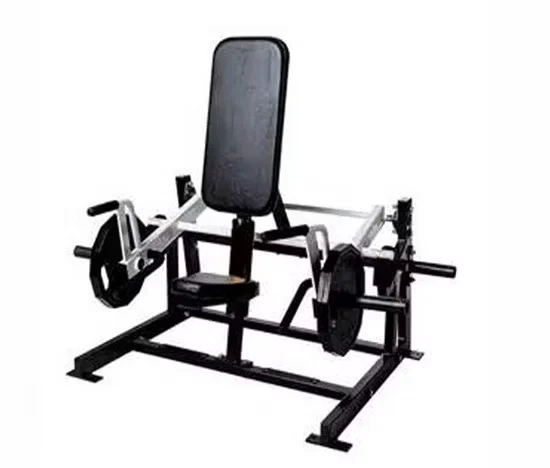
![Body Building ISO-Lateral Rear Deltoid Machine Commercial Gym Equipment [WARN] draft identifier mismatch](https://bicksport.com/wp-content/uploads/2026/08/body-building-iso-lateral-rear-deltoid-machine-commercial-gym-equipment-warn-draft-identifier-mismatch-9567ab.webp)
ISO-Lateral Rear Deltoid Machine 5011 — commercial ISO-lateral rear deltoid machine with ISO/CE certified steel frame and 19821003925mm footprint designed for high-frequency professional gym deployment.
Technical Specifications
| Parameter | Value |
|---|---|
| Designation | 5011 |
| Product Type | ISO-Lateral Rear Deltoid Machine |
| Brand | huiyang |
| Model NO. | 5011 |
| Exercise Part | Back |
| Material | Steel |
| Product Dimensions | 19821003925mm |
| Net Weight | 83kg |
| Age Group | Adult |
| Gender | Unisex |
| OEM/ODM | Available |
| Certification | ISO 9001, CE |
| Application | Community, Gymnasium, Professional Gym and Club |
Application Suitability
| Deployment Scenario | Typical Use |
|---|---|
| Professional gym and club strength zone | High-frequency rear deltoid isolation training for members during peak hours |
| Corporate wellness fitness room | Compact strength equipment for employee training programs with varied fitness levels |
| Community fitness center | Durable back training station for adult users in shared public facility environments |
| Sports performance training center | Targeted posterior shoulder development for athletes requiring precise movement isolation |
| Hotel fitness center strength area | Space-efficient rear deltoid machine for guest use in compact 24-hour fitness rooms |
Why Cable and Pulley Wear Out Before the Frame Does
Sealed bearings and reinforced cable routing determine whether an ISO-lateral rear deltoid machine survives its first year in a busy gym.
Strength equipment in professional facilities often fails at the connection points before the structural frame shows any fatigue. I spent years testing drive systems and noise signatures on cardio lines, and the lesson transfers directly to selectorized strength machines: pulleys that wobble under load, cables that fray at the guide sheaves, and pivot pins that develop play after thousands of repetitions all trace back to bearing quality and cable path engineering. A commercial ISO-lateral rear deltoid machine sees repeated loading cycles from members who pull through the full arc with little regard for smooth deceleration, accelerating wear on underspecified components [NEED_CITE: cable and pulley wear patterns in commercial strength equipment]. When pulley assemblies lack sealed bearings, sweat and chalk dust infiltrate the race, creating friction that members feel as grinding through the handle before maintenance staff notices.
Positioning the 5011 in a Professional Strength Zone
The 5011 occupies the posterior chain isolation segment of a strength training layout, complementing compound pulling machines like lat pulldowns and seated rows. Its ISO-lateral independent arm design allows each side to move through a separate arc, targeting the rear deltoids without the dominant shoulder compensating for the weaker side. This machine fits between cable crossover stations and dedicated shoulder press units, serving members who need focused scapular retraction work after heavy compound sets. The 19821003925mm footprint places it among mid-sized selectorized stations suitable for facilities where floor space competes across cardio, functional, and free weight zones. The steel construction supports adult users across a broad body type range, with adjustable seat positioning accommodating different torso lengths and arm reaches.
Continuous Use Demands and Deployment Environment
Facilities running the 5011 across extended operating hours need to consider daily repetition volume and how cable systems handle sustained member turnover. In a busy professional gym, a rear deltoid station might see dozens of sets per hour during peak windows, demanding pulleys and guide rods that maintain alignment under repeated eccentric loading [NEED_CITE: commercial strength equipment duty cycle standards]. Floor mounting and leveling matter more than with cardio machines because lateral forces during ISO-lateral pulling create torque on the base frame. Adequate clearance on both sides allows the independent arms to travel through full range without interference from adjacent equipment or walls. Ambient temperature and humidity in the strength zone affect cable coating integrity over time, particularly in facilities without climate control during off-hours. Proper spacing also supports member flow, preventing congestion around the machine during circuit training sequences.
Steel Frame, Pivot Geometry, and Cable Path Engineering
The 5011 uses a welded steel frame that must resist torsional loads generated when members pull asymmetrically through the ISO-lateral arms. Unlike fixed-path machines where both sides move in unison, independent arm designs place uneven stress on the central pivot column, requiring reinforced gusseting at the junction points. The pivot geometry determines the resistance curve: properly calculated cam profiles ensure that load increases through the mid-range where the rear deltoid generates peak force, rather than spiking at the end of the arc where shoulder impingement risk rises. Cable routing from the weight stack through guide pulleys to the arm attachment points must minimize friction losses while maintaining consistent resistance feel throughout the repetition [NEED_CITE: resistance curve engineering in selectorized strength machines]. Pulley diameter affects cable bending stress, with larger sheaves reducing fatigue on wire rope strands and extending service intervals.
The Cost of Underspecified Pivot and Cable Components
Strength machines with lightweight pivot pins and unsealed pulleys develop lateral play within months of commercial deployment, creating a grinding sensation that experienced members immediately recognize and avoid. When cable coatings degrade from repeated bending over small-diameter sheaves, frayed strands catch in the guide channels, causing resistance spikes mid-repetition that compromise training quality. Facilities that replace entire cable assemblies quarterly instead of annually face mounting downtime and parts costs that far exceed the initial savings on component specification [NEED_CITE: commercial gym maintenance cost analysis for strength equipment]. Machines with poor pivot geometry also concentrate wear on specific cable sections, requiring partial replacements that create tension imbalances between the left and right arms of an ISO-lateral design.
Why This Product Line Holds Up Under Commercial Load
The 5011 comes from a manufacturing operation with 15 years of engineering fitness equipment across six integrated facilities, from CNC machining through final assembly and QC testing. The ISO-Lateral Rear Deltoid Machine benefits from the same durability testing philosophy applied across the product range, with components evaluated for continuous high-frequency operation. Full OEM and ODM capability means facilities can specify logo placement, frame color, and upholstery to match brand identity without compromising structural specifications. The 3D strength zone layout service addresses spacing and member flow planning specific to the 5011 footprint, ensuring adequate clearance for independent arm travel and approach paths. Technical documentation covers cable tension specifications, pulley replacement intervals, and pivot bearing inspection protocols, supporting facility maintenance teams with clear service schedules rather than reactive troubleshooting.
Documentation & Test Records
- CE declaration of conformity for commercial strength equipment market compliance
- EN 957 test report covering structural integrity and safety requirements
- ISO 9001 certificate documenting manufacturing quality management systems
- Durability test records for cable, pulley, and pivot bearing assemblies
- Cable and pulley specification sheets with replacement part numbers
- Installation and commissioning guide with floor mounting procedures
Installation, Commissioning & Maintenance
- Floor mounting using anchor bolts specified for the 83kg net weight and lateral pull forces
- Leveling verification across the 1982*1003mm base footprint to prevent frame torsion
- Cable tension calibration during commissioning to ensure equal resistance on both ISO-lateral arms
- Pulley bearing inspection schedule based on daily repetition volume and facility humidity conditions
- Guide rod lubrication intervals using manufacturer-specified grease for smooth weight stack travel
- Monthly cable coating inspection for fraying at high-stress bend points near weight stack attachment
Equipment Selection and Layout Inquiry
Facility planners can provide strength zone dimensions and intended equipment list to receive a 3D layout incorporating the 5011 with appropriate clearance for independent arm travel and member circulation. Specifying daily operating hours and expected member volume helps match cable and pulley specifications to actual duty cycle demands. Deployment environment details including floor type, climate control status, and adjacent equipment placement inform mounting and spacing recommendations. Target market information ensures documentation and labeling meet local regulatory requirements. Facilities pursuing console integration or branded aesthetics can scope OEM customization options during the quotation phase.
Frequently Asked Questions
Q: How does ISO-lateral independent arm design differ from fixed-path rear deltoid machines?
A: ISO-lateral arms move independently through separate pivot points, allowing each shoulder to work through its natural arc without the stronger side compensating. Fixed-path machines force both arms through an identical trajectory, which can create asymmetric loading for users with shoulder mobility differences. The independent design requires more precise pivot engineering to maintain consistent resistance feel on both sides through thousands of repetition cycles.
Q: What structural differences separate commercial from home-use rear deltoid machines?
A: Commercial units use heavier gauge steel, reinforced pivot gussets, and sealed bearing pulleys rated for continuous multi-user operation throughout extended facility hours. Home machines often employ lighter frames, bushings instead of bearings, and smaller cable sheaves that suffice for low-volume personal use but develop play under commercial repetition volumes. Weight stack guide rods in commercial models use linear bearing systems rather than plastic bushings for smoother travel under sustained load.
Q: What maintenance intervals apply to the cable and pulley system?
A: Cable inspection should occur monthly in high-volume facilities, checking for coating wear at bend points and strand visibility near attachment hardware. Pulley bearings require quarterly rotation checks for smoothness and lateral play. Cable replacement intervals depend on daily repetition volume and environmental conditions, with humid or unclimate-controlled spaces accelerating coating degradation. Weight stack guide rods need periodic lubrication according to manufacturer specifications to maintain consistent resistance delivery.
Q: How should a strength zone layout accommodate this machine’s footprint and movement pattern?
A: The 19821003925mm dimensions require clearance beyond the physical footprint for independent arm travel and user approach from multiple angles. Adjacent equipment should not intrude into the lateral pull arc, and wall placement needs sufficient distance for full range of motion. Floor mounting secures the frame against lateral forces during asymmetric loading. Adequate spacing between stations supports member circulation during circuit training without creating congestion around the equipment during peak hours.
![Commercial Abdominal Work Station Sprots Equipment [WARN] draft identifier mismatch](https://bicksport.com/wp-content/uploads/2026/08/commercial-abdominal-work-station-sprots-equipment-warn-draft-identifier-mismatch-b06540.webp)