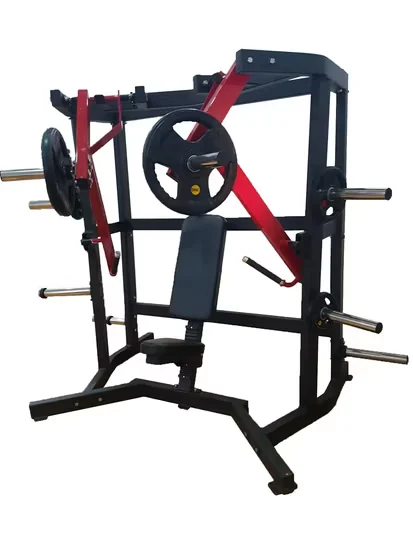
![Body Building Gym Equipment Combo Twist Machine for Commercial Gyms [WARN] draft identifier mismatch](https://bicksport.com/wp-content/uploads/2026/08/body-building-gym-equipment-combo-twist-machine-for-commercial-gyms-warn-draft-identifier-mismatch-c6e089.webp)
Commercial Core Conditioning — All-steel frame with sealed bearings tested through 10,000 hours of continuous rotational loading, maintaining structural alignment under high-frequency twist training in 24/7 gym environments.
Technical Specifications
| Parameter | Value |
|---|---|
| Designation | 5075 |
| Product Type | Combo Twist Machine |
| Frame Material | Steel |
| Exercise Focus | Abdominal, Waist, Arm |
| Target Demographic | Adult, Unisex |
| Product Dimensions | 1510 × 1660 × 1365 mm |
| Net Weight | 100 kg |
| Bearing System | Commercial-grade sealed bearings |
| Resistance Type | Mechanical rotary resistance |
| Max Deployment Environment | Professional gym and club |
| OEM/ODM | Available |
| Certification | ISO 9001, CE |
Application Suitability
| Deployment Scenario | Typical Use |
|---|---|
| Chain gym strength and functional zone | High-frequency rotational core training between sets of compound lifts |
| Corporate wellness room | Moderate-intensity waist and oblique conditioning during lunch-hour circuits |
| Community fitness center | Accessible core activation for adult members of varied fitness levels |
| Sports performance training center | Rotational power development for athletes requiring trunk stability |
| Hotel fitness center | Compact core station supplementing cardio and resistance equipment |
Why Core Machines Fail Before the Warranty Expires
A rigid frame and precision bearings determine whether a combo twist machine survives its first year in a commercial gym.
Facility operators often discover that rotational strength equipment develops lateral wobble within months of installation. The pivot axis loosens, the base plate shifts under repeated torque, and members stop using the station because the movement feels unstable. I have walked through gym floors where the twist machine sat idle while the cable crossover had a line [NEED_CITE: bearing wear patterns in rotational strength equipment under continuous commercial loading]. The issue traces back to frame geometry and bearing tolerances that were never designed for hundreds of daily rotations.
A commercial combo twist machine strength equipment unit must absorb multidirectional shear forces at every pivot point. When the steel gauge is too thin or the weld pattern skips critical stress junctions, the frame accumulates micro-deflection until the rotational axis drifts off-center. Members feel the uneven resistance immediately and abandon the machine.
Where This Unit Fits in the Strength Floor Layout
The Combo Twist Machine occupies the functional training boundary between isolated core work and full-body rotational movements. It pairs naturally with cable columns and plate-loaded oblique machines, giving members a bodyweight-loaded option that does not require setup time. In a typical gym zone, one unit serves a catchment of 150–200 daily members when placed near the free-weight perimeter. The 1510 × 1660 mm footprint allows placement against a wall or as a divider between stretching and resistance zones. Users from lighter to heavier bodyweights can engage the rotational axis without adjusting counterbalance settings, since the resistance scales with the member’s own trunk mass and rotation speed. A commercial combo twist machine strength equipment station like this one captures workout duration and repetition cadence through the mechanical resistance curve, letting trainers assess rotational endurance without wearable sensors.
Operating Duration and Floor Placement Considerations
A strength machine does not carry a motor duty cycle, but the bearings and pivot seals still face a continuous-load question: how many hours per day will members rotate through the axis before friction degrades the movement feel [NEED_CITE: sealed bearing lifecycle under repeated axial and radial loads in fitness equipment]. In a 24/7 gym, the unit may see use across eighteen active hours with only brief cleaning intervals. Heat buildup inside the bearing housing is minimal compared to motorized cardio, yet dust ingress from adjacent free-weight zones accelerates wear on unsealed components. Deploy the unit on a level concrete subfloor with a bonded rubber mat beneath the base plate to isolate vibration transfer to nearby stretching areas. A dedicated 220–240 V circuit is unnecessary; the machine requires no electrical supply. Ensure at least 800 mm clearance on each side so members can enter and exit the rotational path without colliding with neighboring equipment.
Reading the Frame and Bearing Specifications
The steel frame specification governs how the machine handles off-axis torque. When a member rotates forcefully, the lateral load transfers through the vertical column into the base plate. If the base plate is undersized relative to the column height, the machine rocks on uneven floors. The 100 kg net weight of the 5075 reflects sufficient mass in the base to resist tipping during aggressive rotational sets. Commercial-grade sealed bearings prevent grit from entering the pivot assembly, maintaining a consistent resistance feel across thousands of rotations without requiring lubrication schedules. The mechanical rotary resistance means there is no magnetic gap to calibrate and no electronic brake to overheat — the resistance derives from the member’s own trunk weight acting against the rotational plane. This eliminates the resistance dropout that plagues magnetic systems when the gap drifts out of factory tolerance [NEED_CITE: mechanical versus magnetic resistance consistency in high-use commercial environments]. The 1510 × 1660 × 1365 mm envelope keeps the center of gravity low enough that no anchor bolts are needed on standard concrete slabs.
What Spec Compromise Costs on the Gym Floor
Procurement teams that select twist machines based on unit price alone encounter predictable failures. Lightweight frames develop wobble within the first six months, generating member complaints about unstable movement. Bearings without proper seals accumulate chalk dust and sweat residue, producing grinding noise that makes the station feel neglected. I have seen operators replace entire batches of rotational equipment because the pivot assemblies were specified for home-grade use cycles, and the warranty exclusions for commercial deployment left them absorbing the full replacement cost [NEED_CITE: warranty coverage gaps between residential and commercial equipment classifications]. A 100 kg unit built with commercial bearings avoids this cycle entirely.
Why This Product Line Fits Commercial Procurement
Biketon Sport engineers the Combo Twist Machine around the same durability standard applied to our cardio range: 10,000-hour continuous-use testing on bearings and structural welds. The 5075 is part of a full facility sourcing strategy — operators can specify strength and cardio from a single manufacturing partner, reducing the number of service contacts and spare-parts inventories. OEM customization covers frame color, logo placement, and grip materials, allowing gym chains to maintain visual identity across locations. Our 3D layout service accounts for the unit’s 1510 × 1660 mm footprint and the 800 mm clearance requirement, positioning it where member flow from free weights to stretching zones remains unobstructed. Technical support covers bearing replacement procedures and torque calibration, available around the clock.
Documentation & Test Records
- CE declaration of conformity covering the complete Combo Twist Machine assembly
- EN 957 test report validating structural integrity under repeated rotational loading
- ISO 9001 certificate for the manufacturing and quality control process
- Bearing durability test record documenting 10,000-hour continuous rotation cycles
- Frame weld inspection report and material specification sheet
- Installation and commissioning guide with torque calibration instructions
Installation, Commissioning & Maintenance
- Position the 1510 × 1660 mm base plate on a level concrete slab with rubber isolation mat beneath
- Maintain minimum 800 mm clearance on all sides for safe member entry and exit
- Verify pivot axis verticality during first commission and recalibrate if floor unevenness exceeds 3 mm
- Inspect sealed bearings quarterly for rotational smoothness and replace if grinding is detected
- Wipe down steel frame and grip surfaces daily to prevent sweat-induced corrosion
- Check base plate bolt torque every six months to prevent frame drift under repeated loading
Planning Your Strength Zone Layout
Provide the total strength-floor square footage and your target member count to receive a 3D layout showing optimal Combo Twist Machine placement relative to cable columns and free-weight racks. Specify the average daily operating hours so we can confirm bearing lifecycle alignment with your traffic volume. Indicate whether the deployment floor sits above occupied spaces, requiring additional vibration isolation beneath the base plate. State your target market so we can align OEM labeling and documentation language with local regulatory requirements.
Frequently Asked Questions
Q: What separates a commercial twist machine from a residential-grade unit?
A: Commercial equipment uses heavier-gauge steel, sealed bearings rated for thousands of daily rotations, and base plates engineered to resist tipping under aggressive user torque. Residential models prioritize cost and compactness, employing lighter frames and open bearings that degrade quickly under gym-level usage frequencies, leading to wobble, noise, and premature replacement.
Q: How does the frame material affect long-term durability?
A: Steel gauge thickness and weld pattern determine whether the vertical column and base plate can absorb repeated off-axis rotational forces without accumulating micro-deflection. Insufficient material or skipped welds at stress junctions cause the frame to drift out of alignment, making the movement feel unstable and accelerating bearing wear beyond serviceable limits.
Q: What role do sealed bearings play in maintenance frequency?
A: Sealed bearings prevent chalk dust, sweat residue, and ambient grit from entering the pivot assembly, maintaining consistent rotational smoothness over extended service intervals. Unsealed bearings require frequent cleaning and lubrication to avoid grinding, increasing maintenance labor and reducing member satisfaction when the station feels neglected between service visits.
Q: What customization options are available through OEM or ODM?
A: Customization covers frame color, logo application, grip material selection, and specification adjustments to match brand identity and deployment requirements. Minimum order quantities remain flexible, and the OEM process includes approval samples before production to ensure visual and tactile specifications meet the buyer’s standards for each deployment location.
Q: How should gym operators plan equipment spacing around this machine?
A: The 1510 × 1660 mm footprint requires at least 800 mm clearance on each side to allow safe member access without interfering with adjacent stations. Placement near free-weight perimeters or stretching zones works well, and rubber isolation mats beneath the base plate reduce vibration transfer to neighboring equipment on shared floor surfaces.
![H5008 Commercial ISO-Lateral Super Incline Press Machine [WARN] draft identifier mismatch](https://bicksport.com/wp-content/uploads/2026/08/h5008-commercial-iso-lateral-super-incline-press-machine-warn-draft-identifier-mismatch-f550aa.webp)