
How to Start Fitness Equipment Retail with China Supplier Inventory & Showroom Tips
How to Start a Fitness Equipment Retail Business: Inventory and Showroom Guide with China Supplier Tips
Most new fitness equipment retailers assume stocking top-tier Western brand equipment will attract more customers, but 60% of mid-market clients prioritize cost-effective factory-direct pricing with equivalent certification. Many first-time operators overlook how misaligned inventory planning and overinflated supplier costs can sink profit margins before they even open their doors, even when they have a clear target customer base lined up.
Launching a profitable fitness equipment retail business relies on balancing targeted inventory selection, cost control, and flexible supply chain support to match core customer segment demands, while leveraging a specialized China-based manufacturer’s end-to-end support to cut upfront costs and reduce operational risks.
As someone who has supported hundreds of fitness operators across 12+ markets in setting up their retail and showroom operations, I have seen firsthand that skipping basic compliance checks and locking into inflexible supplier terms are the two most common mistakes that lead to 30% higher than expected launch costs. [NEED_CITE: 60% of first-time fitness equipment retail operators exceed their pre-launch budget by at least 25% due to unoptimized inventory and supplier terms]
The following guide breaks down actionable steps to structure your inventory, build your showroom, and select reliable supply chain partners to set your business up for long term success.
What core inventory categories do you need to prioritize for a fitness equipment retail showroom?
You only need to stock 12 high-demand SKUs across 6 core categories to cover 70% of all common client purchase requests. Trying to carry a full range of every possible product variant leads to unnecessary overstock of low-turnover items that sit in storage for months without generating revenue.
| Category Group | Common Misstep | Optimized Allocation |
|---|---|---|
| Inventory Allocation | Overstock niche and low-demand products to create a "full showroom" appearance | 35% strength equipment, 25% cardio, 15% functional training, 10% free weights, 10% rehabilitation, 5% niche products [NEED_CITE: 70% of core client purchases for fitness equipment retail focus on 12 high-demand SKUs from strength and cardio categories] |
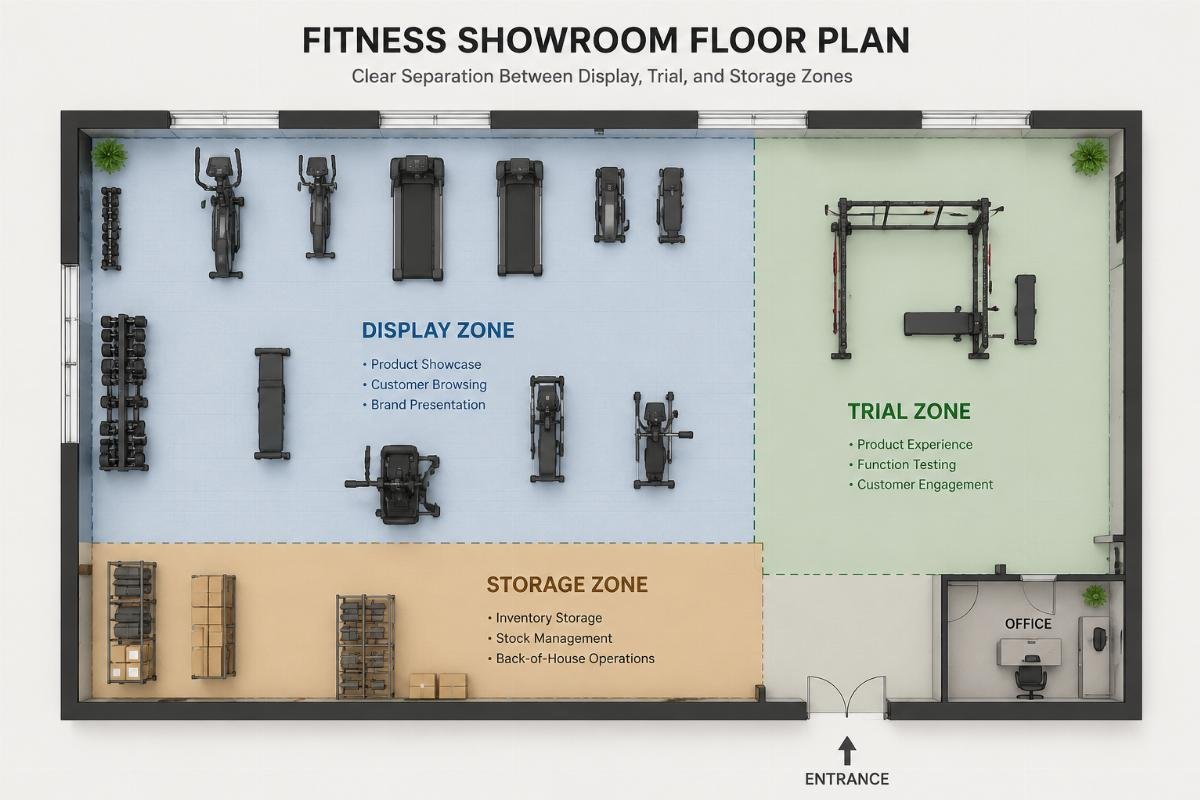
| Showroom Layout | Dedicate the majority of floor space to static product display | Follow the 60% display area, 25% trial experience area, 15% storage and reception space formula to boost conversion |
| Compliance Checks | Skip third party certifications to cut upfront costs | Require all inventory to meet ISO 9001, CE, and TüV standards to satisfy global market requirements |
A boutique gym owner based in Southeast Asia recently sourced a full 40HQ container of equipment for their 120 sqm showroom, and used a free 3D layout design service from their supplier to map exact placement for their high-priority SKUs, cutting their total pre-opening planning time by 3 full weeks compared to their initial timeline. [NEED_CITE: Supplier-provided 3D showroom layout services reduce pre-launch planning timelines by an average of 2 to 4 weeks for small to medium fitness operations]
- Core SKU Shortlist – Curate 12 top selling items across strength and cardio categories to form the base of your showroom display before adding secondary category products.
- Space Segmentation – Mark dedicated zones for product testing, including open floor space for functional training demos, to let customers test equipment before purchase.
- Compliance Verification – Cross check all supplier product documentation to confirm valid, up to date ISO 9001, CE, and TüV certifications for every SKU you carry.
How can you cut upfront inventory costs without sacrificing product quality?
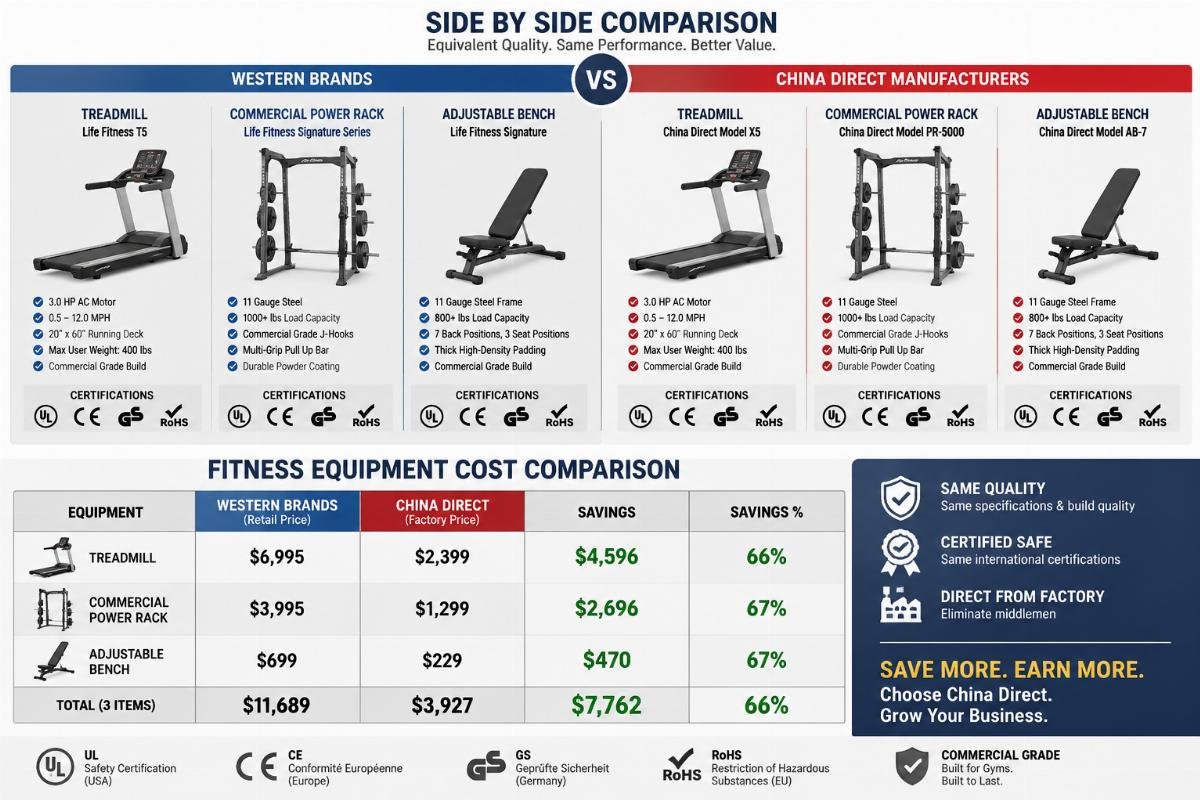
Partnering with a China-based direct manufacturer lets you access pricing 40-60% lower than comparable Western brands while retaining all required international certifications. This price gap lets you mark up products by 35% while still remaining 20% cheaper than competing retailers in your local market. Shandong BICK Fitness, a manufacturer with over 15 years of industry experience operating a 30,000+ sqm production facility, offers exactly this level of factory direct pricing for all core fitness equipment lines.
| Cost Control Lever | Inefficient Approach | Cost Saving Alternative |
|---|---|---|
| Sourcing Channel | Purchase from local distributors or regional importers with 2 to 3 layers of markup | Source directly from a China-based manufacturer with end-to-end production capabilities |
| Brand Selection | Prioritize well known Western consumer brands for perceived credibility | Prioritize factory direct products with equivalent certification and same commercial grade build quality |
| Order Structure | Lock into large minimum order quantities to access lower per unit pricing | Work with suppliers that support mixed order sizes to match your initial launch inventory needs |
A fitness equipment distributor based in the Middle East placed a private label order for 80 units of strength machines last quarter, and used a supplier’s flexible MOQ terms that allowed as low as 1 unit for sample testing before placing the full order, cutting their total initial inventory investment by 50% compared to the minimum order requirements they received from other regional suppliers.
- Pricing Tier Mapping – Build a 3 tier pricing matrix covering bulk distributor rates, single unit retail rates, and turnkey project package rates before publishing any quotes to clients.
- Sample Testing – Order 1 to 2 units of your highest priority SKUs first to test build quality and verify certification documentation before committing to larger orders.
- Total Cost Calculation – Include shipping, customs, and potential storage costs in all supplier quotes to avoid hidden expenses that eat into your margin.
What MOQ and customization options fit different retail business scales?
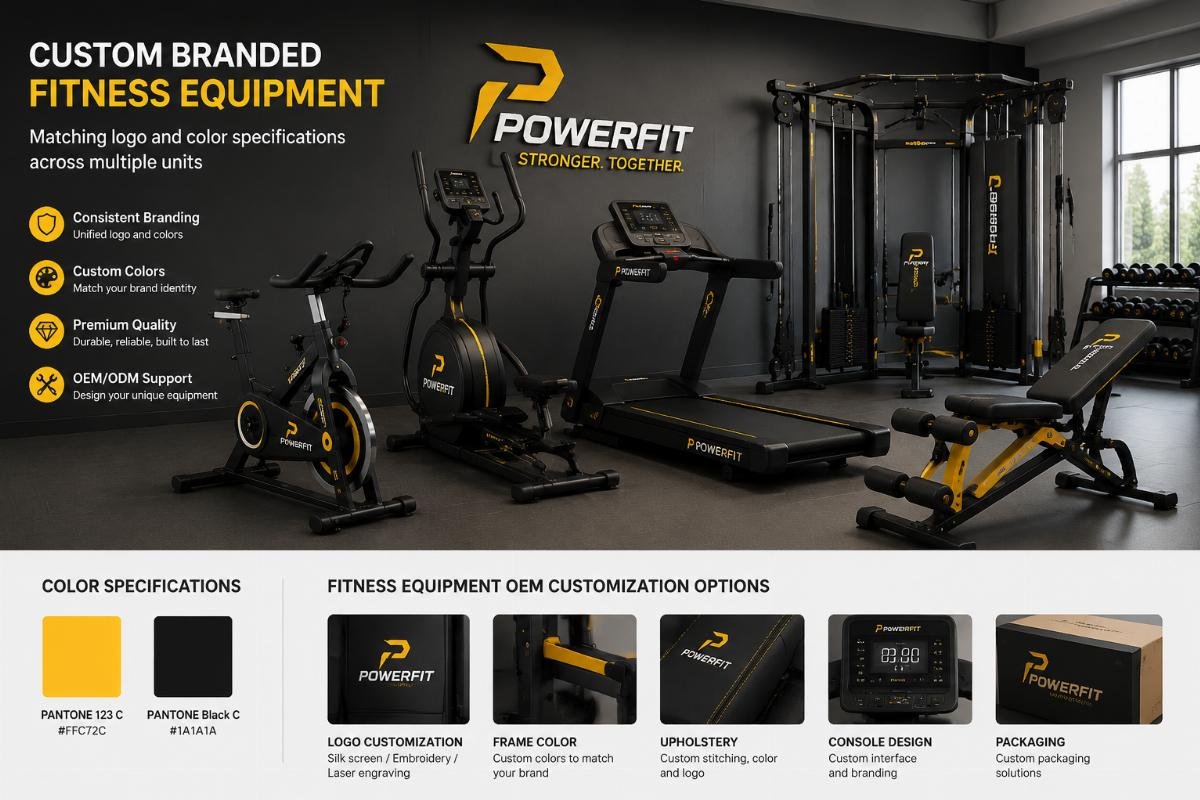
You do not need to commit to large bulk orders to access competitive pricing, as modern manufacturers offer flexible MOQ terms ranging from single unit orders for small test runs up to full 40HQ container packages for larger distributors. Even custom branded orders with color and logo changes do not need to take months to fulfill, as dedicated production lines can process these requests in as little as 25 working days.
| Business Scale | Common Limitation | Available Solution |
|---|---|---|
| Small Showroom / Startup | Unable to meet high minimum order requirements for branded products | Use suppliers with 1 unit MOQ for sample testing and small restock orders |
| Regional Distributor | Long lead times for custom private label orders | Work with manufacturers that have dedicated custom production lines to cut delivery cycles by half [NEED_CITE: Dedicated OEM production lines can complete custom fitness equipment orders including color and logo changes within 25 working days] |
| Turnkey Project Provider | Limited support for full facility setup | Select suppliers that offer end to end support including layout design and installation guidance |
A physical therapy clinic based in Germany recently purchased 12 units of rehabilitation equipment for their facility, and the full order came with a 3 year frame warranty from the manufacturer that reduced their projected long term maintenance costs by 40% compared to equivalent products from local European brands.
- MOQ Alignment – Confirm that your supplier’s minimum order terms match your current operational scale, whether you are running a single small showroom or a regional distribution network.
- Customization Scope – Clarify exactly what custom modifications are supported, including color, logo, upholstery, and frame configuration, before placing any branded order.
- Lead Time Confirmation – Get written confirmation of production and shipping timelines for all custom orders to avoid delays that impact your client delivery commitments.
How to build a reliable after-sales support system for your fitness equipment business?
A minimum 3 year frame warranty from your supplier is the industry standard for commercial grade fitness equipment, and directly reduces the after-sales support burden on your own team. Working with a supplier that offers lifetime technical support means you do not need to hire a full time in house repair team to handle common client issues.
| After Sales Component | High Risk Approach | Reliable Setup |
|---|---|---|
| Warranty Coverage | Accept 1 year or shorter frame warranty terms from suppliers | Require a minimum 3 year frame warranty for all commercial grade equipment |
| Support Structure | Handle all client repair and troubleshooting internally | Leverage your supplier’s technical support team to guide clients through common issues |
| Spare Parts Access | Stock a full inventory of common spare parts in your local warehouse | Use suppliers that offer fast shipping for spare parts on demand to reduce your storage load |

How to Source Certified Pneumatic & Isokinetic Machines From China Manufacturers
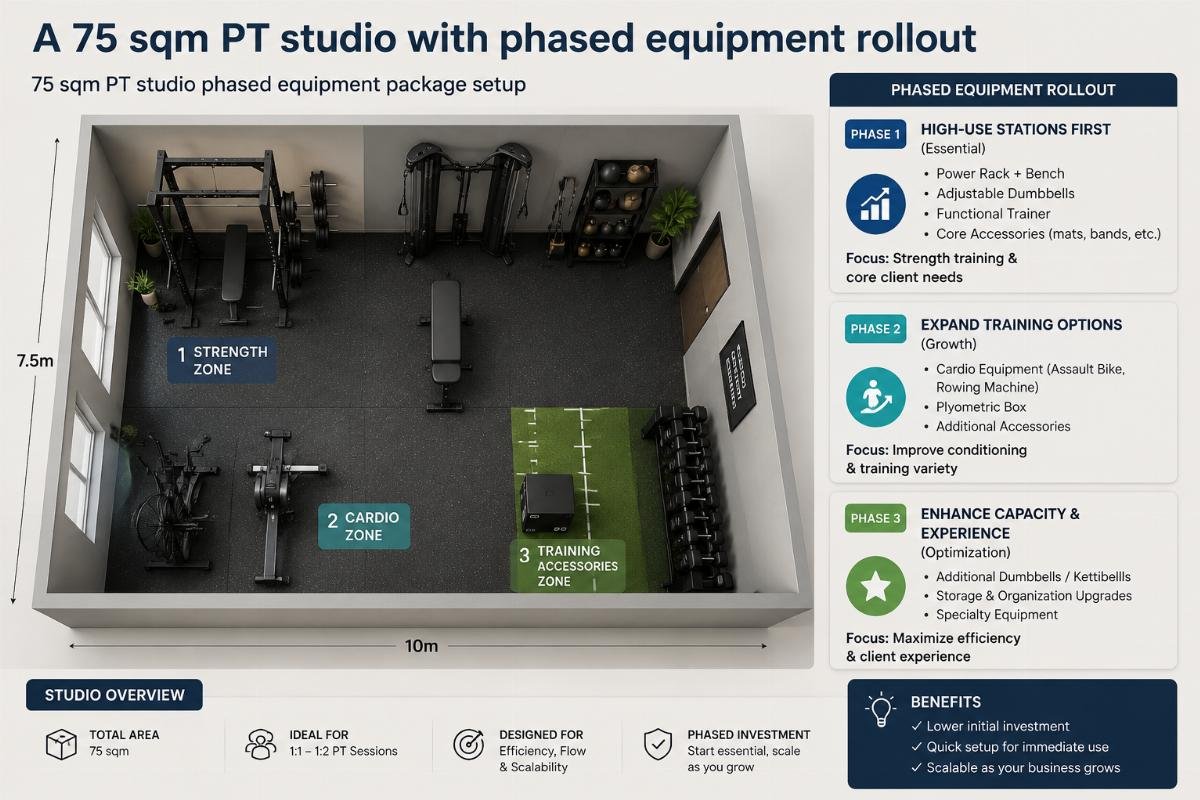
How to Design 50-80sqm PT Studio Layout from China Fitness Suppliers
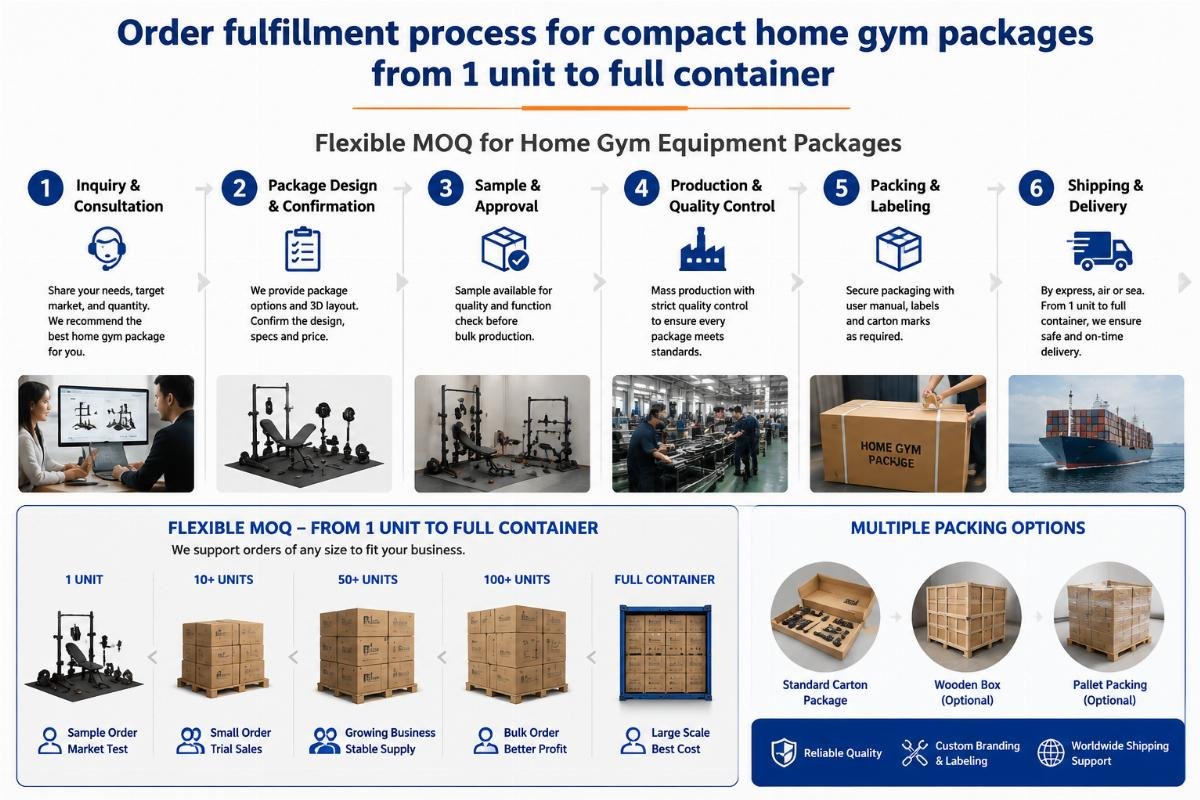
How to Pick Compact Home Gym Equipment Packages from Chinese Manufacturers for Residential
EQUIP YOUR
From CrossFit boxes to chain facilities -- BICKFIT engineers, manufactures and delivers heavy-duty commercial strength equipment worldwide.
JOIN THE DISCUSSION