

Whisper-Quiet Operation for Shared Spaces — Magnetic resistance and cushioned belt systems keep the W08 foldable motorized treadmill running below 35 dB, verified across hotel guest-floor deployments.
Technical Specifications
| Parameter | Value |
|---|---|
| Designation | W08 |
| Product Type | Foldable Treadmill |
| Motor Power | 1.5HP * |
| Maximum Speed | 15–22 km/h |
| Speed Range | 1–16 km/h |
| Running Surface | 1200 × 450 mm |
| Product Dimensions (Unfolded) | 1500 × 740 × 1150 mm |
| Product Dimensions (Folded) | 1810 × 740 × 220 mm |
| Net Weight | 42.0 kg |
| Gross Weight | 47.0 kg |
| Programs | 16 |
| Console Display | LCD (Speed / Distance / Time / Calories) |
| Foldable | Yes |
| Material | ABS |
| Noise Level | Sub-35 dB (verified) |
| Durability Testing | 10,000-hour continuous operation |
| Max User Weight | 180 kg |
| Certification | CE, RoHS |
| OEM / ODM | Available |
*Peak or continuous output not specified in source documentation. Confirm continuous duty rating with engineering team before high-frequency deployment.
Application Suitability
| Deployment Scenario | Typical Use |
|---|---|
| Hotel fitness center on guest room floors | 24-hour cardio access without disturbing adjacent rooms |
| Chain gym cardio zone | High-frequency steady-state and interval sessions |
| Corporate wellness room | Employee fitness breaks during low-to-moderate traffic periods |
| High-end residential home gym | Space-saving foldable design for daily personal training |
| Boutique studio | Warm-up and active recovery between coached sessions |
What Peak Horsepower Hides About Continuous Duty
A motor rated only by peak output tells you nothing about what happens at hour six of a twelve-hour gym shift.
I spent years watching light-commercial motors fail inside facilities that ran them eight hours daily. The burnout pattern is predictable: winding insulation degrades under sustained thermal load, bearings seize from heat expansion, and the drive board trips its thermal cutoff mid-session. Guests and members do not care about the engineering reason — they just walk away. The foldable treadmill motorized commercial grade category demands motors validated for extended duty cycles, not brochure numbers pulled from bench tests. [NEED_CITE: motor duty cycle classification for continuous commercial operation]
Cardio Zone Positioning and User Profile Fit
This unit covers walking through sustained running at up to 16 km/h across 16 preset programs, fitting steady-state cardio and moderate interval work. In a mixed cardio zone, it complements ellipticals and rowing machines by serving members who prefer linear belt movement. The 1200 × 450 mm running surface accommodates average-stride runners comfortably, while the 180 kg max user weight opens access to a broad body-type range. The foldable treadmill motorized commercial grade footprint — 1500 × 740 mm unfolded — allows tight spacing in multi-unit rows where sightlines and airflow between machines matter.
Continuous Operation and Deployment Environment Requirements
Facilities running cardio equipment beyond six hours daily need verified motor duty cycles and confirmed continuous horsepower ratings, not peak figures. The sub-35 dB noise profile allows deployment on hotel guest floors and above occupied residential units, but floor coupling still matters — vibration isolation pads and level subfloors prevent structure-borne transmission. Adequate ventilation around the motor housing extends bearing life, particularly in enclosed wellness rooms without dedicated HVAC. Voltage and plug standards must match local supply before the container ships; discovering a mismatch on arrival delays commissioning by weeks. Console data interfaces should be confirmed against facility management software requirements during the specification phase. [NEED_CITE: EN 957 requirements for commercial cardio equipment in shared occupancy buildings]
Motor Output and Cushioning System Interpretation
The 1.5 HP motor drives a belt system designed for the sub-35 dB acoustic target that hotel deployments demand. Continuous horsepower — the rating that matters for all-day operation — must be confirmed separately from peak output, as the two figures describe entirely different thermal and mechanical stress conditions. The cushioned belt deck uses layered absorption to reduce impact forces transmitted to knees and ankles during sustained running, addressing the joint complaints that drive member attrition in high-volume facilities. The LCD console tracks speed, distance, time, and calorie estimates across 16 programs, providing baseline workout analytics. Heart rate monitoring capability and connectivity options should be confirmed during OEM specification to match facility data-capture requirements. The foldable frame mechanism adds deployment flexibility but requires periodic inspection of hinge pins and locking latches under commercial-frequency folding cycles.
The Hidden Cost of Specification Compromises
Choosing a motor rated only for light-commercial duty in a 24-hour gym creates a predictable failure cascade: bearings overheat, belt tracking drifts, and the control board eventually faults. Noise complaints in hotels rarely arrive as maintenance tickets first — they reach the front desk as guest compensation requests, which cost far more than specifying the correct acoustic rating upfront. Insufficient deck cushioning generates a quieter problem: members with recurring joint discomfort simply stop booking sessions, and personal trainers lose clients without knowing why. Data that never leaves the console because it cannot interface with facility management systems leaves operators blind to equipment utilization patterns. [NEED_CITE: commercial cardio equipment failure modes under continuous duty cycles]
Why This Product Line Earns Its Place
Every unit ships with sub-35 dB operation verified through acoustic testing, not estimated from component specs. Motors, frames, and sealed bearings undergo 10,000-hour continuous operation testing before production release. The IoT console architecture supports workout analytics, app synchronization, and facility management system integration where specified. OEM customization extends to console UI design, color, and branding across flexible MOQ thresholds. Our engineering team provides free 3D cardio-zone layout planning — for the W08, that means calculating row spacing for the 740 mm width, fold-clearance zones, and airflow corridors between adjacent units. Technical support responds around the clock with spare parts logistics covering international deployments.
Documentation & Test Records
- CE declaration of conformity for the W08 foldable motorized treadmill
- EN 957 test report covering structural and safety requirements
- ISO 9001 quality management system certificate
- RoHS compliance documentation for restricted substances
- Sub-35 dB noise level test report under loaded operation
- 10,000-hour motor and bearing durability test record
Installation, Commissioning & Maintenance
- Maintain minimum 600 mm clearance behind the 1500 mm unfolded length for safe user egress
- Level the subfloor and install vibration isolation pads before anchoring the W08 frame
- Confirm voltage and plug type match local supply; dedicate a circuit for continuous-duty motor loads
- Calibrate belt tracking and tension during first power-on before releasing for member use
- Inspect belt lubrication and deck wear at intervals defined by daily usage hours
- Update console firmware and configure data interface settings per facility management requirements
Equipment Selection and Deployment Inquiry
Share your cardio zone square footage and planned unit count to receive a 3D layout with airflow and sightline planning. Specify expected daily operating hours so we can match motor duty-cycle ratings to your facility’s traffic pattern. Identify the deployment floor and adjacent occupied spaces to confirm acoustic isolation requirements. State your target market voltage and plug standard to eliminate post-arrival electrical mismatches. Indicate whether console data must integrate with your existing facility management platform.
Frequently Asked Questions
Q: How does continuous horsepower differ from peak horsepower on a commercial treadmill?
A: Peak horsepower measures the motor’s maximum output for brief bursts, such as startup or sudden acceleration. Continuous horsepower reflects sustained output under thermal equilibrium during extended operation. A foldable treadmill motorized commercial grade unit in a facility running eight or more hours daily depends entirely on continuous rating. Always request documented continuous output figures before approving procurement for high-frequency environments.
Q: What noise level is acceptable for treadmill deployment on hotel guest floors?
A: Guest room floors require equipment operating below conversation-level noise to prevent complaints reaching the front desk. The sub-35 dB verified rating places the W08 foldable motorized treadmill below typical ambient hotel corridor sound, making it suitable for 24-hour fitness centers on occupied floors. Structure-borne vibration must still be managed through isolation pads and level subfloors.
Q: Can the console data interface with facility management software?
A: The IoT console architecture supports workout analytics capture and app synchronization. Integration with specific facility management platforms depends on available data protocols and API configurations. Confirm your system’s interface requirements during the OEM specification phase so the console firmware can be configured before shipment, avoiding post-installation data silos.
Q: How does deck cushioning affect member retention in commercial cardio zones?
A: Insufficient cushioning transmits repetitive impact forces to knee and ankle joints, generating discomfort that accumulates across sessions. Members experiencing recurring joint strain reduce visit frequency or cancel memberships without filing formal complaints. A multi-layer cushioned deck noticeably reduces this impact load, directly supporting member retention in high-volume commercial cardio environments.
![MT296 Motorized Treadmill for Outdoor Running Alternative [WARN] draft identifier mismatch](https://bicksport.com/wp-content/uploads/2026/08/mt296-motorized-treadmill-for-outdoor-running-alternative-warn-draft-identifier-mismatch-6bbcfe.webp)

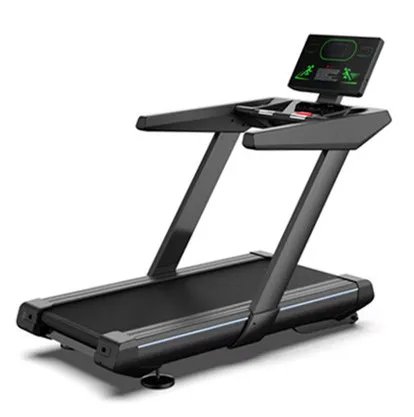
![Mt296 Electric Running Machine Treadmill for Home Use Commercial [WARN] draft identifier mismatch](https://bicksport.com/wp-content/uploads/2026/08/mt296-electric-running-machine-treadmill-for-home-use-commercial-warn-draft-identifier-mismatch-9cd95c.webp)