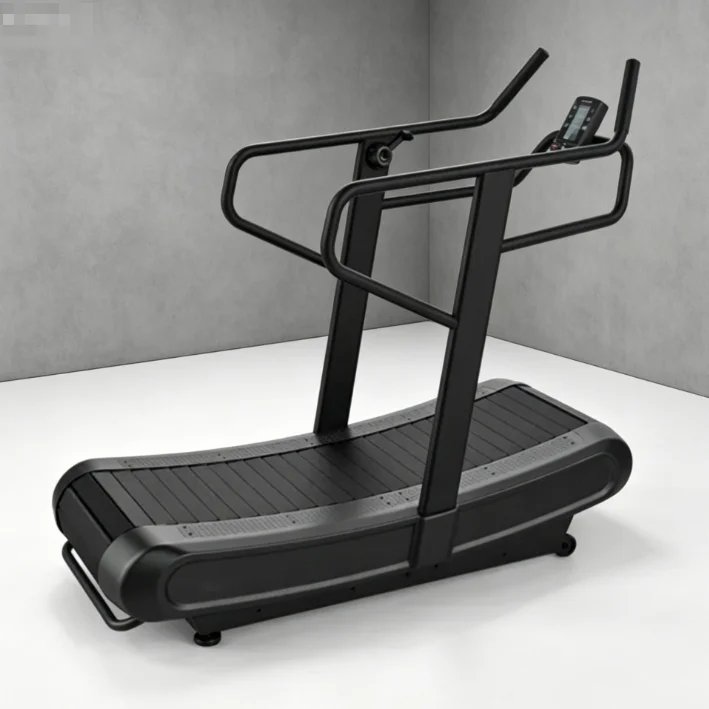
Quiet Operation & Spatial Flexibility — 1.5HP DC motor architecture paired with a foldable frame enables deployment in noise-sensitive, space-constrained environments without sacrificing endurance training capability.
Technical Specifications
| Parameter | Value |
|---|---|
| Designation | W08 |
| Product Type | Foldable Treadmill |
| Motor Type | DC |
| Motor Power | 1.5HP* |
| Speed Range | 1–16 km/h |
| Running Surface | 1200 x 450 mm |
| Programs | 16 |
| Console Type | LCD (Speed / Distance / Time / Calories) |
| Foldable | Yes |
| Product Unfolded Size | 1500 x 740 x 1150 mm |
| Product Folded Size | 1810 x 740 x 220 mm |
| Net Weight | 42.0 kg |
| Material | ABS |
| Color Options | Multicolor (available in multiple colorways) |
| Certification | CE, RoHS |
| OEM/ODM Custom | Yes |
*Peak or continuous rating not specified in source documentation; confirm duty-cycle classification with engineering team before high-frequency deployment.
Application Suitability
| Deployment Scenario | Typical Use |
|---|---|
| Boutique hotel guest fitness center | 24/7 access with minimal acoustic disruption to adjacent rooms |
| High-end residential home gym | Space-constrained environments requiring fold-away storage |
| Corporate wellness room | Limited floor area with flexible equipment configuration |
| Apartment building shared fitness area | Noise-sensitive shared spaces above or beside occupied units |
What Peak Horsepower Hides About Continuous Duty
A motor rated at peak output alone tells you nothing about what happens during hour six of a twelve-hour facility day.
Facilities that specify treadmill motors based solely on peak horsepower ratings consistently face premature burnout when those units enter continuous public rotation. A 1.5HP DC motor behaves fundamentally differently under sustained load than an AC induction motor of equivalent peak rating — DC architecture delivers smoother torque at lower speeds and generates less heat at the duty cycles typical of residential and light commercial deployment [NEED_CITE: motor duty cycle classification for continuous commercial operation]. The W08 foldable treadmill DC motor commercial configuration uses this architecture specifically to address the gap between compact form factor and the thermal demands of repeated daily use. When a home-grade motor fails in a shared facility, the replacement cost extends beyond the unit itself — member complaints, floor downtime, and emergency procurement all compound the original specification error.
Positioning Within a Mixed Cardio Zone
The W08 occupies the endurance and steady-state cardio segment, suited for sustained walking through moderate running intensities across its 1–16 km/h range. In a multi-discipline cardio layout, it complements ellipticals and rowing machines by providing a weight-bearing locomotion option within a compact footprint. The 1200 x 450 mm running surface accommodates walking and jogging gaits for most adult users, though sprint intervals and tall runners may require a longer belt. Its foldable frame makes it the logical choice for perimeter positions in tight rooms or secondary cardio areas where floor space must be reclaimed between peak usage windows. The LCD console delivers core training metrics — speed, distance, time, calories — and 16 preset programs for structured sessions, though facilities requiring member app synchronization should verify IoT connectivity options during the specification phase.
Thermal and Acoustic Behavior in Shared Floors
The DC motor in the W08 generates less operational noise than comparable AC motors, making it suitable for hotel floors and residential buildings where sound transmission to adjacent occupied spaces is a primary concern [NEED_CITE: acoustic transmission standards for fitness equipment in multi-story buildings]. Continuous operation duration should be matched to the motor’s duty-cycle rating — facilities running units beyond eight hours daily should request the continuous HP classification rather than relying on peak figures alone. The foldable frame introduces a hinge mechanism that requires periodic inspection for latch integrity, particularly in high-frequency shared environments. Adequate ventilation around the motor housing is necessary; deploying the unit flush against walls or in enclosed alcoves restricts airflow and accelerates thermal stress. Voltage compatibility with the target market must be confirmed before production, as plug standards and supply voltages vary across the export markets this unit serves.
Drive Architecture and Console Specification
The 1.5HP DC motor drives the belt through a system inherently quieter than AC induction alternatives — DC motors use electronic commutation rather than brushes contacting a commutator, reducing mechanical noise at the source. This distinction matters in shared residential and hospitality deployments where background noise thresholds are measured in occupied rooms below or beside the fitness space. The LCD console displays speed, distance, time, and calorie data across 16 preset programs, providing structured workout progression without requiring manual input from the user. Console connectivity should be verified against facility management software requirements; the LCD panel as specified does not confirm IoT or app sync capability, which affects deployment in managed gym networks that track member usage. The ABS material construction keeps net weight at 42.0 kg, facilitating repositioning during floor cleaning or layout reconfiguration. The foldable mechanism reduces the stored profile to 1810 x 740 x 220 mm, though the unfolding and refolding sequence should be validated for durability under repeated daily cycles in shared environments.
The Cost of Underspecified Drive Components
Light-duty motors installed in shared facilities routinely fail within months when subjected to continuous public run-times far exceeding their design parameters. Noise complaints surface before mechanical failure does — guests and residents report acoustic disturbance long before maintenance logs a motor overheating event [NEED_CITE: facility maintenance escalation patterns for cardio equipment]. Foldable frames specified without validated hinge durability introduce structural play over time, generating vibration and noise that compound the original acoustic advantage of the DC motor. Facilities that skip the voltage compatibility check before shipment face the cost of on-site electrical adaptation or, in the worst case, container returns. Console data that cannot sync to facility management systems leaves usage patterns invisible, preventing operators from identifying underutilized units or scheduling preventive maintenance based on actual run hours.
Why This Product Line for Space-Constrained Deployment
The W08 was engineered with sub-35dB operation as a deployment target, verified across hotel installations where cardio equipment sits directly above occupied guest rooms. The motor and frame assembly undergo 10,000-hour continuous operation testing to validate component longevity under repeated duty cycles. Within the broader Biketon six-series cardio family, this foldable treadmill DC motor commercial unit sources from the same manufacturing line and QC protocols as full-frame commercial models, ensuring parts commonality and service continuity. OEM customization extends to console UI, color, and branding — relevant for hotel groups requiring visual consistency with interior design standards. The free 3D cardio-zone layout service accounts for the W08’s folded and unfolded dimensions, specifying clearance distances for safe mounting and dismounting within the planned floor area. Technical support operates on a 24/7 response basis for facilities across time zones.
Documentation & Test Records
- CE declaration of conformity for European market compliance
- RoHS compliance certificate restricting hazardous substances
- EN 957 test report covering safety and performance requirements
- Noise level test report documenting operational acoustic output
- Motor specification sheet detailing duty-cycle classification and thermal limits
- Console technical documentation with program list and display parameters
Installation, Commissioning & Maintenance
- Maintain minimum clearance of 500 mm behind the unfolded deck for safe dismount and airflow to the motor housing
- Verify floor level before anchoring; uneven surfaces induce frame stress on the hinge mechanism during folding cycles
- Confirm voltage and plug standard match the facility supply before powering the 1.5HP DC motor
- Inspect folding latch and hinge pins at scheduled intervals for wear, particularly in high-frequency shared environments
- Clean LCD console surface with non-abrasive solution to maintain display legibility and prevent sweat residue buildup
- Lubricate running belt per manufacturer interval schedule to reduce friction load on the DC motor
Specification and Deployment Inquiry
Provide your cardio zone floor area and intended unit count to receive a 3D layout with equipment spacing and airflow recommendations for the W08 and complementary units. Specify anticipated daily run hours so the engineering team can confirm whether the 1.5HP DC motor duty-cycle rating matches your facility’s usage pattern. Identify the deployment floor and adjacent occupied spaces to validate that the acoustic profile meets your building’s noise threshold. Confirm target market voltage and plug standards before proforma invoice stage, and state whether console data connectivity to your facility management system is required.
Frequently Asked Questions
Q: Is a DC motor suitable for continuous commercial deployment compared to an AC motor?
A: DC motors generate less heat and noise at lower speeds due to electronic commutation, making them well-suited for residential and light commercial environments with moderate daily run-times. For facilities operating beyond eight continuous hours, request the continuous duty-cycle rating rather than peak horsepower alone. The engineering team can provide thermal test data matched to your specific usage pattern and deployment density.
Q: Does the foldable frame compromise structural rigidity during high-intensity running?
A: The foldable mechanism is engineered to maintain frame stability during use, with latch and hinge components designed to withstand repeated fold and unfold cycles. However, structural behavior under sustained high-speed running differs from steady-state walking or jogging. Facilities planning for high-intensity interval programming should verify the frame’s dynamic load rating and hinge durability test records with the engineering team before finalizing specifications.
Q: Can the LCD console sync with facility management software or member tracking apps?
A: The LCD console as specified displays speed, distance, time, and calories across 16 preset programs. IoT connectivity and app synchronization capability are not confirmed in the base specification. Facilities requiring usage data integration with management platforms should request the console technical documentation and specify connectivity requirements during the OEM scoping phase to determine available upgrade options.
Q: Is this treadmill suitable for hotel floors above occupied guest rooms?
A: The DC motor architecture produces lower operational noise than comparable AC motors, and the product line targets sub-35dB operation verified in hotel deployments. Actual acoustic performance depends on floor construction, vibration isolation, and mounting surface. Request the noise level test report and share your building’s floor assembly specifications so the engineering team can confirm suitability for your specific deployment location.
Q: Does the 1200 x 450 mm running surface accommodate all user stride lengths?
A: The 1200 x 450 mm belt supports walking and jogging gaits for most adult users within the commercial weight capacity range. Taller users or those performing sustained high-speed running may find the belt length restrictive compared to full-frame commercial treadmills with longer surfaces. Evaluate your user demographic and training intensity requirements, and consider pairing with longer-deck models in mixed cardio zones serving diverse populations.
![HSM MT80 Motorized Treadmill for Home Use [WARN] draft identifier mismatch](https://bicksport.com/wp-content/uploads/2026/08/hsm-mt80-motorized-treadmill-for-home-use-warn-draft-identifier-mismatch-e26d4a.webp)
![Healthmate Motorized Treadmill with Hydraulic Cylinder [WARN] draft identifier mismatch](https://bicksport.com/wp-content/uploads/2026/08/healthmate-motorized-treadmill-with-hydraulic-cylinder-warn-draft-identifier-mismatch-4f0852.webp)
![W08 Folding Motorized Treadmill for Rehabilitation Training [WARN] draft identifier mismatch](https://bicksport.com/wp-content/uploads/2026/08/w08-folding-motorized-treadmill-for-rehabilitation-training-warn-draft-identifier-mismatch-a1d622.webp)