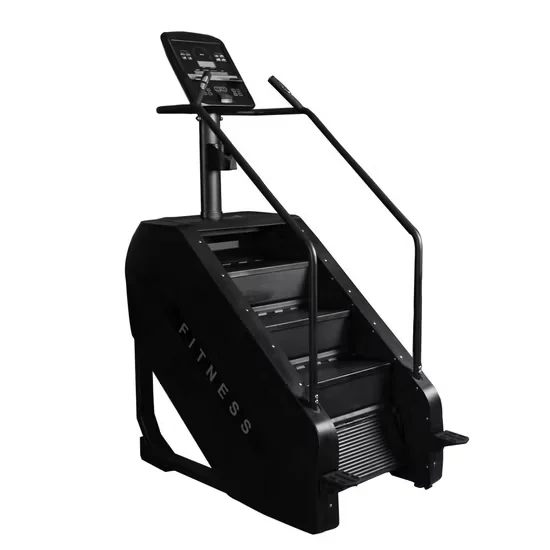
Motor-driven endurance — Engineered for continuous 10,000-hour high-frequency operation in commercial fitness facilities with reinforced aluminium alloy construction.
Technical Specifications
| Parameter | Value |
|---|---|
| Designation | SQ-1017 |
| Product Type | Stair Climber |
| Drive Method | Motor Driven |
| Speed Range | 15 Steps/Minute – 164 Steps/Minute |
| Maximum Load Capacity | 180kg |
| Input Power Voltage | AC220V + 10% or AC110V + 10% |
| Screen Display | Time, Climb, Calories, Steps, Heart Rate |
| Product Dimensions | 14508202080mm |
| Net Weight | 206kg |
| Material | Aluminium Alloy Pipe + PP Plastic |
| Certification | CE, RoHS, ISO |
Application Suitability
| Deployment Scenario | Typical Use |
|---|---|
| hotel fitness center on guest room floors | 24-hour guest access requiring low-noise operation and durable motor performance |
| chain gym cardio zone | High-frequency member traffic demanding continuous duty cycle reliability |
| corporate wellness room | Employee wellness programs with moderate daily usage patterns |
| high-end residential home gym | Premium home installations requiring commercial-grade durability |
| sports performance training center | Athletic conditioning programs requiring precise speed control and biometric tracking |
Why Motor Duty Cycles Determine Commercial Viability
Continuous commercial operation demands motors engineered for sustained load, not peak output.
Facility operators frequently encounter motor failures within months of deployment because manufacturers specify peak horsepower rather than continuous duty ratings. A commercial stair climber motor driven gym equipment installation in a hotel fitness center operates far differently than residential use — constant start-stop cycles, varying user weights up to 180kg, and 24/7 availability requirements create thermal stress that light-duty motors cannot withstand [NEED_CITE: motor duty cycle classification for continuous commercial operation]. When motors overheat and fail, maintenance costs escalate and member satisfaction declines as equipment sits out of service.
Positioning Within Commercial Cardio Zones
This motor-driven stair climber occupies the vertical climbing niche in comprehensive cardio configurations, complementing treadmills and ellipticals by targeting lower-body power and cardiovascular endurance. The 15-164 steps per minute range accommodates rehabilitation protocols at the lower end and high-intensity interval training at maximum speed. Deployed in dedicated cardio zones or standalone climbing areas, the unit handles high-frequency use patterns typical of commercial environments. The 180kg maximum user capacity ensures accessibility across diverse member demographics while maintaining structural integrity under continuous loading.
Continuous Operation and Environmental Requirements
Facilities planning 24/7 cardio access must verify that motor specifications align with actual duty cycles — equipment running 16+ hours daily requires different thermal management than facilities operating 10 hours. The dual voltage compatibility (AC220V / AC110V) eliminates transformer requirements for international deployments, though plug standards must be confirmed before production. Noise transmission through floor assemblies becomes critical when cardio zones occupy upper levels above occupied spaces — motor-driven systems generate different acoustic signatures than self-powered alternatives [NEED_CITE: acoustic performance standards for commercial cardio equipment in multi-story buildings]. Adequate ventilation around the motor housing prevents thermal throttling during sustained high-speed operation, while level flooring with vibration isolation pads reduces structure-borne noise transmission.
Electric Drive System and Performance Characteristics
Motor-driven stair climbers maintain consistent speed regardless of user weight, unlike self-powered units where cadence varies with applied force. The electric propulsion system delivers precise speed control across the entire 15-164 steps per minute range, enabling programmed interval training with exact work-rest ratios. Continuous duty motors differ fundamentally from peak-rated alternatives — continuous ratings reflect sustained thermal capacity under load, while peak values indicate momentary maximum output that cannot be maintained without overheating [NEED_CITE: EN 957 requirements for commercial cardio equipment]. The aluminium alloy frame construction provides structural rigidity necessary for the dynamic loading patterns inherent to climbing motion, where impact forces concentrate on step mechanisms and drive linkages. Heart rate monitoring integrated into the console display enables real-time biometric feedback, though accuracy varies with grip pressure and hand moisture compared to chest-strap alternatives.
The Cost of Specification Compromises
Facilities that prioritize initial purchase price over duty cycle ratings face predictable consequences — motors rated for light-commercial use burn out under continuous public facility operation, requiring replacement within the first year. Noise complaints escalate when equipment lacks proper acoustic engineering, particularly in hotel environments where cardio zones share walls or floors with guest rooms. Voltage mismatches discovered after container arrival force expensive transformer installations or complete equipment returns, delaying facility opening and damaging operator-supplier relationships [NEED_CITE: international electrical standards for commercial fitness equipment deployment].
Why This Product Line Delivers
Sub-35dB whisper-quiet operation has been verified in hotel deployments where cardio equipment occupies guest floor areas. The 10,000-hour durability testing protocol subjects motors, frames, and bearings to continuous high-frequency operation simulating real-world commercial use patterns. Console interfaces support workout analytics and data export, enabling facility management integration rather than creating information silos. OEM customization extends to console UI design, allowing branded user experiences across chain deployments. Free 3D cardio-zone layout planning addresses this unit’s 1450*820mm footprint alongside equipment spacing requirements for safe member circulation and maintenance access. The complete six-series cardio family means facilities source every discipline from one manufacturing partner with unified quality standards and 24/7 technical support response.
Documentation & Test Records
- CE declaration of conformity confirming European market compliance
- EN 957 test report validating safety and performance standards
- ISO 9001 certificate documenting quality management systems
- RoHS compliance verification for hazardous substance restrictions
- Noise level test report measuring acoustic output under operational load
- Durability test record demonstrating 10,000-hour component performance
- Motor specification sheet detailing continuous duty ratings and thermal protection
- Console technical documentation with data interface specifications
Installation, Commissioning & Maintenance
- Maintain 600mm clearance on all sides of the 1450*820mm footprint for safe access and ventilation
- Install on level flooring with vibration isolation pads to minimize structure-borne noise transmission
- Verify AC220V or AC110V power supply with dedicated circuit matching equipment amperage requirements
- Perform initial calibration of speed range (15-164 steps/minute) and console display accuracy before member use
- Schedule quarterly inspection of motor brushes, step mechanism bearings, and drive belt tension
- Configure console data output format for integration with facility management software during commissioning
- Implement daily cleaning protocol focusing on handrail contact surfaces and step treads to prevent sweat corrosion
Equipment Selection and Configuration Inquiry
Provide cardio zone square footage and target equipment count to receive 3D layout planning that optimizes member flow and maintenance access around this 1450*820mm footprint. Specify expected daily operating hours to confirm motor duty cycle adequacy for your usage pattern. Identify deployment floor level and adjacent occupied spaces to verify noise transmission meets facility requirements. Confirm target market voltage and plug standards to ensure electrical compatibility without post-shipment modifications. Indicate whether console data integration with existing facility management systems is required for usage tracking and analytics.
Frequently Asked Questions
Q: What is the difference between motor-driven and self-powered stair climbers in terms of maintenance and user experience?
A: Motor-driven units maintain consistent speed independent of user weight or effort, requiring periodic motor brush inspection and drive belt maintenance. Self-powered models eliminate motor maintenance but demand more user effort to initiate motion and maintain cadence, creating variable workout intensity based on applied force rather than programmed speed targets.
Q: How does the dual voltage input support international deployment without transformer requirements?
A: The AC220V/AC110V dual voltage compatibility allows direct connection to both European and North American electrical standards without external transformers. However, physical plug configurations vary by region and must be specified during ordering to ensure proper connector installation at the factory before shipment.
Q: What heart rate monitoring method does the console use, and how does it integrate with member apps or facility systems?
A: The console displays heart rate data captured through grip sensors on the handrails, providing real-time biometric feedback during workouts. Data output format and connectivity options should be confirmed during specification to ensure compatibility with facility management software and member tracking systems.
Q: How does the 180kg maximum load capacity compare to industry standards for commercial stair climbers?
A: The 180kg maximum user weight aligns with commercial-grade requirements for public facility deployment, accommodating diverse user populations while maintaining structural integrity under continuous high-frequency operation. This capacity rating reflects both frame strength and motor capability under sustained maximum loading conditions.
Q: What routine maintenance is required for the motor drive system and step mechanism to ensure long-term reliability?
A: Quarterly inspection protocols should verify motor brush wear, drive belt tension, and step mechanism bearing condition. The electric drive system requires less frequent maintenance than mechanical alternatives but demands thermal management verification to ensure adequate ventilation around motor housing during sustained high-speed operation.
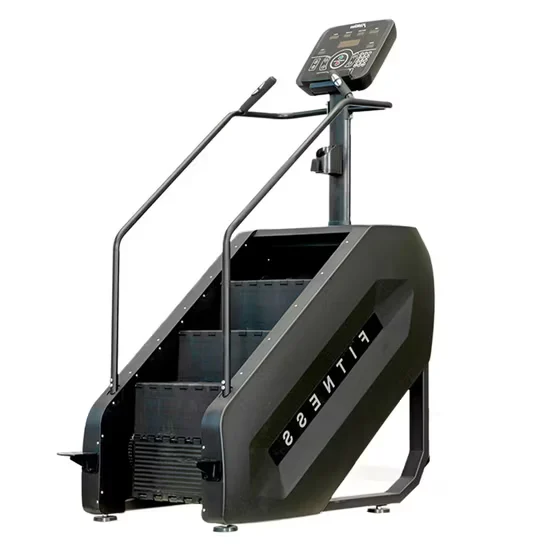
![High-Strength Commercial Stair Machine for Hotel Gyms [WARN] draft identifier mismatch](https://bicksport.com/wp-content/uploads/2026/08/high-strength-commercial-stair-machine-for-hotel-gyms-warn-draft-identifier-mismatch-99a47f.webp)