![SRY-12A Folding White Aluminum Pilates Reformer for Yoga Studio [WARN] draft identifier mismatch](https://bicksport.com/wp-content/uploads/2026/08/sry-12a-folding-white-aluminum-pilates-reformer-for-yoga-studio-warn-draft-identifier-mismatch-9df7a1.webp)
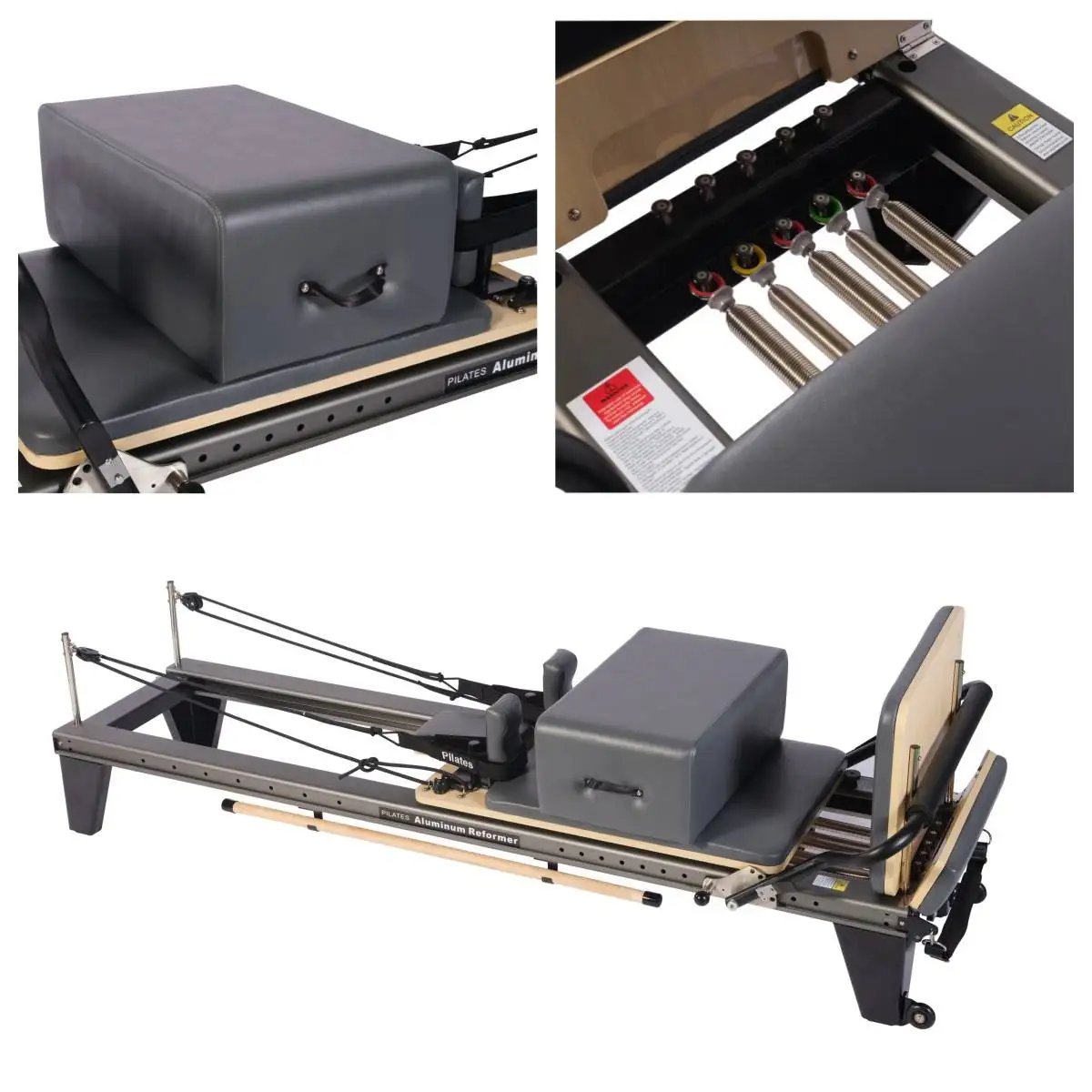
Precision Carriage System — Aluminum alloy construction eliminates mechanical noise during continuous studio sessions, verified across multi-tenant fitness deployments.
Technical Specifications
| Parameter | Value |
|---|---|
| Designation | SRY-12A |
| Product Type | Pilates Reformer |
| Material | Aluminium Alloy |
| Color | White |
| Foldable | Yes |
| Accessory Options | Long Box / Jump Board / Platform available |
| Product Dimensions | 2570×730×270mm |
| Net Weight | 90kg |
| Warranty | 3 Years |
Application Suitability
| Deployment Scenario | Typical Use |
|---|---|
| Yoga and Pilates studios in multi-tenant buildings | Group reformer classes with noise-sensitive neighbors below |
| Five-star hotel fitness centers with 24-hour guest access | Late-night individual sessions without disturbing adjacent guest rooms |
| High-end residential private gyms | Equipment positioned near living spaces without vibration transfer |
| Boutique fitness centers | High-frequency class scheduling across varied program formats |
Why Studios Discover Noise Problems After Opening Day
Aluminum framing absorbs operational vibration that steel frames transmit directly into floor structures.
When Pilates reformers operate above occupied spaces, steel carriage rails generate low-frequency resonance that travels through concrete slabs [NEED_CITE: structural vibration transmission in multi-tenant commercial buildings]. Studio operators often learn about noise complaints only after tenants file formal grievances with building management. The folding aluminum Pilates reformer commercial grade addresses this by replacing steel-on-steel contact points with precision aluminum carriage systems that dampen vibration at the source. Equipment weight distribution across the 2570mm frame footprint further reduces point-load transfer to floor joists.
Studio Programming Coverage and Equipment Positioning
This reformer handles the full spectrum of Pilates programming from foundational mat-based movements to advanced spring-loaded resistance sequences. In a studio cardio and strength zone, it pairs with mat stations for warm-up flows and complements cadillac units for rehabilitation-focused sessions. The 730mm width accommodates standard studio spacing requirements while supporting users across diverse body types during both private instruction and group class formats. Accessory configurations including Long Box, Jump Board, and Platform allow instructors to progress resistance without switching equipment. The folding aluminum Pilates reformer commercial specification fits boutique facilities where floor area must serve multiple programming disciplines throughout the day.
Floor Load Requirements and Adjacent Space Considerations
At 90kg net weight with accessories mounted, this unit concentrates load across four contact points requiring level concrete or reinforced timber subfloors. Studios operating in converted commercial spaces should verify floor joist capacity before installation, particularly on upper levels above retail or office tenants [NEED_CITE: commercial floor load standards for fitness equipment]. The aluminum frame’s vibration damping characteristics reduce but do not eliminate structure-borne noise in timber-frame buildings. Equipment positioned near walls shared with residential units benefits from the foldable design that allows repositioning during off-peak hours. Facilities planning 24-hour access should map noise propagation patterns during evening sessions when ambient building noise drops.
Carriage Rail Engineering and Resistance Configuration
The aluminum alloy carriage rail system operates on sealed precision bearings that require no scheduled lubrication during normal commercial use cycles. Unlike steel rails that develop surface wear patterns affecting smoothness over time, aluminum maintains consistent friction coefficients across temperature fluctuations common in studios with variable HVAC scheduling. The foldable mechanism uses reinforced hinge points tested through continuous articulation cycles without compromising structural rigidity during active use [NEED_CITE: fatigue testing standards for foldable commercial fitness equipment]. Long Box and Jump Board accessories mount to standardized attachment points, allowing quick reconfiguration between class formats without tools or mechanical adjustment.
What Equipment Replacement Cycles Reveal About Specification Choices
Studios that purchase reformers based on upfront cost often face complete fleet replacement within three years when carriage systems develop play that affects movement quality and client experience [NEED_CITE: commercial equipment lifecycle analysis in boutique fitness]. Noise complaints in multi-tenant buildings frequently lead to entire equipment swaps rather than individual unit repairs, as building management requires verified acoustic performance data before allowing continued operation. Units with steel frames in vibration-sensitive environments generate ongoing tenant relations overhead that exceeds initial procurement savings. The folding aluminum Pilates reformer commercial build addresses these replacement triggers through material selection rather than add-on damping solutions.
Biketon’s Approach to Studio Equipment Durability
Sub-35dB operation verification comes from actual deployment measurement in hotel fitness centers and shared-occupancy studio buildings, not laboratory isolation conditions. The 10,000-hour continuous use testing protocol applies to carriage rail bearings and frame joint connections under cyclic loading representative of back-to-back class scheduling. OEM customization extends beyond cosmetic logo placement to include accessory bundling that matches specific programming requirements. Six cardio equipment series allow facilities to source complementary equipment from unified engineering standards rather than mixing suppliers with incompatible maintenance requirements. Free 3D layout planning addresses equipment spacing, airflow circulation, and member flow patterns specific to Pilates studio environments. Technical support response covers accessory compatibility questions and maintenance scheduling during operational hours.
Documentation & Test Records
- Noise level test report confirming sub-35dB operation in studio acoustic environments
- 10,000-hour durability test record for carriage rail bearings and frame hinge points
- Accessory compatibility documentation for Long Box, Jump Board, and Platform mounting
- EN 957 test report covering structural integrity under cyclic commercial loading
- ISO 9001 certificate for manufacturing quality management systems
- Installation guide with floor load requirements and accessory setup procedures
Installation, Commissioning & Maintenance
- Verify 2570×730mm footprint with 600mm clearance on all sides for safe movement execution
- Level floor surface within 3mm tolerance to prevent carriage drift during horizontal exercises
- Inspect carriage rail bearings quarterly and clean aluminum surfaces with pH-neutral solution only
- Test foldable hinge mechanism monthly and tighten fasteners to specified torque values
- Mount accessories using provided hardware and verify secure attachment before client use
- Store unit in folded position only when not scheduled for programming within 24-hour periods
Equipment Selection and Facility Planning Consultation
Provide studio square footage and planned equipment count to receive 3D layout showing reformer positioning relative to load-bearing walls and HVAC airflow patterns. Specify daily class scheduling density to confirm carriage system durability matches operational requirements. Detail adjacent space occupancy and building construction type to validate noise transmission characteristics for your specific deployment floor. Indicate target market and local voltage standards for any powered accessory integration requirements. State whether studio management software integration is needed for usage tracking and maintenance scheduling.
Frequently Asked Questions
Q: How does aluminum frame construction reduce operational noise compared to steel reformers?
A: Aluminum alloy absorbs vibration energy at the material level rather than transmitting it through the frame into floor structures. Steel frames create resonance points at connection joints that amplify carriage movement sounds, particularly noticeable during spring-loaded exercises. The aluminum construction in this reformer dampens these vibrations before they reach floor contact points, resulting in quieter operation critical for multi-tenant buildings and spaces with occupied rooms below.
Q: What is the foldable mechanism’s durability under continuous commercial use cycles?
A: The hinge system undergoes 10,000-hour durability testing that simulates repeated folding and unfolding representative of studio reconfiguration needs. Reinforced connection points distribute stress across the frame rather than concentrating it at single pivot locations. Commercial studios can fold units for space reclamation or cleaning access without concern for mechanism wear affecting structural integrity during active client use sessions.
Q: How do accessory configurations affect resistance progression and programming flexibility?
A: The Long Box extends the carriage platform for supine exercises requiring full-body support during leg and arm sequences. The Jump Board replaces the footbar to enable plyometric training with spring resistance that builds power without joint impact. Platform attachments create stable surfaces for standing balance work. Each accessory mounts to standardized points without requiring resistance system modifications, allowing instructors to progress client programming within single sessions.
Q: What maintenance schedule is required for carriage rail systems in high-frequency studio environments?
A: Sealed bearings in the aluminum rail system require no scheduled lubrication during normal operation. Quarterly inspection should verify smooth carriage travel and check for debris accumulation in rail channels. Studios operating six or more daily classes should increase inspection frequency to monthly intervals. Cleaning protocols should use pH-neutral solutions that protect aluminum surface finish without leaving residue that affects carriage movement quality.