Structural Integrity Verified — Industrial-grade steel frames tested through 10,000-hour continuous load cycles ensure zero wobble under high-frequency commercial use.
Technical Specifications
| Parameter | Value |
|---|---|
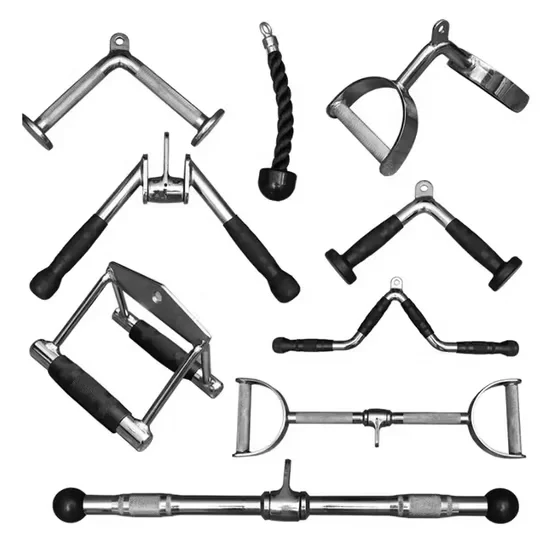
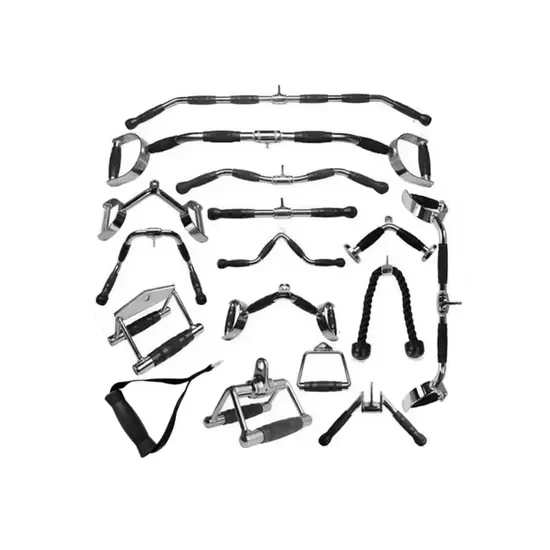
| Product Type | Smith Machine Accessories |
| Material | Steel |
| Application | Indoor |
| Specification | 45–90 cm |
| Color | Silver / Black (custom options available) |
| Logo | Customized logo available |
| MOQ | 50 PCS |
| Certification | CE / EN 957 / ISO 9001 |
Application Suitability
| Deployment Scenario | Typical Use |
|---|---|
| Hotel fitness center on guest room floors | Compact strength stations in 24-hour access cardio-and-strength zones where vibration transfer must be controlled |
| Chain gym strength training area | High-frequency barbell and attachment work during peak hours with continuous member turnover |
| Corporate wellness room | Supervised small-group sessions using smith machine stations for guided compound movements |
| Sports performance training center | Athlete-grade loading protocols requiring rigid frame stability under heavy progressive overload |
What Wobble and Wear Reveal About Attachment Steel Grade
Generic attachments develop play within months; industrial-grade steel holds tolerance under thousands of load cycles.
When a smith machine attachment shifts mid-set, the member feels it instantly — a slight lateral drift that erodes confidence and triggers equipment complaints to the front desk. In commercial facilities running sixteen-hour days, attachment hardware faces repeated engagement and release, lateral force vectors, and impact loading that consumer-grade steel simply cannot absorb. I have seen entire attachment sets swapped out because the mounting brackets deformed under continuous duty, leaving facility managers explaining downtime to frustrated members [NEED_CITE: fatigue failure modes in commercial gym attachment hardware under cyclic loading].
Positioning Within the Strength Zone Layout
This commercial smith machine attachment steel accessory occupies the intersection of guided barbell training and modular station versatility. It complements free-weight racks by providing a controlled movement path, and it pairs with cable crossover stations to cover compound and isolation patterns within a compact footprint. The unit suits deployment in high-density strength areas where members rotate through stations at intervals, and the 45–90 cm specification range accommodates facilities configuring multiple smith machines across varying bay widths. The steel construction supports loading protocols from rehabilitation ranges through advanced athlete programming without requiring attachment swaps between users.
Continuous Load Cycles and Facility Environment Requirements
Commercial strength zones see attachment hardware engaged and released hundreds of times daily, demanding steel that maintains dimensional stability through thousands of load cycles. In hotel fitness centers positioned on guest room floors, vibration transfer through mounting points becomes a noise complaint vector, making rigid steel construction essential for acoustic isolation [NEED_CITE: vibration transmission standards for fitness equipment on occupied floors]. Proper floor leveling beneath the smith machine frame prevents torsional stress on attachment brackets. Facilities in humid environments should verify that steel surface treatment resists corrosion from perspiration and cleaning chemicals applied during daily maintenance cycles.
Decoding the Steel Specification and Load Path
The 45–90 cm specification range reflects the bracket and rail dimensions that interface with standard smith machine frames across major commercial brands. Steel grade selection determines how the attachment handles eccentric loading — the phase where members lower weight under control and lateral forces peak on mounting hardware. Thinner-gauge steel may pass initial load testing but develops micro-deflection after repeated cycles, creating the perceptible wobble that erodes member confidence. Surface finishing options in silver or black address both corrosion resistance and visual integration with existing facility branding, while custom logo application allows operators to maintain brand consistency across the strength zone.
The Hidden Cost of Attachment Specification Compromise
Consumer-grade attachment brackets deform under commercial duty cycles, producing wobble that members notice immediately and report as equipment failure. Facilities that specified attachments based on initial cost rather than steel grade and load-path engineering face premature replacement cycles that disrupt member schedules and generate maintenance backlog [NEED_CITE: commercial gym equipment replacement frequency correlated with initial specification grade]. In multi-site gym networks, inconsistent attachment quality across locations creates member complaints that damage brand perception. Deformed mounting hardware also accelerates wear on the smith machine frame itself, compounding downtime and parts cost.
Why This Product Line Addresses Facility-Level Requirements
Sub-35 dB operation across the cardio range means this attachment integrates into mixed cardio-and-strength zones without introducing vibration noise that disrupts adjacent treadmill or elliptical stations. The 10,000-hour durability testing protocol applied to the broader equipment family informs steel grade and load-path decisions in attachment hardware. Full OEM and ODM capability extends to attachment color, logo, and dimensional customization, allowing facility operators to match existing equipment branding. The 3D layout and airflow planning service accounts for smith machine bay spacing and member flow around attachment stations, preventing congestion during peak hours. Documentation packages include load testing records and material certifications that satisfy commercial procurement verification requirements.
Documentation & Test Records
- CE declaration of conformity covering attachment hardware load ratings
- EN 957 test report verifying structural integrity under commercial loading
- ISO 9001 certificate confirming manufacturing quality management systems
- Material certification and load testing documentation for steel components
- Compatibility verification records for standard smith machine frame interfaces
- Installation guide with torque specifications and mounting hardware清单
Installation, Commissioning & Maintenance
- Verify 45–90 cm specification matches smith machine frame bay width before mounting
- Use calibrated torque wrench on all mounting bolts to prevent stress concentration
- Level smith machine frame before attachment installation to avoid torsional load
- Inspect mounting bracket surfaces quarterly for deformation or corrosion signs
- Apply manufacturer-specified lubricant to moving contact points per maintenance schedule
- Confirm custom logo and color finish integrity after initial cleaning chemical exposure
Inquiry Guidance for Facility Equipment Selection
Provide your strength zone square footage and existing smith machine frame models to receive compatibility verification and 3D layout integration. Specify daily operating hours and expected member throughput so load-cycle requirements can be matched to steel grade selection. Identify deployment floor level and adjacent occupied spaces to confirm vibration transfer requirements. State target market voltage standards if integrating with powered smith machine systems, and indicate whether custom logo, color, or dimensional modifications are needed for facility branding consistency.
Frequently Asked Questions
Q: What steel grade and load capacity does this attachment support in commercial environments?
A: The attachment uses industrial-grade steel engineered for continuous high-frequency use in commercial facilities. Load capacity aligns with EN 957 commercial equipment standards, covering the full range of guided barbell movements from rehabilitation through advanced athlete loading. Material certification and load testing documentation are provided with each order to support procurement verification and facility safety audits.
Q: What customization options are available for logo, color, and specifications?
A: Custom logo application is available across the full attachment range, with silver and black as standard color options and additional finishes upon request. The 45–90 cm specification range accommodates various smith machine frame configurations, and dimensional adjustments can be scoped during the OEM process. Minimum order quantity for custom orders is 50 pieces, with lead time confirmed after design approval.
Q: Is this attachment compatible with smith machine frames from different brands?
A: The attachment is engineered for compatibility with standard commercial smith machine frame configurations across major brands. Compatibility verification is conducted during the inquiry stage using your specific frame model and bay dimensions. The 45–90 cm specification range covers the majority of commercial frame widths, and custom dimensional adjustments are available for non-standard configurations.
Q: What durability can be expected under continuous public facility use?
A: Steel construction and load-path engineering follow the same 10,000-hour continuous operation testing philosophy applied across the broader equipment range. Durability under commercial duty cycles depends on proper installation torque, routine inspection intervals, and environmental conditions including humidity and cleaning chemical exposure. Maintenance documentation specifies inspection schedules and replacement indicators for long-term deployment planning.
Q: What are the MOQ requirements and lead times for custom attachment orders?
A: Standard minimum order quantity is 50 pieces for both stock and custom configurations. Lead time for custom orders depends on logo complexity, color specification, and dimensional modification scope, and is confirmed during the quotation stage. Production includes quality control inspection and load testing before shipment, with commissioning documentation provided for facility maintenance teams.