Years sourcing cardio equipment for Middle East five-star hotels taught me what goes wrong on the floor. A Dubai property installed treadmills directly above guest rooms — low-frequency rumble traveled through the slab, noise complaints every single night. We replaced the entire batch with magnetic-drive units and brought operation under 35dB. Since moving to the supply side, I personally verify every motor, cushioned belt deck and IoT console data handshake before anything leaves the testing lab.
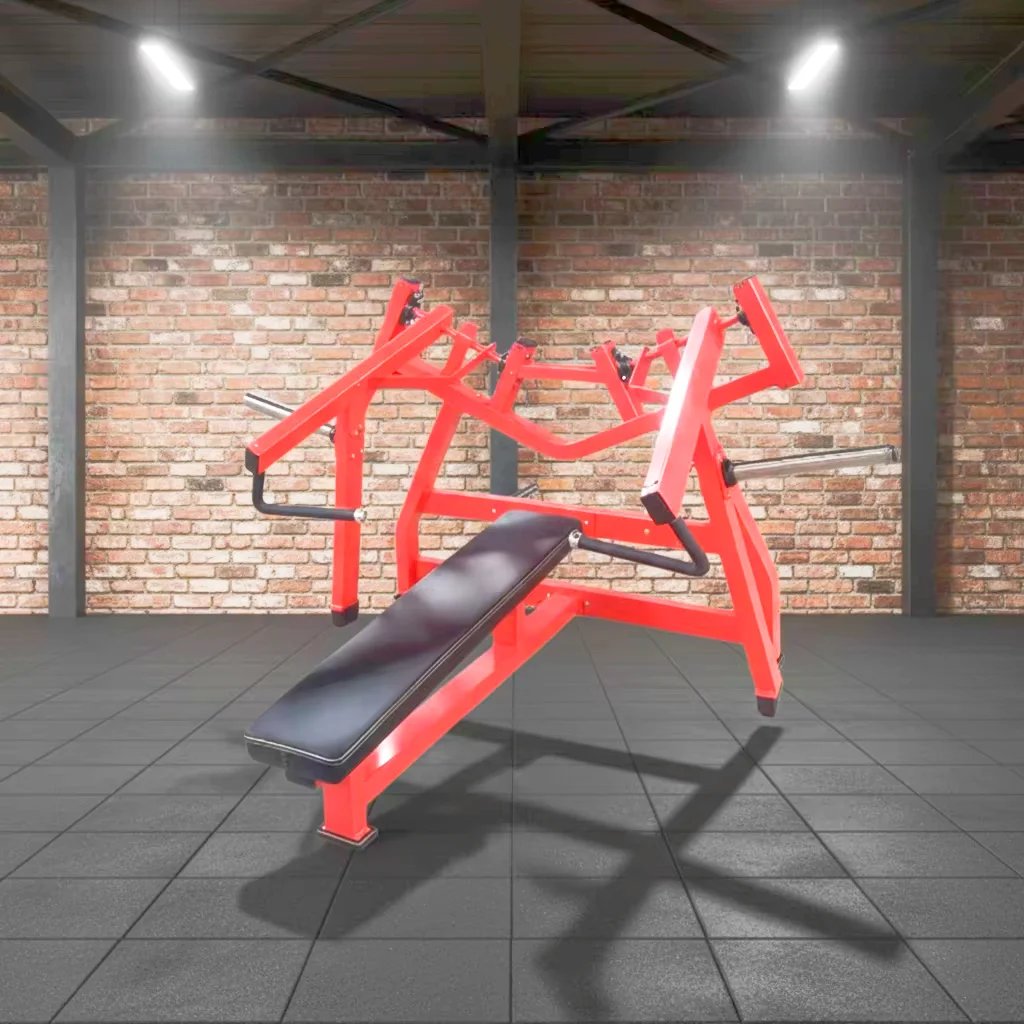
Quiet-Frame Engineering — the H051 Integrated Gym Trainer is built on a reinforced steel chassis that eliminates frame flex under sustained heavy loads, keeping movement stable and repeatable for every user.
Technical Specifications
| Parameter | Value |
|---|---|
| Product Type | Integrated Gym Trainer |
| Model NO. | H051 |
| Exercise Part | Chest |
| Material | Steel |
| Product Dimensions | 1411 × 1286 × 1559 mm |
| Net Weight | 69 kg |
| Main Frame Color | Available per customer requirements |
| Cushion Color | Available per customer requirements |
| OEM/ODM | Acceptable |
| Fit Area | Professional Gym and Club |
| Appliance | Community, Gymnasium |
| Age Group | Adult |
| Gender | Unisex |
| Certification | ISO 9001, CE |
| HS Code | 950691190 |
| Production Capacity | 1000 PCS / Month |
| Transport Package | Plywood Box |
Application Suitability
| Deployment Scenario | Typical Use |
|---|---|
| Chain gym strength floor | High-frequency chest pressing circuits across peak and off-peak hours |
| Hotel fitness center | Guest-accessible upper-body station with commercial-grade cushioning |
| Corporate wellness room | Durable chest trainer for employees with varied fitness levels |
| Community recreation gymnasium | Shared-use incline press station serving broad age demographics |
| Sports performance training center | Biomechanically aligned pressing for athlete strength development |
Why Frame Flex Undermines Member Confidence in Commercial Chest Press Stations
A rigid chassis is the foundation every commercial chest press incline bench gym equipment unit must deliver before any other feature matters.
When lifters feel a frame shift or shudder mid-press, confidence drops immediately. In high-traffic gym environments, this kind of movement accumulates into weld fatigue and fastener loosening over months of daily loading. The H051 addresses this with a reinforced steel main frame designed to resist deflection during heavy incline presses, keeping the user’s pressing path consistent from first rep to last. Operators who have dealt with premature frame failures in light-duty units know that downtime for welding repairs or full replacement costs far more than specifying commercial-grade steel from the start [NEED_CITE: structural fatigue benchmarks for commercial strength equipment frames].
Positioning the Incline Press Within a Strength Floor Layout
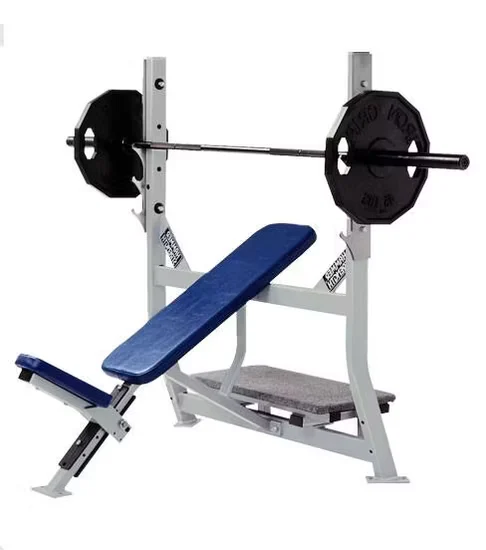
This unit targets the upper pectoral and anterior deltoid region through a fixed incline pressing arc, complementing flat bench and cable crossover stations already on the floor. It fits naturally into a dedicated free-weight or selectorized strength zone where members rotate through pressing movements. The 1411 × 1286 mm footprint requires adequate lateral clearance for loading plates and safe entry and exit. Users across a wide range of body sizes can position themselves on the padded seat and back support, which is engineered to maintain alignment throughout the full range of motion.
Duty-Cycle Realities for Strength Stations Running All Day
A chest press station in a 24-hour chain gym sees loading cycles that start before sunrise and continue past midnight. While strength equipment does not draw continuous motor power like cardio units, the mechanical stress on pivot bearings, guide rods, and frame joints accumulates rapidly in high-traffic facilities. Floor vibration transfer is another consideration — facilities on upper levels or above occupied spaces need isolation pads beneath the base to prevent low-frequency resonance from reaching rooms below. Adequate spacing around the H051 also ensures that ventilation for adjacent cardio equipment is not obstructed. Power requirements for this unit are minimal since it is mechanically driven, but any integrated console or lighting accessory will need a nearby outlet matching local voltage standards [NEED_CITE: deployment spacing guidelines for commercial strength equipment in multi-use facilities].
Reading the Steel and Padding Specifications
The H051 main frame is fabricated from structural steel chosen for load-bearing rigidity rather than lightweight portability. At 69 kg net weight, the frame mass contributes to stability during loaded presses, reducing the tendency for the base to lift or rock. The cushion color and material are available per customer requirements, allowing facility operators to specify high-density foam formulations that resist compression set over thousands of use cycles — a critical factor because cushions that flatten quickly lead to user discomfort and premature reupholstery costs. The fixed incline angle of the pressing path is engineered to match natural shoulder articulation, distributing load across the upper chest while limiting strain on the rotator cuff at the bottom of the movement. Certification to ISO 9001 and CE standards confirms that manufacturing processes and safety testing meet recognized international benchmarks.
What Spec Compromises Cost Facilities Down the Line
Choosing a lighter frame to reduce shipping weight often means thinner steel tubing that develops flex within months under repeated heavy loading. Cushions specified by cost rather than density flatten unevenly, creating pressure points that generate member complaints and accelerate reupholstery budgets. When OEM color options are limited, facilities end up with mismatched equipment across the strength floor, undermining the professional aesthetic that retention depends on. These compromises are not immediately visible at installation but surface as rising maintenance tickets and declining member satisfaction scores within the first operational year [NEED_CITE: long-term cost of ownership comparison for commercial strength equipment].
Why This Product Line Earns Floor Space
Every H051 unit undergoes frame stress verification before it leaves the production floor, ensuring the reinforced steel meets load requirements for continuous commercial use. The OEM and ODM program covers frame color and cushion color customization, so a facility can maintain a unified visual identity across its entire strength zone. This chest press incline bench is part of a broader equipment family that allows operators to source multiple disciplines from a single manufacturing partner, simplifying logistics and spare parts management. The production capacity of 1000 units per month supports rollout schedules for multi-site gym chains without extended backorders. Free 3D layout planning is available to position the 1411 × 1286 mm footprint within a strength floor while respecting clearance requirements and member flow patterns. Technical support is accessible around the clock for installation queries and commissioning guidance.
Documentation & Test Records
- CE declaration of conformity for the H051 chest press incline bench
- EN 957 test report covering structural integrity and safety requirements
- ISO 9001 certificate verifying manufacturing quality management processes
- Frame stress and weld integrity test record
- Cushion density and compression durability test documentation
- OEM customization scope sheet with color matching specifications
Installation, Commissioning & Maintenance
- Verify the 1411 × 1286 × 1559 mm footprint with clearance on all sides for safe plate loading and user access
- Level the base on the facility floor and install isolation pads if deployed above occupied spaces
- Inspect all pivot bolts and frame fasteners after the first week of heavy use and retorque to specification
- Check cushion surface integrity monthly and schedule reupholstery when compression set becomes visible
- Clean padded surfaces daily with non-solvent cleaner to prevent sweat-induced material degradation
- Apply protective wax to the steel frame quarterly to maintain corrosion resistance in humid gym environments
Planning Your Strength Equipment Procurement
Provide your strength floor dimensions and planned station count to receive a 3D layout that accounts for the H051 footprint, member circulation, and adjacent equipment sightlines. Specify expected daily traffic volume so that frame load expectations match your facility’s duty cycle. Confirm deployment floor level and whether occupied spaces exist directly below to determine whether isolation pads are needed. State your target market so that any accessory power requirements align with local voltage standards.
Frequently Asked Questions
Q: How does the reinforced steel frame prevent flex during heavy incline presses?
A: The H051 frame uses structural-grade steel tubing sized to resist deflection under maximum expected loading. Frame mass at 69 kg contributes to base stability, preventing the unit from rocking or shifting during repetitive pressing. Weld joints are inspected to ensure continuous bead integrity, so the chassis maintains rigidity across thousands of use cycles in commercial environments.
Q: What is the expected lifespan of the commercial-grade cushioning under continuous use?
A: Cushion longevity depends on foam density specified at order and daily traffic volume. High-density formulations resist compression set far longer than standard padding, maintaining even support across the seat and backrest surface. Facilities with heavy throughput should plan cushion inspections quarterly and schedule reupholstery when visible deformation begins to affect user comfort.
Q: Can the frame and cushion colors be fully customized to match our gym branding?
A: Yes. The OEM and ODM program accepts customer color requirements for both the main steel frame and the cushion upholstery. This allows facility operators to coordinate the H051 with the rest of their strength equipment lineup, maintaining a consistent visual identity across the entire gym floor without sourcing from multiple manufacturers.
Q: How does the incline trainer design protect shoulder joints during pressing?
A: The fixed pressing arc is engineered to align with natural shoulder joint articulation, distributing load across the upper chest rather than concentrating stress at the rotator cuff. The padded backrest maintains consistent spinal positioning throughout the movement, reducing the compensatory shoulder strain that occurs when users slide out of alignment on poorly contoured benches.
Q: What is the standard lead time for OEM orders with custom frame and cushion colors?
A: Lead time depends on order volume and the complexity of color matching requirements. With a production capacity of 1000 units per month, standard color OEM orders are typically scheduled within regular production cycles. Buyers should confirm customization scope and provide color references early in the procurement process to avoid delays in sample approval and batch scheduling.
![Wholesale Hammer Strength Commercial Abdominal Work Station Gym Machine [WARN] draft identifier mismatch](https://bicksport.com/wp-content/uploads/2026/08/wholesale-hammer-strength-commercial-abdominal-work-station-gym-machine-warn-draft-identifier-mismatch-f7373d.webp)
![Professional Combo Twist Machine Gym Commercial Fitness EquipmentH5075 Combo Twist Machine Commercial Gym Fitness Equipment [WARN] draft identifier mismatch](https://bicksport.com/wp-content/uploads/2026/08/professional-combo-twist-machine-gym-commercial-fitness-equipmenth5075-combo-twist-machine-commercial-gym-fitness-equipment-warn-draft-identifier-mismatch-8665b1.webp)
![Popular Gym Equipment Adjustable Bench Incline Flat Decline 5067 [WARN] draft identifier mismatch](https://bicksport.com/wp-content/uploads/2026/08/popular-gym-equipment-adjustable-bench-incline-flat-decline-5067-warn-draft-identifier-mismatch-5211a0.webp)