![Senrui SRY-20B Foldable Reformer Pilates Machine for Studio [WARN] draft identifier mismatch](https://bicksport.com/wp-content/uploads/2026/08/senrui-sry-20b-foldable-reformer-pilates-machine-for-studio-warn-draft-identifier-mismatch-f418d7.webp)
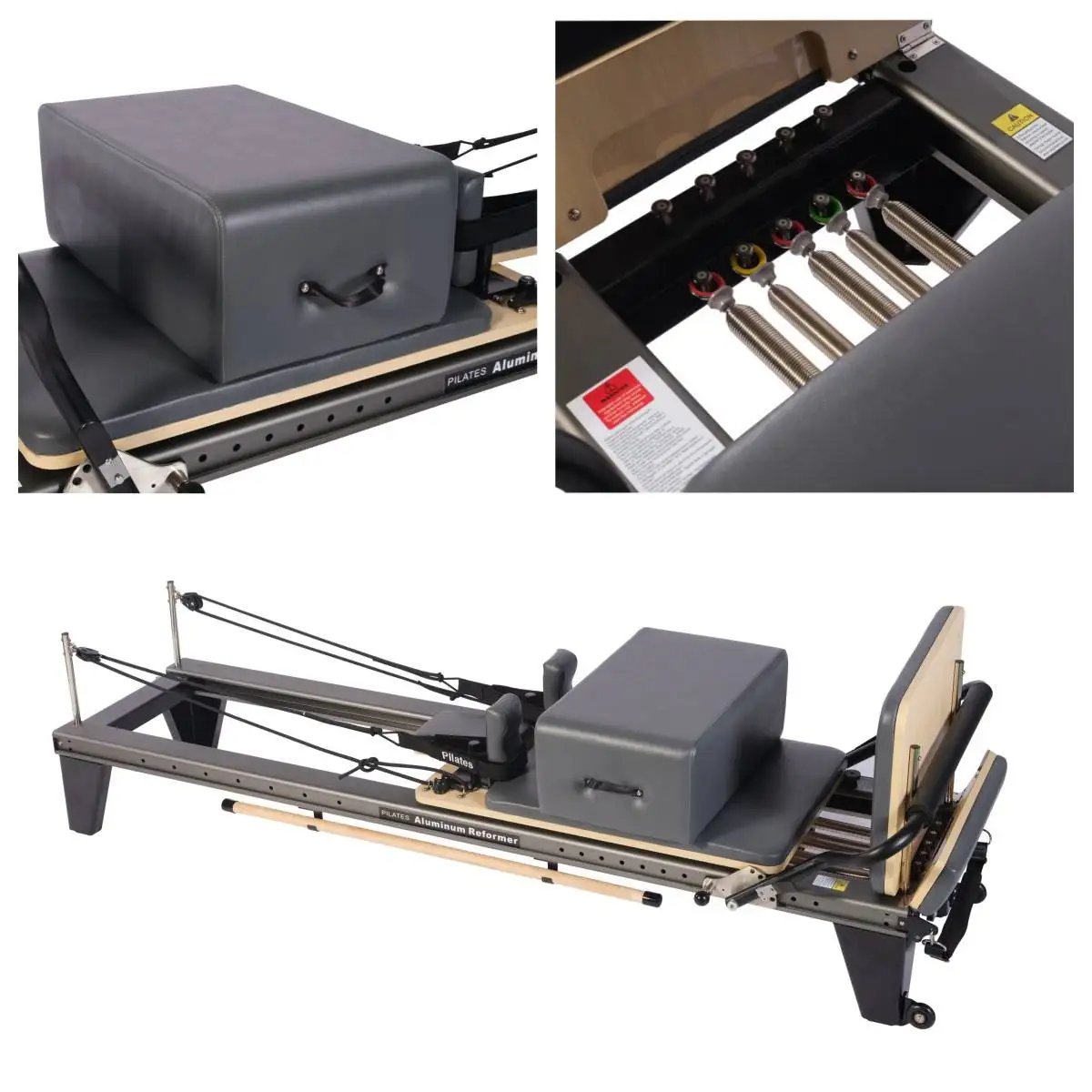
Space-Conscious Deployment — The foldable frame architecture reduces storage footprint for multi-use studio environments while maintaining solid oak structural integrity.
Technical Specifications
| Parameter | Value |
|---|---|
| Product Type | Foldable Reformer Pilates Machine |
| Model NO. | SRY-20B |
| Specification | 2400×600×350mm |
| Net Weight | 100 kg |
| Frame Material | Solid Oak |
| Foldable | Yes |
| Accessory Options | Long Box, Jump Board, Platform |
| Color | Solid Color |
| Age Group | Adult |
| Gender | Unisex |
| Logo Customization | Available |
| Warranty Time | 3 Years |
| Production Capacity | 80 Pieces/Month |
Application Suitability
| Deployment Scenario | Typical Use |
|---|---|
| Boutique Pilates studio | Group and private reformer sessions with accessory-driven progressions |
| Multi-purpose fitness center | Reformer classes integrated into broader class scheduling with rapid room reconfiguration |
| Rehabilitation clinic | High-frequency patient sessions requiring stable platform and controlled resistance |
| High-end residential home gym | Compact storage between sessions with full accessory ecosystem available |
Why Foldable Reformers Address the Studio Space Dilemma
A foldable frame that holds up under daily class schedules eliminates the choice between versatility and durability.
Pilates studio operators routinely face a spatial conflict: reformer carriages demand substantial linear floor space, yet studios must accommodate group classes, private sessions, and open floor work within the same square footage. Fixed-frame reformers force a permanent spatial commitment, limiting scheduling flexibility. The foldable reformer pilates machine commercial market has historically responded with lightweight aluminum frames that sacrifice rigidity for portability — and those mechanisms tend to develop lateral play after several months of daily folding and unfolding cycles. [NEED_CITE: structural fatigue testing standards for folding fitness equipment frames]
Positioning Within a Commercial Reformer Fleet
This reformer occupies the workhorse slot in a studio deployment. The solid oak carriage provides the mass and damping needed for controlled eccentric movements, while the 2400mm bed length accommodates users across the full adult height range. In a mixed-equipment floor plan, these units pair with tower and chair apparatus for circuit-style programming. The foldable reformer pilates machine commercial configuration allows studios to collapse and store units between group sessions, opening floor area for mat work or functional movement blocks. Accessory compatibility — long box, jump board, platform — means a single unit supports beginner rehabilitation sequences through advanced plyometric progressions without requiring additional apparatus purchases.
Continuous Use Demands on the Folding Mechanism
Commercial Pilates studios typically schedule four to eight sessions per unit per day, meaning the foldable joint undergoes repeated load cycles that far exceed residential use patterns. The oak frame must maintain alignment across the hinge point without introducing carriage wobble or rail misalignment. [NEED_CITE: cycle testing requirements for commercial folding fitness equipment] Adequate ventilation around the stored units prevents moisture accumulation against the wood grain, which can affect rail smoothness over time. Floor surfaces beneath the reformer must remain level — any deviation introduces lateral stress on the folding joint during loaded exercises. Studios deploying these units on upper floors should verify that floor vibration dampening meets the requirements for dynamic jump board work.
Frame Construction and Accessory Interface Design
Solid oak carries inherent density advantages over laminated or engineered wood alternatives in a reformer frame: the material resists compression deformation under the repeated carriage travel cycles that define reformer exercise. The 100 kg unit weight reflects that material choice — heavier frames absorb vibration rather than transmitting it to the floor and adjacent structures. The accessory mounting points for the long box, jump board, and platform must maintain dimensional consistency across units in a fleet, ensuring instructors can rotate classes between machines without adjusting technique cues. Color and logo customization options allow facility operators to maintain visual consistency across a multi-unit deployment without sacrificing the structural specification. The 3-year warranty period on the frame and mechanism covers the typical break-in and early wear phase of commercial deployment. [NEED_CITE: EN 957 requirements for Pilates and reformer-type exercise equipment]
What Specification Shortcuts Cost Down the Line
Studios that select lighter-weight reformers to reduce upfront capital expenditure frequently encounter carriage rail wear within the first year of daily use, producing audible friction and uneven resistance that disrupts the controlled movement quality Pilates demands. Folding mechanisms built with light-duty hinges develop play that introduces lateral carriage drift — a problem that worsens with each folding cycle and eventually requires full mechanism replacement. Accessories that do not interface precisely with the carriage mounting points create alignment issues during jump board sequences, introducing safety concerns during plyometric work. [NEED_CITE: comparative service life of commercial versus residential grade folding mechanisms]
Why This Product Line Fits the Commercial Brief
The SRY-20B foldable reformer pilates machine commercial deployment is backed by solid oak construction verified through sustained production at 80 units per month — capacity that supports multi-studio rollouts. The accessory ecosystem ships with the unit rather than as aftermarket additions, reducing procurement complexity. OEM customization extends to color and logo, so a studio chain can standardize visual identity across locations. For facilities planning a full reformer room, the foldable specification means storage requirements between sessions can inform the 3D layout planning process, and the unit’s 2400×600mm footprint determines minimum spacing and aisle clearance.
Documentation & Test Records
- CE declaration of conformity for the SRY-20B reformer assembly
- Structural load test record for the solid oak frame and folding mechanism
- Accessory interface dimensional verification report
- Warranty documentation covering frame, rails, and folding hardware
- Installation guide with floor leveling and clearance specifications
- Spare parts catalog with mechanism and accessory replacement components
Installation, Commissioning & Maintenance
- Verify floor level within tolerance before anchoring the 2400×600mm footprint to prevent carriage drift
- Confirm folding hinge torque specification at commissioning and re-check quarterly under commercial use
- Inspect accessory mounting interfaces — long box, jump board, platform — for secure engagement before each class block
- Maintain rail lubrication schedule based on session frequency and ambient humidity conditions
- Store folded units with adequate ventilation clearance to protect the oak frame from moisture accumulation
Planning Your Reformer Room Deployment
Provide the studio floor area and intended unit count to receive a layout plan addressing folded storage zones, carriage clearance, and instructor sightlines. Specify whether units will serve group class rotation or dedicated private session use, as this affects accessory configuration and folding frequency expectations. Confirm ceiling height for jump board exercises and floor construction for vibration transfer to adjacent spaces. Indicate any branding requirements including logo placement and color matching across the equipment fleet.
Frequently Asked Questions
Q: What materials are used in the frame construction and how do they affect durability?
A: The frame is constructed from solid oak, which provides inherent density and resistance to compression deformation under repeated carriage travel. Compared to laminated or engineered wood alternatives, solid oak maintains dimensional stability across the folding hinge point, reducing the development of lateral play during daily commercial use cycles over multiple years of studio operation.
Q: How does the foldable mechanism perform under continuous commercial use?
A: The folding joint is designed for the load cycles typical of studio environments scheduling multiple sessions per unit daily. Solid oak construction at the hinge interface resists the compression and shear forces that cause lighter materials to develop play. Routine torque verification during scheduled maintenance ensures the mechanism maintains alignment throughout its service life.
Q: Can accessories be purchased separately or upgraded after initial deployment?
A: The long box, jump board, and platform are included as standard accessories with the SRY-20B. Additional units or replacements can be ordered through the same production channel. Mounting point specifications remain consistent across production runs, ensuring compatibility with previously deployed units within the same facility fleet.
Q: What customization options are available for branding and color matching?
A: Logo placement and solid color customization are available as OEM options. Facilities operating multiple locations or expanding an existing fleet can specify matching visual identity parameters. Customization scope and lead time should be confirmed during the quotation phase to align with deployment scheduling requirements.
Q: How does the equipment integrate into existing studio layouts and class scheduling?
A: The 2400×600mm footprint and foldable configuration allow the reformer to occupy a defined training position during sessions and collapse into a reduced storage footprint between classes. This supports studios running mixed programming — reformer classes followed by mat or functional floor work — within the same room without permanent spatial commitment to the apparatus.

![Body Building Pilates Machine Maple Wood Pilates Reformers with Tower [WARN] draft identifier mismatch](https://bicksport.com/wp-content/uploads/2026/08/body-building-pilates-machine-maple-wood-pilates-reformers-with-tower-warn-draft-identifier-mismatch-2ec9e0.webp)