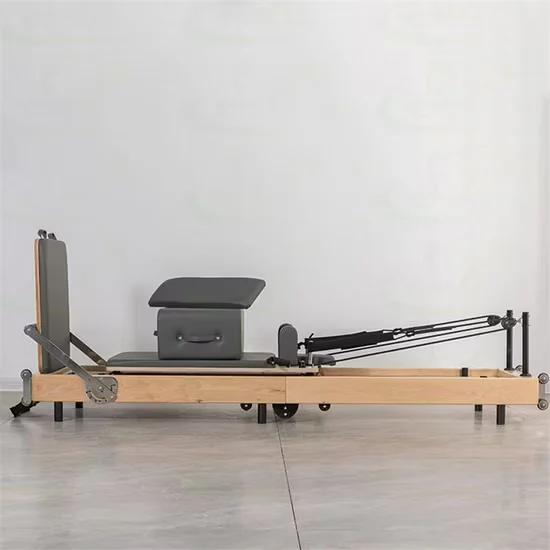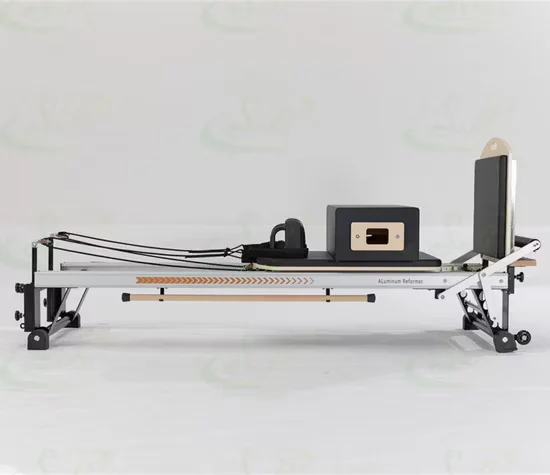
Whisper-Quiet Aluminum Platform — Precision-machined aluminum alloy frame with belt-driven carriage system eliminates structural resonance during high-frequency studio sessions.
Technical Specifications
| Parameter | Value |
|---|---|
| Product Type | Pilates Reformer |
| Material | Aluminium Alloy |
| Drive Type | Belt and Precision Pulley System |
| Accessory Options | Long Box / Jump Board / Platform |
| Product Dimensions | 2570 × 730 × 1100 mm |
| Net Weight | 110 kg |
| Color | Black (customizable) |
| Warranty | 3 Years |
| Logo | Customized Is Allowed |
| Certification | CE, ISO 9001 |
| Age Group | Adult |
| Gender | Unisex |
Application Suitability
| Deployment Scenario | Typical Use |
|---|---|
| Pilates studio with multiple daily classes | Full-range reformer sessions across beginner to advanced programming |
| Rehabilitation center or physical therapy clinic | Low-impact progressive resistance training with stable aluminum support |
| Boutique wellness facility | Group reformer classes requiring quiet carriage operation between adjacent rooms |
| High-end residential home gym | Compact footprint deployment on upper floors where vibration transfer matters |
| Hotel fitness center on guest room floors | 24-hour access cardio-strength sessions without disturbing occupied rooms above or below |
Why Studio Operators Hear Carriage Noise Before Instructors Do
A rigid frame and precision pulley alignment determine whether your reformer disappears into the class or becomes the distraction.
Traditional wooden or steel-framed reformers develop carriage rattle and track wear within months of high-frequency studio scheduling. The vibration transmits through floor structures into adjacent treatment rooms and shared corridors, generating complaints that arrive at the front desk long before maintenance tickets get filed. When springs fatigue unevenly and pulley bearings develop play, the resistance curve becomes inconsistent mid-session — members feel the carriage stutter during controlled eccentric movements, and instructors spend class time adjusting equipment instead of cueing form [NEED_CITE: commercial Pilates equipment duty cycle standards for multi-session studio environments].
Where This Reformer Sits in a Studio Equipment Roster
This commercial aluminum Pilates reformer covers the full spectrum from foundational supine and seated exercises through advanced standing and plyometric work when paired with the Jump Board. In a mixed-modality studio layout, it anchors the dedicated reformer zone alongside cadillacs and chair apparatus, handling the highest-volume class slots without requiring rotation to secondary equipment. The 2570 mm length accommodates users across the full adult height range with adequate carriage travel, while the modular Long Box and Platform accessories extend programming into spinal articulation sequences and standing balance progressions without needing separate apparatus.
Continuous Session Scheduling and Floor-Level Deployment Constraints
When a studio runs four to six reformer classes daily with back-to-back bookings, the carriage system accumulates thousands of full-travel cycles per week. Belt-driven pulley architecture avoids the metal-on-metal wear pattern that chain drives introduce over time, reducing scheduled maintenance intervals [NEED_CITE: belt versus chain drive longevity in commercial Pilates applications]. The aluminum frame’s inherent damping characteristics mean less low-frequency vibration propagating through floor slabs — a critical factor when deploying on upper levels of mixed-use buildings where occupied spaces sit directly below. Adequate clearance around the 2570 × 730 mm footprint must account for instructor circulation paths and accessory storage, and floor leveling within tolerance prevents carriage drift during slow eccentric control work.
Belt Drive Architecture and Aluminum Alloy Frame Engineering
The shift from chain or cable-driven carriage systems to belt-and-pulley transmission addresses two failure points simultaneously: chain stretch requiring periodic tension adjustment, and cable fraying at attachment hardware. Belt drives maintain consistent tension across the carriage travel range without lubrication, and the engagement surfaces do not develop the play that introduces lateral carriage wobble at high spring tensions. The aluminum alloy frame construction delivers a stiffness-to-weight ratio that steel tube frames cannot match at this net weight, while the material’s natural damping coefficient absorbs harmonic frequencies that rigid welded steel would transmit into the floor. Pulley bearing specification directly determines how long the carriage maintains centered tracking — sealed bearings rated for continuous oscillation prevent the axial play that causes uneven rail wear and eventual carriage binding.
What Underspecified Components Cost Over a Twelve-Month Cycle
Studios that procure reformers based on upfront unit cost discover the real expense through replacement spring sets, carriage bearing rebuilds, and rail resurfacing within the first year of commercial scheduling. Springs that lose their calibrated resistance rating force instructors to modify programming around equipment limitations rather than client progression [NEED_CITE: spring fatigue testing protocols for commercial Pilates reformer springs]. Carriage systems with unsealed bearings accumulate chalk dust and sweat residue, accelerating wear and introducing the gritty feedback that clients notice during controlled eccentric work. When frames lack adequate cross-bracing, the lateral flex during standing exercises creates a perception of instability that limits the exercises an instructor will confidently program.
Why This Product Line Holds Up Across Daily Studio Scheduling
Sub-35dB operation verified in hotel deployments translates directly to reformer studios sharing walls with treatment rooms and residential units. The 10,000-hour durability testing protocol covers carriage bearing life and spring fatigue cycles specific to multi-session commercial use rather than light home schedules. OEM customization extends to frame color and logo placement, allowing studio branding consistency across a full equipment order. The free 3D studio layout and airflow planning service accounts for reformer spacing requirements, instructor sightlines during group classes, and HVAC return air positioning to prevent heat buildup during high-intensity reformer intervals. 24/7 technical support response means a carriage tracking issue discovered during Saturday morning class prep gets addressed before Monday’s schedule fills.
Documentation & Test Records
- CE declaration of conformity covering full reformer assembly and accessory components
- EN 957 test report validating structural integrity under commercial loading cycles
- ISO 9001 certificate confirming manufacturing process control across frame fabrication and assembly
- Noise level test report documenting carriage operation sound pressure at specified spring tensions
- Durability test record covering pulley bearing life and belt tension retention over extended cycles
- Spring resistance calibration sheet with fatigue life data per tension level
Installation, Commissioning & Maintenance
- Verify floor level tolerance across the 2570 × 730 mm footprint to prevent carriage drift during slow controlled movements
- Maintain minimum clearance on all sides for instructor access and Long Box or Jump Board attachment and removal
- Calibrate spring resistance array at commissioning and verify each attachment point delivers consistent tension across carriage travel
- Inspect belt tension and pulley bearing play quarterly under commercial scheduling of four or more daily sessions
- Clean aluminum frame rails and carriage contact surfaces after each class block to prevent chalk and sweat residue accumulation
- Confirm accessory quick-release mechanisms on Jump Board and Platform engage positively before each use
Planning Your Reformer Deployment
Provide your studio floor dimensions and target reformer count to receive a 3D layout addressing spacing, sightlines, and ventilation requirements for group class configurations. Specify your daily session volume and class duration so we can match spring specification and bearing grade to your actual duty cycle. Indicate your deployment floor level and what occupies the rooms directly adjacent and below so we can confirm the aluminum frame’s vibration isolation meets your acoustic requirements.
Frequently Asked Questions
Q: How does an aluminum alloy frame compare to steel or wood in noise and durability?
A: Aluminum’s natural damping coefficient absorbs harmonic frequencies that rigid steel frames transmit through floor structures into adjacent rooms. The alloy resists the moisture-driven warping and joint loosening that wooden frames experience in high-humidity studio environments, maintaining rail alignment and carriage tracking consistency across years of commercial scheduling without requiring frame refinishing or hardware re-tensioning.
Q: What maintenance does a belt drive system require versus chain or cable?
A: Belt drives eliminate the periodic tension adjustment and lubrication that chain systems demand, and they avoid cable fraying at attachment points. Under typical studio scheduling, belt inspection occurs quarterly with replacement intervals measured in years rather than months, and the sealed pulley bearings prevent chalk dust intrusion that accelerates wear in open-bearing configurations common on entry-level reformers.
Q: How do the Jump Board and Long Box accessories expand class programming?
A: The Jump Board introduces lower-body plyometric and cardiovascular intervals that transform reformer sessions beyond traditional controlled-strength work, increasing class variety and scheduling appeal. The Long Box supports supine spinal articulation sequences and seated core work with full back contact, enabling instructors to program progressive rehabilitation protocols and advanced mat-work adaptations directly on the reformer carriage.
Q: What is the spring replacement timeline under high-frequency studio use?
A: Springs in daily multi-session commercial use require resistance verification at six-month intervals, with replacement timing depending on the tension levels programmed most frequently. Springs operated predominantly at higher resistance settings accumulate fatigue cycles faster, and maintaining a calibration log helps identify individual springs approaching end of service life before they deliver inconsistent resistance during client sessions.