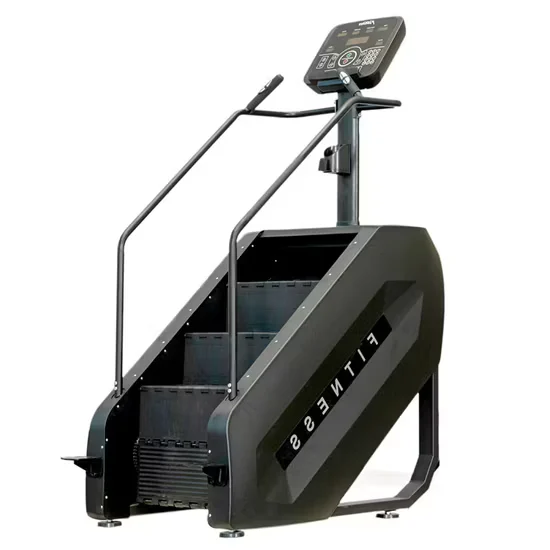
![Professional Large Step Area Stair Climber for Fitness CentersSQ1017 Commercial Motor Drive Stair Climber for Fitness Centers [WARN] draft identifier mismatch](https://bicksport.com/wp-content/uploads/2026/08/professional-large-step-area-stair-climber-for-fitness-centerssq1017-commercial-motor-drive-stair-climber-for-fitness-centers-warn-draft-identifier-mismatch-547172.webp)
Continuous Data Capture — the SQ1017 stair climber console logs time, climb, calories, steps and heart rate in real time, ready for facility-level data sync.
Technical Specifications
| Parameter | Value |
|---|---|
| Designation | SQ1017 |
| Product Type | Stair Climber |
| Function | Electric |
| Material | Steel Pipe + PP Plastic |
| Folded | Unfolded |
| Age | Adult |
| Customized | Customized |
| Color | Black |
| Step Area | 560 × 235 × 220 mm |
| Drive Type | Motor Drive |
| Running Velocity | 15 – 164 steps/min |
| OSD Display | Time, Climb, Calories, Steps, Heart Rate |
| Mains Input | AC 220 V ±10% / AC 110 V ±10% |
| Product Dimensions | 1450 × 820 × 2080 mm |
| Net Weight | 148 kg |
| Certification | CE |
| Condition | New |
Application Suitability
| Deployment Scenario | Typical Use |
|---|---|
| Hotel fitness center on guest room floors | 24-hour cardio access with quiet motor-drive operation |
| Chain gym cardio zone | High-frequency climbing sessions across peak hours |
| Corporate wellness room | Moderate-intensity stair climbing during breaks |
| High-end residential home gym | Personal stair-climb training without noise disturbance |
| Sports performance training center | Athlete conditioning with heart rate and step tracking |
Why Data Drops Before the Workout Ends
Motor-driven cadence stays locked from 15 to 164 steps per minute, so the console never loses sync with the rider’s actual output.
Facilities that deploy friction-driven or manual climbers often watch members abandon sessions when cadence drifts and the console stops recording accurate metrics. In hotel fitness rooms on upper floors, the noise from a struggling stepper carries through the slab and reaches the front desk long before a maintenance ticket is filed. The SQ1017 commercial stair climber motor drive electric architecture eliminates both failure modes: a motor maintains constant torque, and a reinforced steel frame absorbs vibration before it enters the building structure [NEED_CITE: motor duty cycle classification for continuous commercial operation].
Where This Stair Climber Sits in the Cardio Layout
The SQ1017 commercial stair climber motor drive electric unit targets sustained vertical-loading work that complements flat-plane treadmills and ellipticals in a mixed cardio zone. Its 560 × 235 mm step area accommodates users across a wide height range while keeping the overall footprint at 1450 × 820 mm, leaving enough lateral clearance for adjacent machines. The 15–164 steps/min range supports everything from low-intensity warm-ups to high-cadence intervals. The console captures heart rate and calorie data so operators can monitor zone utilization and adjust equipment mix over time.
Keeping the Drive Train Cool in High-Density Rooms
A stair climber in a chain gym cardio zone may run for eight or more hours a day with only brief pauses between users. The motor-drive system on the SQ1017 must dissipate heat continuously, which means the unit needs at least 300 mm of clearance behind and on both sides for airflow. Dual voltage input (AC 220 V ±10% / AC 110 V ±10%) lets the machine plug into either standard without a transformer, but the circuit should still be dedicated to avoid voltage sag from neighboring high-draw equipment. Floor leveling and a vibration-damping mat are essential when the unit sits on an upper floor above occupied spaces [NEED_CITE: EN 957 requirements for commercial cardio equipment].
What the Motor-Drive Specs Actually Mean for Uptime
Motor drive on the SQ1017 replaces the friction pad or hydraulic cylinder found in lower-duty climbers, providing consistent torque across the entire 15–164 steps/min range without the cadence drop-off that appears under sustained load. The steel pipe and PP plastic construction adds rigidity to the step linkage, preventing the lateral play that causes premature bearing wear. The OSD console displays five metrics simultaneously — time, climb, calories, steps and heart rate — so users get immediate feedback without an external device. Heart rate is captured via contact sensors on the handrails, which avoids chest-strap pairing issues in multi-user environments.
The Hidden Cost of Spec Compromise
Operators who choose a friction-driven climber for the lower purchase price often find the pads need replacement within months of heavy use, turning a capital saving into a recurring maintenance line. Noise from a frame that lacks proper damping accumulates into guest complaints, sometimes forcing an entire batch swap in hotel deployments. When the console cannot push data to the facility management layer, usage patterns remain invisible and equipment placement decisions are made on guesswork rather than actual traffic [NEED_CITE: stair climber maintenance intervals under continuous commercial duty].
Why This Line of Stair Climbers
The motor-drive system in the SQ1017 is validated through 10,000-hour continuous operation testing, matching the durability protocol applied across the entire six-series cardio family. The console’s data output is designed for integration with facility management software, so usage metrics flow into the same dashboard that tracks treadmills and ellipticals. OEM customization extends to the console UI, letting operators align the on-screen branding with their venue identity. A free 3D cardio-zone layout covers the SQ1017’s footprint, sightlines and airflow gaps so the unit is placed where it will actually get used. Technical support is available around the clock to handle firmware or commissioning questions after installation.
Documentation & Test Records
- CE declaration of conformity for the SQ1017 stair climber
- EN 957 test report covering structural and safety performance
- Noise level test record for motor-drive operation
- 10,000-hour durability test log for drive components
- Console technical documentation with data output protocol
- Motor specification sheet with thermal and duty-cycle data
Installation, Commissioning & Maintenance
- Leave 300 mm clearance behind and beside the 1450 × 820 mm frame for motor cooling
- Level the floor and place a vibration-damping mat to limit structure-borne noise on upper floors
- Connect to a dedicated AC 220 V or AC 110 V circuit to prevent voltage sag from adjacent equipment
- Verify console OSD readings against a manual step count during first-power commissioning
- Inspect step linkage bearings and motor brushes per the interval schedule in the installation guide
- Wipe handrail heart rate sensors daily to prevent sweat residue from degrading signal contact
Requesting a Cardio-Zone Plan for Stair Climbers
Provide your cardio area dimensions and current equipment list so we can generate a 3D layout that positions the SQ1017 for proper airflow and member sightlines. Specify expected daily run-time to confirm the motor duty cycle matches your traffic pattern. Note the deployment floor and adjacent room types so we can verify acoustic suitability. Confirm the destination market voltage and plug standard before production begins, and indicate whether console data needs to sync with your existing facility management system.
Frequently Asked Questions
Q: What is the difference between motor-drive and manual-drive stair climbers for commercial use?
A: Motor-drive climbers like the SQ1017 use an electric motor to maintain consistent step cadence across the full 15–164 steps/min range, even under continuous load. Manual-drive units rely on user momentum, which can cause cadence drop-off during high-frequency use and lead to premature wear on friction components. Motor-drive systems also allow the console to capture accurate real-time data for facility management.
Q: How does the console track heart rate, and can data sync with gym management systems?
A: The SQ1017 uses contact sensors built into the handrails to capture heart rate without requiring a chest strap. The console displays this alongside time, climb, calories and steps. For data sync, operators should confirm the output protocol during the specification stage so the console can communicate with the facility’s existing management software or member app.
Q: What noise level can be expected during continuous operation in a hotel fitness center?
A: The motor-drive system and reinforced steel frame are engineered to keep operational noise low enough for deployment on guest room floors. Actual sound pressure depends on room acoustics, floor construction and vibration isolation. We provide a noise level test report with each unit and can advise on placement to minimize structure-borne transmission.
Q: How do I confirm the correct voltage and plug standard for my target market?
A: The SQ1017 supports both AC 220 V ±10% and AC 110 V ±10% input. Before production, share the destination country’s voltage and plug type so the correct power cord and internal wiring configuration are set at the factory. This avoids the need for on-site transformers or rewiring after the container arrives.
Q: What maintenance is required for the motor-drive system to ensure long-term durability?
A: Regular maintenance includes inspecting the step linkage bearings, checking motor brushes for wear, and keeping the motor compartment free of dust. The installation guide provides interval schedules based on daily run-time. Keeping the unit on a level floor with adequate side clearance helps the motor stay within its thermal range and extends service life.

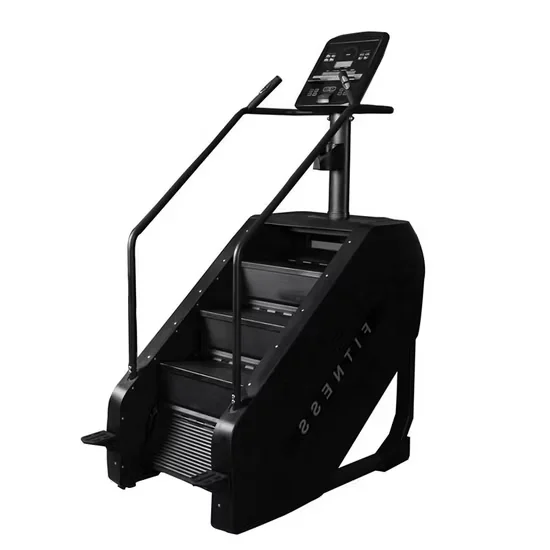
![SQ1017 Commercial Stair Climber Machine Motor Drive for Fitness Facilities [WARN] draft identifier mismatch](https://bicksport.com/wp-content/uploads/2026/08/sq1017-commercial-stair-climber-machine-motor-drive-for-fitness-facilities-warn-draft-identifier-mismatch-df6ff6.webp)