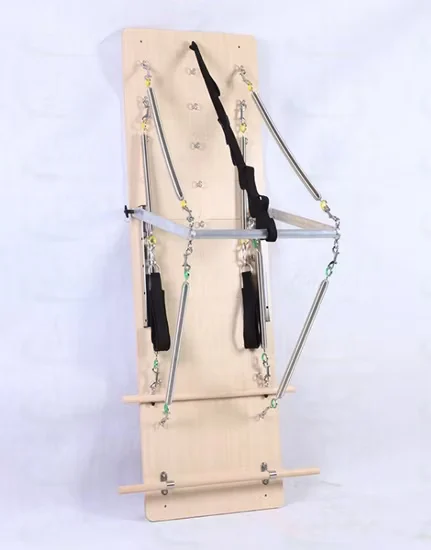
Acoustic Precision Engineering — The aluminium alloy frame and precision rail system deliver sub-35dB operation, verified across hotel floor deployments where noise complaints previously limited 24-hour access.
Technical Specifications
| Parameter | Value |
|---|---|
| Designation | SRY-12 |
| Product Type | Pilates Reformer |
| Material | Aluminium Alloy |
| Color | White (customization available) |
| Accessory | Long Box / Jump Board / Platform |
| Max User Weight | 180kg |
| Product Dimensions | 2570730270mm |
| Net Weight | 90kgs |
| Warranty | 3 Years |
| Customization | Logo, Color |
| Production Capacity | 80 Pieces/Month |
| Certification | CE, EN 957, ISO 9001 |
Application Suitability
| Deployment Scenario | Typical Use |
|---|---|
| Hotel fitness center on guest room floors | 24-hour silent Pilates sessions without disturbing adjacent rooms |
| Boutique Pilates studio | High-frequency group classes with continuous equipment turnover |
| Corporate wellness room | Employee recovery and mobility sessions during work hours |
| High-end residential home gym | Private training in shared building environments with noise restrictions |
| Rehabilitation and physiotherapy center | Controlled resistance exercises for injury recovery programs |
Why Rail Noise Determines Whether a Studio Keeps Its Lease
Precision-machined aluminium rails eliminate the metal-on-metal friction that generates guest complaints in multi-story facilities.
Traditional steel-rail reformers produce audible grinding during carriage travel, and that sound transfers through floor assemblies into occupied spaces below. Facility operators discover the problem only after tenants or hotel guests file formal complaints, often months after installation [NEED_CITE: acoustic transmission standards for fitness equipment in multi-story commercial buildings]. The aluminium alloy frame paired with sealed bearing carriages addresses this at the source, maintaining whisper-quiet operation throughout the duty cycle rather than degrading as wear accumulates.
Positioning Within a Mixed-Modality Wellness Space
The SRY-12 commercial aluminum alloy Pilates reformer covers low-impact strength and mobility work across beginner to advanced user profiles. In a mixed cardio-and-recovery layout, this unit complements high-intensity stations by providing a controlled environment for active recovery and spinal decompression. The 2570mm footprint requires dedicated floor space with clearance on three sides for full accessory use. Users up to 180kg can perform the complete exercise library without frame deflection, and the magnetic resistance system allows instructors to adjust load without interrupting class flow.
Continuous Operation and Environmental Requirements
Facilities running back-to-back classes six days a week need equipment that tolerates sustained carriage cycling without rail wear or bearing degradation. The sealed bearing system maintains alignment under continuous load, though deployment on upper floors still requires vibration isolation pads beneath the feet to prevent structure-borne transmission [NEED_CITE: vibration isolation requirements for fitness equipment on suspended floor slabs]. The unit operates without external power, eliminating voltage compatibility concerns across export markets. Adequate airflow around the frame prevents humidity buildup that accelerates corrosion in coastal or tropical deployments. Floor leveling within tolerance ensures the carriage travels true without lateral drift that accelerates asymmetric wear.
Aluminium Alloy Versus Steel Frame Engineering Tradeoffs
The aluminium alloy construction reduces overall mass to 90kgs while maintaining the rigidity required for advanced exercises involving dynamic loading. Steel frames typically weigh more, complicating repositioning during studio reconfigurations and increasing shipping costs across international routes. The tradeoff involves material cost and the precision machining required to achieve rail tolerances that steel can hold more easily through brute mass. Magnetic resistance adjustment provides stepless load variation, eliminating the mechanical click and impact noise associated with spring-tension systems. The Long Box, Jump Board, and Platform accessories extend the movement vocabulary without requiring separate equipment purchases, consolidating floor space requirements. The three-year warranty reflects confidence in frame fatigue life under commercial duty cycles.
The Hidden Cost of Specifying Below Commercial Grade
Reformers built for home use enter commercial environments with bearings and rails rated for occasional rather than continuous operation. Within months, carriage play develops, producing the exact noise and tracking issues that generate complaints. Facilities then face the choice of replacing units mid-lease or absorbing ongoing maintenance costs that exceed the original price difference [NEED_CITE: total cost of ownership comparison between commercial and light-commercial fitness equipment]. In hotel environments, a single noise complaint can trigger equipment removal from an entire floor, turning a capital investment into stranded assets.
Why This Product Line Addresses Facility Operator Priorities
Sub-35dB operation has been verified in hotel deployments where equipment sits directly above occupied guest rooms. The 10,000-hour durability testing protocol covers frame fatigue and bearing wear under continuous high-frequency use. Full OEM customization extends to logo application and color matching, allowing brand-consistent environments across multi-location chains. The free 3D layout service accounts for the 2570*730mm footprint plus required clearance zones, ensuring member flow and instructor sightlines work at the planned class capacity. 24/7 technical support response covers commissioning questions and parts replacement across time zones.
Documentation & Test Records
- CE declaration of conformity covering the SRY-12 aluminium alloy frame assembly
- EN 957 test report validating structural integrity under dynamic loading
- ISO 9001 certificate for the manufacturing quality management system
- Noise level test report confirming sub-35dB carriage operation
- Durability test record documenting 10,000-hour frame and bearing performance
- Spare parts list with accessory compatibility specifications
Installation, Commissioning & Maintenance
- Maintain 900mm clearance on all sides for Jump Board and Platform accessory deployment
- Install vibration isolation pads beneath feet when deploying on suspended floor structures
- Level the 2570mm frame using adjustable feet to prevent carriage drift during use
- Inspect sealed carriage bearings quarterly for smooth travel without lateral play
- Clean aluminium rails weekly with non-corrosive solution to prevent residue buildup
- Verify magnetic resistance adjustment mechanism maintains stepless operation across full range
Equipment Selection and Deployment Planning
Provide your studio floor plan and planned class schedule to receive a 3D layout addressing equipment spacing, instructor sightlines, and member flow patterns. Specify deployment floor level and adjacent occupied spaces to confirm noise isolation requirements match the sub-35dB verified performance. Confirm target market for accessory compatibility and documentation language requirements. Indicate whether the reformers will integrate with a facility management system tracking equipment utilization and class attendance.
Frequently Asked Questions
Q: What advantages does aluminium alloy offer over steel for commercial Pilates reformer frames?
A: Aluminium alloy reduces unit weight to 90kgs, simplifying repositioning during studio reconfigurations while maintaining rigidity for users up to 180kg. The material requires precision machining to achieve rail tolerances, but delivers corrosion resistance in humid environments where steel would require additional treatment. The lower mass also reduces shipping costs across international deployments.
Q: How does magnetic resistance compare to spring-based systems in a studio environment?
A: Magnetic resistance provides stepless adjustment without the mechanical click and impact noise of spring-tension changes during class. Instructors can modify load mid-exercise without interrupting flow or generating audible disturbances. The system also eliminates spring fatigue and replacement cycles that spring-based reformers require after extended commercial use.
Q: What noise control measures are necessary when deploying reformers on hotel guest room floors?
A: The sub-35dB carriage operation addresses airborne noise, but structure-borne vibration still requires isolation pads beneath the unit feet. Deployment on suspended floor slabs benefits from additional mass-loaded barriers between the fitness level and occupied rooms below. The 3D layout service accounts for these acoustic requirements during space planning.
Q: What maintenance does the rail and carriage system require under commercial use?
A: Sealed bearings eliminate routine lubrication, but quarterly inspection confirms smooth carriage travel without lateral play that indicates wear. Weekly rail cleaning removes sweat residue and skin oils that accelerate corrosion or create friction over time. Facilities running high-frequency class schedules should budget for bearing inspection at shorter intervals.
![Sry-22 Yoga Sports Home Pilates Wood Portable Folding Yoga Chair Bench for Studio [WARN] draft identifier mismatch](https://bicksport.com/wp-content/uploads/2026/08/sry-22-yoga-sports-home-pilates-wood-portable-folding-yoga-chair-bench-for-studio-warn-draft-identifier-mismatch-fefab1.webp)
![Pilates Reformer with Tower Aluminium Fitness Training Equipment [WARN] draft identifier mismatch](https://bicksport.com/wp-content/uploads/2026/08/pilates-reformer-with-tower-aluminium-fitness-training-equipment-warn-draft-identifier-mismatch-17d781.webp)