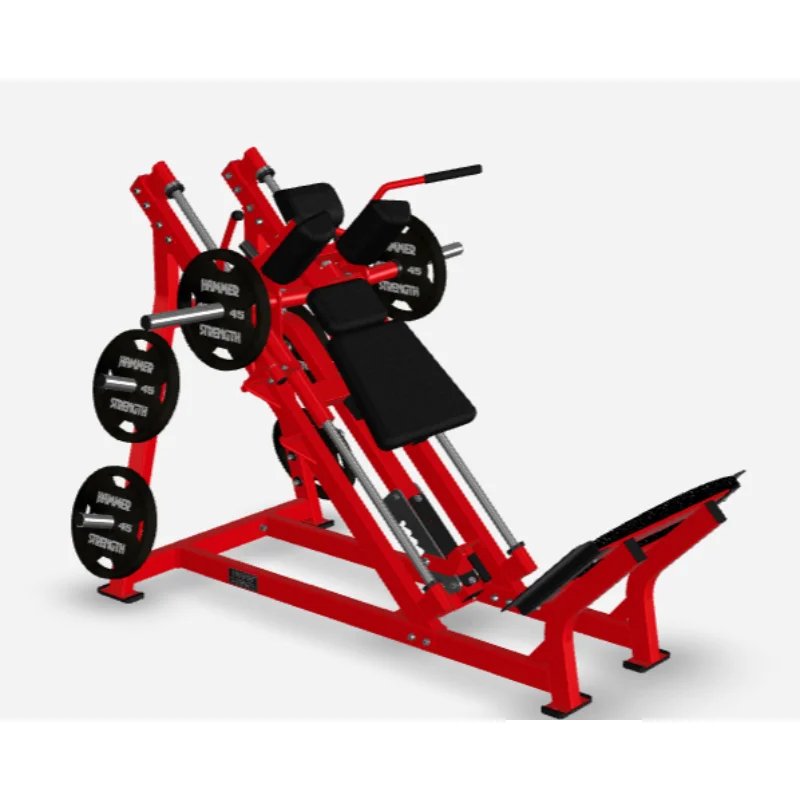
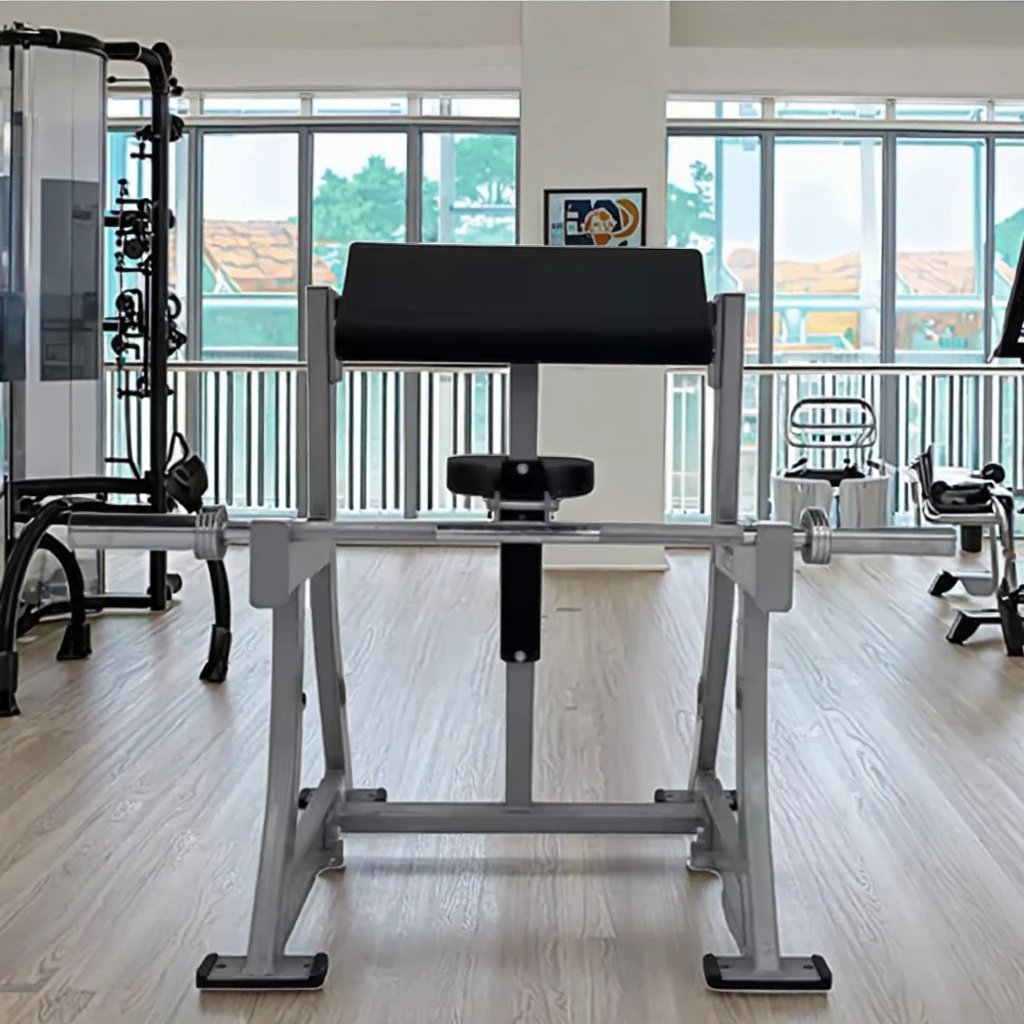
10,000-Hour Durability Tested — Steel-frame ISO-lateral leg extension built to withstand continuous high-frequency loading cycles in commercial strength zones without pivot wear or frame flex.
Technical Specifications
| Parameter | Value |
|---|---|
| Designation | 5036 |
| Product Type | Plate Loaded ISO-Lateral Leg Extension |
| Resistance Type | Plate Loaded |
| Frame Material | Heavy-Gauge Steel |
| Movement Path | ISO-Lateral Independent Arm Convergence |
| Target Muscle Group | Quadriceps Isolation |
| Product Dimensions | 1433 × 1477 × 1470 mm |
| Net Weight | 126 kg |
| Max User Weight | Not specified |
| Age Group | Adult |
| Gender | Unisex |
| Fit Area | Professional Gym and Club |
| Certification | ISO 9001, CE |
| OEM/ODM | Available |
| Production Capacity | 500 PCS/Month |
Application Suitability
| Deployment Scenario | Typical Use |
|---|---|
| Professional gym strength zone | High-throughput quad isolation training across diverse member groups |
| Commercial fitness club leg area | Progressive overload training with independent plate loading per leg |
| Community fitness center | Durable lower-body equipment for adult users with varying fitness levels |
| Corporate wellness facility | Space-efficient leg extension station for employee strength routines |
| Sports performance training center | Biomechanically accurate unilateral and bilateral quad development |
Why Frame Flex Under Heavy Plates Ruins the Resistance Arc
ISO-lateral convergence keeps the resistance path true under load.
Gym operators who install light-duty leg extension machines in commercial environments quickly discover that frame flex under heavy plate loads shifts the pivot geometry. The resistance arc becomes uneven — heavier plates exaggerate the problem. Members notice the inconsistency within weeks, and the machine earns a reputation as unreliable before the frame itself fails structurally [NEED_CITE: structural fatigue patterns in commercial plate loaded leg equipment].
Where This Machine Sits in a Commercial Strength Floor Plan
This plate loaded ISO-lateral leg extension occupies a specific niche in strength zones: isolated quadriceps work with independent leg convergence that matches natural knee biomechanics. It complements compound lower-body machines like leg presses and squat racks by targeting the quad group without spinal loading. The footprint suits mid-traffic placement where members rotate through isolation exercises between heavier compound sets. The steel frame and plate loaded design accommodate adult users across a broad range of training experience and body composition.
Continuous Loading Cycles and Facility Environment Demands
In a professional gym running 16 to 24 hours daily, leg extension stations see repeated heavy loading and unloading throughout operating hours. The plate loaded design eliminates cable and pulley maintenance cycles that pin-select machines require, keeping the unit operational around the clock without scheduled downtime for weight stack adjustments or cable tension checks. Floor placement matters — the 1433 × 1477 mm footprint requires adequate clearance on all sides for safe plate handling, particularly when users load and unload heavy bumper plates [NEED_CITE: commercial gym equipment spacing standards for plate loaded machines]. Ground leveling and rubber matting beneath the frame prevent micro-movement during high-load repetitions.
Pivot Mechanics and Frame Construction Decoded
The ISO-lateral independent arm convergence allows each leg to operate on its own movement path, which addresses a fundamental biomechanical reality: no two knees track identically. Fixed-axis leg extension machines force both legs through one path, creating compensatory stress on the stronger side. Independent convergence eliminates this mismatch. The heavy-gauge steel frame carries the 126 kg unit weight plus plate loads without deflection at the pivot points — critical because even millimeter-level flex at the pivot shifts the resistance feel across the repetition arc. Plate loaded resistance delivers a linear load profile directly proportional to plates added, without the mechanical losses or friction variables that cable-and-pulley systems introduce over time. The steel construction also resists the lateral forces generated during heavy single-leg work, where off-center loading would twist a lighter frame progressively out of alignment.
What Underspecified Frames Cost Operators Over Time
When a leg extension frame is built to home-gym tolerances but deployed in a commercial facility, pivot wear accelerates under repetitive heavy loads. The resistance arc degrades gradually — members feel it as inconsistency rather than identifying a mechanical fault. Frame flex under max plate loads stresses weld points that were never rated for commercial duty cycles, leading to structural fatigue that maintenance teams catch only during routine inspection [NEED_CITE: weld fatigue failure rates in commercial vs. light-duty strength equipment]. Operators then face a choice between pulling the machine from the floor for weld repair or replacing it outright, both of which leave a gap in the strength zone and drive member frustration.
Why This Product Line Earns Its Floor Space
The 5036 leg extension underwent durability testing aligned with 10,000-hour continuous operation standards — the same benchmark applied across the full cardio and strength range. OEM/ODM customization extends to frame color, upholstery selection, and facility branding, so the unit integrates visually with existing equipment lines. The plate loaded design inherently simplifies maintenance: no cables to tension, no weight stacks to lubricate, no selector pins to replace. Deployment planning includes 3D strength-zone layout covering the unit’s 1433 × 1477 mm footprint, surrounding clearance for plate handling, and sightline positioning relative to compound lifting stations. Technical support covers commissioning guidance and spare parts availability around the clock.
Documentation & Test Records
- CE declaration of conformity for commercial strength equipment
- EN 957 test report covering structural integrity and safety
- ISO 9001 certificate for manufacturing quality management
- Frame load testing documentation for max plate capacity
- Pivot mechanism durability test record
- Installation guide with spare parts list
Installation, Commissioning & Maintenance
- Confirm floor leveling beneath the 1433 × 1477 mm footprint and install rubber matting for vibration isolation
- Maintain clearance on all sides for safe plate loading and unloading during peak hours
- Inspect ISO-lateral pivot bearings and lubricate per schedule based on daily use volume
- Tighten frame bolts at commissioning and at regular intervals under commercial loading cycles
- Wipe steel frame and upholstery daily to prevent sweat corrosion on contact surfaces
Planning Your Strength Zone Equipment Order
Provide your facility floor plan and target equipment count to receive a 3D strength-zone layout covering the 5036 placement alongside other leg and compound stations. Specify your daily operating hours and expected user volume so deployment recommendations match actual throughput. Confirm whether OEM customization for frame color and branding is required for your facility standards. State your target market to ensure all documentation and compliance markings align with local regulatory requirements.
Frequently Asked Questions
Q: What is ISO-lateral movement and why does it matter for leg extension biomechanics?
A: ISO-lateral movement gives each leg its own independent arm path that converges naturally toward the body’s centerline. This matches how knees actually track during extension — no two legs move identically. Fixed-axis machines force both legs through one rigid path, creating compensatory stress. Independent convergence lets each quad work through its own biomechanically correct arc, which matters especially under heavy commercial plate loads where small tracking errors amplify joint stress.
Q: Plate loaded vs. pin-select machines: which is better for high-traffic commercial gyms?
A: Plate loaded machines eliminate the cable, pulley, and selector pin maintenance that pin-select units require on a recurring schedule. In 24/7 facilities, this means fewer scheduled downtime windows and no cable tension adjustments. Plate loaded designs also offer unlimited progressive overload — users add plates beyond any fixed weight stack ceiling. The trade-off is that plate loading and unloading takes longer per set, which affects throughput in extremely high-traffic zones.
Q: How does frame construction affect long-term durability under continuous use?
A: Heavy-gauge steel frames resist deflection at pivot points under repeated max plate loads. When a frame flexes even slightly, the pivot geometry shifts and the resistance arc becomes inconsistent — members feel this before they identify a mechanical problem. Commercial-grade welding at stress concentration points prevents progressive fatigue cracking that lighter frames develop within months of high-frequency deployment [NEED_CITE: frame deflection thresholds in commercial strength equipment standards].
Q: What OEM/ODM customization options are available for facility branding?
A: Frame color, upholstery material and color, and logo or facility branding placement can all be customized to match existing equipment lines or interior design standards. Console panels are not applicable on this plate loaded unit, but visual branding on the frame and pad surfaces ensures brand consistency across the strength zone. Lead times and minimum order quantities for customized runs should be confirmed during the quotation stage.
Q: What maintenance is required for plate loaded strength equipment in 24/7 environments?
A: Plate loaded leg extension machines require pivot bearing inspection and lubrication at intervals determined by daily repetition volume. Frame bolt torque checks should occur at commissioning and periodically thereafter, since heavy plate loading generates vibration that loosens fasteners over time. Daily upholstery and steel frame wiping prevents sweat corrosion. Unlike pin-select machines, there are no cables to tension, no weight stacks to service, and no selector mechanisms to replace.