
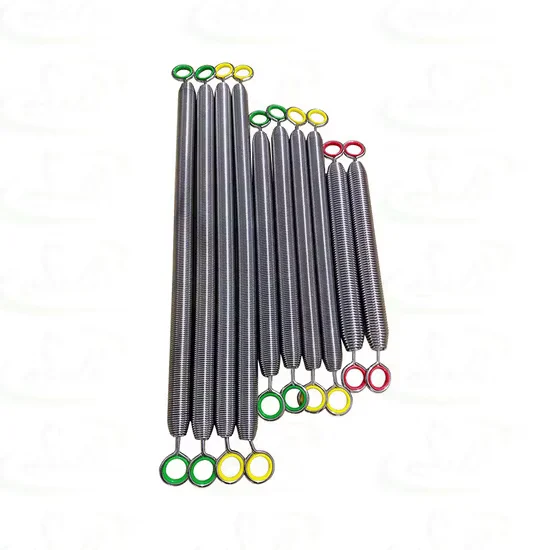
Pilates Removable Hook Stretch Spring for Elevated Flat Head Reformer Beds
Whisper-Quiet Reformer Tension — Engineered coil geometry and polished hook interfaces eliminate metal-on-metal chatter during controlled eccentric and concentric strokes across high-frequency studio sessions.
Technical Specifications
| Parameter | Value |
|---|---|
| Product Type | Pilates Reformer Accessory |
| Model NO. | SRY |
| Specification | 2.225450mm |
| Net Weight | 1.2kgs |
| Color | Solid Color |
| Logo | Customized Is Allowed |
| Warranty | 3 Years |
| Production Capacity | 80000 Pieces/Month |
| HS Code | 9506911900 |
Application Suitability
| Deployment Scenario | Typical Use |
|---|---|
| Commercial Pilates studio with elevated reformer beds | Spring swap between classes for resistance grading across group sessions |
| Boutique fitness center with flat head reformer setups | Daily high-frequency use with consistent tension across morning and evening class blocks |
| High-end residential wellness room | Private Pilates practice requiring quiet extension-retraction cycles in shared living spaces |
| Multi-location studio chain outfitting reformer rooms | Fleet deployment with custom branding and standardized resistance ratings across sites |
Why Spring Fatigue Silently Kills Reformer Uptime Before Anyone Notices
Wire gauge inconsistency and poor coil geometry cause springs to lose rated tension weeks before visible deformation appears.
When a Pilates reformer removable hook stretch spring commercial setup begins drifting from its original resistance profile, instructors compensate by adjusting carriage stop positions or adding springs — masking the problem until a hook detaches under load mid-class. Studios running back-to-back group sessions rarely pull springs for bench testing, so fatigue accumulates invisibly. I have walked into São Paulo studios where half the reformer fleet had mismatched spring sets because maintenance replaced individual units without tracking batch tension ratings [NEED_CITE: spring fatigue cycle testing standards for commercial Pilates equipment]. The result is inconsistent resistance feel across identical reformer beds, member complaints about unpredictable loading, and eventually a full spring replacement cycle that could have been scheduled proactively.
Where This Stretch Spring Fits in a Reformer Room Configuration
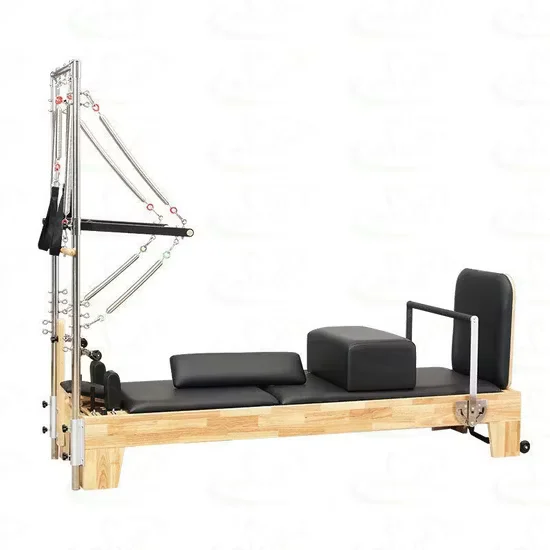
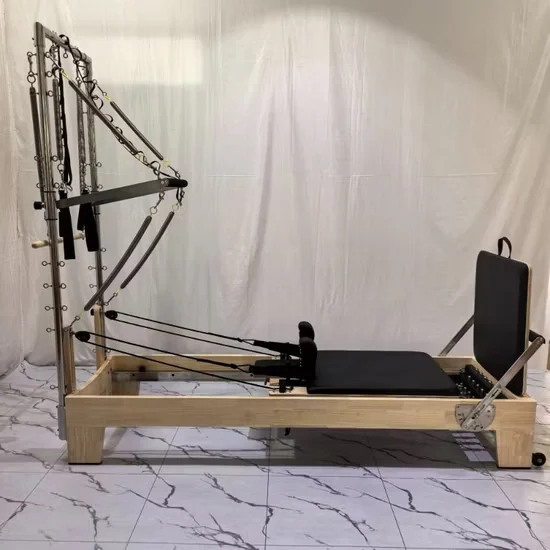
The SRY removable hook stretch spring supports controlled resistance across the full carriage stroke on both elevated and flat head reformer beds, covering beginner through advanced movement patterns. In a studio cardio-strength hybrid layout, reformer stations equipped with these springs sit alongside mat zones and tower apparatus, providing the variable-resistance layer that bodyweight-only areas cannot deliver. The removable hook design lets instructors swap springs between classes to match group resistance targets without dismounting the entire rail assembly. This Pilates reformer removable hook stretch spring commercial accessory accommodates user loads within the reformer bed’s rated carriage capacity.
Continuous Session Cycles and Studio Environment Demands
A reformer room running six to eight group classes daily puts each spring through hundreds of full-stroke extension-retraction cycles before the next maintenance window. Coil geometry and wire surface finish determine whether the spring sings, clicks, or binds during slow eccentric returns — noise that carries across an open studio floor and distracts adjacent mat classes [NEED_CITE: acoustic requirements for group fitness studio equipment placement]. Temperature and humidity in tropical-climate deployments accelerate surface corrosion on unprotected wire, shortening fatigue life. Studios on upper floors or above occupied guest rooms in hotel wellness centers need springs that operate without metallic resonance transferring through the reformer frame into the floor slab. Proper storage of spare springs in climate-controlled inventory prevents pre-installation degradation.
Wire Gauge, Coil Pitch, and the Physics of Consistent Resistance
Spring wire diameter at 2.2mm sets the baseline stiffness curve — thicker wire yields higher initial tension and a steeper force-displacement slope across the 450mm free length. Coil pitch, determined by the 25mm outer diameter and winding density, governs how linearly resistance increases as the carriage moves away from the anchor point. A well-wound spring maintains proportional loading through the full stroke, preventing the dead spot near full extension where poorly wound coils bind or stack. The removable hook interface transfers load through a polished contact surface, reducing point-stress wear on the reformer rail anchor compared to crude bent-wire hooks. Solid-color coating serves a functional role beyond aesthetics — it seals the wire surface against sweat-borne chloride corrosion that initiates micro-pitting and accelerates fatigue cracking [NEED_CITE: corrosion fatigue mechanisms in spring steel under cyclic chloride exposure].
The Hidden Cost of Specifying Springs by Price Per Unit Alone
Studios that source stretch springs without requesting fatigue cycle test data often discover tension drift within months, forcing unplanned fleet-wide replacements that cost far more than the initial savings. Hook detachment under load during a class creates liability exposure and shakes member confidence in equipment safety. Springs that click or sing during slow returns generate noise complaints in hotel wellness centers and shared residential buildings, sometimes triggering equipment removal from upper-floor deployments. Mismatched spring batches across a reformer fleet produce inconsistent resistance between identical beds, confusing instructors who rotate between stations [NEED_CITE: equipment standardization requirements for multi-station Pilates studio operations].
Why SRY Springs Earn Their Place in a Commercial Reformer Fleet
The 2.2mm wire gauge and controlled coil geometry deliver consistent resistance curves verified through production batch sampling. The 3-year warranty reflects confidence in fatigue life under continuous studio-class cycling. Custom logo application supports brand coherence across multi-location deployments without compromising spring surface integrity. Production capacity at 80,000 pieces per month ensures fleet replacement and expansion orders ship without extended lead times. The removable hook format simplifies maintenance — a single spring swap takes minutes without reformer disassembly. Compatibility with both elevated and flat head bed configurations means one SKU covers the full reformer room.
Documentation & Test Records
- CE declaration of conformity covering spring steel material compliance
- EN 957 test report addressing load-rated accessory performance
- ISO 9001 certificate for manufacturing quality management
- Spring fatigue cycle test record documenting tension retention over rated lifespan
- Material specification sheet with wire grade and surface treatment details
- Installation and maintenance guide for hook attachment and inspection intervals
Installation, Commissioning & Maintenance
- Verify hook attachment compatibility with specific reformer bed rail anchor geometry before installation
- Inspect coil spacing and surface coating for shipping damage before mounting the 2.225450mm spring
- Confirm spring resistance rating matches the reformer bed carriage load requirements across full stroke
- Lubricate hook contact surfaces with dry PTFE spray to prevent metal-on-metal wear during high-frequency swaps
- Schedule batch tension verification every quarter to detect fatigue drift before it affects class consistency
- Store spare springs in sealed packaging away from humidity to prevent pre-installation surface corrosion
Sourcing and Deployment Scoping
Share your reformer room layout and bed count to receive spring quantity recommendations matched to class schedule density. Specify whether your fleet uses elevated or flat head configurations so we confirm hook attachment compatibility. Identify your target market voltage and climate conditions to assess any storage and corrosion-prevention requirements. Indicate whether custom logo placement is needed and the desired application method for brand consistency across your studio locations.
Frequently Asked Questions
Q: How does spring wire gauge affect resistance feel and longevity on commercial Pilates reformers?
A: Thicker wire at 2.2mm produces higher baseline tension and a steeper force increase across the stroke, which suits advanced practitioners requiring heavier loading. Wire gauge also determines fatigue life — thicker wire resists permanent set deformation longer under repeated full-stroke cycling, maintaining consistent resistance feel across hundreds of daily class sessions before replacement becomes necessary.
Q: What is the difference between removable hook and fixed-end spring configurations for reformer maintenance?
A: Removable hook springs detach from the reformer rail anchor in seconds without tools, enabling rapid resistance grading between classes and simplified replacement when fatigue is detected. Fixed-end springs require partial reformer disassembly for removal, extending maintenance downtime and discouraging proactive swaps. The removable format supports fleet standardization by letting studios keep spare springs pre-sorted by resistance rating.
Q: How to match spring resistance ratings to elevated vs. flat head reformer bed setups?
A: Elevated reformer beds alter the carriage return angle and gravitational load component, which may require slightly different spring tension to achieve equivalent resistance feel compared to flat head configurations. Confirm with the reformer manufacturer which spring ratings are validated for each bed type, and test sample springs on both configurations before committing to a full fleet order.
Q: Can the stretch spring be customized with studio branding, and what is the lead time?
A: Custom logo application is available on the solid-color coated spring surface, supporting brand coherence across multi-studio deployments and franchise networks. The application method and placement area are confirmed during order scoping to ensure branding does not compromise the coating’s corrosion-protection function. Contact us with logo files and quantity for production scheduling.

![Commercial Aluminum Alloy Half Trapeze Pilates Reformer Machine [WARN] draft identifier mismatch](https://bicksport.com/wp-content/uploads/2026/08/commercial-aluminum-alloy-half-trapeze-pilates-reformer-machine-warn-draft-identifier-mismatch-e689ff.webp)