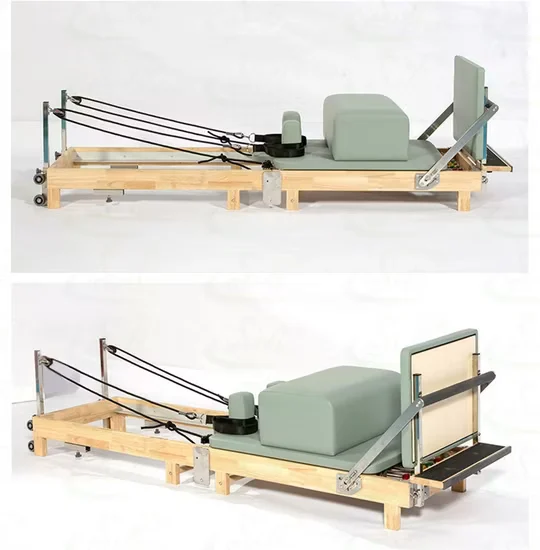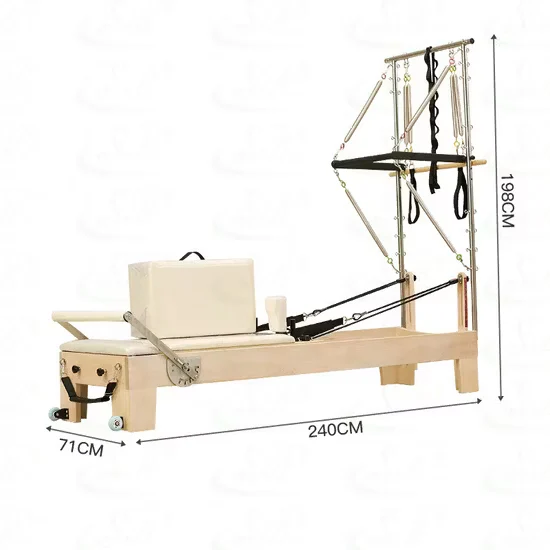
Engineered for Studio Floors — A 150 kg steel frame with integrated half trapeze tower dampens jump board impact and keeps carriage tracking precise through back-to-back reformer sessions.
Technical Specifications
| Parameter | Value |
|---|---|
| Product Type | Pilates Reformer with Half Trapeze Tower |
| Product Dimensions | 2460 730 1900 mm |
| Net Weight | 150 kg |
| Accessories | Long Box, Jump Board, Platform |
| Color | Solid Color |
| Gender / Age | Unisex / Adult |
| Logo | Customized Is Allowed |
| Warranty | 3 Years |
| Production Capacity | 80 Pieces / Month |
| HS Code | 9506911900 |
| Origin | China |
Application Suitability
| Deployment Scenario | Typical Use |
|---|---|
| Pilates studio | Daily reformer classes with integrated tower exercises |
| Commercial fitness center | Dedicated Pilates zone complementing cardio and strength floors |
| Boutique reformer class venue | High-frequency group sessions with rapid attachment changes |
| Rehabilitation and physiotherapy center | Controlled resistance therapy using spring and tower systems |
| High-end home gym | Private reformer practice with full exercise repertoire |
Why Studio Operators Rethink Reformer Procurement After the First Spring Failure
A carriage that tracks true and a tower that holds silent under load come down to frame rigidity, not cosmetics.
I have stood on studio floors watching a carriage drift off line mid-session because the carriage wheels met a track worn unevenly after a year of group classes. The instructor paused the class, the client lost rhythm, and the studio absorbed the cost of emergency service. When a Pilates studio schedules four or five classes back to back, the commercial Pilates reformer with half trapeze tower must hold its geometry from the first client to the last without the springs sagging, the ropes fraying, or the tower vibrating against the wall behind it [NEED_CITE: spring fatigue and track wear rates in continuous commercial Pilates deployment].
Where This Reformer Fits Inside a Full Studio Layout
A commercial Pilates reformer with half trapeze tower covers the full reformer repertoire plus standing, kneeling, and suspended work from the tower bars and springs, bridging mat-based movement and equipment-based resistance in a single footprint. In a studio that also runs Cadillac and chair classes, this unit fills the reformer slot without demanding the ceiling clearance a full tower requires. It suits high-frequency group formats where attachments swap between classes and private sessions where a single client works through a longer sequence. The frame accommodates adult users across a broad height and weight range without carriage modification.
What Continuous Scheduling Demands from the Room and the Floor
Running five reformer classes a day means the carriage returns to zero hundreds of times between maintenance windows, and the jump board transmits repeated impact into the floor below. Studios on upper floors or above treatment rooms need to verify that the floor structure handles dynamic load from jump board sequences and that the ceiling height clears the tower uprights with room for overhead spring work [NEED_CITE: dynamic floor load requirements for reformer jump board use in commercial settings]. Ventilation matters as well; a packed studio generates heat and humidity that accelerate rope wear and corrode spring anchors if the room lacks air exchange. Ground-level studios with concrete slabs avoid the resonance issue entirely but require a level surface to prevent the carriage from drifting on the tracks.
Reading the Frame and Spring Specs That Actually Matter
The 150 kg net weight and steel construction give this commercial Pilates reformer with half trapeze tower a mass that resists walk-off during jump board work and dampens the vibration that lighter frames transmit through the floor. Spring resistance systems differ from weight-stack or elastic-band setups in that they deliver progressive load — the further you pull, the heavier it feels — which mirrors how muscles recruit through range. A half trapeze tower integrates push-through bars, roll-down bars, and arm and leg spring attachments without the footprint of a full Cadillac tower, trading the overhead trapeze and canopy for floor-space efficiency. Quick-release attachment points on the long box, jump board, and platform let instructors reconfigure between group and private formats without tools, reducing the dead time that erodes class schedules.
The Hidden Cost of Cutting Specs on the Reformer Line
A studio that buys reformers rated for light commercial duty and then runs them through group class schedules finds springs losing tension within months, forcing instructors to teach around dead spots in the resistance curve. Carriage wheels that are not matched to the track profile develop flat spots under repetitive loading, producing a chatter that clients feel through every footwork series. On the tower side, a frame that lacks mass will resonate when a client works the push-through bar under heavy spring tension, and that vibration travels down the uprights into the floor [NEED_CITE: vibration transmission in lightweight Pilates tower frames under continuous spring load]. Studios that replace reformers after eighteen months absorb not only the hardware cost but the instructor retraining time and the client trust that erodes when equipment feels inconsistent from visit to visit.
What Senrui Brings to a Reformer-First Studio Buildout
The SRY-06 pairs a full-length carriage with a half trapeze tower in one frame, so a studio sourcing this line gets reformer and tower work from a single footprint rather than managing two separate units. The 2460 mm length and 730 mm width set the spacing between units in a group room layout; most studios plan for a minimum clearance on each side to allow instructors to cue and adjust clients without stepping onto a neighboring reformer. The three-year warranty reflects confidence in the springs, tracks, and attachment hardware under studio scheduling. OEM customization covers logo, color, and accessory configuration, so a chain with a defined visual identity can align the equipment to its brand without aftermarket modifications. Biketon Sport, the cardio division behind Senrui’s manufacturing, backs the SRY-06 with the same ISO 9001 production discipline applied across its commercial line.
Documentation & Test Records
- CE declaration of conformity covering the complete SRY-06 assembly
- EN 957 test report validating structural and mechanical safety requirements
- ISO 9001 certificate for the manufacturing facility
- Spring fatigue and carriage track durability test records
- Tower structural load and stability verification file
- Accessory compatibility and quick-release mechanism endurance confirmation
Installation, Commissioning & Maintenance
- Allow minimum clearance around the 2460 * 730 mm footprint for instructor access on all sides
- Verify floor level before bolting down; an uneven slab causes carriage drift on the tracks
- Confirm spring group tension and carriage tracking during initial commissioning before opening to clients
- Schedule track cleaning and wheel inspection at intervals matched to weekly class volume
- Inspect quick-release pins on the long box, jump board, and platform monthly for wear
- Wipe down steel surfaces and spring anchors after each class to prevent sweat corrosion
Requesting a Studio Equipment Proposal
Provide the studio floor area and the planned reformer count so a 3D layout can confirm spacing, instructor circulation, and air flow around each unit. State the average number of classes per day and the expected client turnover to match spring and track durability expectations to the actual duty cycle. If the studio sits above occupied space, describe the floor construction and the use below to determine whether additional vibration isolation is needed before the equipment arrives.
Frequently Asked Questions
Q: What is the functional difference between a half trapeze tower and a full tower?
A: A half tower provides push-through bars, roll-down bars, and spring anchor points for arm and leg work while omitting the overhead canopy and trapeze bar. This reduces the ceiling height requirement and the overall footprint, making it suitable for studios with standard ceiling clearance that still want tower-based exercises integrated into the reformer session.
Q: How often should the carriage tracks and wheels be inspected in a group class environment?
A: In a studio running multiple group classes daily, track cleaning and wheel inspection should occur weekly to remove dust and debris that accelerate wear. A thorough track alignment check and wheel bearing inspection should follow a monthly schedule, with replacement intervals determined by the observed wear pattern rather than a fixed calendar date.
Q: What does OEM customization cover on this reformer?
A: Customization includes logo placement, frame color selection, and accessory configuration from the available long box, jump board, and platform options. Studios and chains can align the equipment appearance with their brand identity. Minimum order quantities and delivery timelines for custom configurations are confirmed during the inquiry process based on the requested scope.
Q: Are the attachment points on the long box, jump board, and platform designed for tool-free changes?
A: Yes, the quick-release mechanisms allow instructors to swap attachments between classes without tools, reducing the transition time in a tight class schedule. The pins and mounting brackets are tested for repeated engagement and release cycles to ensure they hold firmly during use without developing play over time.