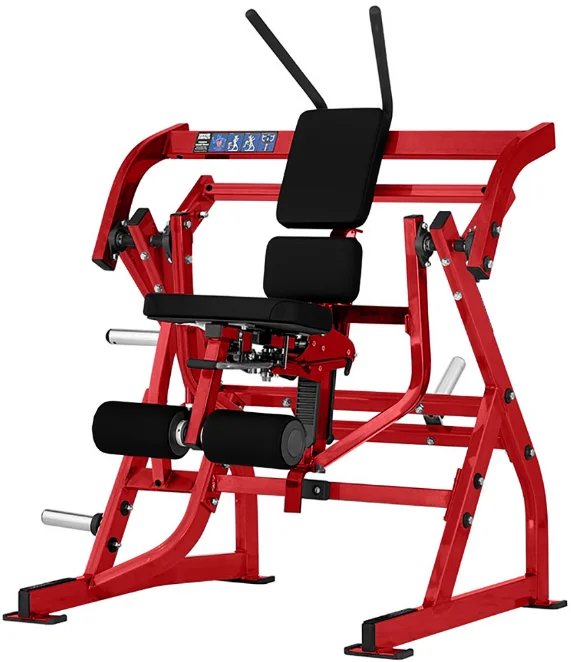
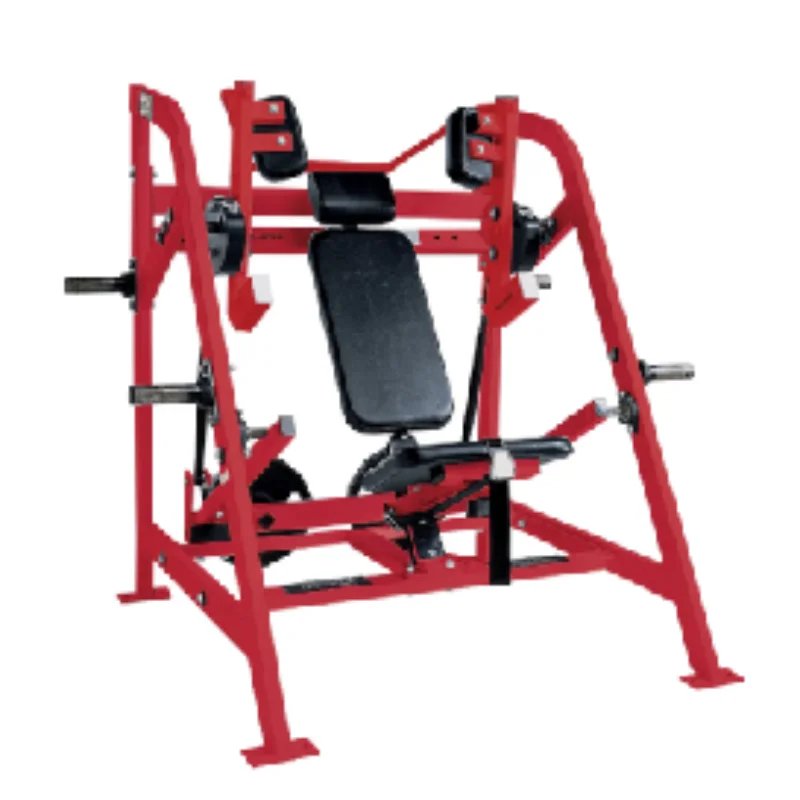
10,000-Hour Endurance — pivot mechanisms and sealed bearings on the OS-H5076 endure repetitive loading cycles that match the highest-traffic commercial gym schedules.
Technical Specifications
| Parameter | Value |
|---|---|
| Designation | OS-H5076 |
| Product Type | Hip and Glute Trainer |
| Material | Steel |
| Product Dimensions | 1250×1750×1090mm |
| Net Weight | 65kg |
| Max User Weight | 180kg |
| Exercise Part | Hip and Glute |
| Resistance Type | Selectorized weight stack |
| OEM/ODM | Available |
| Production Capacity | 500 PCS/Month |
| Certification | ISO 9001, CE |
Application Suitability
| Deployment Scenario | Typical Use |
|---|---|
| Professional gym and health club strength zones | High-frequency isolation training between compound lifts |
| Community fitness centers with diverse user demographics | Accessible glute activation for all fitness levels |
| Corporate wellness facilities | Low-maintenance strength station for employee fitness programs |
Why Strength Equipment Fails at the Pivot Points Before Anyone Notices
Precision-machined pivot joints determine whether a hip and glute trainer survives its first year in a commercial facility.
I spent weeks replacing worn pivot bearings in a batch of strength machines that a chain gym had deployed across eight locations. The grinding noise started around month four, and by month six members were skipping the station entirely [NEED_CITE: pivot bearing failure rates in commercial strength equipment under continuous use]. The problem is rarely the steel frame itself — it is the machined surfaces and sealed bearings that either hold tolerance under thousands of articulation cycles or develop play that turns smooth movement into an audible, wobbling mess.
Where the OS-H5076 Fits in a Commercial Strength Zone
This commercial hip and glute trainer fills the isolation gap between squat racks and leg press stations, targeting posterior-chain activation with a controlled movement path. In a typical gym layout it pairs naturally with cable machines and abduction/adduction stations to round out the lower-body training area. The 1250×1750mm footprint occupies a single-user station footprint, so it fits alongside a standard rack without requiring dedicated aisle expansion. The 180kg user capacity accommodates the full range of member body types, and the fixed movement pattern reduces the need for instructor supervision during peak hours.
Continuous Use and Deployment Environment Requirements
A commercial hip and glute trainer in a busy gym sees forty to sixty sets per day across multiple users, each cycle loading the pivot mechanism and weight stack guide rods with lateral force [NEED_CITE: daily repetition volume for isolation machines in commercial gyms]. The sealed bearings on this unit resist dust and sweat ingress that typically accelerates wear in humid locker-room-adjacent placements. Floor loading must account for the 65kg net weight plus user weight and dynamic force during hip thrust motions — a reinforced concrete slab or properly rated elevated floor is necessary. Adequate ventilation around the weight stack channel prevents moisture accumulation that corrodes guide rods over time.
Engineering Behind the Frame and Pivot Specifications
The reinforced steel frame concentrates weld density at the pivot stress points where repetitive hip extension loads generate the highest bending moments. Precision-machined pivot mechanisms maintain tight rotational tolerance so the resistance curve stays smooth through the full range of motion rather than sticking at mid-travel or dropping suddenly near lockout. Commercial-grade sealed bearings keep contaminants out of the rotation path, extending service intervals far beyond what open bushings deliver in a high-traffic facility. Low-friction glide surfaces on the movement arm reduce operational noise, keeping the station quiet enough for multi-use spaces where sound carries between zones. The 180kg maximum user weight rating reflects the structural margin built into the frame and pivot assembly rather than a theoretical static load calculation.
What Happens When Strength Specs Are Treated as Optional
I once reviewed a community center equipment list where the buyer substituted a light-commercial glute trainer to save on unit cost. Within months the pivot joints developed visible play, members reported grinding sounds during use, and the facility faced a replacement order that exceeded the original savings [NEED_CITE: total cost of premature strength equipment replacement in commercial facilities]. Noise complaints are not limited to cardio floors — a wobbling strength station in an open-plan gym broadcasts mechanical noise across the entire room. Equipment pulled from service for pivot repair leaves a gap in the training lineup that members notice and work around, often by leaving the facility.
Why This Product Line Holds Up Under Commercial Conditions
Every frame in this series undergoes welding inspection at stress points before leaving the assembly line, so the pivot assembly arrives with verified structural integrity. The sealed bearing specification is matched to the 10,000-hour continuous use standard that governs the full product family. OEM customization extends to frame color and pad upholstery, allowing the commercial hip and glute trainer to match existing equipment aesthetics without sacrificing component specifications. The free 3D layout service accounts for this unit’s footprint and required user clearance when planning the strength zone, ensuring adjacent equipment spacing meets safety standards. Full technical documentation accompanies each unit, and the 24/7 support channel addresses calibration questions that arise during installation.
Documentation & Test Records
- CE declaration of conformity covering structural and mechanical safety requirements
- EN 957 test report validating load capacity and durability under cyclic testing
- ISO 9001 certificate confirming manufacturing process control
- Weld inspection reports for frame stress-point verification
- Bearing specification sheet with expected service life under commercial duty cycles
Installation, Commissioning & Maintenance
- Position the 1250×1750mm footprint with minimum 600mm clearance on all sides for safe user entry and exit
- Level the unit on a reinforced slab and anchor base feet to prevent lateral drift during loaded repetitions
- Verify weight stack guide rod alignment and lubricate with specified grease before first member use
- Inspect sealed pivot bearings at six-month intervals for smooth rotation and absence of lateral play
- Wipe down low-friction glide surfaces weekly to prevent sweat residue buildup that increases friction over time
Request a Deployment Assessment
Provide your strength zone dimensions and current equipment list to receive a 3D layout that positions this unit within your member traffic flow. Specify average daily user volume so we can confirm the pivot bearing duty cycle matches your operational tempo. Indicate floor construction type and adjacent room usage so we can verify noise transmission stays within acceptable limits. Confirm whether console data tracking or facility management system integration is required for your membership platform.
Frequently Asked Questions
Q: What maintenance schedule is required for commercial hip and glute trainers?
A: Sealed pivot bearings on this unit require inspection every six months under normal commercial use, with guide rod lubrication at the same interval. Weight stack cables should be checked for fraying annually. High-traffic facilities operating twelve or more hours daily may need quarterly bearing inspections depending on total repetition volume.
Q: How do sealed bearings perform in high-humidity gym environments?
A: Sealed bearings prevent moisture and sweat from reaching the internal race surfaces, which is the primary cause of premature bearing failure in humid facilities. Units placed near locker rooms or indoor pools benefit most from this design, as ambient humidity does not penetrate the seal under normal operating conditions.
Q: Can the resistance curve be adjusted or customized for different user levels?
A: The selectorized weight stack provides incremental loading suitable for rehabilitation through advanced strength training. The fixed pivot geometry delivers a consistent resistance profile through the full movement arc. Facilities requiring variable resistance curves should discuss cam profile options during the OEM customization scoping phase.
Q: What floor reinforcement is needed for strength equipment placement?
A: The 65kg unit weight combined with dynamic user loading requires a reinforced concrete slab or structurally rated elevated floor. Facilities on upper levels should verify point-load capacity at the base foot locations before installation. A structural engineer can confirm whether additional reinforcement plates are necessary for your specific floor construction.
Q: How does frame weight affect stability during intense workouts?
A: The steel frame mass and wide base footprint resist lateral movement during heavy hip thrust repetitions without requiring permanent floor anchoring in most installations. Bolt-down points on the base feet provide additional stability on polished concrete or rubber flooring surfaces where friction alone may be insufficient during peak-force repetitions.