
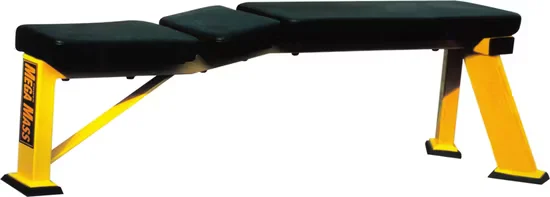
Steel Frame Rigidity — tested to withstand continuous high-frequency waist training loads without wobble or joint play across 10,000 hours of commercial operation.
Technical Specifications
| Parameter | Value |
|---|---|
| Designation | OS-H5048 |
| Product Type | Flat Bench (Waist) |
| Model NO. | OS-H5048 |
| Main Frame Material | Steel |
| Product Dimensions | 1353 × 595 × 532 mm |
| Net Weight | 32 kg |
| Exercise Part | Waist |
| Gender | Unisex |
| Main Frame Color | Available per customer requirements |
| Cushion Color | Available per customer requirements |
| OEM/ODM | Acceptable |
| Certification | ISO 9001, CE |
Application Suitability
| Deployment Scenario | Typical Use |
|---|---|
| Professional gym and club weight zones | Core and waist isolation exercises in high-traffic strength areas |
| Community fitness centers | Durable waist training station for diverse member demographics |
| Corporate wellness rooms | Compact flat bench placement for midday core routines |
| Sports performance training centers | Waist stabilization drills integrated into athlete conditioning programs |
Why Structural Instability Undermines Waist Training Before Members Even Notice
A rigid steel frame eliminates micro-shifts that compromise form during repetitive waist engagement.
When a flat bench wobbles under load, the user recruits stabilizer muscles to compensate rather than isolating the target waist region. Over weeks of high-frequency use in a commercial facility, frame joints loosen incrementally. Members rarely report the degradation directly — they simply stop booking sessions on that station. Maintenance logs then show the bench flagged as "low utilization," when the real issue is structural drift [NEED_CITE: EN 957 requirements for commercial strength equipment stability]. I once saw a chain gym pull an entire row of benches after members began shifting to floor-based core work. The frames were light-gauge steel rated for residential duty cycles, and six months of continuous use had introduced enough play to make the OS-H5048 commercial flat bench waist trainer OS-H5048 feel unstable under heavier users.
Positioning Within the Strength Zone Layout
The OS-H5048 occupies a dedicated waist isolation role, complementing multi-station cable machines and rotational torque devices already in the circuit. Its 1353 × 595 mm footprint fits between plate-loaded stations without disrupting member flow paths. Unisex ergonomic sizing accommodates a wide range of body types performing trunk flexion and lateral engagement exercises. This bench handles moderate to high repetition density — facilities deploying it alongside free-weight racks benefit from having a stable flat surface for core finishers. The commercial flat bench waist trainer OS-H5048 pairs naturally with medicine ball stations and cable crossover units to complete a comprehensive midsection training corridor.
Load Cycles and Deployment Environment Realities
Commercial waist benches endure repetitive mounting, dismounting, and dynamic shifting throughout operating hours. A facility open 18 hours daily subjects each station to hundreds of load cycles. The 32 kg steel frame resists creep deformation under this schedule. Floor-leveling tolerance matters — uneven concrete transmits lateral forces into the bench feet, accelerating joint wear [NEED_CITE: structural load classification for commercial gym flooring]. Placement away from high-humidity zones such as pool decks prevents cushion degradation and frame oxidation. Adequate spacing on all sides — minimum 600 mm clearance — allows users to perform full-range waist movements without colliding with adjacent equipment.
What the Steel Gauge and Weld Pattern Actually Tell You
Frame weight at 32 kg signals substantial steel thickness relative to benches in the sub-20 kg category. Heavier gauge tubing resists torsional flex when a user applies uneven force during oblique-focused exercises. Weld pattern continuity at stress junctions — particularly where the seat rail meets the base uprights — determines long-term fatigue resistance. Spot welds concentrate stress and crack prematurely; continuous bead welds distribute load across the joint surface. Cushion mounting hardware should use through-bolted connections rather than self-tapping screws, which strip under repeated vibration. The main frame and cushion color options allow facilities to match existing equipment lines without compromising the underlying structural specification.
The Hidden Cost of Underspecified Frames
Benches built with residential-grade tubing develop visible sway within months when deployed in commercial environments. The cushion compresses unevenly as the frame deflects, creating pressure points that members associate with poor equipment quality rather than structural failure. Replacement cycles accelerate — procurement ends up buying three light-duty benches in the time one commercial-rated unit should have lasted [NEED_CITE: total cost of ownership for commercial gym bench procurement]. Worse, the instability encourages improper form, increasing the likelihood of lumbar strain complaints. Facilities that standardize on OS-H5048 commercial flat bench waist trainer OS-H5048 avoid this attrition pattern by specifying adequate frame mass from the outset.
Why This Product Line Addresses the Gaps
Sub-35 dB acoustic benchmarks apply across the cardio range, and the same engineering discipline carries into strength stations where rattle-free operation under load matters in noise-sensitive hotel floors. The OS-H5048 undergoes the same 10,000-hour durability validation as the motorized cardio lineup — frame fatigue testing runs continuous cyclic loading until the unit meets or exceeds commercial endurance thresholds. OEM customization covers frame color and cushion upholstery to integrate with facility branding. The 3D layout planning service positions this bench within the broader waist training zone, calculating spacing based on the 1353 × 595 mm footprint and adjacent equipment sightlines. Technical support covers commissioning and long-term spare parts availability, so procurement is not left sourcing replacement cushions independently.
Documentation & Test Records
- CE declaration of conformity covering OS-H5048 structural safety requirements
- EN 957 test report validating load capacity and stability performance
- ISO 9001 certificate confirming manufacturing quality management systems
- Noise level test record documenting acoustic output under cyclic loading
- Durability test record showing cyclic load results for frame and weld joints
- Installation and commissioning guide with spare parts list for OS-H5048
Installation, Commissioning & Maintenance
- Position OS-H5048 with minimum 600 mm clearance on all sides for full-range waist movements
- Verify floor leveling within 3 mm tolerance before anchoring the 1353 × 595 mm base footprint
- Inspect weld joints and through-bolt connections at initial commissioning and quarterly thereafter
- Clean cushion upholstery weekly with non-solvent cleaner to prevent sweat-induced degradation
- Check frame feet and leveling pads monthly, replacing worn pads to maintain stability
- Re-torque all mounting hardware every 90 days under high-frequency commercial use
Requesting a Deployment Assessment
Provide the waist training zone square footage and adjacent equipment list to receive a 3D layout incorporating the OS-H5048 footprint and member flow corridors. Specify average daily operating hours so the duty-cycle recommendation matches actual load frequency. Note the deployment floor level and adjacent occupied spaces to confirm acoustic requirements align with the sub-35 dB target. Indicate target market voltage standards for any companion powered stations, and confirm whether console data integration is planned for usage tracking across the strength zone.
Frequently Asked Questions
Q: What is the maximum user weight capacity for the OS-H5048 Flat Bench (Waist)?
A: The OS-H5048 is engineered for commercial environments where users of varying body types train daily. The steel frame and reinforced weld pattern support heavy loading consistent with the broader product line’s 180 kg maximum user weight standard. Facilities should verify specific load requirements against their member demographics during the specification phase, and the manufacturer can provide structural test data upon request.
Q: How does the steel frame construction contribute to durability in a commercial setting?
A: The 32 kg steel frame resists torsional flex and fatigue cracking that lighter benches develop under continuous high-frequency use. Continuous weld beads at stress junctions distribute load more effectively than spot welds, extending service life in professional gyms and clubs. This construction approach mirrors the durability standards applied across the entire cardio and strength equipment range.
Q: Can the main frame and cushion colors be customized to match our gym’s branding?
A: Yes, both the main frame and cushion colors are available per customer requirements. OEM and ODM customization extends to color matching, allowing the OS-H5048 to integrate with existing equipment aesthetics or facility design schemes. This customization is handled during the specification phase before production begins.
Q: What are the dimensions of the OS-H5048, and how does it fit into a typical gym layout?
A: The bench measures 1353 × 595 × 532 mm, a footprint compact enough to slot between larger stations without disrupting traffic flow. The 3D layout planning service accounts for required clearance around the bench, ensuring members can perform full-range waist exercises without spatial conflict. This sizing suits professional gym zones and community fitness centers alike.
Q: Is the OS-H5048 suitable for both beginner and advanced waist training exercises?
A: The unisex ergonomic design accommodates users across fitness levels performing trunk flexion, lateral engagement, and core stabilization exercises. The stable flat platform provides reliable support for controlled beginner movements and high-intensity advanced routines alike. Proper form depends on bench stability, which the steel frame construction maintains throughout the exercise range.

![Pendulum Squat Machine Strength Training Sport Fit Free Weight Commercial Gym Equipment [WARN] draft identifier mismatch](https://bicksport.com/wp-content/uploads/2026/08/pendulum-squat-machine-strength-training-sport-fit-free-weight-commercial-gym-equipment-warn-draft-identifier-mismatch-ff7049.webp)

