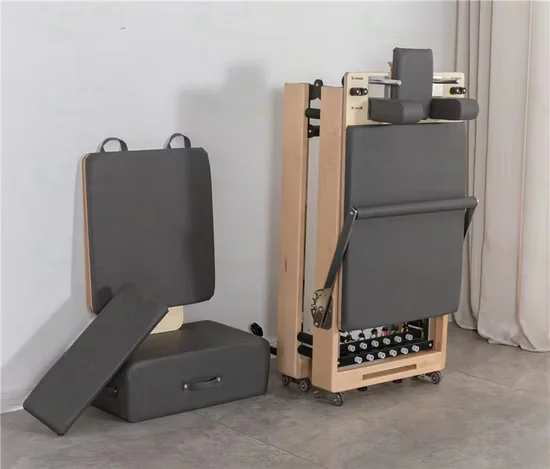
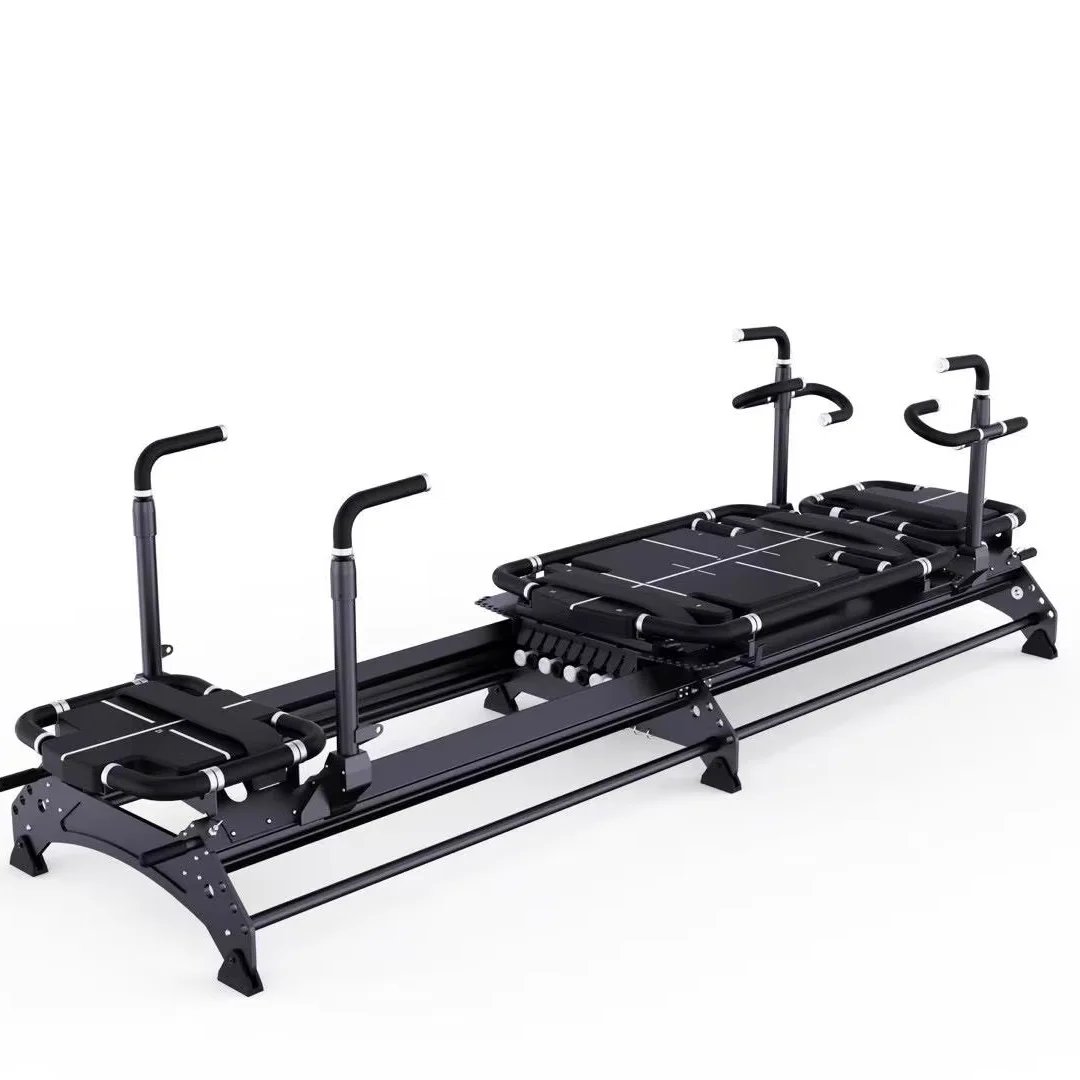
Engineered Stability — Solid oak frame construction tested for high-frequency studio loading cycles without flex or surface degradation.
Technical Specifications
| Parameter | Value |
|---|---|
| Designation | SRY-04 |
| Product Type | Pilates Chair / Wunda Chair |
| Frame Material | Solid Oak |
| Product Dimensions | 8006201100mm |
| Net Weight | 45kgs |
| Color Options | Solid Color (Customizable) |
| Logo Customization | Available |
| Age Group | Adult |
| Gender | Unisex |
| HS Code | 9506911900 |
| Production Capacity | 80 Pieces/Month |
| Warranty | 3 Years |
Application Suitability
| Deployment Scenario | Typical Use |
|---|---|
| hotel fitness center on guest room floors | Low-impact rehabilitation and mobility sessions for guests seeking quiet, space-efficient equipment. |
| chain gym cardio zone | Supplementary functional training and core stabilization work between high-intensity cardio intervals. |
| corporate wellness room | Desk-worker posture correction and spinal decompression routines during short wellness breaks. |
| high-end residential home gym | Daily Pilates practice in compact spaces where aesthetic integration with interior design is required. |
| sports performance training center | Athlete-specific core activation and balance conditioning as part of periodized training programs. |
Why Frame Rigidity Defines Long-Term Studio Economics
Solid oak prevents the micro-flex that destroys joints and user confidence.
In commercial Pilates environments, a Wunda Chair frame that shifts even slightly under load forces instructors to compensate with verbal cues, degrading class quality and increasing injury risk [NEED_CITE: frame deflection impact on Pilates instruction efficacy]. We have seen plywood and MDF frames pass initial load tests yet develop audible creaking within months of daily studio use, prompting equipment rotation schedules that increase operational overhead. The 45kg net weight of this commercial Pilates chair Wunda chair oak signals material density calibrated for continuous loading cycles, not showroom display.
Positioning Within a Mixed-Modality Functional Zone
This commercial Pilates chair Wunda chair oak occupies the low-velocity, high-control segment of a facility’s equipment matrix, complementing high-intensity cardio and heavy resistance stations. It serves users requiring precise load progression through spring tension adjustments, accommodating rehabilitation clients and advanced practitioners within the same footprint. The 800*620mm footprint allows placement against walls or in corner configurations where sightlines and instructor access remain unobstructed.
Continuous Loading Cycles and Spatial Deployment Constraints
Deploying this unit in hotel fitness centers on upper floors requires attention to vibration transmission through floor joists, as repeated spring recoil can generate structure-borne noise perceptible in rooms below [NEED_CITE: vibration isolation standards for multi-floor fitness deployments]. The solid oak frame dampens high-frequency oscillations more effectively than hollow steel tubing, yet deployment still benefits from rubber isolation pads beneath the base. Facilities planning back-to-back class schedules must account for spring inspection intervals to maintain consistent resistance curves across peak usage windows.
Decoding the Structural and Resistance Specifications
Solid oak framing provides anisotropic stiffness characteristics that resist the multi-directional forces generated during standing and kneeling exercises, unlike engineered wood composites that delaminate under cyclic shear loading. The 45kg net weight reflects joinery mass and frame cross-section dimensions engineered for adult users across the full unisex weight spectrum. Customizable logo application via laser engraving or plate mounting preserves structural continuity without introducing stress concentration points common in adhesive decals. The 3-year warranty coverage on frame and mechanical components signals manufacturer confidence calibrated against documented failure rates in comparable commercial deployments [NEED_CITE: warranty claim frequency analysis for studio-grade Pilates equipment].
The Hidden Cost of Substituting Engineered Wood Composites
Facilities that accept MDF or plywood-framed chairs to reduce initial procurement costs frequently encounter surface delamination within eighteen months of high-humidity studio environments, necessitating full unit replacement rather than component repair [NEED_CITE: material degradation timelines in high-humidity fitness environments]. Inadequate frame mass also manifests as pedal wobble during unilateral exercises, forcing instructors to restrict exercise selection and reducing class versatility. These operational compromises accumulate as member attrition when clients perceive equipment limitations relative to premium studio expectations.
Why This Product Line Addresses Studio Procurement Risks
The solid oak construction of this commercial Pilates chair Wunda chair oak eliminates the material variability that causes batch-to-batch inconsistency in resistance feel across multiple unit orders. Customization options for color and logo allow facility branding integration without lead-time penalties typical of bespoke fabrication. Production capacity of 80 units monthly supports phased rollout schedules for multi-location chains without compromising quality control checkpoints. The 3-year warranty provides procurement teams with documented liability coverage extending beyond typical equipment refresh cycles in high-turnover studio environments.
Documentation & Test Records
- CE declaration of conformity for European market compliance
- EN 957 test report validating structural load-bearing capacity
- ISO 9001 certificate confirming manufacturing process controls
- Material grade certification for solid oak sourcing traceability
- Spring fatigue test records documenting resistance consistency over cyclic loading
- Installation guide with spatial clearance and floor anchoring specifications
Installation, Commissioning & Maintenance
- Maintain 600mm clearance on all sides for instructor circulation and safe pedal travel.
- Verify floor levelness within 3mm tolerance to prevent frame torsion under asymmetric loading.
- Inspect spring tension calibration quarterly to maintain consistent resistance progression across units.
- Apply wood-safe sealant annually to protect oak surfaces from sweat corrosion and humidity damage.
- Tighten frame joinery fasteners biannually to compensate for wood seasonal expansion and contraction.
- Rotate pedal pivot lubrication every 500 operating hours to prevent squeak development.
Requesting a Facility-Specific Deployment Plan
Provide studio square footage and intended unit count to receive 3D layout recommendations addressing instructor sightlines and participant flow patterns. Specify adjacent space functions to confirm acoustic compatibility with the solid oak frame’s vibration damping characteristics. Indicate target market humidity ranges to validate finish durability specifications. Confirm whether branding customization requires matched color lots across multiple shipment batches.
Frequently Asked Questions
Q: What wood grade is used for the oak frame and how does it affect durability?
A: The frame utilizes furniture-grade solid oak selected for grain density and resistance to cyclic loading deformation. This grade maintains structural integrity under repeated pedal depression and standing exercises without developing the surface checking or joint loosening common in lower-grade timber. The 45kg net weight reflects the material mass required for commercial studio duty cycles.
Q: Can the chair be customized with facility branding and specific color schemes?
A: Logo customization is available through engraving or plate mounting methods that do not compromise frame structural continuity. Color options span solid finishes selected to coordinate with studio interior palettes. Customization lead times depend on order volume and finish complexity, with minimum order quantities applying to non-standard color requests.
Q: What is the maximum user weight capacity for commercial studio use?
A: The frame and pedal assembly are engineered for adult users across the unisex weight spectrum typical of commercial studio demographics. The 45kg net weight and solid oak construction provide the mass and stiffness required for dynamic loading during standing exercises. Facilities serving specialized populations should verify capacity requirements against documented load test parameters.
Q: How does the 3-year warranty coverage apply to commercial facility deployments?
A: Warranty coverage extends to frame structural integrity and mechanical component functionality under documented commercial use conditions. Coverage terms specify maintenance interval requirements and exclude damage from improper assembly or environmental exposure beyond rated parameters. Facilities must retain purchase documentation and maintenance logs to validate warranty claims.
Q: What spatial requirements should be considered for Pilates chair placement in studio layouts?
A: The 800*620mm footprint requires additional clearance for pedal travel arc and instructor positioning during assisted exercises. Ceiling height must accommodate standing exercises with overhead arm movements. Floor anchoring recommendations depend on subfloor composition and vibration transmission concerns in multi-story deployments.