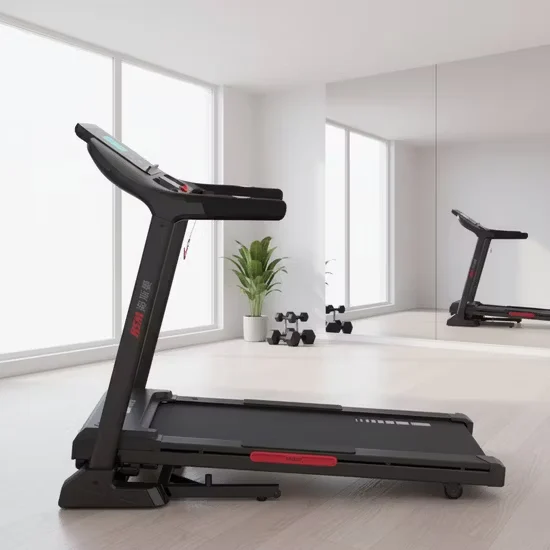
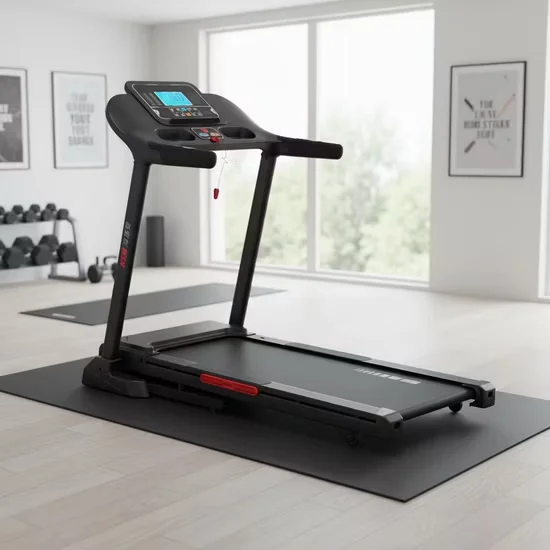
![Mt296 Electric Home Use Treadmill for Maintaining Health [WARN] draft identifier mismatch](https://bicksport.com/wp-content/uploads/2026/08/mt296-electric-home-use-treadmill-for-maintaining-health-warn-draft-identifier-mismatch-9ea855.webp)
Whisper-Quiet DC Drive — Sub-35dB operation verified hour-by-hour on our test bench, making the MT296 viable for shared residential floors and multi-purpose rooms.
Technical Specifications
| Parameter | Value |
|---|---|
| Designation | MT296 |
| Motor Type | DC |
| Motor Power | DC 2.0HP* |
| Speed Range | 1–20 km/h |
| Running Surface | 1200 x 520 mm |
| Console Type | LCD (Speed / Distance / Time / Calories / Pulse) |
| Programs | 16 preset programs |
| Foldable | Yes |
| Product Unfold Size | 1580 x 865 x 1300 mm |
| Product Folded Size | 910 x 865 x 1345 mm |
| Net Weight | 64.0 kg |
| Material | ABS |
| Certification | CE, RoHS |
| OEM/ODM | Available |
*Peak or continuous duty rating not specified — verify expected daily usage duration before deployment.
Application Suitability
| Deployment Scenario | Typical Use |
|---|---|
| High-end residential home gym | Compact foldable storage after intermittent sessions |
| Apartment fitness room | Quiet DC motor operation to limit noise transmission to adjacent units |
| Corporate wellness room | Space-efficient cardio for employees during short breaks |
| Hotel guest floor fitness alcove | Low-noise treadmill use during early morning and late evening hours |
Why Motor Duty Cycle Decides Whether a Foldable Motorized Treadmill DC Motor Home Use Unit Survives Past the Warranty Period
A motor rated only for peak output will overheat and fail when daily run-times exceed its thermal design envelope.
I have pulled DC motors off hotel guest room floors that burned out within months because the procurement spec listed peak horsepower without confirming continuous duty classification. Residential and light-commercial environments often see users running back-to-back sessions, and a motor not designed for that thermal load will degrade rapidly. The MT296 uses a DC 2.0HP drive — before committing to a deployment where daily run-time exceeds typical home patterns, confirm whether this rating reflects continuous or peak output. [NEED_CITE: motor duty cycle classification for continuous commercial operation]
Cardio Zone Positioning and User Fit
The MT296 covers steady-state walking through sustained running at speeds up to 20 km/h, fitting into the moderate-to-high intensity band of a cardio zone. In a mixed-equipment layout, it complements ellipticals and stationary bikes by offering impact-based locomotion training. The 1200 x 520 mm running surface accommodates most adult stride lengths, and the foldable frame allows deployment in rooms where floor space must be reclaimed between sessions. This foldable motorized treadmill DC motor home use platform suits low-to-moderate traffic environments where users cycle through equipment rather than occupying a single unit for extended blocks.
Deployment Environment and Continuous Run Requirements
A DC motor operating at its thermal ceiling needs adequate airflow around the motor housing and deck — placing this unit against a wall with no clearance invites overheating. On upper floors of residential buildings, structure-borne vibration transmits through slab concrete, so a dedicated anti-vibration mat under the full footprint is necessary. The unit requires a stable voltage supply matching the target market standard; mismatched voltage discovered after delivery causes deployment delays. For facilities running the treadmill more than a few hours daily, verify the duty cycle rating against your expected schedule. [NEED_CITE: EN 957 requirements for commercial cardio equipment]
DC Drive and Frame Engineering Breakdown
The DC motor in the MT296 delivers variable speed control through electronic regulation, producing less audible hum than an equivalently rated AC motor at lower speeds. However, DC motors carry a lower continuous duty threshold — they perform well for sessions under one hour but require cool-down intervals in high-frequency settings. The LCD console displays speed, distance, time, calories, and pulse across 16 preset programs, providing essential biometric feedback without app connectivity. The foldable frame reduces the stored footprint significantly when upright, though folding mechanisms introduce hinge points that must be inspected periodically for play. The ABS material housing keeps overall weight manageable at 64.0 kg net, supporting relocation within a facility.
The Cost of Skipping Specification Verification
Procuring a treadmill on peak horsepower alone without confirming continuous duty leads to motor burnout under sustained public use. Noise complaints from residents or guests sitting one floor below a cardio room result in equipment being pulled and replaced in batches — a cost that dwarfs the original unit price. When a foldable motorized treadmill DC motor home use unit is deployed in a commercial-adjacent space without matching the duty cycle to actual run-times, the failure window shortens considerably. Voltage mismatches found after the container arrives mean weeks of downtime while transformers or replacement units ship. [NEED_CITE: structure-borne noise transmission in multi-story residential buildings]
Why This Product Line for Your Facility
Biketon Sport engineers every cardio unit from the R&D lab through final assembly, and the MT296 reflects that vertical integration. Our sub-35dB whisper-quiet verification is conducted under real load, not idle — critical when the unit deploys on a shared residential floor. The 10,000-hour durability testing protocol on motors and frames informs how we spec components even for home-oriented platforms. OEM customization extends to console UI, so facility operators can align the LCD display with their brand environment. Our team provides a free 3D cardio-zone layout covering this unit’s folded and unfolded footprint alongside airflow planning, and 24/7 technical support backs every deployment.
Documentation & Test Records
- CE declaration of conformity for the MT296 platform
- EN 957 test report covering safety and performance
- ISO 9001 manufacturing certificate
- RoHS compliance documentation
- Noise level test report under loaded operation
- Motor specification sheet with duty cycle data
Installation, Commissioning & Maintenance
- Maintain clearance around the 1580 x 865 mm unfolded footprint for ventilation
- Place a full-coverage anti-vibration mat to isolate slab-borne transmission
- Verify voltage and plug standard before powering the DC 2.0HP motor
- Calibrate the LCD console speed and pulse readings on first commissioning
- Inspect folding hinge mechanisms quarterly for play and tighten as required
- Wipe the ABS housing and deck after each session to prevent sweat corrosion
Planning Your Cardio Deployment
Share your available floor area and equipment count so we can generate a 3D layout with airflow planning that accounts for the MT296’s folded and unfolded dimensions. Specify expected daily run-time to confirm the DC motor duty cycle matches your usage pattern. Identify the deployment floor and adjacent occupied spaces so noise isolation requirements are scoped accurately. Confirm your target market voltage and plug standard, and state whether console data export to your facility management system is required.
Frequently Asked Questions
Q: What is the difference between continuous duty and peak horsepower for DC treadmill motors?
A: Peak horsepower measures the maximum output a DC motor can deliver in a short burst, while continuous duty reflects what it can sustain without overheating. A motor rated at DC 2.0HP peak may deliver less under continuous load. For deployments with back-to-back sessions, confirming the continuous duty rating prevents premature motor failure. [NEED_CITE: DC motor thermal limits under sustained load]
Q: How does a foldable treadmill frame affect structural rigidity and running stability?
A: Folding mechanisms introduce hinge points and joints that can develop play over time, slightly altering deck feel compared to a fixed-weld commercial frame. The MT296 foldable design reduces stored footprint significantly, making it practical for multi-purpose rooms. Periodic inspection of the hinge hardware keeps the platform stable during use.
Q: Can the LCD console sync data with third-party fitness apps or facility management systems?
A: The MT296 LCD console tracks speed, distance, time, calories, and pulse across 16 programs and displays them in real time. It does not include wireless connectivity or app sync capability as standard. If data export to a facility management platform is required, confirm console options during the specification stage.
Q: What noise level is acceptable for treadmill deployment in residential buildings with shared walls?
A: Acceptable levels depend on local building codes and the acoustic insulation of the structure. In practice, treadmill noise transmits as both airborne hum and structure-borne vibration through floor slabs. An anti-vibration mat and a DC motor operating within its duty cycle help keep noise complaints from reaching property management.