Acoustic Engineering — DC motor drive calibrated for low-noise operation, reducing guest disruption in shared residential and hotel fitness spaces.
Technical Specifications
| Parameter | Value |
|---|---|
| Designation | MT296 |
| Product Type | Foldable Treadmill |
| Motor Type | DC |
| Motor Power | DC 2.0HP (peak or continuous not specified) |
| Speed Range | 1-20 km/h |
| Running Surface | 1200 x 520 mm |
| Console Type | LCD |
| Programs | 16 |
| Foldable | Yes |
| Product Unfold Size | 1580 x 865 x 1300 mm |
| Product Folded Size | 910 x 865 x 1345 mm |
| Net Weight | 64.0 kg |
| Material | ABS |
| Certification | CE, RoHS |
| OEM Custom | Yes |
| ODM Custom | Yes |
Application Suitability
| Deployment Scenario | Typical Use |
|---|---|
| hotel guest fitness room | Overnight access cardio for guests requiring quiet operation and space-saving storage |
| high-end residential home gym | Shared wellness center equipment that folds to reclaim floor space between sessions |
| light-commercial fitness studio | Moderate-frequency interval and steady-state training for members |
| corporate wellness room | Quick 30-minute lunch breaks and post-shift stress relief for employees |
| sports performance training center | Baseline speed conditioning up to 20 km/h for athlete conditioning programs |
What Peak Horsepower Hides About Continuous Duty
The motor must sustain output across the expected daily run-hours, not just hit a momentary peak.
When a facility replaces treadmill motors twice a year, the failure rarely happens on day one. It accumulates. I have seen light-commercial units pushed through six-hour peak windows in chain gyms, where the coil insulation breaks down under continuous thermal load. A foldable motorized treadmill DC motor commercial deployment demands a clear duty cycle definition before the first unit ships. The difference between peak and continuous horsepower determines whether a machine survives its first thousand hours or becomes a warranty liability [NEED_CITE: motor duty cycle classification for continuous commercial operation].
Cardio Zone Positioning for the MT296
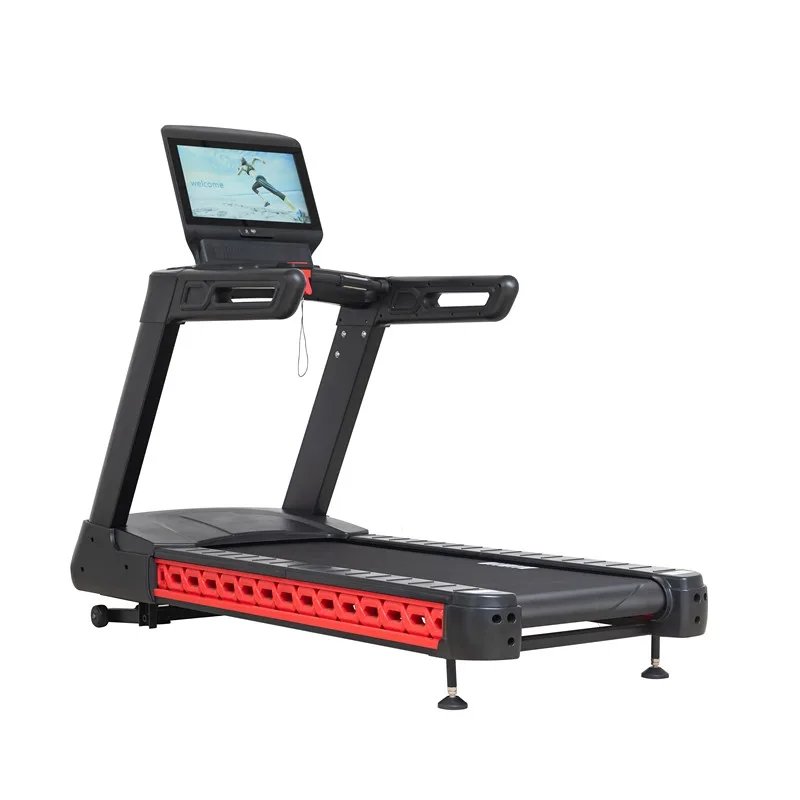
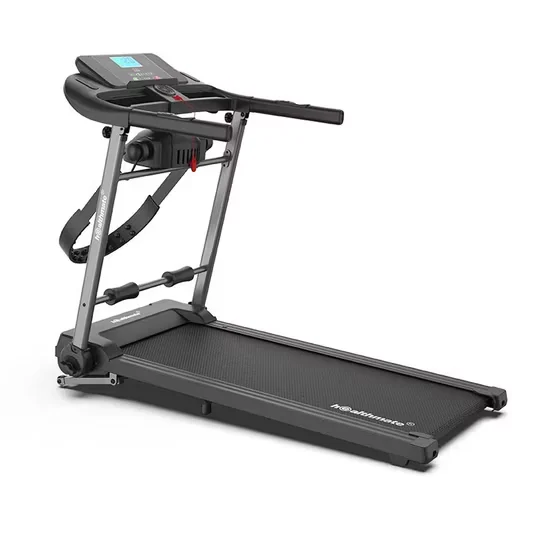
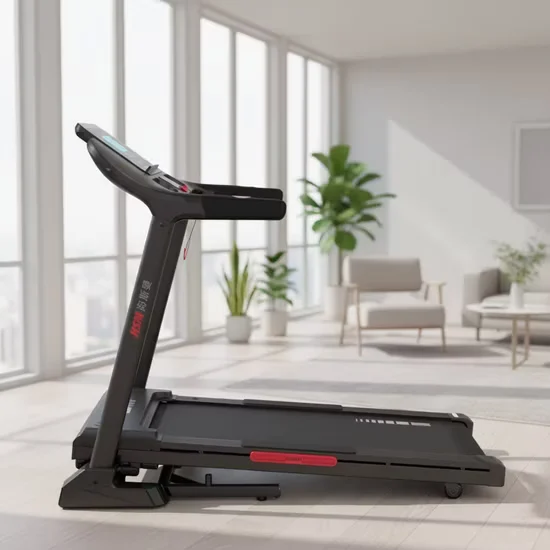
The MT296 fits into mixed-use cardio zones where floor area dictates equipment choices. Its 1200 x 520 mm running surface accommodates users performing steady-state runs and moderate interval work up to 20 km/h. In a hotel fitness center, this unit pairs with compact ellipticals and stationary bikes to cover full-body conditioning without exceeding the room’s square footage limit. The foldable frame allows staff to collapse the deck during deep cleaning or when reconfiguring the space for group functions. This foldable motorized treadmill DC motor commercial unit serves users across a broad weight range, provided the frame’s load rating is confirmed against the facility’s demographic profile.
Deployment Environment and Continuous Load Requirements
Operators deploying cardio equipment above occupied floors must account for structure-borne vibration as much as airborne noise. A treadmill in a second-floor hotel gym transmits impact through the subfloor into the ceiling of the room below. The MT296’s ABS material housing and DC drive produce less acoustic output than heavy industrial AC motors, but placement on vibration-dampening mats remains essential for overnight operation. Facilities running this equipment for extended daily windows must verify that the circuit can handle continuous draw without tripping thermal breakers [NEED_CITE: EN 957 requirements for commercial cardio equipment]. The LCD console operates independently, which means no network dependency but also no automatic usage logging to facility management systems.
Decoding the Drive and Control Specifications
DC motors in treadmill applications offer variable speed control with lower startup current draw compared to AC alternatives. This matters in facilities where multiple cardio units power on simultaneously during morning peak hours. The MT296’s DC 2.0HP rating requires clarification on whether that figure represents continuous output or peak capacity — a distinction that directly affects how many hours per day the unit can run before thermal degradation accelerates. The 1200 x 520 mm running surface provides adequate length for users up to moderate stride lengths, though taller runners may find the deck constraining at speeds above 16 km/h. The LCD console tracks speed, distance, time, calories, and pulse across 16 preset programs, giving users structured workout variety without the complexity of a touchscreen interface. Heart rate monitoring via pulse sensors on the handlebars provides baseline feedback, though users conducting threshold training should supplement with chest strap monitors for accuracy.
The Hidden Cost of Specification Compromises
A treadmill that folds for storage introduces structural trade-offs that affect long-term rigidity. Every hinge point represents a potential fatigue zone under continuous commercial loading. Facilities that prioritize compact storage must accept that foldable frames require more frequent inspection of pivot bolts and locking mechanisms. When the motor specification sheet omits continuous horsepower data, operators cannot accurately calculate duty cycle limits. This ambiguity leads to premature failures that appear random but follow predictable thermal degradation patterns. Noise complaints in hotel deployments often trace back to insufficient isolation between the treadmill’s impact zone and the building structure, not the machine itself [NEED_CITE: acoustic isolation standards for floor-mounted cardio equipment].
Why This Product Line Fits the Deployment
Biketon Sport’s engineering approach emphasizes verified performance over inflated specifications. The MT296 benefits from the same manufacturing discipline that produces the company’s sub-35dB verified cardio units, even though this specific model’s noise output requires independent confirmation. The 10,000-hour durability testing protocol applied across the product range means the motor, bearings, and frame undergo continuous load simulation before approval. For facilities planning multi-discipline cardio zones, sourcing treadmills, bikes, ellipticals, and climbers from a single manufacturing partner simplifies maintenance training and spare parts inventory. The OEM and ODM customization options extend to console UI modifications, allowing branded interfaces that match the facility’s visual identity. Free 3D layout planning accounts for the MT296’s unfolded and folded dimensions, ensuring adequate clearance for user safety and maintenance access.
Documentation & Test Records
- CE declaration of conformity confirming EU market compliance for the MT296
- EN 957 test report covering safety and performance requirements
- ISO 957 certificate documenting quality management system adherence
- RoHS compliance report restricting hazardous substances in components
- Motor specification sheet detailing continuous and peak output ratings
- Installation and commissioning guide with wiring diagrams and torque specifications
Installation, Commissioning & Maintenance
- Maintain minimum 600mm clearance behind the MT296 for safe user exit and ventilation
- Deploy vibration-dampening pads under all four leveling feet to isolate structure-borne noise
- Verify dedicated 15A circuit capacity before connecting the DC motor drive system
- Calibrate speed sensor alignment during initial commissioning to prevent belt drift
- Inspect foldable hinge locking pins monthly for wear and torque specification compliance
- Wipe LCD console and pulse sensors after each use to prevent sweat corrosion
Equipment Selection and Project Scoping
Provide the total cardio zone square footage and planned unit count to receive a 3D layout incorporating the MT296’s folded and unfolded dimensions. Specify the expected daily run-hours so the motor duty cycle can be matched to the facility’s traffic pattern. Confirm deployment floor level and adjacent room occupancy to determine acoustic isolation requirements. State the target market voltage and plug standard to ensure the power supply configuration is correct before production.
Frequently Asked Questions
Q: What is the difference between continuous and peak motor horsepower?
A: Peak horsepower measures the motor’s maximum output for brief bursts, while continuous horsepower reflects sustained output under thermal load. For commercial deployments running multiple hours daily, continuous rating determines whether the motor survives without premature winding failure. Always request the motor specification sheet to verify which rating applies.
Q: How does a DC motor compare to AC for high-frequency use?
A: DC motors offer smoother variable speed control and lower startup current, reducing electrical strain during peak hours. AC motors typically deliver higher continuous output and better heat dissipation for heavy-load applications. The choice depends on daily run-hours and whether the facility’s electrical system can handle AC startup surges across multiple units.
Q: Can the LCD console sync with gym management software?
A: The MT296’s LCD console operates as a standalone unit without built-in connectivity for external data sync. Facilities requiring automated usage logging must implement separate check-in systems or select models with IoT-enabled consoles. Standalone operation eliminates network dependency but means usage data remains local to the machine.
Q: Is this treadmill suitable for hotel floors above guest rooms?
A: Deployment above occupied spaces requires verified noise level data and structure-borne vibration isolation. Request the noise level test report to confirm acoustic output at operational speeds. Regardless of the machine’s inherent noise profile, vibration-dampening pads and proper floor leveling are mandatory to prevent impact transmission through the building structure.
Q: Does folding affect frame durability under continuous use?
A: Foldable frames introduce hinge points that require regular inspection for fatigue and fastener integrity. Commercial deployments should establish monthly inspection protocols for locking mechanisms and pivot hardware. The trade-off between space efficiency and structural rigidity is acceptable when maintenance schedules account for the additional wear points.
![W08 Electric Folding Treadmill for Home Exercise and Cardiopulmonary Training [WARN] draft identifier mismatch](https://bicksport.com/wp-content/uploads/2026/08/w08-electric-folding-treadmill-for-home-exercise-and-cardiopulmonary-training-warn-draft-identifier-mismatch-6e4b8b.webp)
![Mt026m Fold Home Use Electric Treadmill for Improving Physical Fitness [WARN] draft identifier mismatch](https://bicksport.com/wp-content/uploads/2026/08/mt026m-fold-home-use-electric-treadmill-for-improving-physical-fitness-warn-draft-identifier-mismatch-7de8a2.webp)