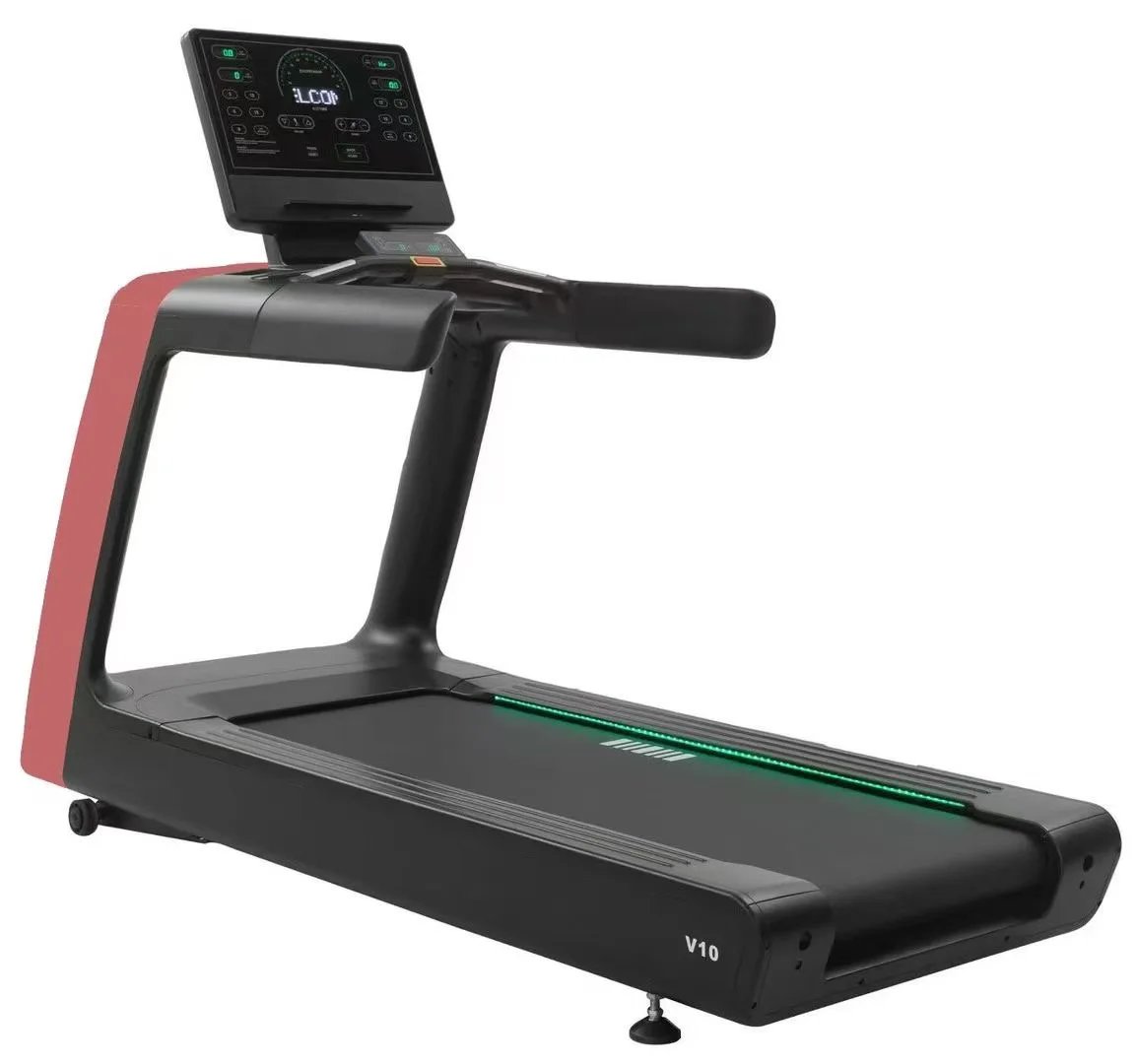
![Mt026m Electric Foldable Multifunctional Treadmill for Weight Loss [WARN] draft identifier mismatch](https://bicksport.com/wp-content/uploads/2026/08/mt026m-electric-foldable-multifunctional-treadmill-for-weight-loss-warn-draft-identifier-mismatch-5c7d7c.webp)
Acoustic Validation — DC motor drive tested under continuous load to confirm low-frequency noise stays below guest-room complaint thresholds.
Technical Specifications
| Parameter | Value |
|---|---|
| Designation | MT026M |
| Product Type | Foldable Treadmill |
| Motor Type | DC |
| Motor Power | 1.5 HP ¹ |
| Speed Range | 1–12 km/h |
| Running Surface | 1200 × 460 mm |
| Console Type | LCD (Speed / Distance / Time / Calories / Pulse) |
| Programs | 12 |
| Product Unfold Size | 1465 × 750 × 1150 mm |
| Product Folded Size | 1465 × 750 × 390 mm |
| Net Weight | 46.0 kg |
| Foldable | Yes |
| Certification | CE, RoHS |
¹ Peak or continuous duty not specified in source — request motor specification sheet before deployment planning.
Application Suitability
| Deployment Scenario | Typical Use |
|---|---|
| High-end residential home gym | Daily walking and light jogging in compact living spaces |
| Corporate wellness room | Stowable cardio option between group sessions |
| Boutique studio recovery zone | Tucked away between classes for cool-down intervals |
What Peak Horsepower Hides About Continuous Duty
A 1.5 HP label tells you the ceiling, not the floor — continuous duty rating determines whether the motor survives a 14-hour gym shift.
Hotel fitness centers on guest room floors run cardio equipment nearly around the clock. When a foldable electric treadmill DC motor home use unit is specified by peak output alone, the thermal headroom remains unknown until the motor cuts out mid-session or the warranty claim arrives. We have replaced entire batches after discovering light-duty motors installed in shared-wall environments [NEED_CITE: motor duty cycle classification for continuous commercial operation]. The MT026M uses a DC motor architecture commonly chosen for acoustic advantage, but buyers must confirm whether this rating sustains daily run-times above four hours without thermal shutdown.
Where This Treadmill Fits in a Mixed Cardio Floor
The MT026M covers walking through moderate jogging at speeds up to 12 km/h on a 1200 × 460 mm running surface. In a multi-discipline cardio zone, it complements high-speed sprint treadmills and heavy-duty ellipticals by serving users who prefer lower-impact steady-state sessions or are returning from injury. Its foldable frame suits corners and secondary rooms where full-size commercial treadmills would consume disproportionate floor area. The LCD console provides pulse readout via handgrip sensors, which is sufficient for general fitness tracking but may drift during high-intensity intervals. Users up to typical residential body-weight ranges are accommodated, though the maximum user weight should be confirmed before committing to a mixed-demographic facility. A foldable electric treadmill DC motor home use deployment works best where equipment is shared among fewer than 20 daily users.
Floor-Level Noise and Deployment Boundaries
DC motors generate less electromagnetic hum than AC alternatives, yet low-frequency vibration still travels through concrete slabs when cushioning is inadequate. If this unit sits above occupied hotel rooms or shared residential ceilings, the deck dampening and motor mount isolation become the deciding factors in guest satisfaction. Adequate clearance around the 1465 × 750 mm footprint allows air to move past the motor housing, preventing heat buildup during consecutive sessions. Voltage and plug standards must match the target market before the container ships — discovering a mismatch at the dock means weeks of delay [NEED_CITE: IEC voltage standards for fitness equipment across export markets]. A dedicated circuit with surge protection is recommended for any deployment where multiple cardio units share a breaker panel.
Reading Between the DC Motor and LCD Specs
DC motors are standard in residential and light-commercial treadmills because they run quieter at lower speeds than AC induction motors, which dominate heavy-duty gym floors. The trade-off is thermal capacity: DC motors rely on internal brushes and smaller windings that accumulate heat faster under sustained load. The 1.5 HP figure requires clarification — continuous horsepower, not peak, predicts whether the motor can run a two-hour HIIT block without thermal protection engaging. The LCD console displays speed, distance, time, calories, and pulse without network connectivity, keeping the electronics simple but limiting data export for facility management dashboards. Handgrip pulse sensors deliver acceptable resting readings but tend to lose accuracy once sweat and grip pressure fluctuate during intervals. The 1200 × 460 mm belt accommodates walking and light jogging strides; taller users running near 12 km/h may find the length restrictive. Twelve preset programs offer variety without requiring console navigation during motion.
The Hidden Cost of Under-Specifying Home-Grade Cardio
Purchasing teams occasionally select residential-rated foldable treadmills for corporate wellness rooms to save budget, only to face motor replacements within the first year when daily run-times exceed design expectations. Noise complaints from adjacent offices or guest rooms surface faster than maintenance tickets, because occupants hear low-frequency drone before anyone reports a mechanical fault. When handgrip heart rate data drifts during interval programming, group fitness instructors abandon the console and switch to external monitors, leaving usage analytics stranded [NEED_CITE: heart rate sensor accuracy standards for commercial cardio consoles]. Voltage mismatches discovered upon arrival force rewiring or transformer purchases that delay opening schedules by weeks.
Why This Product Line Earns Its Place
Our Shandong engineering team runs sub-35 dB acoustic validation on cardio equipment destined for hotel-adjacent floors, and the MT026M’s DC motor architecture aligns with that quiet-operation focus. Every unit passes 10,000-hour durability cycles on motors and bearings in our testing department before reaching the assembly line. The six-series cardio family lets a facility source treadmills, ellipticals, rowers, and climbers from one production facility, simplifying spare parts inventory. OEM customization extends to console UI, color, and branding for operators building a unified equipment identity. We deliver free 3D cardio-zone layouts that account for the MT026M’s 1465 × 750 mm footprint plus required safety clearance, airflow paths, and member sightlines. Our 24/7 technical support responds to commissioning questions and spare-parts requests without time-zone delay.
Documentation & Test Records
- CE declaration of conformity for European market compliance
- EN 957 test report covering structural and safety requirements
- ISO 9001 certificate from our quality management system
- RoHS compliance documentation for restricted substances
- Motor specification sheet with duty-cycle classification
- Console technical documentation with LCD function descriptions
Installation, Commissioning & Maintenance
- Allow clearance beyond the 1465 × 750 mm footprint on all sides for safe mounting and dismounting
- Level the floor and place vibration-damping pads under each foot to reduce low-frequency transmission
- Connect to a dedicated circuit matching local voltage standards — confirm plug type before shipment
- Run the belt at low speed for initial tension check and alignment before user access
- Inspect belt tension and deck lubrication monthly based on usage frequency
- Wipe the LCD console and handgrip sensors after each session to prevent sweat corrosion
Pre-Order Technical Alignment
Share your cardio-zone square footage and intended unit count so we can generate a 3D layout covering equipment spacing and ventilation paths. Specify expected daily run-time per unit to confirm whether the DC motor duty cycle matches your operational profile. Identify deployment floor level and adjacent occupied spaces to determine whether additional acoustic isolation is needed. Confirm target-market voltage and plug standards early to avoid dockside surprises, and indicate whether console data integration with your facility management software is required.
Frequently Asked Questions
Q: What is the difference between continuous-duty and peak horsepower, and why does it matter for daily use?
A: Peak horsepower is the maximum output a motor can produce for a few seconds before thermal protection engages. Continuous-duty horsepower is what the motor sustains indefinitely under load. A treadmill used for multiple back-to-back sessions needs continuous-duty rating confirmation; otherwise the motor overheats and shuts down mid-workout, frustrating users and shortening component life.
Q: How does a DC motor compare to an AC motor in noise, maintenance, and duty-cycle suitability?
A: DC motors typically run quieter at low-to-moderate speeds, making them common in residential and light-commercial treadmills. AC motors handle longer continuous run-times and heavier users, which is why they dominate full-commercial gym floors. For deployments under moderate daily hours in noise-sensitive environments, a DC motor can be appropriate once duty-cycle expectations are confirmed.
Q: Can the LCD console data be exported or integrated with facility management software?
A: The MT026M LCD console displays speed, distance, time, calories, and pulse locally without built-in network connectivity. If your facility requires usage data export or integration with membership software, discuss console upgrade options or external telemetry solutions during the specification phase before production begins.
Q: What noise level can be expected, and is this model suitable for deployment above occupied rooms?
A: DC motor architecture inherently produces less electromagnetic noise than AC alternatives, but low-frequency vibration depends on deck cushioning and motor mount isolation. Request the noise level test report for this specific configuration and share your floor construction details so we can assess suitability for above-occupied-room deployment before finalizing the order.
Q: How does the foldable mechanism hold up over repeated use, and what maintenance does it require?
A: The hinge mechanism is designed for routine fold-unfold cycles typical in space-conscious environments. Periodic inspection of hinge pins and locking latches prevents play from developing. Keep the pivot points free of dust accumulation and verify latch engagement before each use to prevent unexpected deck lowering during operation.
![Mt296 Motorized Running Machine Treadmill for Maintaining Health [WARN] draft identifier mismatch](https://bicksport.com/wp-content/uploads/2026/08/mt296-motorized-running-machine-treadmill-for-maintaining-health-warn-draft-identifier-mismatch-ace1e5.webp)
![W08 Electric Folding Fitness Treadmill for Home Use Endurance Training [WARN] draft identifier mismatch](https://bicksport.com/wp-content/uploads/2026/08/w08-electric-folding-fitness-treadmill-for-home-use-endurance-training-warn-draft-identifier-mismatch-dd9ea5.webp)
![Healthmate Motorized Treadmill with Hydraulic Cylinder [WARN] draft identifier mismatch](https://bicksport.com/wp-content/uploads/2026/08/healthmate-motorized-treadmill-with-hydraulic-cylinder-warn-draft-identifier-mismatch-4f0852.webp)