Acoustic and Thermal Management for Home Fitness Deployment — DC motor selection and folded footprint planning dictate whether a residential treadmill survives its first six months without overheating or disturbing adjacent rooms.
Technical Specifications
| Parameter | Value |
|---|---|
| Designation | MT026M |
| Product Type | Foldable Treadmill |
| Motor Type | DC |
| Motor Power | 1.5 HP (peak or continuous not specified) |
| Speed Range | 1–12 km/h |
| Running Surface | 1200 x 460 mm |
| Console Type | LCD (Speed / Distance / Time / Calories / Pulse) |
| Programs | 12 |
| Heart Rate | Handgrip pulse sensors |
| Foldable | Yes |
| Product Unfold Size | 1465 x 750 x 1150 mm |
| Product Folded Size | 1465 x 750 x 390 mm |
| Net Weight | 46.0 kg |
| Material | ABS |
| Color Options | Multicolor (options available) |
| Certification | CE, RoHS |
| OEM/ODM | Available |
Application Suitability
| Deployment Scenario | Typical Use |
|---|---|
| Small apartment home gym | Daily walking and light jogging with fold-away storage between sessions |
| Hotel guest room | In-room cardio option for guests preferring private workout space |
| Compact corporate wellness room | Low-traffic employee fitness corner with basic speed and pulse tracking |
| Bedroom workout space | Quiet morning or evening sessions where floor area must be reclaimed after use |
What Peak Horsepower Hides About Continuous Duty in a Foldable Home Treadmill DC Motor
A 1.5 HP rating without a duty-cycle label tells you almost nothing about real-world thermal endurance.
The spec sheet for this foldable home treadmill DC motor lists 1.5 HP, but the source does not confirm whether that figure represents peak burst output or continuous duty rating. In our noise and durability lab, we have repeatedly seen light-duty DC motors pushed past their thermal threshold when hotel operators deploy them on guest-room floors expecting commercial uptime [NEED_CITE: motor duty cycle classification for continuous commercial operation]. A motor rated only for peak output can sustain its top speed for short intervals before winding temperature climbs, triggering thermal cut-offs or, in worst-case scenarios, insulation breakdown. For a bedroom or apartment deployment where sessions stay under forty minutes and user weight remains moderate, a DC motor at this rating handles walking and light jogging adequately. Chain gym operators or hotel fitness centers running units back-to-back across twelve-hour windows need continuous-duty ratings and verified thermal headroom instead.
Where MT026M Sits in a Mixed Cardio Zone
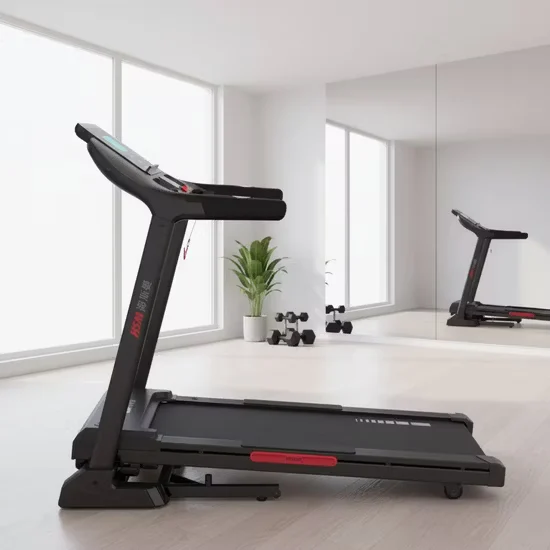
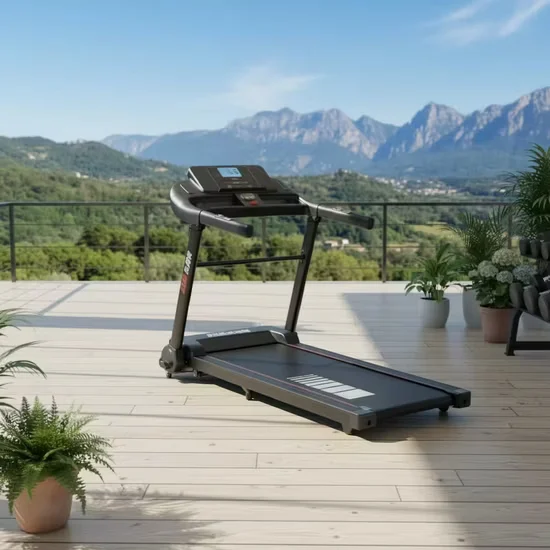
This foldable home treadmill DC motor covers walking through moderate-paced jogging, filling the low-to-mid intensity slot that ellipticals and rowers do not address. Its 1200 x 460 mm belt accommodates average-stride users for steady-state sessions, while the foldable frame lets a small apartment or hotel room reclaim floor space between workouts. In a compact corporate wellness room, it pairs with a stationary bike or a set of dumbbells to offer a complete cardio-plus-strength circuit without exceeding a three-unit footprint. Users with longer stride patterns or sprint-interval goals will find the surface and top speed limiting.
Continuous Run-Time Limits and Room-Level Deployment
A DC motor in this class carries a duty cycle suited to intermittent sessions rather than continuous back-to-back operation. In apartment and hotel-room settings, heat buildup inside the motor shroud depends on ambient ventilation; placing the unit against a wall with minimal clearance reduces convective cooling and shortens winding life [NEED_CITE: thermal management in compact treadmill motor housings]. Noise propagation through floor joists and party walls remains a variable that depends on sub-floor rigidity and the presence of a vibration-damping mat. Voltage must match the target market standard before the unit is energized, as running a 220–240 V motor on a 110 V supply causes immediate underperformance and excessive current draw. For any installation on an upper residential floor, a leveling check and isolation pad prevent low-frequency resonance from reaching occupied rooms below.
Reading the Drive Train and Console Data Path
DC motors deliver smooth torque ramp-up at low speeds, which suits walking and gradual pace increases. The distinction between peak and continuous horsepower matters because peak figures describe short-burst output during acceleration or incline surges, while continuous ratings reflect sustainable thermal load. This unit uses a basic LCD console displaying speed, distance, time, calorie estimates, and pulse via handgrip sensors. Handgrip pulse readings are adequate for casual pace checks but drift when palm moisture changes or grip pressure loosens during a run [NEED_CITE: accuracy comparison of handgrip versus chest-strap heart rate monitoring]. The console does not advertise wireless connectivity, so workout data stays on-screen rather than syncing to external facility management software. The 46 kg net weight and ABS frame material indicate a design priority on portability and fold-away convenience over the mass needed to absorb heavy-footstrike vibration.
The Hidden Cost of Specifying Below the Deployment Reality
When a home-duty treadmill lands in a hotel fitness center running ten hours daily, the motor windings degrade within months and the control board trips under sustained thermal stress. Noise complaints reach the front desk before maintenance receives a work order, because guests hear belt slap and motor whine through floor assemblies long before a technician logs the fault. Users who feel inadequate deck cushioning under a 1200 mm surface tend to shorten their sessions or abandon the equipment entirely, leaving the cardio zone underutilized [NEED_CITE: deck cushioning degradation and user retention in residential fitness equipment]. Voltage mismatches discovered after a container arrives force either transformer retrofits or full unit swaps, both of which delay facility opening.
Why This Product Line Addresses Those Gaps
Our engineering team tests components for 10,000 hours of continuous high-frequency operation so that motor and bearing specifications carry verified duty-cycle data rather than brochure claims. The six-series cardio family allows a facility to source treadmills, bikes, ellipticals, rowers, stair climbers, and spinning bikes from one production line, keeping maintenance parts and console interfaces consistent. For this model, OEM and ODM customization extends to color selection and branding, while the foldable frame design fits within a 3D cardio-zone layout that accounts for folded clearance and member circulation paths. Sub-35 dB whisper-quiet operation targets are validated through in-house acoustic measurement so that hotel-room and apartment deployments avoid noise-driven complaints. A free 3D layout and airflow plan confirms whether this unit’s 1465 x 750 mm unfolded footprint leaves adequate clearance for safe mounting and dismounting. Technical support remains available around the clock for commissioning and spare-parts coordination.
Documentation & Test Records
- CE declaration of conformity for European market entry
- EN 957 test report covering structural and safety requirements
- ISO 9001 certificate for manufacturing quality management
- RoHS compliance declaration for restricted substances
- Noise level test record specific to DC motor operating range
- Motor specification sheet with duty-cycle and thermal data
Installation, Commissioning & Maintenance
- Maintain minimum clearance around the 1465 x 750 mm unfolded footprint for safe user entry and exit
- Place a vibration-damping pad beneath the frame to reduce low-frequency transmission on upper floors
- Confirm voltage and plug standard match the target market before first power-on
- Inspect belt tension and alignment after the initial 20 hours of operation
- Wipe the LCD console and handgrip sensors after each session to prevent sweat corrosion
- Lubricate the running surface per the included maintenance schedule to preserve deck cushioning
Planning Your Equipment Inquiry
Share the room dimensions and intended unit count so that a 3D cardio-zone layout confirms spacing and airflow for each foldable home treadmill DC motor deployed. Specify expected daily run-time and average user profile to verify that the motor duty cycle matches the environment. Identify the deployment floor and adjacent occupied spaces to confirm acoustic requirements, and state the target-market voltage standard so that electrical configuration is correct before shipment.
Frequently Asked Questions
Q: What is the difference between peak and continuous horsepower in treadmill motors?
A: Peak horsepower describes the maximum output a motor can produce for short bursts during acceleration or heavy load. Continuous horsepower reflects the sustainable output the motor can maintain without overheating during extended sessions. For a foldable home treadmill DC motor used in light-duty environments, peak rating may suffice, but commercial or high-frequency deployments require verified continuous-duty figures to prevent thermal shutdowns and premature winding failure.
Q: Is a DC motor treadmill suitable for commercial gym environments?
A: DC motors suit intermittent, lower-volume usage typical of home gyms and hotel rooms where sessions are short and spaced apart. Commercial gyms running equipment for ten or more hours daily generally need AC motors rated for continuous duty with higher thermal margins. Deploying a DC motor unit in a high-traffic commercial cardio zone risks overheating, frequent thermal cut-offs, and shortened motor lifespan.
Q: How does foldable design affect frame rigidity and running stability?
A: Folding mechanisms introduce hinge points that can reduce overall frame stiffness compared to fixed-frame commercial treadmills. On a 46 kg unit, users may notice slight lateral movement during faster jogging or heavier footstrikes. The trade-off is significant floor-space recovery when the unit folds to 390 mm depth, making it practical for bedrooms and small apartments where permanent floor commitment is not feasible.
Q: Can the LCD console sync data with third-party fitness apps?
A: The LCD console on this model displays speed, distance, time, calorie estimates, and pulse through an integrated interface without documented wireless connectivity or third-party app sync. Users who need automated data export to facility management software or personal training apps should specify connectivity requirements during inquiry so that a console variant with appropriate data interfaces can be evaluated.
Q: What maintenance does a foldable home treadmill require for long-term durability?
A: Regular maintenance includes checking belt tension and alignment, lubricating the running surface, and cleaning sweat residue from the console and handgrip sensors. The folding hinge should be inspected periodically for bolt tightness. Motor ventilation openings must remain unobstructed to prevent dust accumulation and thermal buildup. Following these routines preserves deck cushioning performance and extends motor life under typical home-use duty cycles.
![Healthmate Durable Foldable Household Treadmill with DC Motor [WARN] draft identifier mismatch](https://bicksport.com/wp-content/uploads/2026/08/healthmate-durable-foldable-household-treadmill-with-dc-motor-warn-draft-identifier-mismatch-498ec6.webp)