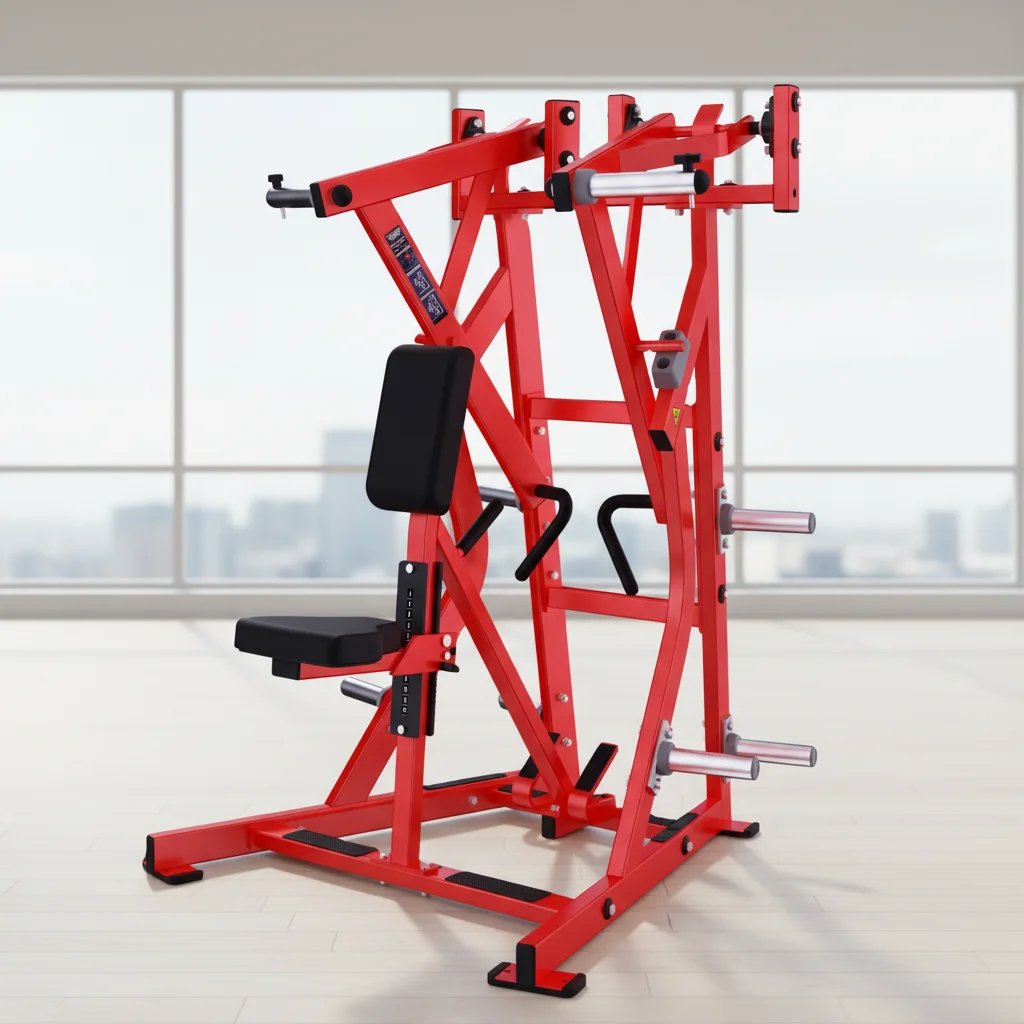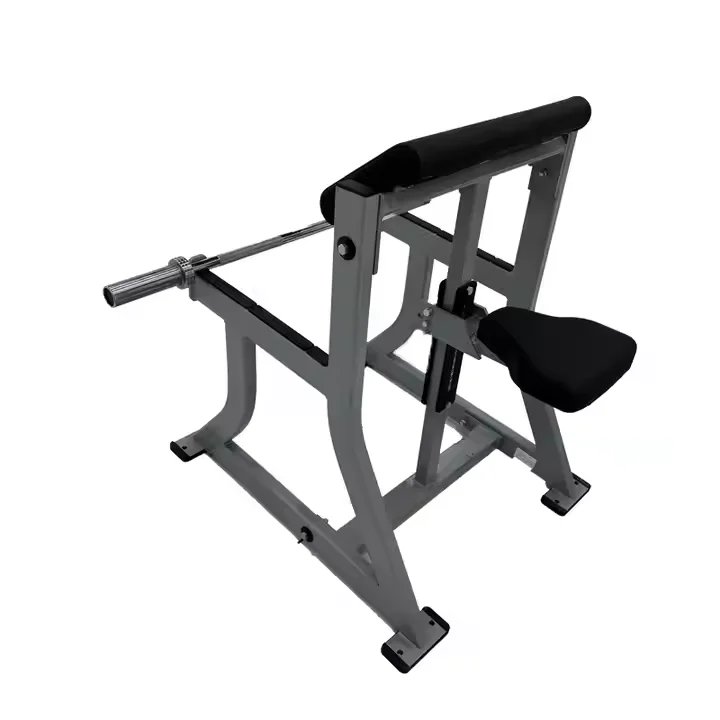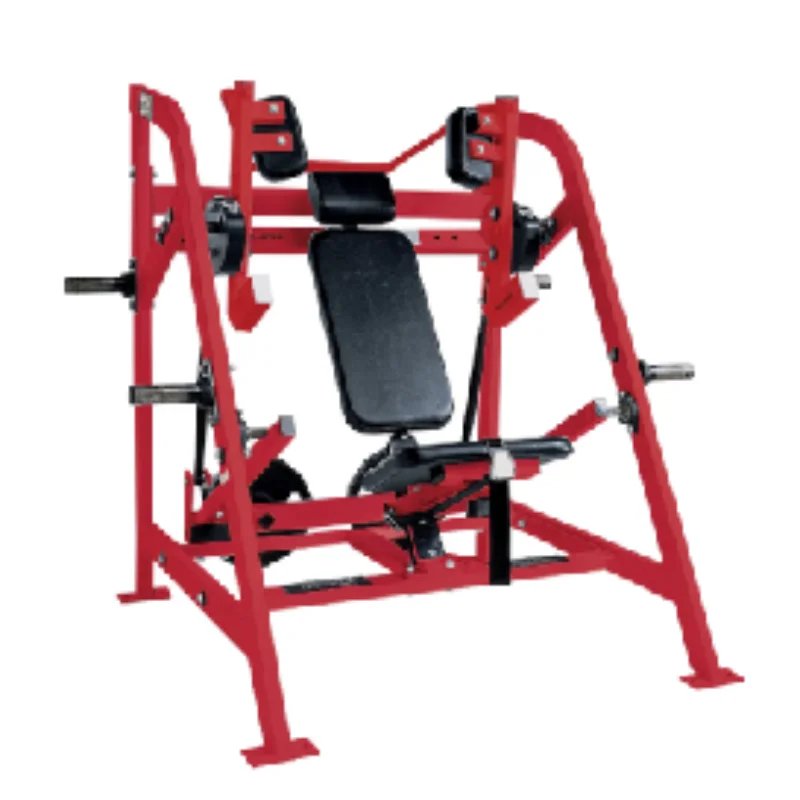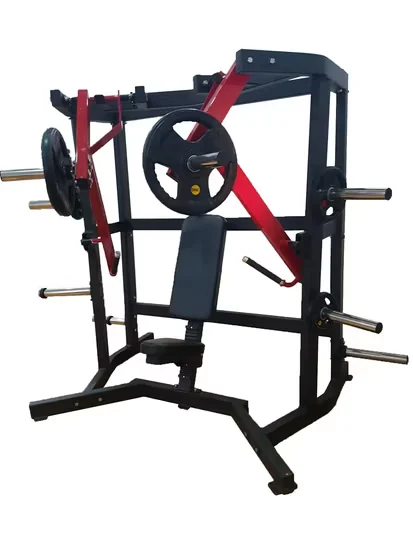
Steel Frame Durability — ISO-lateral independent arm articulation tested for continuous high-frequency bilateral chest pressing in commercial fitness facilities.
Technical Specifications
| Parameter | Value |
|---|---|
| Product Type | ISO-Lateral Chest Press Machine |
| Model NO. | 5019 |
| Exercise Part | Chest |
| Material | Steel |
| Resistance Type | ISO-Lateral Independent Arm |
| Product Dimensions | 1343 × 1981 × 1761 mm |
| Net Weight | 141 kg |
| Max User Weight | Accommodates diverse adult anthropometrics |
| Certification | ISO 9001, CE |
| Age Group | Adult |
| Gender | Unisex |
Application Suitability
| Deployment Scenario | Typical Use |
|---|---|
| Chain gym strength zone | High-frequency bilateral chest pressing with independent arm articulation for diverse membership |
| Corporate wellness room | Space-efficient chest development station for employee fitness programs |
| Community fitness center | Durable chest press accommodating varying user sizes throughout extended daily operation |
| Sports performance training center | Athlete-grade converging press motion for sport-specific upper body conditioning |
| Hotel fitness center | Compact footprint chest station for 24-hour guest access environments |
Why Fixed Bar Paths Drive Members Away From Chest Stations
ISO-lateral independent arm movement eliminates forced movement patterns that cause shoulder discomfort and reduce session completion rates.
Facility operators consistently report that strength machines with fixed bar paths generate joint complaints within the first weeks of member use. When a chest press forces both arms through an identical plane, users with asymmetrical strength or shoulder limitations compensate by shifting their torso, creating uneven loading and discomfort. Members who experience this during their first few sessions rarely return to that station, leaving the equipment underutilized while free weight benches develop queues [NEED_CITE: member retention correlation with strength equipment ergonomic design]. The ISO-Lateral Wide Chest Press commercial gym equipment addresses this through independent arm articulation that allows each side to follow a natural converging path, accommodating individual shoulder mechanics without forcing compensation patterns.
Positioning Within the Strength Training Zone
This ISO-Lateral Chest Press Machine covers the horizontal pressing movement pattern across moderate to heavy loading ranges, complementing incline press stations and cable fly systems within a comprehensive chest development area. The independent arm design serves both unilateral and bilateral work, reducing the need for separate single-arm machines in space-constrained deployments. Its 1343 × 1981 mm footprint positions naturally along perimeter walls with adequate clearance for plate loading, while the reinforced steel frame handles the repeated loading cycles typical of peak-hour gym traffic. The unisex ergonomic grip positioning accommodates users across a wide anthropometric range without requiring seat or handle adjustments between sets.
Continuous Operation and Facility Environment Requirements
In a commercial gym running twelve to sixteen hours daily, a chest press station may see dozens of users cycling through sets with minimal rest between loading changes. The pivot points and frame joints experience repeated stress cycles that demand precision machining and reinforced steel construction rated for continuous high-frequency public facility operation [NEED_CITE: commercial strength equipment duty cycle standards for pivot point wear]. Floor deployment requires level concrete with vibration-dampening pads beneath the frame base to prevent transmission to adjacent spaces, particularly when positioned above occupied floors. Adequate spacing between units—typically 600 mm lateral clearance and 900 mm rear clearance for plate loading—ensures safe member flow during peak usage periods without creating bottleneck congestion in the strength zone.
Engineering Behind the ISO-Lateral Articulation System
The independent arm mechanism relies on precision-machined pivot points that allow each press arm to follow a converging arc, matching the natural path of the pectoral muscles through the full range of motion. Unlike fixed bar chest presses where both hands are locked to a single axis, the ISO-lateral design lets each arm move independently, which means a user with left-side dominance or a previous shoulder injury can press without forcing the weaker side into an unnatural trajectory. The steel frame construction provides the structural rigidity necessary to maintain pivot point alignment under heavy asymmetric loading—when a user presses significantly more weight on one side, the frame must resist torsional stress without flexing. The 141 kg net weight reflects the material mass required for this stability, anchoring the machine firmly during aggressive pressing sets without requiring floor bolting in most commercial installations.
What Happens When Strength Stations Lack Commercial-Grade Construction
Chest press machines built to light-commercial specifications develop pivot point play within months of high-frequency deployment, creating a wobble that users perceive as instability and that accelerates bearing wear. Facilities that purchase based on price rather than duty cycle often face complete station replacement within the first year, as frame welds crack under repeated asymmetric loading and grip hardware loosens beyond field-serviceable limits [NEED_CITE: pivot point failure modes in commercial chest press deployments]. Beyond the direct replacement cost, the operational impact includes member complaints about equipment feel, personal trainers routing clients away from the station, and the visible presence of out-of-order signage that undermines confidence in the facility’s equipment investment.
Why This Product Line Addresses Facility Deployment Challenges
The reinforced steel frame and precision pivot system on this chest press machine reflect engineering priorities shaped by real deployment feedback from gym operators who experienced premature wear on competitor units. Every unit undergoes continuous cycle testing on the pivot mechanism to verify smooth articulation across the full range of motion under load, with documentation available for procurement review. The 3D strength zone layout service addresses spacing and member flow planning specific to this equipment’s 1343 × 1981 mm footprint, ensuring adequate plate loading clearance and sightline considerations within the broader training floor. OEM customization extends to frame color and branding, allowing chain operators to maintain visual consistency across locations. Technical support covers pivot point maintenance intervals and bearing replacement procedures, reducing long-term service dependency on external contractors.
Documentation & Test Records
- CE declaration of conformity confirming compliance with European machinery safety directives
- EN 957 test report validating structural integrity and safety requirements for stationary training equipment
- ISO 9001 certificate covering manufacturing quality management systems
- Frame durability test records documenting continuous load cycle performance
- Pivot point machining precision specifications and wear resistance data
- Installation and commissioning guide with spare parts list
Installation, Commissioning & Maintenance
- Position on level concrete with vibration-dampening pads; maintain 600 mm lateral and 900 mm rear clearance for plate loading access
- Verify all pivot point bolts are torqued to specification before first use; recheck after initial 500 use cycles
- Inspect pivot bearings quarterly for play or roughness; replace sealed bearings when articulation resistance increases noticeably
- Clean grip surfaces daily with non-corrosive sanitizer to prevent sweat residue buildup on steel contact points
- Check frame welds annually for stress cracking, particularly at pivot mounting junctions under heavy-use deployment conditions
Request a Strength Zone Equipment Assessment
Provide your strength zone floor area and current equipment inventory to receive a 3D layout plan that accounts for this machine’s footprint, plate loading clearance, and member traffic flow. Specify your facility’s daily operating hours and expected peak-hour throughput so the pivot mechanism duty cycle can be matched to your usage profile. Confirm your floor construction type and adjacent space occupancy to determine whether additional vibration isolation is required beneath the frame base.
Frequently Asked Questions
Q: How does ISO-lateral independent arm movement differ from a traditional plate-loaded chest press?
A: Traditional plate-loaded presses lock both hands to a single bar path, forcing symmetrical movement regardless of individual shoulder mechanics. The ISO-lateral design allows each arm to press independently along a converging arc, accommodating natural bilateral asymmetry. This reduces compensatory torso shifting during heavy sets and provides more comfortable pressing for users with previous shoulder limitations or strength imbalances between sides.
Q: What frame construction standards apply to commercial chest press deployment?
A: Commercial deployment requires steel frames engineered for repeated asymmetric loading without torsional flex or weld fatigue. The frame must maintain pivot point alignment under continuous high-frequency use, which demands precision machining and reinforced junction points at stress concentration areas. Facilities should request durability test records documenting load cycle performance rather than relying on static weight ratings alone.
Q: Why does independent arm articulation matter for injury prevention?
A: Fixed bar paths force users into movement patterns that may not match their individual joint geometry, creating shear stress on the shoulder capsule during heavy pressing. Independent arms allow each side to follow its natural path, reducing rotator cuff strain and accommodating users recovering from upper body injuries. This flexibility supports broader membership usage without requiring personal trainer supervision for safe operation.
Q: How should strength zone layout planning account for ISO-lateral chest press spacing?
A: Plan for the machine’s 1343 × 1981 mm footprint plus 600 mm lateral clearance on each side for member passage and 900 mm rear clearance for plate loading access. Position along perimeter walls to avoid creating traffic bottlenecks in central floor areas. Consider sightlines from the entrance and high-traffic cardio zones to ensure the station remains visible and accessible during peak usage periods.
Q: What maintenance do pivot points require in high-traffic commercial environments?
A: Pivot bearings should be inspected quarterly for play or roughness during articulation, with sealed bearing replacement when movement quality degrades noticeably. Bolt torque at pivot junctions requires checking after the initial break-in period and annually thereafter. Facilities running extended daily hours may need shortened inspection intervals based on actual use volume and loading patterns observed during peak traffic periods.