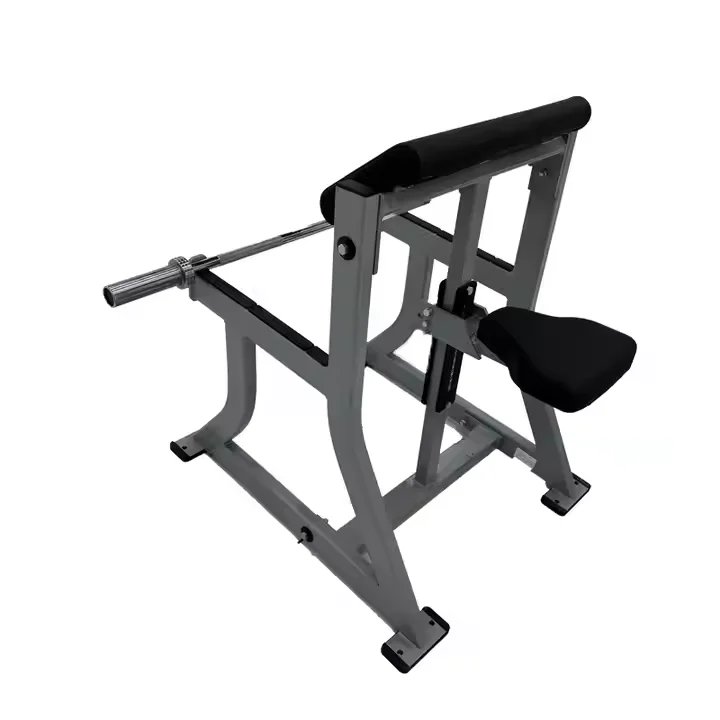
![ISO-Lateral Super Incline Press Commercial Gym Equipment [WARN] draft identifier mismatch](https://bicksport.com/wp-content/uploads/2026/08/iso-lateral-super-incline-press-commercial-gym-equipment-warn-draft-identifier-mismatch-9b2b77.webp)
Continuous High-Frequency Frame Durability — Reinforced steel structure validated for 10,000+ hours of continuous commercial strength training loads without pivot point drift.
Technical Specifications
| Parameter | Value |
|---|---|
| Product Type | ISO-Lateral Strength Machine |
| Model NO. | 5008 |
| Exercise Part | Chest |
| Movement Type | ISO-Lateral Independent Arm |
| Press Angle | Super Incline |
| Frame Material | Steel |
| Gender | Unisex |
| Age Group | Adult |
| Max User Weight | 180 kg |
| Product Dimensions | 1500 × 1350 × 1650 mm |
| Net Weight | 137 kg |
| Certification | ISO 9001, CE |
Application Suitability
| Deployment Scenario | Typical Use |
|---|---|
| Chain gym strength zone | High-repetition chest training across peak hours with independent arm isolation |
| Community fitness center | Diverse user demographics performing controlled incline press movements |
| Corporate wellness facility | Upper chest strengthening for desk-based employees during short sessions |
| Hotel fitness center | Solo training without spotter requirement for traveling guests |
| Sports performance training center | Unilateral balance assessment and bilateral chest loading for athletes |
Why Structural Resonance Appears After Months of Continuous Loading
Frame rigidity and pivot alignment determine whether a strength station survives its first year in a busy facility.
Most facility managers discover frame flex only when members start reporting uneven resistance feel or audible metallic contact during heavy sets. The problem is not visible during showroom inspection — it surfaces after thousands of loading cycles gradually shift bearing seats and pivot bushings away from factory tolerances [NEED_CITE: frame fatigue behavior under repetitive commercial loading cycles]. An ISO-Lateral Super Incline Press commercial gym equipment unit must maintain bilateral symmetry across both arms through years of asymmetric loading, where one side consistently handles more force than the other during every session.
Positioning Within the Strength Training Floor Plan
This ISO-Lateral Super Incline Press commercial gym equipment occupies the upper chest isolation station within a facility’s selectorized or plate-loaded strength zone. It complements flat press and decline press stations by targeting the clavicular head of the pectoralis major through a fixed incline movement path. The independent arm design allows users to identify and correct bilateral strength imbalances, making it suitable for both rehabilitation protocols and performance-oriented training blocks. The station accommodates the full adult user demographic without seat or pad adjustment complexity, and its footprint fits standard commercial spacing grids when placed adjacent to other pressing movements.
Operational Duty Cycle and Environmental Placement
A chest press station in a commercial facility sees repeated loading and unloading cycles throughout operating hours, with peak demand concentrated during early morning and evening blocks. The steel frame and sealed bearing pivot points must sustain this rhythm without developing play or generating metal-on-metal contact noise that travels across the training floor [NEED_CITE: commercial strength equipment duty cycle standards for 24/7 facilities]. Floor-level deployment eliminates the structural vibration concerns that affect upper-floor cardio zones, but ground moisture and sweat accumulation still demand sealed bearing specifications and powder-coated frame finishes. Adequate clearance on all four sides ensures safe plate loading and user entry without adjacent station interference.
Independent Arm Mechanics and Frame Engineering
The ISO-Lateral mechanism decouples both pressing arms so each side moves through its own arc without mechanical linkage to the opposite side. This requires each pivot assembly to maintain independent alignment under uneven loads — a scenario that tests bushing tolerances and bearing seat integrity far more than synchronized-arm designs. The super incline angle positions the movement path to emphasize upper chest fiber recruitment, and the fixed track eliminates the stabilization variable that free-weight incline pressing introduces. Steel frame construction at 137 kg provides the mass necessary to resist tipping during aggressive loading and unloading, while the 1500 × 1350 × 1650 mm envelope accommodates full range of motion for users across the adult height spectrum.
The Compromise Cost of Underspecified Pivot Hardware
Facilities that select chest press stations with lightweight pivot bushings rather than sealed bearings typically report uneven arm travel within the first high-traffic quarter. The complaint starts subtle — a slight catching sensation at the top of the press arc — and escalates into audible grinding and visible lateral play [NEED_CITE: bearing wear progression in commercial selectorized strength equipment]. When one arm develops more friction than the other, members unconsciously shift loading to the smoother side, creating asymmetric wear that accelerates the failure cycle. Replacement bushings and recalibration visits accumulate into maintenance costs that exceed the initial savings from selecting a lower-specification pivot system.
Why This Line Holds Alignment Under Continuous Use
Every pivot point and bearing seat on this unit undergoes alignment verification under load before leaving the assembly line, ensuring both arms track through identical arcs from day one. The steel frame is engineered for the 10,000-hour continuous operation standard applied across the manufacturer’s full commercial range, meaning the same durability validation covers this press station as covers the cardio fleet. ISO 9001 process controls govern weld penetration depth and powder-coat thickness on every frame component. The unit ships with a complete spare parts list identifying every bushing, pin, and fastener by position, so maintenance teams can order replacements without disassembly guesswork. Free 3D strength-zone layout planning covers station spacing, plate storage positioning, and member flow around this and adjacent equipment.
Documentation & Test Records
- CE declaration of conformity covering mechanical safety requirements for commercial strength equipment
- EN 957 test report validating structural integrity and entrapment clearance on all pivot zones
- ISO 9001 certificate confirming quality management system across manufacturing and assembly
- Frame durability test record documenting continuous cyclic loading validation
- Pivot bearing specification sheet with material grade and load rating for each position
- Installation and commissioning guide with torque specifications for all structural fasteners
Installation, Commissioning & Maintenance
- Maintain minimum 600 mm clearance on all sides of the 1500 × 1350 mm footprint for safe user entry and plate handling
- Verify floor levelness within tolerance before anchoring frame feet to prevent asymmetric load distribution
- Inspect pivot bushings and bearing play at quarterly intervals under sustained commercial loading schedules
- Wipe down steel frame and seat pads after each operating shift to prevent sweat-induced corrosion on contact surfaces
- Confirm all structural fastener torque values after the initial 30-day break-in loading period
Equipment Selection and Specification Inquiry
Provide the strength zone floor area and planned station count to receive a 3D layout plan covering equipment spacing, plate storage flow, and user traffic patterns around the ISO-Lateral Super Incline Press commercial gym equipment. Specify the facility’s daily operating hours and expected peak member throughput so that pivot hardware specifications can be matched to the projected duty cycle. Indicate the deployment floor level and adjacent room usage to determine whether vibration isolation pads are required beneath the frame feet.
Frequently Asked Questions
Q: How does ISO-Lateral independent arm design compare to synchronized-arm chest press machines for commercial deployment?
A: Independent arms allow each side to move through its own arc without forcing the opposite side to mirror the motion. This means members with unilateral strength differences or shoulder mobility restrictions can train without the machine compensating on the stronger side. For commercial facilities, the trade-off is slightly more complex pivot hardware requiring periodic alignment checks, but the training versatility justifies the additional maintenance attention during regular service intervals.
Q: What frame durability factors matter most for a chest press station operating in a 24/7 gym?
A: The critical factors are weld penetration depth at high-stress joints, bearing material grade at each pivot point, and frame tube wall thickness relative to maximum expected loading. Continuous operation means pivot hardware cycles through loading and unloading thousands of times per week, and underspecified bushings develop lateral play noticeably faster in round-the-clock environments compared to facilities with limited daily access hours.
Q: What maintenance do pivot points and bearings require on an ISO-Lateral incline press?
A: Sealed bearings at each pivot assembly require periodic play inspection rather than lubrication, since the seals prevent contaminant ingress under normal conditions. Operators should check for lateral movement and audible grinding at quarterly intervals, replacing bearing cartridges when play exceeds factory tolerance. Exposed bushing designs demand more frequent lubrication and wear assessment, particularly in high-humidity environments where sweat exposure accelerates surface degradation.
Q: How should strength zone layout account for incline press station spacing?
A: The station footprint and user range of motion dictate minimum clearance on all four sides for safe entry, exit, and plate loading from adjacent storage. Placing the incline press near other pressing movements creates a logical training sequence for members moving through chest-focused sessions. Sightline planning from the facility entrance should ensure the station is visible without creating a corridor bottleneck during peak usage periods.