
![HSM MT80 Foldable Treadmill with Hydraulic Cylinder for Household Use [WARN] draft identifier mismatch](https://bicksport.com/wp-content/uploads/2026/08/hsm-mt80-foldable-treadmill-with-hydraulic-cylinder-for-household-use-warn-draft-identifier-mismatch-ca9831.webp)
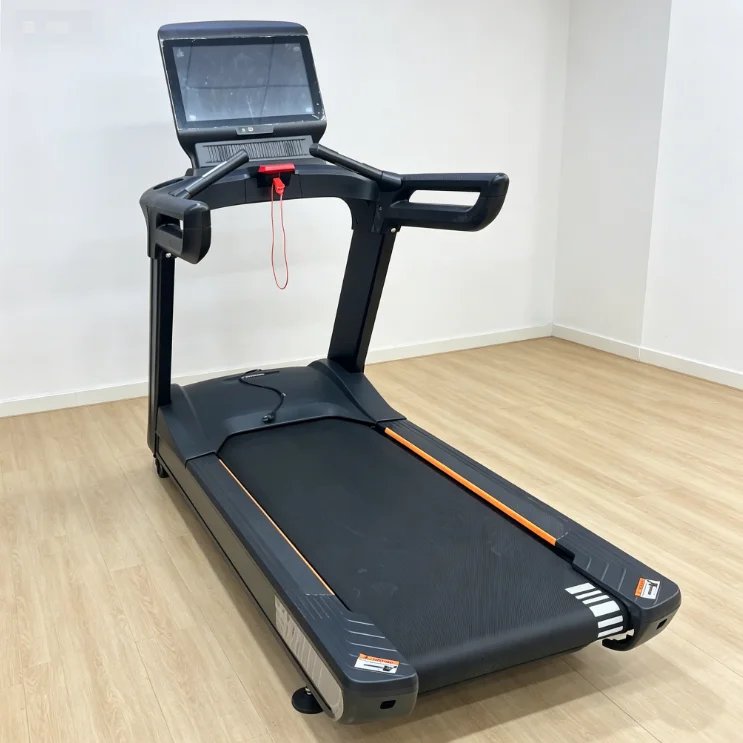
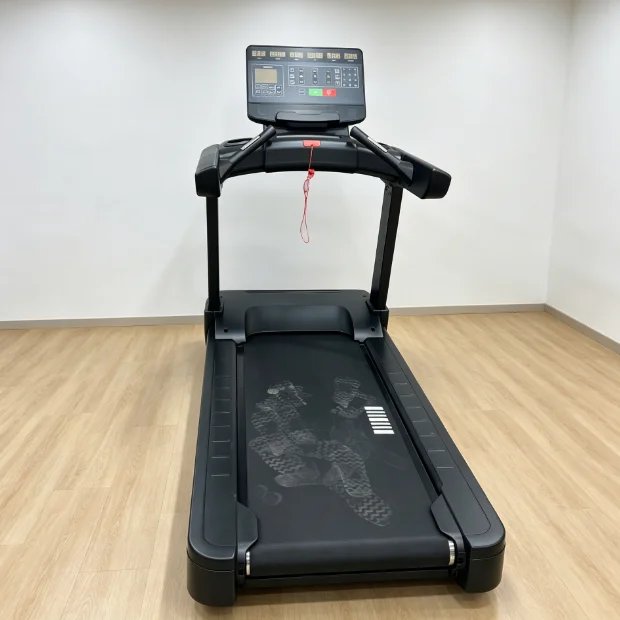
Quiet Drive Architecture — The MT80 foldable treadmill utilizes a DC motor system and a foldable frame design, reducing floor footprint while maintaining stable operation in home and light-commercial spaces.
Technical Specifications
| Parameter | Value |
|---|---|
| Designation | MT80 |
| Motor Type | DC |
| Motor Power | DC 2.5 HP* |
| Speed Range | 1–20 km/h |
| Running Surface | 1320 × 480 mm |
| Console Type | LCD (Speed / Distance / Time / Calories / Pulse) |
| Programs | 12 preset programs |
| Heart Rate | Handgrip pulse sensors |
| Product Dimensions | 1750 × 805 × 1380 mm (unfolded) |
| Net Weight | 62 kg |
| Gross Weight | 77 kg |
| Foldable | Yes |
| Color Options | Multicolor |
| Certification | CE, RoHS |
* Peak or continuous duty rating not specified in source — confirm with manufacturer documentation before deployment.
Application Suitability
| Deployment Scenario | Typical Use |
|---|---|
| High-end residential home gym | Space-saving cardio for daily intermittent sessions |
| Corporate wellness room | Foldable unit for multi-purpose rooms with limited storage |
| Light-commercial fitness studio | Flexible equipment layout in shared training spaces |
| Residential fitness center | Compact deployment in community housing clubhouses |
| Hotel guest floor fitness alcove | Quiet operation in noise-sensitive shared areas |
What Peak Horsepower Hides About Continuous Duty in a Foldable Treadmill
The MT80’s DC 2.5 HP motor suits intermittent use patterns — not continuous commercial duty cycles.
Household-grade DC motors installed in shared residential facilities or corporate wellness rooms often run far beyond their thermal design envelope. When a foldable treadmill with a DC motor is deployed in a setting where multiple users cycle through it daily, the motor’s thermal margin erodes quickly. I have seen this firsthand: equipment spec’d for light duty placed in high-traffic zones, with motors overheating within months. The DC 2.5 HP rating on this foldable treadmill DC motor household commercial unit requires verification — whether it reflects continuous output or peak burst capacity determines whether it survives six months in a corporate wellness room with back-to-back lunchtime sessions. [NEED_CITE: motor duty cycle classification for continuous commercial operation]
Where This Foldable Treadmill Fits in a Cardio Zone
The MT80 covers steady-state walking through moderate-intensity running across its 1–20 km/h speed range, serving users focused on cardiovascular conditioning and daily movement. In a cardio zone, it complements higher-capacity units by handling overflow traffic and serving space-constrained corners where a full-frame treadmill cannot fit. The 1320 × 480 mm running surface accommodates walking and jogging gaits for average-height users, though taller runners may find the deck length restrictive during sustained sprints. Handgrip pulse sensors provide basic heart rate feedback, suitable for general monitoring during moderate sessions. The foldable treadmill DC motor household commercial configuration positions this unit as a flexible deployment option rather than a primary workhorse.
Deployment Environment and Daily Runtime Boundaries
The DC motor in this unit performs reliably under intermittent use — typically one to two hours per day with cooldown intervals between sessions. Noise transmission through floor structures is a consideration when deploying on upper hotel floors or above occupied residential units; requesting a noise level test report clarifies whether the operational profile suits noise-sensitive environments. Ventilation around the motor housing must remain unobstructed, with clearance on all sides to prevent thermal accumulation during extended sessions. Voltage and plug compatibility with the target market must be confirmed before shipment to avoid on-site adapter failures. Floor leveling and a vibration-dampening mat further reduce transmitted vibration in shared spaces. [NEED_CITE: EN 957 requirements for commercial cardio equipment deployment environments]
DC Motor, LCD Console, and Frame Rigidity Trade-Offs
DC motors deliver smooth acceleration and lower initial cost compared to AC alternatives, but their brush assemblies wear under sustained load — making them better suited to home and light-commercial patterns than 24/7 gym environments. The peak versus continuous horsepower distinction matters: a DC 2.5 HP peak rating means continuous output is lower, which directly affects speed stability under heavier users during incline or high-speed segments. The LCD console displays speed, distance, time, calories, and pulse without external app connectivity — this limits data tracking to on-unit feedback, which is adequate for users who do not require facility management system integration. Handgrip pulse sensors drift during high-intensity intervals when grip pressure fluctuates, a known limitation compared to chest strap telemetry. The foldable frame introduces a hinge mechanism that, while enabling storage, inherently reduces torsional rigidity compared to a welded fixed-frame design.
The Hidden Cost of Underspec’ing Foldable Cardio Equipment
Deploying household-spec motors in corporate wellness rooms with daily lunchtime rushes leads to premature thermal shutdowns and eventual motor burnout, disrupting member routines and triggering replacement cycles. Noise complaints from adjacent occupied spaces — hotel rooms, apartments, office floors — often surface only after installation, forcing costly relocations or wholesale equipment swaps. Handgrip-only heart rate monitoring creates data gaps during interval sessions where users release the grips, leaving workout logs incomplete. Facilities that skip voltage verification before container shipment face weeks of downtime while sourcing adapters or rewiring units. Each of these failures traces back to specification gaps that could have been caught during the procurement phase. [NEED_CITE: common deployment failures in light-commercial cardio equipment]
Why This Product Line for Your Facility
Biketon Sport verifies sub-35 dB operation across its commercial range, a benchmark applicable when evaluating where this foldable unit sits in a mixed cardio zone. The six-series cardio family — from treadmills to stair climbers — means a facility can source every discipline from one engineering standard and one support channel. OEM customization extends to console UI, color, and specification adjustments at flexible MOQ, allowing brand-specific deployments. Free 3D cardio zone layout and airflow planning covers the MT80’s 1750 × 805 mm footprint plus required clearance for safe user entry and exit. The 10,000-hour durability testing protocol applied across the commercial range provides a reference point for assessing this DC motor unit’s positioning within the lineup. Technical support responds around the clock, with spare parts logistics covering international deployments.
Documentation & Test Records
- CE declaration of conformity for market entry compliance
- EN 957 test report covering structural and safety requirements
- RoHS compliance certificate for restricted substance limits
- Noise level test report for deployment in sensitive environments
- Motor specification sheet clarifying duty cycle ratings
- Installation and commissioning guide with foldable mechanism setup instructions
Installation, Commissioning & Maintenance
- Allow 1750 × 805 mm footprint plus clearance for safe user entry and folding operation
- Level the floor and place a vibration-dampening mat beneath the unit to reduce structure-borne noise
- Confirm voltage and plug type match target market standards before powering the DC motor
- Calibrate speed and distance readings during first startup before opening to users
- Lubricate the running belt and check tension at intervals specified in the commissioning guide
- Wipe the LCD console and handgrip sensors after each session to prevent sweat corrosion
Planning Your Cardio Equipment Procurement
Provide your cardio zone square footage and target unit count to receive a 3D layout with airflow and sightline planning tailored to this foldable treadmill’s dimensions. Specify expected daily runtime per unit to confirm whether the DC motor duty cycle aligns with your traffic pattern. Identify the deployment floor level and adjacent occupied spaces so noise requirements can be matched to test data. Confirm your target market’s voltage and plug standard before production to prevent on-site incompatibility. Indicate whether console data must integrate with existing facility management software to determine if this LCD configuration meets your connectivity needs.
Frequently Asked Questions
Q: Is a DC motor suitable for my facility’s daily usage pattern?
A: DC motors perform well under intermittent use — typically one to three hours per day with rest intervals between sessions. They suit home gyms, corporate wellness rooms, and light-commercial studios where continuous all-day traffic is not expected. For 24/7 gym environments with back-to-back users, an AC motor with continuous duty rating is the appropriate specification.
Q: What is the difference between peak horsepower and continuous duty horsepower?
A: Peak horsepower measures the motor’s maximum short-burst output, while continuous duty reflects sustained power delivery under load. A DC 2.5 HP peak rating means continuous output is lower. Request the manufacturer’s motor specification sheet to confirm continuous duty values before matching equipment to your facility’s daily traffic volume.
Q: How does foldable design affect frame rigidity over time?
A: The hinge mechanism that enables folding introduces a structural joint that reduces torsional rigidity compared to a fully welded fixed frame. This trade-off is acceptable for intermittent use in space-constrained environments but may accelerate wear under high-frequency commercial deployment where users apply lateral forces during dynamic movement.
Q: Can the LCD console data sync with facility management software?
A: The MT80’s LCD console displays real-time workout metrics on-screen but does not include IoT connectivity or external app synchronization. Facilities requiring usage data integration with management platforms should specify a console with network connectivity from the commercial range.
![W08 Electric Folding Treadmill for Cardiopulmonary Training Home Use [WARN] draft identifier mismatch](https://bicksport.com/wp-content/uploads/2026/08/w08-electric-folding-treadmill-for-cardiopulmonary-training-home-use-warn-draft-identifier-mismatch-cfef96.webp)
