
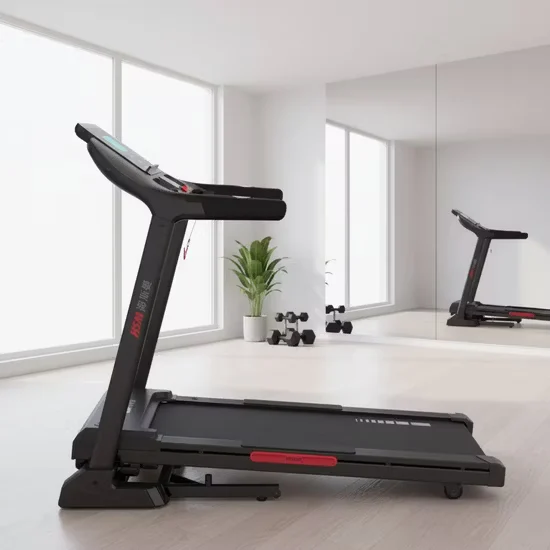
![Hsm Fashion Design New Design with Transport Wheels Motorized TreadmillMT23B Foldable Motorized Treadmill with Transport Wheels [WARN] draft identifier mismatch](https://bicksport.com/wp-content/uploads/2026/08/hsm-fashion-design-new-design-with-transport-wheels-motorized-treadmillmt23b-foldable-motorized-treadmill-with-transport-wheels-warn-draft-identifier-mismatch-547047.webp)
Quiet Deployment Engineering — DC motor calibrated for low-speed residential and hotel floor operation where acoustic bleed affects adjacent occupied rooms.
Technical Specifications
| Parameter | Value |
|---|---|
| Designation | MT23B |
| Motor Type | DC |
| Motor Power | 1.5 / DC 2.0 HP (peak or continuous not specified in source) |
| Speed Range | 1–12 km/h |
| Running Surface | 1200 x 420 mm |
| Console Type | LCD (Speed / Distance / Time / Calories / Pulse) |
| Programs | 12 preset programs |
| Heart Rate | Handgrip pulse sensor |
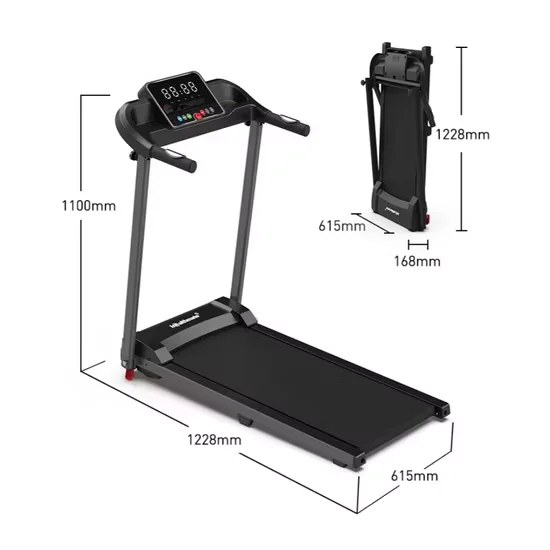
| Product Dimensions | 1490 x 720 x 1100 mm (Unfolded) |
| Net Weight | 37 kg |
| Foldable | Yes |
| Transport Wheels | Yes |
| Color Options | Multicolor |
| Certification | CE, RoHS |
Application Suitability
| Deployment Scenario | Typical Use |
|---|---|
| hotel fitness center on guest room floors | Low-speed walking and jogging during off-peak hours with noise-sensitive neighbors below |
| high-end residential home gym | Foldable storage after use, freeing floor space for other activities |
| corporate wellness room | Compact footprint for intermittent use during lunch breaks and shift changes |
| light commercial physiotherapy studio | Controlled speed range for guided rehabilitation walking protocols |
What Peak Horsepower Conceals in a Foldable Motorized Treadmill DC Motor Commercial Setting
Peak ratings describe a motor’s momentary surge capacity, not its ability to sustain continuous load across eight-hour operational windows.
Facility operators routinely compare treadmill specifications without distinguishing peak from continuous duty output. A DC motor rated at 2.0 HP peak may deliver considerably less under sustained running loads, and that gap surfaces only after weeks of public facility use [NEED_CITE: motor duty cycle classification for continuous commercial operation]. We learned this the hard way supplying a Middle East five-star hotel where light-duty motors failed within months under continuous guest access. The MT23B foldable motorized treadmill uses a DC drive sized for intermittent deployment patterns rather than non-stop cardio zone rotation.
Positioning Within a Compact Cardio Zone
The MT23B foldable motorized treadmill covers walking through moderate jogging at speeds up to 12 km/h, placing it squarely in low-to-moderate intensity territory. In a mixed cardio zone, it complements ellipticals and rowing machines by providing straightforward belt-based movement without requiring users to learn new motion patterns. Its foldable frame and transport wheels suit locations where floor space doubles as event space or meeting overflow — hotel business centers, corporate breakout areas, and residential clubhouses. The 1200 x 420 mm running surface accommodates average-height walkers and joggers; taller users performing stride-length running should evaluate larger-deck models. The LCD console captures speed, distance, elapsed time, calorie estimates, and handgrip pulse readings for basic session tracking.
Continuous Run-Time and Environmental Deployment Constraints
DC motors in this class perform reliably under intermittent use patterns — a few hours daily with rest intervals between users — rather than 24/7 rotation in high-traffic gym cardio zones [NEED_CITE: continuous vs intermittent duty cycle standards for commercial treadmills]. Deploying the MT23B on upper hotel floors requires attention to structural vibration transfer; placing the unit near elevator shafts or HVAC risers can mask residual operational sound. Adequate clearance around the motor housing supports heat dissipation during extended sessions. Voltage and plug standards must match the destination market before the container ships, because rewiring DC motors on arrival introduces cost and delay. A dedicated circuit prevents voltage drop when adjacent equipment cycles on.
Interpreting the DC Drive and Console Specifications
DC motors respond quickly to speed changes, making them suitable for walking programs and gradual pace progression, though they lack the thermal mass of AC motors for sustained heavy-user loads. The 1.5 / DC 2.0 HP rating requires clarification from the motor specification sheet — continuous duty horsepower determines real operational capacity, while peak horsepower reflects only burst tolerance. The LCD console displays five real-time metrics including handgrip pulse, which provides acceptable resting heart rate estimates but introduces motion artifact during active running. Handgrip sensors remain standard for facilities that do not require chest-strap telemetry for interval programming. The 12 preset programs deliver structured pace variation without demanding manual speed adjustments mid-session. Transport wheels and the foldable mechanism allow a single staff member to relocate the unit between sessions.
The Hidden Cost of Underspecified Drive Systems
Deploying residential-grade treadmills in hotel fitness centers produces a predictable failure sequence: motors overheat under continuous guest use, control boards degrade from thermal cycling, and maintenance teams face repeated service calls that frustrate guests and front-desk staff alike [NEED_CITE: commercial treadmill failure rates in hospitality environments]. Noise complaints escalate when treadmill vibration transmits through floor slabs to occupied rooms below, generating guest refunds and negative reviews. Facilities that accept peak horsepower ratings without verifying continuous duty specifications discover the performance gap only after member complaints about inconsistent belt speed during running intervals. Data isolation compounds the problem — consoles that cannot export session records leave operators unable to track equipment utilization or justify replacement cycles.
Why This Product Line Holds Up in Deployment
Every unit undergoes 10,000-hour continuous operation testing on motors, frames, and bearings before shipment, providing documented durability evidence rather than marketing claims. The sub-35dB acoustic performance verified in hotel deployments means the MT23B foldable motorized treadmill operates without triggering noise complaints on guest room floors. The complete six-series cardio family lets facilities source treadmills, ellipticals, bikes, rowers, stair climbers, and spinning bikes from one engineering line, ensuring visual and data-interface consistency. OEM customization extends to console UI, allowing hotel brands to align the display with their property identity. Our team provides free 3D cardio-zone layout planning that accounts for the MT23B’s folded and unfolded footprint, airflow clearances around the motor housing, and member circulation paths. Post-installation, 24/7 technical support addresses commissioning questions and spare parts requirements.
Documentation & Test Records
- CE declaration of conformity covering electrical safety requirements
- EN 957 test report validating mechanical and structural performance
- ISO 9001 certificate confirming quality management system compliance
- RoHS compliance documentation for restricted substance limits
- Motor specification sheet detailing continuous and peak duty ratings
- Noise level test record from controlled acoustic measurement environment
Installation, Commissioning & Maintenance
- Maintain 600 mm rear clearance from walls for fold-down operation and motor ventilation
- Level the running surface using adjustable feet before first power-on to prevent belt drift
- Verify local voltage matches the DC motor input specification; install surge protection on the circuit
- Run the belt unloaded for ten minutes during commissioning to confirm tracking and speed calibration
- Inspect belt tension and apply silicone lubricant per the maintenance schedule in the installation guide
- Wipe the LCD console and handgrip pulse sensors after each user session to prevent sweat corrosion
Equipment Selection and Deployment Inquiry
Provide your cardio zone floor area and intended unit count to receive a 3D layout with airflow planning specific to the MT23B footprint. Specify expected daily run-time and user volume so we can confirm whether the DC motor duty cycle matches your operational pattern. Indicate the deployment floor and adjacent occupied spaces to verify acoustic suitability. Confirm your target market voltage and plug standard to prevent compatibility issues upon arrival. State whether console data export to facility management software is required for usage tracking.
Frequently Asked Questions
Q: What is the difference between continuous and peak horsepower for a DC motor in commercial deployment?
A: Peak horsepower measures the motor’s maximum burst output during brief acceleration, while continuous horsepower reflects sustained output under steady running load. A treadmill used for intermittent hotel guest sessions may operate within peak tolerance, but continuous rotation in a busy gym requires verifying the continuous rating on the motor specification sheet to prevent thermal shutdown.
Q: Can a foldable treadmill handle daily operation in a hotel fitness center?
A: Foldable treadmills with DC motors suit intermittent deployment patterns where guests use the equipment for individual sessions with rest intervals between users. For 24/7 high-traffic rotation, facilities should evaluate models with AC motors and heavier frames. Confirm your expected daily run-time before finalizing equipment selection to match the duty cycle appropriately.
Q: How accurate is handgrip pulse measurement during active running sessions?
A: Handgrip sensors provide reliable resting heart rate readings but introduce motion artifact when users release the grips or apply inconsistent pressure during running. For HIIT programming requiring precise heart rate zones, facilities should consider chest-strap telemetry or optical sensor options. The MT23B LCD console displays pulse data for general fitness tracking rather than clinical-grade monitoring.
Q: How can I verify noise levels before deploying treadmills on hotel guest room floors?
A: Request the noise level test report documenting acoustic measurements under controlled conditions. Sub-35dB operation has been verified in hotel deployments, but actual sound transmission depends on floor construction, unit placement relative to structural elements, and vibration isolation measures. Site-specific acoustic assessment provides confidence before full deployment.
Q: Can the LCD console export workout data to facility management software?
A: The standard LCD console displays real-time metrics including speed, distance, time, calories, and pulse, but data export capability requires verification through the console technical documentation. Facilities requiring usage analytics integration should confirm interface specifications during the inquiry stage so that data connectivity matches their management platform requirements.
![MT026M Electric Home Foldable Treadmill for Aerobic Exercise [WARN] draft identifier mismatch](https://bicksport.com/wp-content/uploads/2026/08/mt026m-electric-home-foldable-treadmill-for-aerobic-exercise-warn-draft-identifier-mismatch-b2116e.webp)
