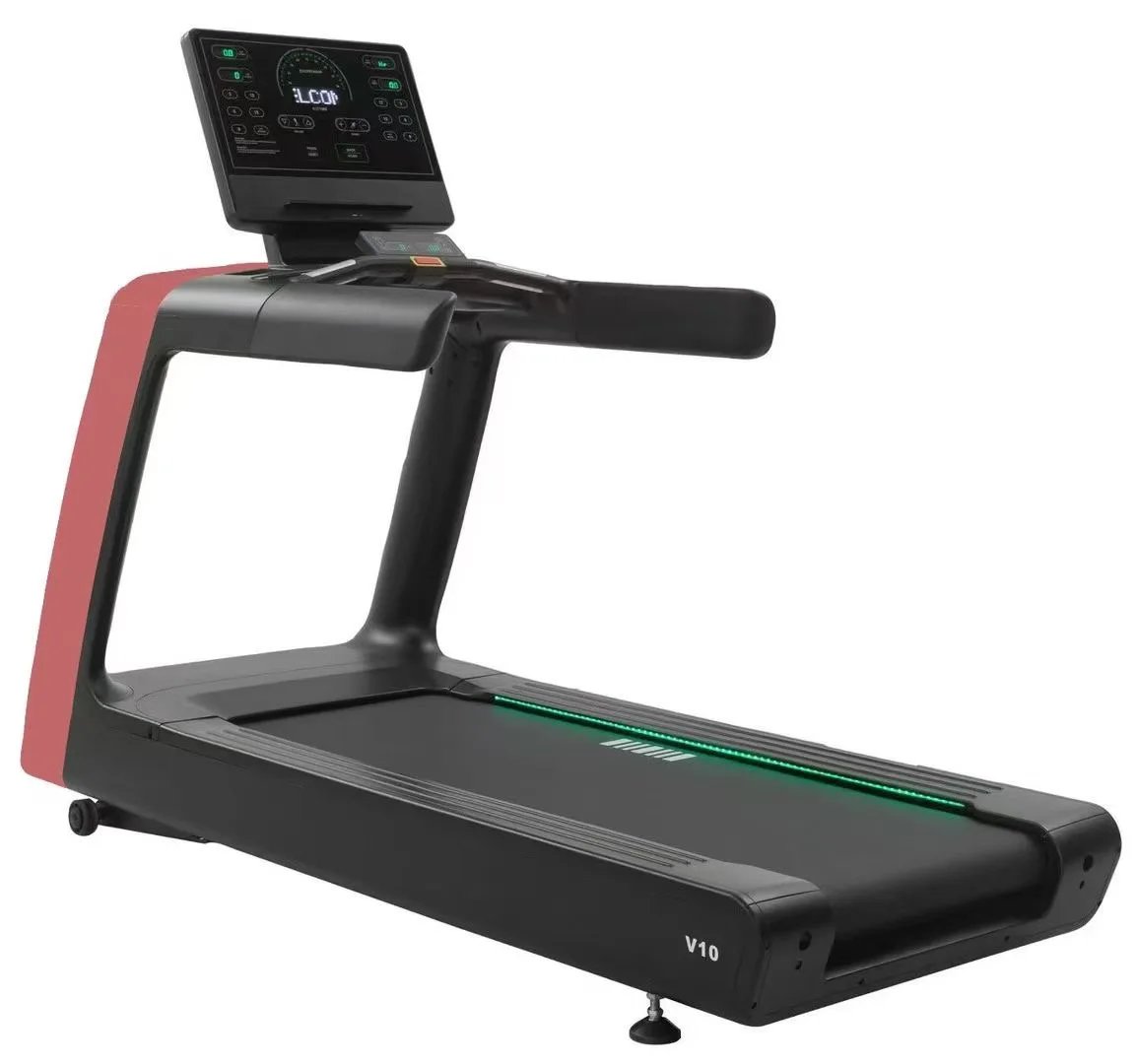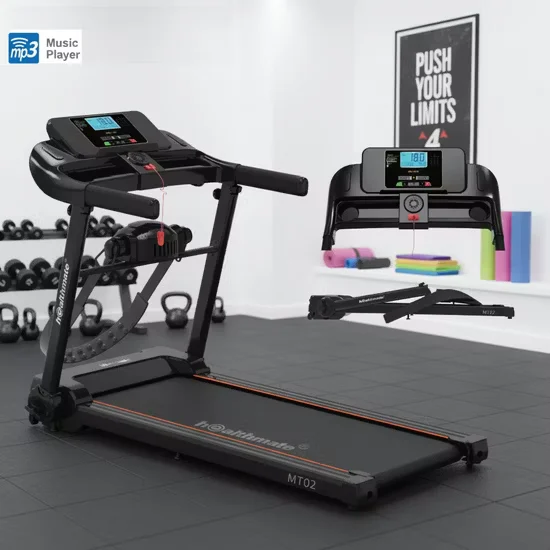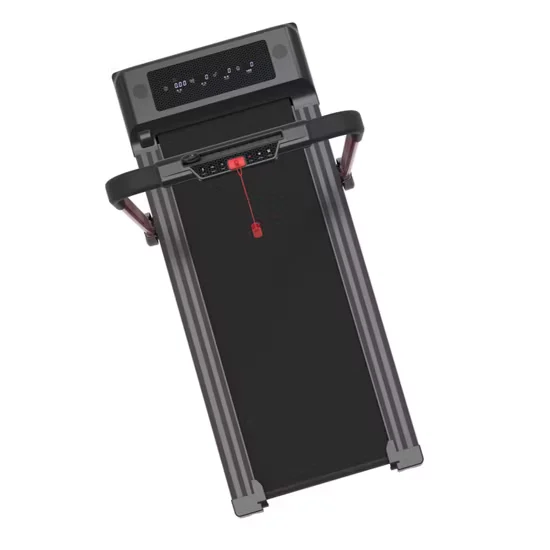
Low-Noise DC Drive — W06D5 uses a DC motor paired with a cushioned deck to keep footstrike sound contained in shared residential spaces.
Technical Specifications
| Parameter | Value |
|---|---|
| Designation | W06D5 |
| Product Type | Foldable Treadmill |
| Motor Type | DC Motor |
| Speed Range | 1–8 km/h |
| Running Surface | 1000 × 400 mm |
| Programs | 6 |
| Console Type | LED Screen |
| Display Metrics | Speed / Distance / Time / Calories |
| Foldable | Yes |
| Product Dimensions | 1270 × 650 × 965 mm |
| Net Weight | 100–160 kg |
| Certification | CE, RoHS |
| Target User | Adult |
| Customization | Logo, packaging |
| Production Capacity | 3,000 units / month |
Application Suitability
| Deployment Scenario | Typical Use |
|---|---|
| High-end residential home gym | Daily walking or light jogging with foldable storage between sessions |
| Apartment fitness corner | Low-noise cardio in multi-tenant buildings where floor vibration is a concern |
| Boutique wellness studio | Supplementary light cardio station alongside strength or group-fitness zones |
| Hotel in-room fitness program | Compact foldable unit deployed in suites where space is limited |
Why Residential Noise Complaints Start With the Motor, Not the User
A correctly sized DC motor eliminates the primary source of neighbor-facing vibration.
Property managers in multi-story residential buildings repeatedly report that treadmill complaints originate from motor resonance and deck rigidity rather than footstrike force alone. Consumer-grade motors paired with thin, un-damped decks transmit low-frequency vibration directly into structural floor slabs, reaching rooms below as an audible hum. When that hum appears at 6 AM or 11 PM, the facility receives the complaint — not the resident who bought the unit. The W06D5 addresses this by pairing a DC motor tuned for intermittent home-use duty cycles with a cushioned running surface, reducing the vibration pathway before it reaches the floor [NEED_CITE: residential floor impact sound transmission standards for cardio equipment].
Where This Treadmill Fits in a Home Cardio Setup
This foldable motorized treadmill covers walking and light jogging intensity ranges, filling the steady-state cardio slot in a residential or studio environment. In a home gym layout it pairs with free weights or a compact multi-station for users who want both cardio and resistance in a single room. The foldable frame allows the unit to clear floor space when idle, making it practical for rooms that serve dual purposes. It accommodates adult users within the running surface dimensions and the structural load rating of the reinforced frame.
Operating Duration and Room-Level Deployment Factors
The DC motor in the W06D5 is sized for intermittent sessions rather than all-day continuous operation, which shapes where and how long the unit should run. In a residential apartment the motor’s thermal profile is well-suited to multiple sessions of 30–60 minutes with cooldown intervals. Floor placement matters: deploying the unit on a carpeted or mat-covered surface further attenuates vibration compared to hard tile. Adequate clearance around the unit — especially behind the running belt — supports motor ventilation and prevents heat buildup during longer sessions. Voltage and plug configuration must match the destination market before the unit ships, as mismatched power standards remain a frequent deployment failure [NEED_CITE: voltage and frequency compatibility for motorized fitness equipment across export markets].
DC Motor, Cushioned Deck, and LED Console — Reading the Core Specs
A DC motor operates at lower RPM and generates less continuous thermal output than an AC motor of comparable peak power, which is why it dominates the home treadmill category. The trade-off is duty cycle: a DC motor excels at intermittent use but will overheat under continuous commercial loads. The 1000 × 400 mm running surface provides a functional belt area for walking and jogging, and the cushioned deck beneath it introduces a compliance layer that attenuates footstrike impact compared to a rigid steel-deck alternative. The LED console displays speed, distance, time, and calories across six preset programs, offering structured session variety without requiring external app connectivity — a deliberate choice for users who prefer self-contained operation. The console does not include wireless connectivity, which eliminates a common failure point in networked units deployed in environments where Wi-Fi stability is inconsistent.
The Hidden Cost of Underspecified Motors in Shared Buildings
When a treadmill motor is rated for light personal use but deployed in a setting that demands higher daily runtime, the thermal stress accumulates until winding insulation degrades. In multi-tenant buildings the secondary cost is noise-related: units that grow louder as bearings and belts wear under sustained load generate complaints that lead to outright removal. A deck with minimal cushioning compounds the problem by transmitting more vibration into the floor structure, shifting the issue from the user’s comfort to the building manager’s inbox. Choosing equipment with verified noise and duty-cycle documentation prevents these cascading failures [NEED_CITE: motor failure modes in light-commercial versus home-use treadmill deployment].
Why the W06D5 Earns Its Place in the Lineup
The W06D5 was developed against the same noise and durability benchmarks applied across the full cardio range, including sub-35dB acoustic targets verified in hotel deployments. The foldable frame addresses spatial constraints that fixed-frame commercial units cannot, and the cushioned deck specification aligns with the joint-comfort standards expected across the product family. OEM customization covers logo and packaging, allowing brand partners to integrate the unit into private-label offerings. When planning deployment, the unit’s folded and unfolded dimensions feed directly into 3D cardio-zone layouts that account for clearance, airflow, and user traffic patterns. Documentation and testing follow the same protocol as the commercial series, and 24/7 technical support covers this model alongside the broader range.
Documentation & Test Records
- CE declaration of conformity covering the W06D5 motorized treadmill assembly
- EN 957 test report validating structural and safety performance
- RoHS compliance documentation for electronic and material components
- Noise level test record from controlled acoustic measurement
- Motor specification sheet detailing DC drive output and duty-cycle rating
- LED console technical documentation with display and program parameters
Installation, Commissioning & Maintenance
- Maintain minimum clearance behind the 1270 × 650 mm footprint for belt ventilation and user safety
- Place on a level surface with a vibration-damping mat to complement the cushioned deck
- Confirm voltage and plug standard match before connecting to a dedicated circuit
- Run initial belt alignment and tension calibration per the commissioning guide
- Schedule periodic belt lubrication and deck inspection to preserve low-noise operation
- Wipe the LED console and handrails after each session to prevent sweat corrosion
Planning Your Deployment? Here Is What We Need
Share the room dimensions and intended equipment list to receive a 3D layout with clearance and airflow planning for this foldable treadmill. Specify expected daily session count and duration so we can confirm the DC motor duty cycle matches your usage pattern. Identify the deployment floor and adjacent room types to verify that noise performance meets building requirements. Confirm the destination market’s voltage and plug standard to avoid power compatibility issues at delivery.
Frequently Asked Questions
Q: Is a DC motor appropriate for home use, or should I specify AC?
A: DC motors are standard for home treadmills because they operate at lower RPM and generate less heat during intermittent sessions. AC motors sustain continuous loads better and are specified for all-day commercial gym use. For daily sessions under an hour in a residential setting, a DC motor provides adequate thermal headroom and quieter operation. The correct choice depends entirely on expected daily runtime.
Q: How does the foldable frame affect long-term belt alignment?
A: A well-engineered foldable frame maintains hinge rigidity across repeated folding cycles, preserving belt tracking. The W06D5 frame uses reinforced pivot points designed to hold alignment through normal folding and unfolding. Periodic belt tension checks remain part of standard maintenance, as with any treadmill, regardless of whether the frame folds or remains fixed.
Q: What is the difference between peak and continuous motor output?
A: Peak output is the maximum power a motor can deliver in short bursts, while continuous output reflects sustained power under ongoing load. Treadmill manufacturers sometimes advertise peak values that sound impressive but do not represent real-world running conditions. Always verify the continuous duty rating in the motor specification sheet to ensure the unit handles your expected session length without overheating.
Q: Does the LED console sync with fitness apps or external devices?
A: No. The LED console on the W06D5 is a self-contained display that tracks speed, distance, time, and calories across six preset programs without wireless connectivity. This design eliminates network dependency and reduces electronic failure points. Users who prefer app-free operation find the standalone console simpler to maintain over the equipment lifespan.
Q: What maintenance routine keeps noise levels low over time?
A: Regular belt lubrication reduces friction between the belt and deck, preventing the squeaking and vibration that develop as surfaces dry out. Deck inspection for wear spots ensures the cushioning layer remains intact. Bearing and motor ventilation checks prevent dust buildup that increases operating temperature and noise. A consistent maintenance schedule preserves the low-noise performance the unit delivers at installation.

![Anti-Tipping Mt296 Electric Treadmill for Home Fitness Running [WARN] draft identifier mismatch](https://bicksport.com/wp-content/uploads/2026/08/anti-tipping-mt296-electric-treadmill-for-home-fitness-running-warn-draft-identifier-mismatch-f67a1d.webp)