

Structural Integrity — Reinforced steel frame tested for 10,000 hours of continuous high-frequency loading cycles in professional gym environments.
Technical Specifications
| Parameter | Value |
|---|---|
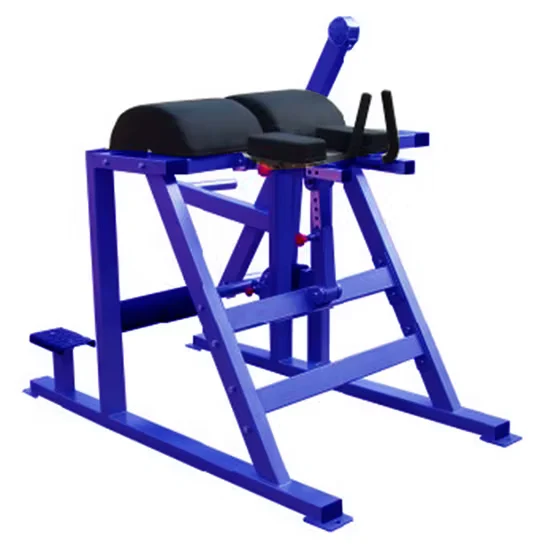
| Product Type | Squat Rack Machine |
| Model NO. | 5056 |
| Main Frame Material | Steel |
| Product Dimensions | 1830 × 1200 × 1876 mm |
| Net Weight | 98 kg |
| Maximum User Weight | 180 kg |
| Frame Color | Available per customer requirements |
| Cushion Color | Available per customer requirements |
| Fit Area | Professional Gym and Club |
| OEM/ODM | Acceptable |
| Certification | ISO 9001, CE |
Application Suitability
| Deployment Scenario | Typical Use |
|---|---|
| Chain gym strength zone | High-frequency squat and compound lift programming across peak hours |
| Hotel fitness center | Guest-accessible lower-body training with controlled loading patterns |
| Corporate wellness room | Employee strength sessions during break periods with moderate throughput |
| Community fitness center | Shared-use leg training accommodating varied experience levels |
| Sports performance training center | Athlete-grade squat work requiring frame stability under heavy loads |
Why Frame Fatigue Reaches the Incident Report Before the Maintenance Log
Light-commercial frames crack under sustained public loading long before anyone schedules an inspection.
Strength equipment placed in 24/7 commercial environments endures repeated asymmetric loading that consumer-grade frames were never validated to absorb. When a squat rack is loaded and unloaded dozens of times per day by users of varying technique, weld joints and upright tubes experience stress cycles that accumulate silently. Facilities often discover frame fatigue only after a visible deformation or a member complaint [NEED_CITE: structural fatigue failure modes in commercial strength equipment]. The cost of pulling an entire rack from the floor mid-week, shipping it back, and replacing it far exceeds specifying commercial-grade steel from the outset. This commercial squat rack machine integrated gym trainer addresses that gap by using reinforced steel construction validated through extended durability protocols rather than relying on visual inspection alone.
Positioning Within the Strength Training Zone
The commercial squat rack machine integrated gym trainer occupies the heavy compound-lift station in a professional gym layout, handling barbell squats, rack pulls, and related lower-body movements. It pairs naturally with adjacent free-weight benches and cable systems so that members transition between exercises without crossing traffic lanes. Deployed against a wall or in a dedicated power zone, it accommodates users across a wide range of statures given its 1830 × 1200 mm footprint and 1876 mm upright height. The 180 kg maximum user weight rating provides sufficient safety margin for advanced lifters loading the bar well beyond body weight.
Continuous Loading and Deployment Environment Demands
A squat rack in a busy gym endures hundreds of loading cycles daily, each one transferring force through the uprights into the floor. Proper deployment requires a level concrete subfloor with adequate compressive strength to handle concentrated point loads from the 98 kg frame plus user and barbell weight. Ventilation around the unit matters less than for cardio equipment, but spacing between adjacent racks must allow plate loading from both sides without interference. Floor-mounted rubber matting beneath the footprint absorbs dropped-plate shock and protects the subfloor from indentation over time. Facilities deploying multiple units in a single zone should plan electrical routing for any lighting or camera systems independently to avoid cable runs across the lifting area [NEED_CITE: floor load distribution requirements for heavy strength equipment installations].
What the Frame Geometry and Weld Patterns Actually Mean
The 1830 × 1200 × 1876 mm specification tells a structural story beyond simple footprint. Upright height at 1876 mm allows tall users to rack the bar at shoulder level without overhead clearance issues, while the 1200 mm depth provides a stable base triangle that resists forward tipping when heavy loads are set on front-facing J-hooks. Steel tube gauge and weld penetration depth at every joint determine whether the frame survives thousands of eccentric loading cycles — the moments when a user sets an uneven bar down and lateral force spikes through one upright. Sealed bearings and heavy-duty pivot hardware at adjustable hook positions prevent play from developing over time, maintaining the precise positioning that safe squat mechanics require. The 98 kg net weight reflects the mass of steel needed to keep the unit stationary without bolting, though bolting remains recommended for high-throughput floors.
The Hidden Cost of Underspecifying Strength Stations
When a facility purchases light-commercial squat racks to save on initial equipment cost, the first failure rarely appears in the frame itself. Adjustable J-hooks develop wobble after repeated loading, safety spotter arms lose their positive lock engagement, and upright tubes show hairline stress marks near weld seams. Each of these issues forces the rack offline for repair — and in a gym with limited strength stations, one offline rack concentrates all member traffic onto the remaining units, accelerating their degradation in turn. The cascade effect means facilities end up replacing an entire row of racks within a cycle that should have seen only routine maintenance [NEED_CITE: cascading equipment failure patterns in high-throughput commercial gyms]. Specifying a commercial squat rack machine integrated gym trainer rated for sustained heavy use eliminates this domino pattern.
What This Product Line Delivers Beyond the Frame
The reinforced steel frame on this unit is validated through 10,000-hour continuous high-frequency durability testing, the same protocol applied across the full six-series cardio and strength family so that quality benchmarks stay consistent. OEM customization covers frame color, cushion color, logo placement, and specification adjustments, allowing gym operators to match branding without sacrificing structural grade. Vertical integration from the in-house R&D lab through CNC machining and final assembly means that weld quality, paint adhesion, and dimensional tolerance are controlled at every stage rather than outsourced to disconnected suppliers. Deployment planning includes 3D layout and airflow consultation so that squat rack placement accounts for member traffic flow, plate storage proximity, and ceiling clearance requirements specific to the facility footprint. The 24/7 technical support line covers installation questions and spare parts sourcing long after commissioning is complete.
Documentation & Test Records
- CE declaration of conformity covering this strength equipment model
- EN 957 test report validating structural and safety requirements
- ISO 957 and ISO 9001 quality management certification documents
- Frame durability test record confirming 10,000-hour validation
- Weld quality inspection and material specification sheets
- OEM customization scope documentation for color and branding options
Installation, Commissioning & Maintenance
- Confirm 1830 × 1200 mm footprint clearance with minimum 600 mm lateral safety spacing on each side
- Level the reinforced steel base on concrete subfloor using adjustable foot pads before loading
- Anchor upright tubes to floor where building code or insurance requirements mandate fixed installation
- Inspect all J-hook positions and safety spotter arms for positive engagement before first member use
- Schedule quarterly weld seam visual inspections and hardware torque verification per usage volume
- Apply sweat-resistant cleaning protocol to steel frame surfaces daily to prevent corrosion buildup
Planning Your Strength Zone Procurement
Submit your facility floor plan with square footage and planned unit count to receive a 3D layout covering equipment spacing, traffic flow, and adjacent zone sightlines. Specify expected daily usage volume so that frame durability requirements match your throughput. Confirm target market delivery standards for any ancillary hardware or electrical accessories included in the shipment. Indicate whether OEM color matching and logo application are required so that production scheduling accounts for custom finishing lead time.
Frequently Asked Questions
Q: How does reinforced steel frame construction compare to standard commercial equipment in terms of lifespan?
A: Reinforced steel frames use thicker-gauge tubing and deeper weld penetration at every joint, which distributes stress across a larger area during asymmetric loading. Standard commercial frames often use thinner material that accumulates fatigue at weld seams under repeated heavy use. The result is a frame that maintains structural rigidity and upright alignment through years of high-frequency gym deployment without developing the play or wobble that forces equipment offline.
Q: What durability testing protocols validate the 10,000-hour continuous operation claim?
A: Testing involves cyclic loading applied to the frame at intervals simulating real-world squat and rack usage patterns, including asymmetric bar placement and rapid load changes. Sensors monitor weld joint deflection and upright tube deformation throughout the test duration. Units must pass structural integrity thresholds at the conclusion without measurable permanent deformation or fatigue cracking at any joint.
Q: Can OEM customization extend beyond color options on this integrated gym trainer?
A: OEM options cover frame color, cushion color, logo placement, and specification modifications to match facility branding and functional requirements. Customization scope is documented before production begins so that dimensional changes, additional attachment points, or modified upright heights are engineered into the frame rather than applied as after-production modifications.
Q: How does vertical integration from R&D to production impact quality control and lead times?
A: Controlling every stage from the R&D lab through CNC machining and final assembly means weld quality, paint application, and dimensional tolerance are verified internally at each handoff point rather than inspected only at final receiving. This reduces rework cycles caused by supplier variance and keeps production lead times predictable, which matters when a facility build-out has a fixed opening date.

![Commercial Squat High Pull Strength Equipment OS-H5043 | OEM [WARN] draft identifier mismatch](https://bicksport.com/wp-content/uploads/2026/08/commercial-squat-high-pull-strength-equipment-os-h5043-oem-warn-draft-identifier-mismatch-322338.webp)
