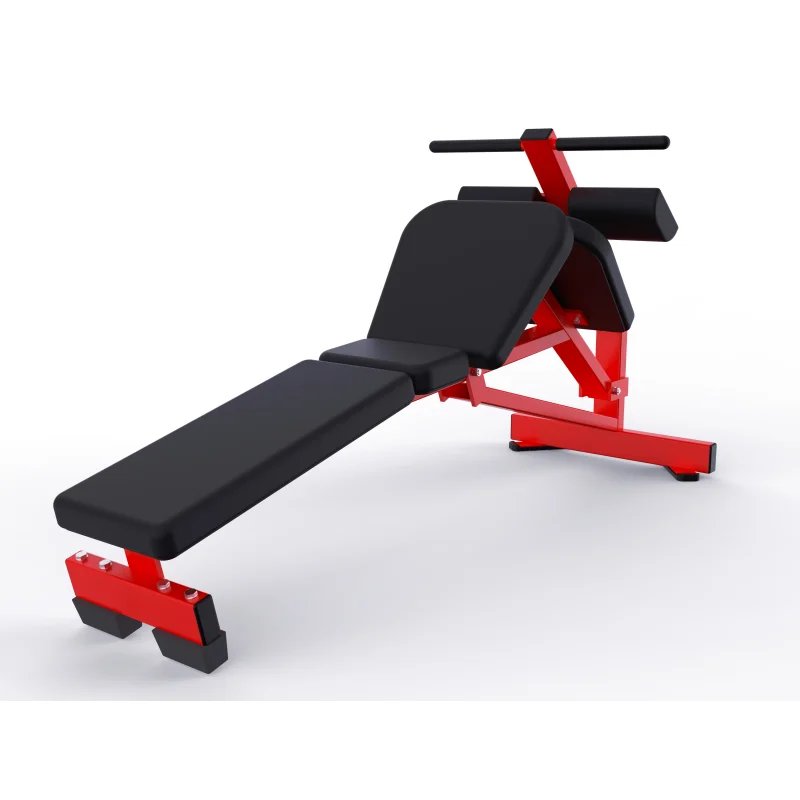
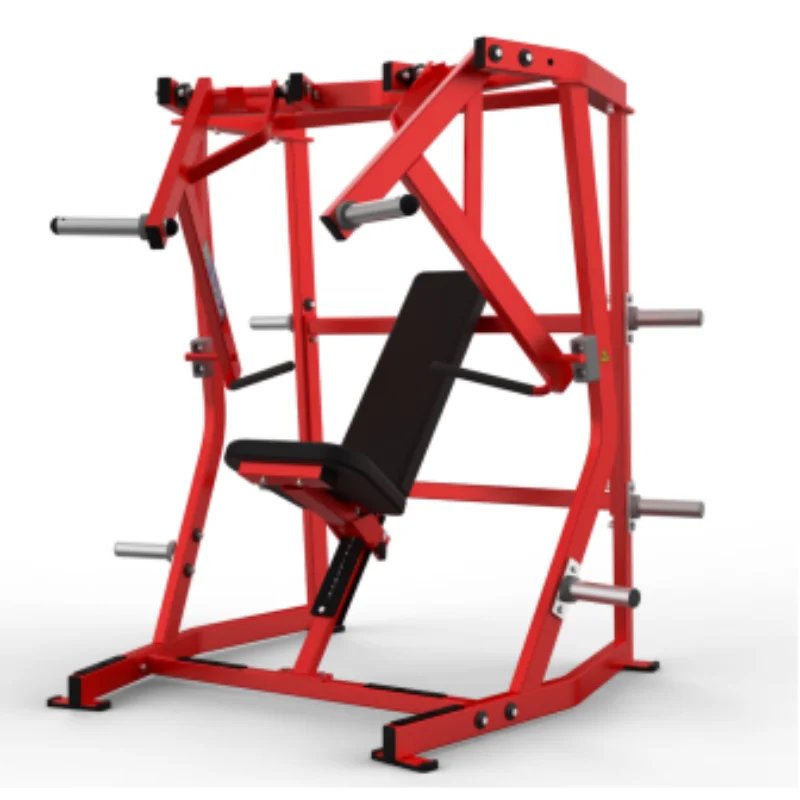
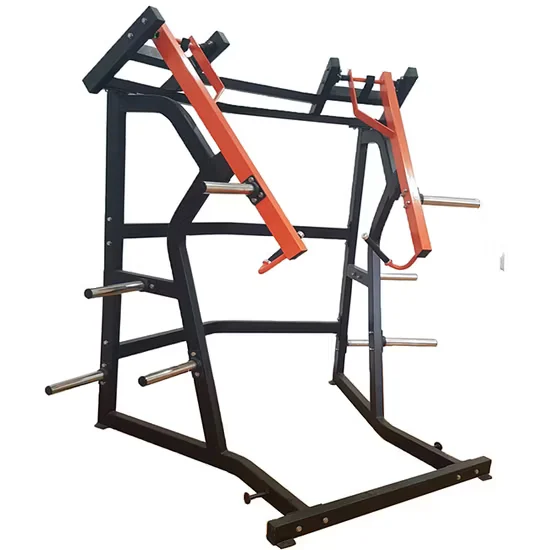
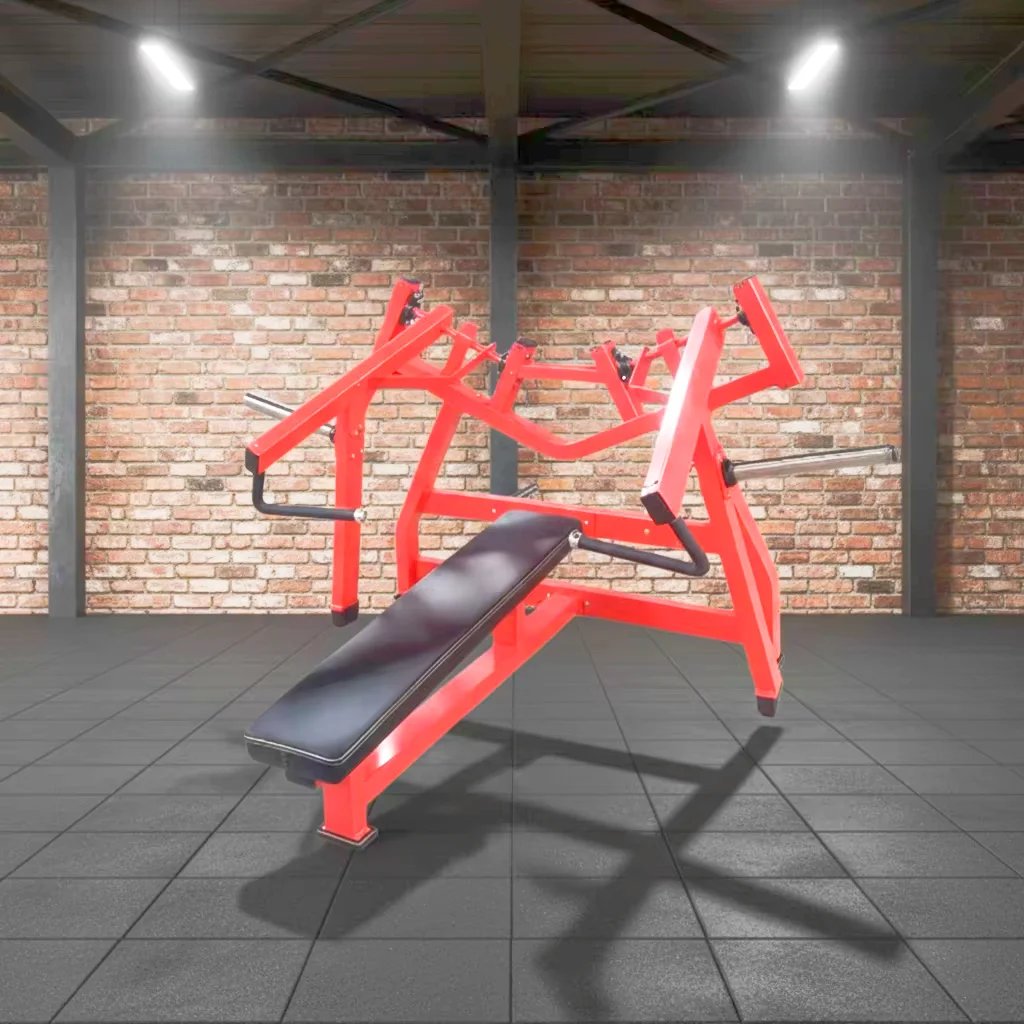
Heavy-Duty Steel Construction — The 5081 Half Rack is engineered with industrial-grade welding and reinforced steel uprights tested for continuous high-frequency use in commercial strength training facilities.
Technical Specifications
| Parameter | Value |
|---|---|
| Product Type | Half Rack |
| Model NO. | 5081 |
| Product Dimensions | 1434 × 1675 × 2296 mm |
| Net Weight | 152 kg |
| Frame Material | Steel |
| Exercise Part | Half Rack |
| Age Group | Adult |
| Gender | Unisex |
| Fit Area | Professional Gym and Club |
| Max Load Capacity | Commercial-grade structural testing |
| OEM/ODM | Available |
| Certification | ISO 9001, CE |
| Transport Package | Plywood Case |
| HS Code | 9506911900 |
| Production Capacity | 500 PCS/Month |
Application Suitability
| Deployment Scenario | Typical Use |
|---|---|
| Professional gym and club strength zones | Compound lifts including squats, bench presses, and overhead presses with spotter arm protection |
| Community fitness center weight rooms | Supervised and semi-supervised barbell training for members with intermediate to advanced experience |
| Corporate wellness facility training areas | Functional strength circuits and barbell-based programming during peak and off-peak hours |
| Sports performance training centers | Athlete-specific strength and power development under coach supervision |
| High-end residential shared fitness rooms | Semi-private barbell training for residents with space-optimized footprint requirements |
Why Structural Fatigue Threatens Gym Safety Before Visible Damage Appears
A commercial half rack must resist cyclical loading thousands of times per day without micro-fracture accumulation at welded joints.
When strength training equipment enters a high-traffic gym floor, the frame endures repeated eccentric and concentric load cycles far beyond what any residential unit faces. Micro-stress accumulates at weld seams and cross-member junctions long before a crack becomes visible to maintenance staff. Facility operators often discover frame degradation only after a member reports unusual wobble or audible creaking during heavy sets [NEED_CITE: EN 957 structural fatigue testing for commercial strength equipment]. The 5081 commercial half rack strength training equipment addresses this through full-perimeter weld penetration on all primary load paths and reinforced gusset plates at high-stress junctions, distributing force across a wider area rather than concentrating it at single weld points.
Where the 5081 Half Rack Fits in a Commercial Strength Zone
This unit occupies a middle ground between open squat stands and full power cages, offering spotter-arm safety for unsupervised or semi-supervised barbell work while maintaining an open footprint that keeps sightlines clear across the training floor. The 5081 commercial half rack strength training equipment pairs naturally with flat and adjustable benches, plate storage trees, and dedicated deadlift platforms within a zoned strength layout. Its 1434 × 1675 mm footprint allows deployment in facilities where full cages would consume too much square footage, and the 2296 mm upright height accommodates overhead pressing and pull-up bar attachments without ceiling clearance conflicts. The open-front design supports barbell movements for users across a wide range of statures and training experience levels. Data collection is not applicable to this non-electronic frame system; resistance is managed entirely through free-weight loading.
Continuous High-Frequency Loading and Facility Deployment Requirements
The 5081 Half Rack is designed for environments where equipment sees use across 12 to 18 hours of daily facility operation without scheduled rest periods. Unlike motorized cardio units, the structural demand here is purely mechanical — each racked barbell load transmits force through the uprights into the floor, making subfloor rigidity and level anchoring critical [NEED_CITE: commercial gym subfloor load rating for free-weight zones]. Deployment on upper floors requires structural engineering verification to confirm the slab can handle dynamic point loads from dropped or re-racked weights. Rubber flooring of adequate thickness beneath and around the unit dampens vibration transfer to adjacent spaces and protects the base frame from impact damage. Ventilation planning for the surrounding zone should account for the higher metabolic output of barbell trainees, with airflow directed across the training area rather than concentrated on a single machine.
Frame Engineering, Weld Quality, and Load Path Design
The 152 kg net weight reflects the mass of steel required to resist deformation under maximum rated loads — lighter frames in this category typically sacrifice wall thickness in the uprights or reduce cross-member dimensions to cut shipping costs. Industrial-grade welding on the 5081 commercial half rack strength training equipment uses full-penetration passes at primary junctions, meaning the weld metal bonds through the entire thickness of both joined surfaces rather than sitting as a surface bead. This approach resists the peeling forces generated when a loaded barbell is re-racked off-center, a scenario that concentrates torque on one upright. The powder-coat surface treatment provides corrosion resistance against humidity and sweat exposure common in commercial environments, extending the interval between cosmetic refurbishment cycles. Upright hole spacing follows standard increment patterns to support precise J-hook and spotter-arm positioning across different user heights and lift variations.
What Undersized Frames Cost Facility Operators Over Time
Selecting a half rack based on upfront price often leads to compounding costs that surface months after installation. Lightweight frames develop audible play at bolted connections within the first year of commercial use, prompting maintenance calls and member complaints that erode confidence in the facility. Welds that lack full penetration can fail under peak loads, creating liability exposure that no equipment warranty offsets [NEED_CITE: liability standards for structural failure in commercial gym equipment]. Powder-coat finishes applied without proper surface preparation chip and corrode rapidly in humid environments, forcing early refinishing or full replacement. The 5081 commercial half rack strength training equipment eliminates these failure modes by specifying material thickness and weld quality against the demands of continuous commercial deployment rather than intermittent home use.
Why This Product Line Serves Commercial Facility Requirements
The 5081 Half Rack sits within a vertically integrated manufacturing system where frame fabrication, welding, powder-coating, and assembly occur under one quality management umbrella. Every unit undergoes structural load verification before leaving the production line, and the facility maintains ISO 9001 certification across all fabrication stages. The 1434 × 1675 mm footprint was determined through 3D strength-zone layout planning that accounts for safe barbell clearance, member circulation paths, and adjacent equipment spacing. OEM and ODM options allow facility operators to specify custom upright hole spacing, attachment compatibility, and color finishes matched to brand standards. The manufacturing team provides installation and commissioning documentation covering anchoring requirements, floor load verification, and initial alignment checks. Technical support remains available around the clock for structural or assembly questions after deployment.
Documentation & Test Records
- CE declaration of conformity covering the 5081 Half Rack for European market entry
- EN 957 test report verifying structural integrity and safety under rated loads
- ISO 9001 certificate confirming quality management across fabrication stages
- Noise and vibration transfer assessment for upper-floor deployment planning
- Weld quality inspection records documenting penetration depth at critical joints
- Surface treatment durability report covering corrosion and chip resistance testing
Installation, Commissioning & Maintenance
- Verify subfloor load capacity and level tolerance before anchoring the 1434 × 1675 mm base frame
- Install rubber flooring beneath and around the rack to dampen impact vibration from re-racked weights
- Confirm upright plumb and cross-member square during initial assembly before tightening all fasteners
- Inspect weld seams and bolt torque quarterly under commercial high-frequency use conditions
- Clean powder-coated surfaces with pH-neutral solutions to prevent sweat-salt corrosion buildup
- Replace worn J-hook protective liners and spotter-arm padding on a scheduled inspection cycle
Planning Your Strength Zone Equipment Inquiry
Provide the total square footage allocated for your free-weight zone along with an initial equipment list to receive a 3D layout plan that maps rack placement, barbell clearance arcs, and member circulation flow. Specify the expected daily usage intensity and whether the deployment location sits on a ground-floor slab or an elevated structure, so that anchoring and subfloor requirements can be confirmed before shipment. State the destination market and any applicable import certification requirements to ensure documentation accompanies the consignment. Indicate whether custom upright configurations, attachment packages, or OEM branding are required so that customization scoping aligns with your project timeline.
Frequently Asked Questions
Q: What structural factors differentiate a commercial half rack from a residential model?
A: Commercial units use thicker-walled steel uprights, full-penetration welds at load-bearing junctions, and surface treatments rated for humidity and sweat exposure. Residential racks prioritize cost reduction through thinner materials and lighter finishes, which degrade rapidly under the cyclical loading patterns of a shared gym environment. The structural margin determines how many years of continuous use the frame withstands before play or deformation appears.
Q: How should facility operators choose between a half rack and a full power cage?
A: Half racks suit facilities prioritizing open sightlines and flexible floor layouts, offering spotter-arm protection while occupying a smaller footprint. Full cages provide enclosed safety for maximal solo lifts but consume more square footage and restrict airflow. The decision depends on available space, supervision levels, and whether the programming emphasizes barbell movements requiring enclosed safety or open-platform functional work.
Q: What load capacity verification should buyers request before purchasing?
A: Buyers should request the EN 957 test report confirming the frame withstands rated static and dynamic loads without permanent deformation. The report should specify the test methodology, load values applied, and cycle counts completed. Manufacturers should also provide weld inspection documentation and material specification sheets so buyers can independently verify steel grade and wall thickness claims.
Q: Which attachments and expansion options are compatible with this half rack?
A: The upright hole pattern supports standard J-hooks, spotter arms, pull-up bars, and landmine attachments. Compatibility depends on the upright diameter and hole spacing specification, both of which are confirmed during the customization scoping phase. Operators should request the attachment compatibility list to verify that planned accessories mount securely without adapter modifications that could compromise structural integrity.
Q: What floor and spatial requirements apply to installing this half rack?
A: The 1434 × 1675 mm base footprint requires a level, structurally rated subfloor with adequate clearance on all sides for barbell travel and member movement. Rubber flooring is recommended to absorb impact vibration and protect the base frame. Ceiling height must accommodate the 2296 mm uprights plus any overhead attachments, and the surrounding zone should allow safe loading and unloading of weight plates.