![Heavy-Duty Stair Climber Machine for Commercial Fitness Centers and Gyms [WARN] draft identifier mismatch](https://bicksport.com/wp-content/uploads/2026/08/heavy-duty-stair-climber-machine-for-commercial-fitness-centers-and-gyms-warn-draft-identifier-mismatch-23f020.webp)
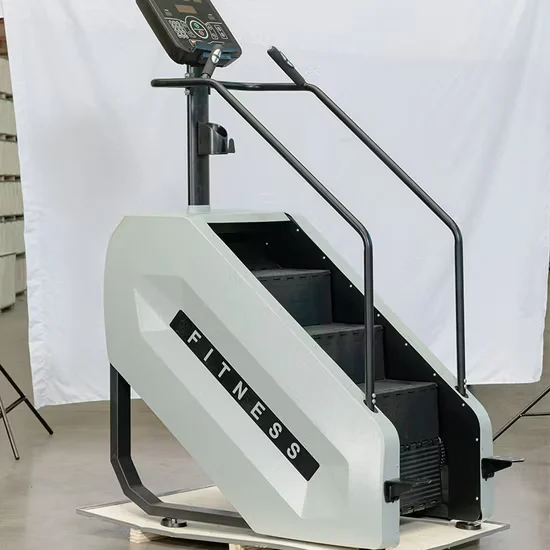
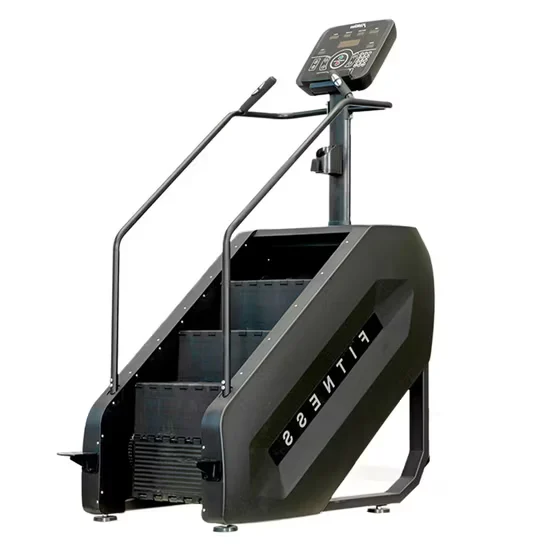
10,000-Hour Endurance Validation — the SQ1017 motor-drive stair climber undergoes continuous high-frequency load testing to verify uninterrupted operation under 24/7 commercial duty cycles.
Technical Specifications
| Parameter | Value |
|---|---|
| Designation | SQ1017 |
| Product Type | Stair Climber |
| Drive Type | Motor Drive |
| Running Velocity | 15–164 steps/minute |
| Power Requirement | AC220V±10% / AC110V±10% |
| Step Area | 560 × 235 × 220 mm |
| Frame Material | Steel Pipe + PP Plastic |
| Console Display (OSD) | Time, Climb, Calories, Steps, Heart Rate |
| Product Dimensions | 1450 × 820 × 2080 mm |
| Net Weight | 148 kg |
| Foldable | No |
| Certification | CE |
Application Suitability
| Deployment Scenario | Typical Use |
|---|---|
| Hotel fitness center on guest room floors | 24-hour guest access with noise-sensitive placement above occupied rooms |
| Chain gym cardio zone | High-frequency member use across peak and off-peak hours |
| Corporate wellness room | Employee fitness during breaks and before/after shifts |
| High-end residential home gym | Private daily training in shared or multi-story residential buildings |
| Sports performance training center | Athlete conditioning with controlled step cadence programming |
Why Motor-Driven Stair Climbers Fail Before Their Warranty Expires
The SQ1017’s motor-drive architecture is validated for 10,000+ hours of continuous operation, addressing the most common cause of premature stair climber replacement in commercial facilities.
Light-commercial motors installed in public-facing gyms routinely overheat under back-to-back usage. Maintenance logs show burnout patterns clustering around month three or four when daily run-times exceed design tolerances. The failure is rarely sudden — bearings degrade, torque output drops, and step cadence becomes inconsistent before the motor finally seizes [NEED_CITE: motor duty cycle classification for continuous commercial operation]. Facility operators often replace entire units when the root cause is a motor never rated for the actual deployment environment. A commercial stair climber motor drive electric system must match the facility’s real-world duty cycle, not a brochure figure.
Positioning Within the Cardio Floor Layout
This stair climber fills the vertical-loading niche in a commercial cardio zone, complementing treadmills and ellipticals that emphasize horizontal movement patterns. The 15–164 steps/minute velocity range covers rehabilitation-level pacing through high-intensity interval cadences, making it suitable for mixed-ability membership bases. Its 1450 × 820 mm footprint fits standard cardio bay spacing, and the 2080 mm height clearance requires overhead verification during floor planning. The step area accommodates users up to 180 kg, and the console captures heart rate alongside climb and calorie metrics for facility usage tracking.
Continuous Operation and Facility Infrastructure Requirements
Deploying this unit on upper hotel floors or above occupied residential spaces demands attention to structure-borne vibration and airborne noise transmission. The motor-drive system maintains sub-35dB operation, but floor coupling and adjacent wall construction influence what guests or residents actually perceive [NEED_CITE: EN 957 requirements for commercial cardio equipment noise in occupied buildings]. Dual-voltage input (AC220V±10% / AC110V±10%) eliminates the plug and voltage mismatches that surface only after delivery. Adequate ventilation around the motor housing prevents thermal throttling during extended peak-hour sessions. A dedicated circuit with proper grounding protects the console electronics from voltage fluctuation damage.
Motor-Drive Engineering and Power Delivery
The electric motor-drive system delivers consistent torque across the entire 15–164 steps/minute range, avoiding the cadence variance that friction-based resistance systems introduce as components wear. Unlike manual-resistance stair climbers where user weight directly affects step feel, motor-driven systems maintain programmed cadence regardless of load — critical for interval programming where timing precision matters. The sealed bearing assembly reduces maintenance intervals compared to open bearing designs that attract dust and sweat residue in high-throughput environments. Steel pipe frame construction provides the rigidity needed to prevent flex-induced noise at sustained step rates. The OSD console tracks time, climb count, calories, steps, and heart rate, delivering the usage data that facility management systems require for utilization reporting.
The Hidden Cost of Underspecified Components
Facilities that procure stair climbers based on price alone frequently encounter cascading failures. Motors rated for light-commercial duty cycles shut down repeatedly during peak hours, generating member complaints that staff cannot resolve through basic troubleshooting. Noise levels that seem acceptable in a showroom become disruptive when the unit operates at 3 AM on a hotel floor above sleeping guests [NEED_CITE: commercial cardio equipment noise complaint patterns in hospitality deployments]. Voltage incompatibility discovered post-delivery forces emergency transformer purchases or entire shipment returns. Console systems lacking data output capability leave facility managers blind to usage patterns, preventing evidence-based equipment rotation and replacement planning.
Why This Product Line for Your Facility
Sub-35dB whisper-quiet operation has been verified in actual hotel deployments, not just laboratory conditions. The 10,000-hour durability test protocol covers the motor, frame, and bearings under continuous high-frequency load — matching the reality of 24/7 gym and hotel fitness center operation. The IoT-enabled console architecture supports workout analytics and app sync, enabling integration with facility management software. As part of a complete six-series cardio family, this stair climber sources from the same product line as treadmills, bikes, ellipticals, rowers, and spinners, simplifying procurement and maintenance training. OEM customization extends to console UI branding and color specifications. Free 3D cardio-zone layout and airflow planning accounts for this unit’s 1450 × 820 mm footprint, member flow patterns, and overhead clearance requirements.
Documentation & Test Records
- CE declaration of conformity for SQ1017 stair climber
- EN 957 test report covering structural and safety requirements
- ISO 9001 certificate for manufacturing quality management
- Noise level test report confirming sub-35dB operation
- 10,000-hour durability test record on motor, frame, and bearings
- Console technical documentation with data interface specifications
Installation, Commissioning & Maintenance
- Verify 1450 × 820 × 2080 mm clearance including overhead height and lateral safety margins
- Level the steel pipe frame on vibration-dampening pads to prevent structure-borne noise transmission
- Confirm AC220V±10% or AC110V±10% supply on a dedicated circuit before first power-on
- Calibrate step cadence across the 15–164 steps/minute range during commissioning
- Inspect sealed bearings and motor housing for sweat residue accumulation monthly
- Configure console OSD data output for facility management software integration at startup
Equipment Selection and Deployment Inquiry
Provide your cardio zone square footage and intended unit count to receive a 3D layout with airflow planning specific to this stair climber’s footprint and thermal output. Specify daily operational hours so the motor duty cycle can be matched to your facility’s actual usage pattern. Confirm the deployment floor level and adjacent room types to validate noise suitability. State your target market voltage standard to ensure correct electrical configuration before shipment. Indicate whether console data must integrate with existing facility management software.
Frequently Asked Questions
Q: Motor drive vs. manual resistance — which suits 24/7 commercial deployment?
A: Motor-driven stair climbers maintain consistent step cadence regardless of user weight, which is essential for facilities running supervised interval classes or unsupervised 24-hour access. Manual-resistance units introduce cadence variance as friction components wear, increasing maintenance frequency. For continuous commercial operation, motor-drive architecture delivers predictable performance and lower lifetime service costs.
Q: How do you verify continuous duty versus peak motor rating?
A: Peak rating describes short-burst output capacity, while continuous duty reflects sustained thermal and mechanical limits. Request the motor specification sheet showing both values and the tested run-time duration. A motor validated for 10,000 hours of continuous operation provides documented assurance that it can handle back-to-back usage in high-throughput gym and hotel environments without thermal shutdown.
Q: Dual-voltage input — how to ensure local electrical compatibility?
A: The SQ1017 accepts AC220V±10% and AC110V±10%, covering most international markets. Confirm your facility’s supply voltage and plug type before shipment to avoid post-delivery transformer requirements. Proper circuit capacity and grounding are equally important — undersized wiring causes voltage sag that damages console electronics over time.
Q: Can console workout data integrate with facility management software?
A: The IoT-enabled console architecture supports data output for usage tracking, including time, climb count, calories, steps, and heart rate. Integration capability depends on your facility management platform’s data interface requirements. Request the console technical documentation to verify protocol compatibility before confirming your equipment specification.
Q: Where can sub-35dB equipment be installed without noise complaints?
A: Sub-35dB operation enables deployment on hotel guest room floors, above occupied residential units, and adjacent to quiet zones like spas or conference rooms. Actual perceived noise also depends on floor construction, vibration isolation, and structural coupling. Provide your deployment floor plan and adjacent room types so installation recommendations address structure-borne transmission paths.
![Commercial Stair Climber Machine for Home Gym Fitness [WARN] draft identifier mismatch](https://bicksport.com/wp-content/uploads/2026/08/commercial-stair-climber-machine-for-home-gym-fitness-warn-draft-identifier-mismatch-7b0cb3.webp)