![Hammer Strength Plate Loaded PRO Tackler Commercial Gym Equipment [WARN] draft identifier mismatch](https://bicksport.com/wp-content/uploads/2026/08/hammer-strength-plate-loaded-pro-tackler-commercial-gym-equipment-warn-draft-identifier-mismatch-3c4fa7.webp)
10,000-Hour Endurance Verified — Frame and bearing assemblies tested under continuous commercial loading cycles.
Technical Specifications
| Parameter | Value |
|---|---|
| Designation | 5041 |
| Product Type | Plate Loaded Strength Machine |
| Exercise Part | Arm |
| Material | Steel |
| Resistance Type | Plate Loaded |
| Max User Weight | 180kg |
| Product Dimensions | 164313561841mm |
| Net Weight | 139kg |
| Certification | ISO 9001, CE |
| Appliance | Gymnasium |
Application Suitability
| Deployment Scenario | Typical Use |
|---|---|
| International chain gym strength zone | High-frequency arm isolation training across peak hours |
| Professional sports training center | Athlete-specific upper body loading protocols |
| Corporate wellness facility | Moderate-volume arm training for employee fitness programs |
| Community fitness center | Durable arm exercise station for general membership |
What Happens When Pivot Bearings Fail at 4 AM
Sealed bearings prevent unplanned downtime in high-traffic arm training zones.
Walk through any commercial strength floor after six months of continuous operation and you will find machines with visible play at the pivot joints. The bushings degrade, the motion path develops wobble, and members quietly stop using the station. In a busy chain gym, that dead footprint costs revenue every day it sits unused. This plate loaded strength machine commercial gym equipment addresses the problem with sealed bearing assemblies at every rotational joint, designed to maintain tight tolerances through thousands of daily repetitions without requiring scheduled lubrication [NEED_CITE: bearing seal specification for high-frequency pivot joints].
Where This Arm Station Fits in a Commercial Strength Layout
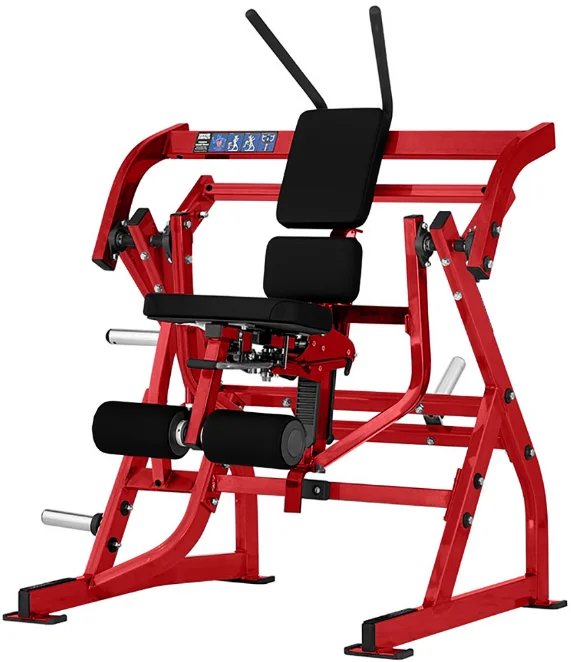
This plate loaded arm trainer covers isolation movements for biceps, triceps, and forearm development across low to high repetition ranges. In a dedicated strength zone, it complements compound pressing and pulling machines by providing focused arm work that free weights alone cannot deliver with consistent resistance curves. The 164313561841mm footprint fits standard equipment spacing grids and allows plate loading from the side without blocking adjacent traffic flow. The 180kg maximum user weight accommodates the full spectrum of commercial gym members and competitive athletes. This plate loaded strength machine commercial gym equipment collects no electronic data, relying entirely on mechanical resistance for predictable loading.
Continuous Loading Cycles and Facility Environment Requirements
A plate loaded arm machine in a busy commercial gym may see fifty or more working sets per day across multiple users, each imposing full dynamic load on the frame and pivot hardware. The reinforced steel construction handles this duty cycle without the frame flex that lighter builds develop within months of public deployment [NEED_CITE: frame deflection standards under repetitive dynamic loading]. Because there is no motor or electronic console, power provisioning and voltage matching are irrelevant, simplifying installation in markets with unstable electrical grids. The unit requires a level floor with adequate plate storage clearance on the loading side and standard rubber flooring beneath to manage dropped plate noise and protect the subfloor.
Why Plate Loading Eliminates the Weakest Link in Selectorized Machines
Selectorized pin-and-cable systems introduce mechanical complexity at the exact point where commercial equipment fails most often. Cables stretch, pulleys wear, and weight stack guide rods develop friction that alters the intended resistance curve. This plate loaded strength machine commercial gym equipment bypasses those failure points entirely by placing the load directly on the lever arm through Olympic plate horns. The steel frame transfers ground reaction forces through reinforced weld points at high-stress junctions, a construction method verified under continuous load testing. The resistance curve is determined solely by the lever arm geometry and plate position, remaining consistent from the first repetition to the ten-thousandth without mechanical degradation.
The Cost of Underspecifying Strength Equipment for Public Use
Facilities that deploy light-commercial or home-grade strength machines in public settings follow a predictable failure arc. Frames develop hairline cracks at weld junctions within the first year. Pivot hardware loosens under repetitive loading, creating play that members feel immediately and interpret as poor build quality. Plate horns bend under heavy loading, making plate changes difficult and eventually dangerous. When an arm machine goes out of service for welding repair or bearing replacement, the station generates zero member value and triggers maintenance calls that consume technician hours better spent on preventive work [NEED_CITE: comparative maintenance frequency for commercial versus light-commercial strength frames].
Why This Product Line Supports Facility-Wide Deployment
The sub-35dB operational standard that defines the cardio range extends to strength equipment through bearing and bushing selection that minimizes mechanical noise during plate loading and lever arm return. Every unit undergoes durability testing for 10,000 hours of continuous operation, with frame weld and bearing performance documented in test records available before shipment. The six-series product family allows a facility to source cardio and strength from one engineering platform with consistent finish and build standards. OEM customization extends to frame color and logo application with flexible minimum order quantities. The free 3D strength zone layout service covers equipment spacing, plate storage integration, and member flow planning around this unit’s specific footprint.
Documentation & Test Records
- CE declaration of conformity for commercial strength equipment
- EN 957 test report covering frame and pivot load requirements
- ISO 9001 certificate for manufacturing quality management
- Frame durability test record for weld and bearing assemblies
- Steel grade and welding specification documentation
- Installation guide with floor anchoring and spacing requirements
Installation, Commissioning & Maintenance
- Maintain minimum 600mm clearance on plate loading side of the 1643*1356mm footprint
- Level floor required; use shims if subfloor deviation exceeds 3mm across base contact points
- Inspect pivot bearing seals and lever arm bushings quarterly for play or contamination ingress
- Verify plate horn straightness and retaining pin function during monthly preventive maintenance walk
- Wipe frame contact points daily to prevent sweat corrosion on powder-coated steel surfaces
Planning Your Strength Zone Equipment Specification
Provide your facility floor plan with the intended strength zone area to receive a 3D layout showing equipment spacing and plate storage placement around this arm station. Specify the expected daily user volume so the duty cycle can be matched to deployment recommendations. Confirm the target market and facility type so that documentation and labeling meet local regulatory requirements. Indicate whether the strength zone shares floor space with cardio equipment so that the layout accounts for noise and traffic flow across both zones.
Frequently Asked Questions
Q: What are the operational trade-offs between plate loaded and selectorized arm machines in commercial facilities?
A: Plate loaded machines eliminate cables, pulleys, and weight stack guide rods, which are the components most likely to require maintenance in a selectorized system. The trade-off is that users must manually load and unload plates, which slightly increases time between sets and requires adjacent plate storage. Facilities prioritizing uptime and minimal maintenance often favor plate loaded designs for high-traffic strength zones.
Q: What frame construction standards apply to plate loaded equipment in commercial gym deployment?
A: Commercial plate loaded frames must withstand repetitive dynamic loading without weld fatigue or structural deflection. EN 957 testing addresses static and dynamic load scenarios relevant to public use. Buyers should request the specific test report documenting frame and weld performance under cyclic loading to verify the unit meets commercial duty requirements rather than light-commercial or home-use classifications.
Q: How should bearing maintenance be planned for plate loaded pivot joints?
A: Sealed bearings at pivot joints significantly reduce maintenance intervals compared to open bushings that require regular lubrication. Quarterly inspection for play, contamination, or seal damage is standard practice in commercial facilities. Replacement intervals depend on daily usage volume, but sealed units in moderate to high traffic environments typically maintain performance for extended periods before requiring service.
Q: What floor space and clearance planning is needed around plate loaded arm stations?
A: Beyond the machine footprint itself, planners must allocate clearance for plate storage racks or tree stands, user movement during loading and unloading, and safe passage for other members navigating the strength zone. A minimum 600mm loading-side clearance is typical, with additional space required if plates are stored on freestanding racks rather than integrated horns.
![Hammer Strength Machine ISO-Lateral D.Y. Row Commercial Gym Equipment [WARN] draft identifier mismatch](https://bicksport.com/wp-content/uploads/2026/08/hammer-strength-machine-iso-lateral-d-y-row-commercial-gym-equipment-warn-draft-identifier-mismatch-e2751b.webp)
![Commercial Hammer Strength Pull Over Machine for Gym Commercial Hammer Strength Pull Over Machine for Gyms [WARN] draft identifier mismatch](https://bicksport.com/wp-content/uploads/2026/08/commercial-hammer-strength-pull-over-machine-for-gym-commercial-hammer-strength-pull-over-machine-for-gyms-warn-draft-identifier-mismatch-969e4c.webp)