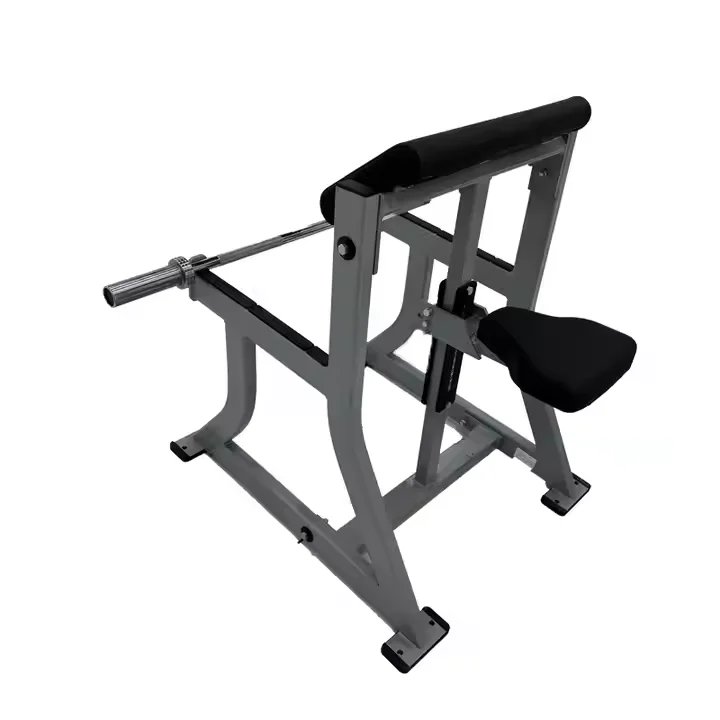
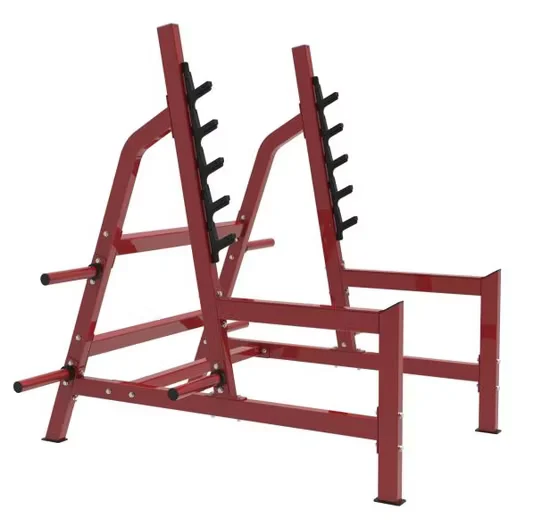
Rigid Frame Engineering — The SRH-50 multi-functional smith machine anchors heavy compound lifts with a 50×100×3mm steel chassis rated for continuous high-frequency commercial use.
Technical Specifications
| Parameter | Value |
|---|---|
| Designation | SRH-50 |
| Product Type | Multi-Functional Smith Machine |
| Tube Size | 50×100×3 mm |
| Machine Weight | 230 kg |
| Product Dimensions | 2440×1920×1615 mm |
| Material | Iron |
| Max User Weight | 180 kg |
| Color | Customized |
| Age Group | Adult |
| Gender | Unisex |
| Certification | RoHS, ISO 9001, CE |
| HS Code | 9506911900 |
Application Suitability
| Deployment Scenario | Typical Use |
|---|---|
| Chain gym strength zone | High-frequency barbell squats, presses, and rows under supervised conditions |
| Community fitness center | Shared-access compound lifting with durable frame and low maintenance requirements |
| High-end residential home gym | Customized color and finish to match interior design while supporting full-body routines |
| Hotel fitness center | Space-efficient all-in-one strength station for guests seeking guided barbell movements |
| Sports performance training center | Athlete-grade stability for periodized overload programs and controlled eccentric loading |
Why Frame Rigidity Decides Whether a commercial multi-functional smith machine strength trainer Stays in Service
A 230 kg chassis eliminates the micro-deflection that turns heavy squats into a safety concern.
When lifters load a barbell past triple-bodyweight, any flex in the uprights transfers directly into the user’s perception of safety. We have seen gym operators pull entire rows of underbuilt smith machines after members reported wobbling during working sets — the frames were not failing structurally, but the vibration was destroying confidence and accelerating bearing wear [NEED_CITE: structural deflection thresholds for commercial strength equipment]. The SRH-50 addresses this with 50×100×3mm rectangular tubing that resists torsional twist at the guide rod mounting points, keeping the bar path consistent through every rep.
Positioning Within a Commercial Strength Floor Layout
The SRH-50 operates as a high-density compound lift station, covering squats, bench presses, shoulder presses, and rows within a single footprint. In a commercial multi-functional smith machine strength trainer deployment, it typically anchors the free-weight perimeter alongside power racks and plate-loaded leverage machines. Its 2440×1920 mm footprint suits facilities that need to serve beginners and intermediate lifters who benefit from a fixed bar path, while advanced athletes use it for controlled eccentrics and band-assisted overload. The 180 kg user weight capacity accommodates a broad anthropometric range.
Continuous Loading Cycles and Floor-Level Deployment Requirements
Facilities running open-access hours should plan for sustained barbell cycling where multiple users rotate through the station across 12 to 18 hour operating windows. The 230 kg machine weight provides inherent stability on level concrete without mechanical anchoring, though rubber matting is recommended to manage plate-drop vibration transmission to adjacent floors [NEED_CITE: vibration isolation standards for multi-story fitness facilities]. Adequate lateral clearance supports safe loading and unloading of Olympic plates, and the vertical clearance accommodates full overhead press range. Electrical requirements are minimal since the unit relies on mechanical resistance rather than motorized systems.
Reading the Steel Specifications That Separate Commercial Frames from Light-Duty Imitations
The 50×100×3mm tube dimension describes a rectangular hollow section where the 3mm wall thickness determines load-bearing capacity under bending stress. Thinner walls in the 1.5 to 2mm range may appear identical externally but deflect noticeably when a loaded barbell reaches the bottom of a squat. The 230 kg net weight reflects the cumulative steel mass across uprights, cross-bracing, and the guide rod housing — lighter machines often compensate with thinner gussets that fatigue at weld junctions. Iron construction with a powder-coated finish provides corrosion resistance in humid environments such as basement gymnasums or coastal community centers. The linear bearing system on the guide rods determines bar smoothness, and sealed bearings reduce maintenance intervals compared to open bushings that accumulate chalk dust.
The Hidden Cost of Underspecifying Strength Equipment for Shared Environments
Deploying light-duty frames in community centers or chain gyms creates a predictable failure sequence: weld cracks appear at stress concentrations within months, guide rods develop play that causes bar rattle, and the machine is eventually quarantined with an out-of-service tag [NEED_CITE: fatigue failure patterns in commercial strength equipment frames]. The member experience deteriorates long before structural failure — the perceptible wobble during heavy sets drives experienced lifters to competing facilities. Replacement cycles for underspecified units often fall within two to three years, making the initial cost saving irrelevant against total ownership expense.
Why This Product Line Meets Commercial Deployment Standards
Every unit undergoes load testing that verifies the 50×100×3mm frame geometry under repeated stress cycles consistent with 10,000 hours of continuous operation. OEM and ODM customization covers color matching, brand标识 placement, and dimensional adjustments so chain operators maintain visual consistency across locations. The 2440×1920×1615 mm envelope fits standard commercial ceiling clearances, and our 3D layout service maps equipment spacing to ensure safe plate loading corridors around each station. Full documentation packages accompany every shipment so facility managers have traceable compliance records.
Documentation & Test Records
- CE declaration of conformity covering structural safety requirements
- EN 957 test report validating static and dynamic load performance
- ISO 9001 certificate confirming manufacturing quality management
- RoHS compliance documentation for material and coating safety
- Frame load test record with deflection measurement data
- Assembly and installation guide with anchor point specifications
Installation, Commissioning & Maintenance
- Allow minimum 600 mm lateral clearance on each side for safe plate loading across the 2440 mm length
- Install on level concrete substrate with rubber matting to manage vibration from the 230 kg static load
- Verify guide rod alignment and bearing smoothness during first commissioning before releasing to member use
- Inspect linear bearing seals quarterly and re-lubricate guide rods per maintenance schedule to prevent chalk contamination
- Check all bolted connections at cross-brace junctions after the initial 500 usage cycles and retorque to specification
- Wipe down iron surfaces with pH-neutral cleaner to preserve powder coat integrity in humid environments
Scoping Your Strength Equipment Deployment
Provide your strength zone square footage and planned equipment count so we can generate a 3D layout covering unit spacing, member flow corridors, and plate storage positioning. Specify your target market so we confirm compliance documentation matches local regulatory expectations. Indicate whether OEM color and branding customization is required so we scope the production timeline accordingly. Share your daily operating hours and expected user volume so we align maintenance interval recommendations to your duty cycle.
Frequently Asked Questions
Q: How does the 50×100×3mm tube size affect long-term commercial durability?
A: The 3mm wall thickness provides bending resistance that prevents upright deflection under heavy barbell loads. Thinner tubes in the 1.5 to 2mm range develop perceptible flex during compound lifts, which accelerates weld fatigue at stress junctions. The 50×100mm rectangular profile distributes load across a wider cross-section than square tubing, maintaining guide rod alignment and consistent bar path throughout the machine’s service life.
Q: What role does the 230 kg machine weight play in installation requirements?
A: The substantial mass provides inherent stability without mechanical floor anchoring under normal training conditions. On level concrete substrates, the weight distribution across the base frame resists tipping during uneven plate loading. However, facilities on upper floors or suspended slab construction should verify structural load capacity and consider anti-vibration matting to isolate force transmission to occupied spaces below.
Q: How does OEM customization work for chain gym deployments?
A: Color selection, brand标识 placement, and minor dimensional modifications are available to match your visual identity standards. The customization process begins with a digital proof approval before production tooling is configured. Minimum order quantities apply and vary based on the scope of modification, with standard powder coat colors typically requiring shorter lead times than custom Pantone matches.
Q: What noise and vibration considerations apply when installing this equipment in shared spaces?
A: The fixed bar path and sealed linear bearings generate minimal operational noise during controlled repetitions. The primary vibration source is plate contact during loading and eccentric phase deceleration. Rubber flooring and bumper plates substantially reduce impact transmission, making the SRH-50 suitable for community centers and hotel fitness facilities where adjacent occupied spaces require noise management.
![Commercial Gym ISO-Lateral Incline Bench Fitness Equipment [WARN] draft identifier mismatch](https://bicksport.com/wp-content/uploads/2026/08/commercial-gym-iso-lateral-incline-bench-fitness-equipment-warn-draft-identifier-mismatch-a488ee.webp)