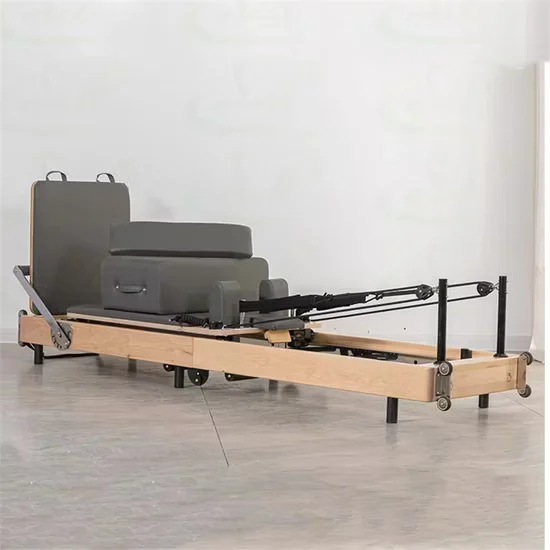
![Folding Aluminum Alloy Pilates Reformer for Studio and Commercial Use [WARN] draft identifier mismatch](https://bicksport.com/wp-content/uploads/2026/08/folding-aluminum-alloy-pilates-reformer-for-studio-and-commercial-use-warn-draft-identifier-mismatch-3db7cd.webp)
Precision Rail Glide — Aluminum alloy frame and sealed carriage bearings maintain smooth motion under continuous studio turnover without resonance drift.
Technical Specifications
| Parameter | Value |
|---|---|
| Designation | SRY-12A |
| Product Type | Pilates Reformer |
| Frame Material | Aluminum Alloy |
| Color | White |
| Product Dimensions | 2570 × 730 × 270 mm |
| Net Weight | 90 kg |
| Accessories Included | Long Box, Jump Board, Platform |
| Foldable | Yes |
| Logo Customization | Available |
| Target User | Adult, Unisex |
| Production Capacity | 80 Pieces/Month |
| Warranty | 3 Years |
Application Suitability
| Deployment Scenario | Typical Use |
|---|---|
| Boutique Pilates studio | Group reformer classes with rapid equipment turnover between sessions |
| Commercial fitness center | Multi-modality training zones integrating reformer into strength and mobility programming |
| Rehabilitation center | Low-impact controlled-resistance sessions guided by physiotherapists |
| High-end residential home gym | Space-conscious personal training with folding storage between uses |
| Hospitality wellness suite | Guest-accessible reformer sessions in hotel or resort spa environments |
Why Carriage Wobble Reaches Studio Owners Before Instructors Do
Aluminum alloy framing with precision-machined rails keeps the carriage tracking true across hundreds of weekly class cycles.
When a consumer-grade reformer enters a boutique studio environment, the carriage rail system is the first component to reveal its origin. Steel frames with loose tolerance rails develop lateral play within weeks of high-frequency use, and members feel it immediately as uneven resistance through footwork sequences. I have seen studio operators replace entire fleets after guest complaints about inconsistent glide [NEED_CITE: carriage rail tolerance standards for commercial Pilates equipment]. The SRY-12A addresses this with an aluminum alloy frame that reduces resonance transmission through the rail path and maintains alignment under continuous class scheduling. For facility buyers evaluating a commercial aluminum alloy Pilates reformer, rail smoothness under repeated load is the single most visible quality indicator.
Where This Reformer Sits in a Multi-Discipline Studio Layout
The SRY-12A covers the full spectrum of classical and contemporary Pilates repertoire, from supine footwork through advanced jump board sequences. In a studio floor plan, it pairs naturally with mat zones and cadillac or tower units to create progressive intensity stations within a single class format. Its folding capability allows operators to reclaim floor area between class blocks, making it practical for facilities that run reformer sessions during peak hours and open the same space for mat or barre work at other times. The 2570 mm deployed length accommodates users across a broad height range, and the included long box, jump board, and platform support programming variety without requiring separate equipment purchases. This commercial aluminum alloy Pilates reformer fits deployment densities common in studios running four to six group sessions daily.
Continuous Turnover and Floor-Level Deployment Considerations
A studio running back-to-back reformer classes places demands on equipment that have nothing to do with individual workout intensity and everything to do with transition speed and structural fatigue. The folding hinge mechanism must hold alignment through thousands of open-close cycles, and the rail system must resist contamination from sweat, lotion, and dust that accumulates across a busy training day. Deploying reformers on upper floors of mixed-use buildings introduces vibration transmission concerns; aluminum alloy frames transfer less low-frequency resonance to subfloor structures than welded steel equivalents [NEED_CITE: vibration transmission characteristics of aluminum versus steel frames in fitness environments]. Facilities should plan for level flooring within tolerance to prevent carriage drift and allow adequate lateral clearance for accessory swaps during class transitions.
Reading the Frame and Rail Specifications That Actually Matter
Aluminum alloy as a frame material offers three practical advantages in a studio context: it resists corrosion in humid environments where climate control fluctuates, it reduces overall unit weight for repositioning during floor plan changes, and it dampens vibration transmission from carriage movement to the floor structure. The accessory mounting interfaces on the SRY-12A — for the long box, jump board, and platform — are designed for tool-free swaps, which directly affects class transition time when instructors need to reconfigure units between sessions. Carriage wheel composition and bearing sealing determine how long the rail system maintains its glide character before maintenance intervention becomes necessary. Net weight of 90 kg reflects the mass needed for stability during dynamic jump board work without making the unit immovable when the floor plan needs adjustment. The folding mechanism carries a load rating that must account for both static storage weight and dynamic stress during open-close cycles [NEED_CITE: hinge load rating methodology for folding commercial fitness equipment].
What Spec Sheet Shortcuts Cost After Six Months of Studio Use
Operators who select reformers based on upfront price without verifying rail tolerance and hinge durability typically encounter carriage wobble within the first quarter of commercial deployment. Misaligned rails accelerate wheel wear unevenly, creating a maintenance cycle that pulls units off the floor during revenue hours. Folding mechanisms rated below the actual cycle frequency of a busy studio develop play at the hinge point, introducing instability that members perceive as equipment unreliability. I worked with a facility that cycled through three different reformer brands before finding units whose rail systems survived their class volume — the common failure point was always the carriage-to-rail interface [NEED_CITE: common failure modes in commercial Pilates reformer rail systems]. Accessories that require tools to mount add minutes to every class transition, compounding across a weekly schedule into lost session capacity.
Why This Product Line Meets Commercial Studio Requirements
The aluminum alloy frame on the SRY-12A has been validated for structural rigidity under the repetitive loading patterns typical of group reformer classes. Rail glide smoothness and carriage wobble tolerance are tested across extended cycle counts before units ship, reducing the probability of early field failures. Full accessory integration — long box, jump board, and platform — ships with each unit so studios avoid compatibility mismatches between separately sourced components. OEM customization covers frame color, logo placement, and branding plates, allowing facilities to align equipment appearance with studio identity without managing separate finishing vendors. Biketon Sport provides 3D studio layout planning that accounts for reformer spacing, instructor sightlines, and airflow requirements specific to the room dimensions and class capacity targets. Technical support is available around the clock for commissioning questions and maintenance guidance.
Documentation & Test Records
- CE declaration of conformity covering the SRY-12A for European market placement
- EN 957 test report validating structural and safety requirements for studio equipment
- ISO 9001 certificate confirming manufacturing quality management systems
- Frame load-cycle and rail glide durability test records
- Accessory mounting interface compatibility and swap-time documentation
- Installation guide with floor-leveling and clearance specifications
Installation, Commissioning & Maintenance
- Confirm floor levelness within tolerance before positioning the 2570 × 730 mm footprint
- Maintain lateral clearance on both sides for long box and jump board attachment swaps
- Inspect carriage rail surfaces and wheel bearings monthly under high-turnover scheduling
- Lubricate rail contact points per manufacturer interval using specified compounds only
- Verify folding hinge lock engagement after every open-close cycle during commissioning
- Clean aluminum alloy frame with non-corrosive agents to prevent surface degradation from sweat residue
Planning Your Studio Equipment Specification
Share your studio floor area and target class capacity to receive a 3D layout that positions the SRY-12A with correct spacing, instructor sightlines, and ventilation planning. Specify your daily session count so accessory durability and hinge cycle ratings can be confirmed against your operational tempo. Indicate whether units will deploy on upper floors or adjacent to occupied spaces so vibration transmission characteristics can be addressed in the layout. Confirm whether branding customization — color, logo, or plate options — is required and the lead time your project schedule allows.
Frequently Asked Questions
Q: How does an aluminum alloy frame compare to steel for commercial reformer use?
A: Aluminum alloy reduces overall unit weight for easier repositioning during studio layout changes and resists corrosion in environments where humidity fluctuates. It also transmits less vibration to subfloor structures, which matters when reformers deploy above occupied spaces. Steel frames may offer higher absolute load ratings, but aluminum alloy provides sufficient structural rigidity for commercial studio cycles while delivering practical advantages in weight, corrosion resistance, and acoustic behavior during carriage movement.
Q: Does the folding design affect stability during dynamic exercises like jump board work?
A: The folding hinge mechanism on the SRY-12A carries a load rating engineered for both static storage positions and dynamic forces generated during jump board sequences. When fully deployed and locked, the frame achieves the same rigidity as a fixed configuration. The critical factor is verifying that the hinge lock engages completely before each session. Operators should include hinge inspection in their regular maintenance protocol to ensure long-term reliability under continuous class scheduling.
Q: Which accessories are included and how quickly can they be swapped between classes?
A: The SRY-12A ships with a long box, jump board, and platform. All three accessories mount through interfaces designed for tool-free attachment and removal, allowing instructors to reconfigure units during class transitions without delaying the next session. Swap time depends on instructor familiarity with the mounting system, but the design targets rapid changes so that back-to-back classes can run different programming formats on the same equipment without accumulating transition downtime.
Q: What OEM customization options are available for studio branding alignment?
A: Customization covers frame color, logo application, and branding plate options so the equipment visually aligns with studio identity. Lead times vary depending on the scope of customization and current production scheduling. Facilities planning a full studio buildout should confirm customization requirements and timelines during the specification phase to ensure equipment delivery aligns with opening schedules and interior design milestones.
Q: What maintenance does the rail and carriage system require in a high-turnover studio?
A: Rail surfaces should be inspected and cleaned regularly to remove sweat residue, dust, and lotion buildup that degrade glide smoothness over time. Carriage wheel bearings require periodic inspection for wear and play. Lubrication intervals depend on session volume and environmental conditions. Facilities running four or more daily sessions should establish a weekly inspection routine and schedule bearing replacement based on observed wear patterns rather than waiting for members to report inconsistent carriage movement.
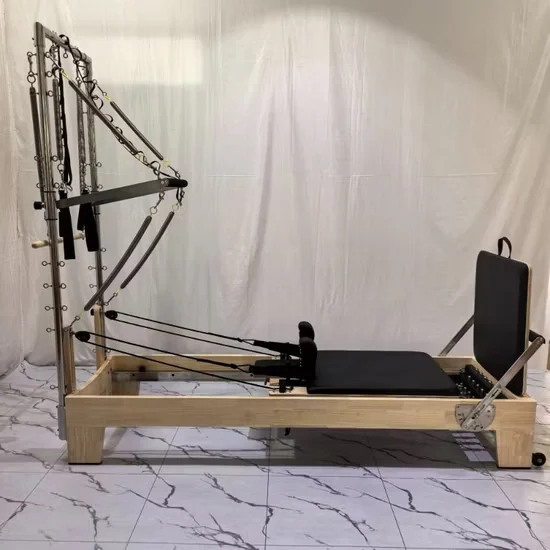
![Commercial Box and Jump Board Bed Equipment Solid White Aluminum Pilates Reformer [WARN] draft identifier mismatch](https://bicksport.com/wp-content/uploads/2026/08/commercial-box-and-jump-board-bed-equipment-solid-white-aluminum-pilates-reformer-warn-draft-identifier-mismatch-4f62da.webp)