
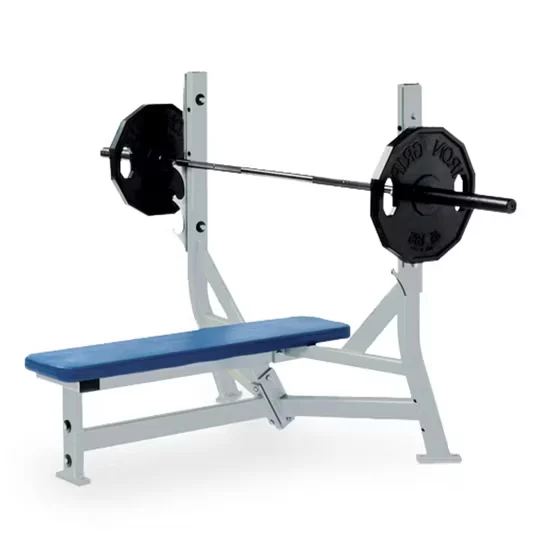
Heavy-Duty Steel Frame — Engineered for continuous commercial use with reinforced welding and ISO 9001 certified manufacturing to withstand high-frequency gym environments without structural fatigue.
Technical Specifications
| Parameter | Value |
|---|---|
| Designation | 5050 |
| Exercise Part | Chest |
| Material | Steel |
| Product Dimensions | 130413001234mm |
| Net Weight | 63kg |
| Certification | ISO9001, CE |
| OEM/ODM | Available |
| Appliance | Community, Gymnasium |
| Fit Area | Professional Gym and Club |
| Production Capacity | 500 PCS/Month |
Application Suitability
| Deployment Scenario | Typical Use |
|---|---|
| Professional gym and club | High-frequency chest press and dumbbell work across daily peak hours |
| Community fitness center | Shared strength training zone accommodating diverse user demographics |
| Commercial gymnasium | Dedicated free weight area supporting heavy barbell loading cycles |
| Hotel fitness room | Compact strength station for guest use with minimal maintenance needs |
| Corporate wellness facility | Employee training space requiring durable, low-upkeep strength solutions |
Why Frame Welds Fail Before the First Membership Renewal
Commercial flat bench press machine strength equipment demands structural integrity that lightweight residential designs cannot deliver under continuous public use.
When facility operators purchase strength equipment based on showroom appearance rather than frame gauge and welding inspection, they inherit a maintenance liability that surfaces within the first year. Lightweight benches buckle under repeated heavy loading cycles, creating weld fractures that compromise user safety and trigger liability concerns [NEED_CITE: structural fatigue patterns in commercial strength equipment under continuous loading]. The commercial flat bench press machine strength equipment category requires steel construction and reinforced joint welding to withstand the daily abuse of high-traffic gym environments where multiple users cycle through sets without equipment rest periods.
Positioning Within the Free Weight Zone Layout
This flat bench occupies the core strength training area where chest press movements and dumbbell exercises anchor upper body programming. The 130413001234mm footprint positions it alongside squat racks and cable machines, creating logical traffic flow between compound movement stations. The commercial flat bench press machine strength equipment designation serves users across the full weight spectrum, supporting barbell work and isolation exercises without spatial conflicts. Facilities typically deploy multiple units to accommodate peak hour demand, spacing them to allow safe barbell clearance and spotter access from all angles.
Continuous Load Cycles and Floor Deployment Requirements
The 63kg net weight anchors the bench during heavy pressing movements, preventing drift on gym flooring without requiring permanent floor mounting. Steel frame construction handles repeated loading and unloading cycles throughout 16-hour operational days in commercial facilities [NEED_CITE: commercial strength equipment duty cycle standards for continuous public use]. The footprint allows deployment on standard rubber gym flooring without specialized subfloor preparation, though level surface verification prevents frame stress from uneven loading. Facilities planning 24/7 access zones should account for equipment spacing that allows user circulation and emergency access around each bench station.
Steel Gauge and Welding Inspection for Commercial Durability
The reinforced steel frame addresses the primary failure point in strength equipment: joint welds under cyclic loading. Commercial-grade steel construction differs fundamentally from residential alternatives, using thicker gauge tubing and full-penetration welds at stress concentration points where the bench back meets the support structure. The 63kg unit weight reflects material density rather than portability considerations, indicating structural mass designed for stability under maximum user loading combined with barbell weight. ISO9001 manufacturing certification ensures weld quality control and material traceability through the production process, providing documentation that facility operators can verify during procurement.
The Hidden Cost of Specifying Below Commercial Grade
Facilities that procure residential-grade benches for commercial deployment face predictable replacement cycles that compound acquisition costs within two years. Lightweight frames develop structural play at connection points, creating user complaints about stability during heavy presses and safety concerns that drive member attrition [NEED_CITE: equipment failure patterns and member retention correlation in commercial fitness facilities]. Weld fractures in underspecified equipment create liability exposure that insurance underwriters flag during facility audits. The operational disruption of removing failed equipment and sourcing replacements mid-contract damages facility reputation far beyond the original procurement savings.
Why This Product Line Addresses Facility Procurement Priorities
The steel frame construction and 63kg mass deliver the structural stability that high-frequency commercial environments require for continuous strength training operations. ISO9001 and CE certification provides international compliance documentation for import markets and insurance verification. OEM/ODM customization capability allows facilities to match padding color, frame finish, and branding specifications to facility design standards without minimum order quantities that strain single-location budgets. The 500 units monthly production capacity supports multi-location rollouts with consistent lead times, enabling chain operators to standardize equipment across properties. Full documentation packages including EN 957 test reports and material specifications support procurement due diligence and ongoing compliance verification.
Documentation & Test Records
- CE declaration of conformity for international market compliance
- EN 957 test report verifying safety and performance standards
- ISO 9001 certificate documenting manufacturing quality management
- Noise level test report for deployment environment verification
- Durability test record demonstrating continuous load cycle performance
- Steel frame material specification and welding inspection documentation
Installation, Commissioning & Maintenance
- Verify floor levelness across 1304*1300mm footprint before positioning to prevent frame stress
- Maintain 600mm clearance on all sides for safe barbell loading and spotter access
- Inspect weld joints and frame connections quarterly under continuous commercial use
- Check padding compression and upholstery integrity monthly in high-traffic deployments
- Clean steel frame with non-corrosive agents to prevent sweat-induced oxidation
- Verify bolt torque specifications at all connection points during initial commissioning
Equipment Selection and Deployment Planning
Provide your strength training zone square footage and equipment list to receive 3D layout planning that optimizes traffic flow and safety clearances. Specify your daily operational hours and peak usage patterns to confirm the frame durability matches your facility’s duty cycle requirements. Identify your deployment floor level and adjacent occupied spaces to verify acoustic transmission won’t generate noise complaints from neighboring tenants or guest rooms. Confirm your target market voltage standards if integrating any electronic components, and specify whether you require OEM customization for branding consistency across your facility network.
Frequently Asked Questions
Q: What is the maximum user weight capacity for commercial flat benches?
A: The specification documentation should be requested directly to verify maximum user weight against manufacturer testing records. Commercial facilities must confirm that rated capacity accommodates their heaviest users plus barbell loading without approaching structural limits. Request the load testing certificate during procurement to verify safety margins align with your facility’s user demographics and insurance requirements.
Q: How does steel frame construction differ between commercial and residential benches?
A: Commercial steel frames use thicker gauge tubing and reinforced welding at stress concentration points where cyclic loading creates fatigue. Residential benches prioritize lightweight portability over structural mass, using thinner materials that develop play and fractures under continuous public use. The 63kg net weight of this unit reflects commercial-grade material density designed for stability under maximum loading conditions without frame deflection.
Q: What OEM customization options are available for facility branding?
A: Full OEM/ODM services cover frame color, padding material and density, upholstery color and logo embroidery, and custom specification adjustments to match facility design standards. Customization scope and lead time should be confirmed during inquiry based on order quantity and specific requirements. This allows multi-location operators to maintain brand consistency across their equipment fleet.
Q: How to verify commercial-grade durability for high-frequency gym use?
A: Request the EN 957 test report and durability test records that document continuous load cycle performance under simulated commercial conditions. Verify ISO9001 manufacturing certification and inspect weld quality documentation that demonstrates quality control throughout production. These records provide objective evidence that the equipment meets commercial duty cycle requirements rather than residential intermittent use standards.
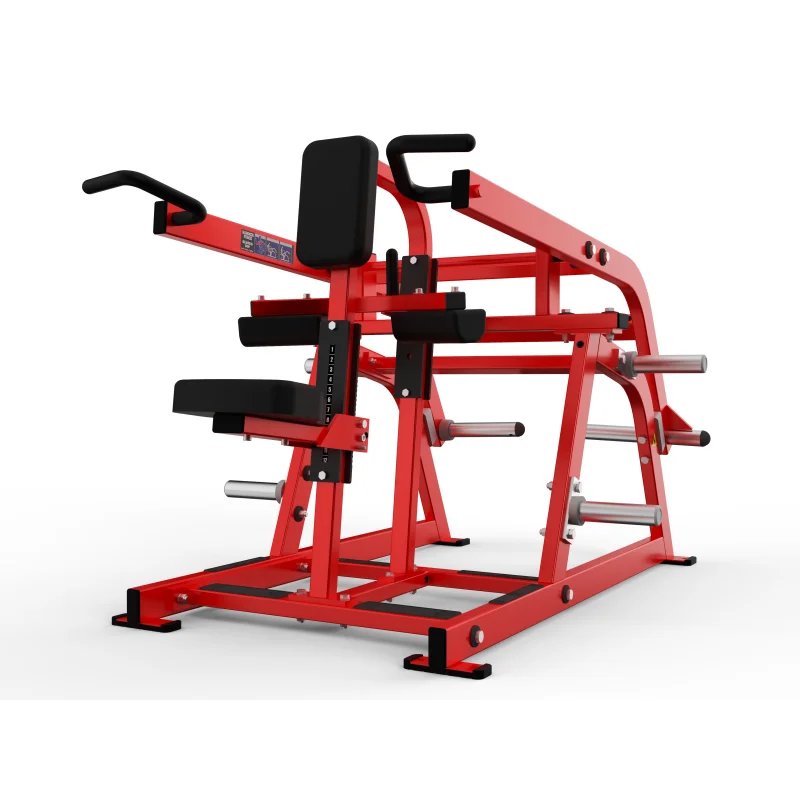
![ISO-Lateral Wide Pulldown OS-H5020 Commercial Strength Equipment [WARN] draft identifier mismatch](https://bicksport.com/wp-content/uploads/2026/08/iso-lateral-wide-pulldown-os-h5020-commercial-strength-equipment-warn-draft-identifier-mismatch-1a96ee.webp)
![Commercial Fitness ISO Lateral Wide Chest Press Machine Equipment [WARN] draft identifier mismatch](https://bicksport.com/wp-content/uploads/2026/08/commercial-fitness-iso-lateral-wide-chest-press-machine-equipment-warn-draft-identifier-mismatch-a6c471.webp)
