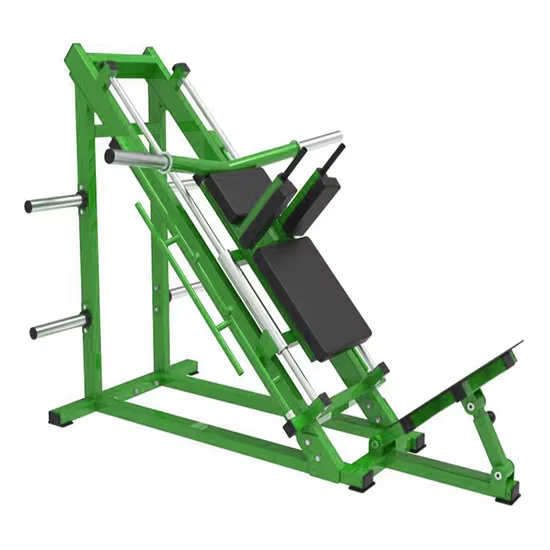
![Factory Direct Plate Loaded ISO-Lateral Low Row Fitness Gym Equipment [WARN] draft identifier mismatch](https://bicksport.com/wp-content/uploads/2026/08/factory-direct-plate-loaded-iso-lateral-low-row-fitness-gym-equipment-warn-draft-identifier-mismatch-343b1e.webp)
Heavy-Duty Stability — 139kg reinforced steel frame and sealed bearing system engineered to eliminate vibration and structural noise during high-intensity back training sessions.
Technical Specifications
| Parameter | Value |
|---|---|
| Product Type | ISO-Lateral Low Row Machine |
| Model NO. | 5005 |
| Resistance Type | Plate Loaded |
| Exercise Target | Back |
| Motion Design | ISO-Lateral Independent Arms |
| Frame Material | Steel |
| Product Dimensions | 1250 × 1056 × 1700 mm |
| Net Weight | 139 kg |
| Max User Weight | 180 kg |
| Certification | ISO 9001, CE |
Application Suitability
| Deployment Scenario | Typical Use |
|---|---|
| hotel fitness center strength zone | back conditioning for guests with varied fitness levels |
| chain gym free-weight and plate-loaded area | high-frequency low row training during peak hours |
| corporate wellness room | guided back strengthening for employee fitness programs |
| sports performance training center | unilateral and bilateral back development for athletes |
| high-end residential home gym | space-efficient plate-loaded back training |
Why Plate-Loaded Machines Still Generate Noise Complaints in Modern Gyms
The real culprit is rarely the weight plates — it is the bearing wear and frame resonance that develops over thousands of repetitions.
When a plate-loaded ISO-Lateral Low Row Machine sits in a multi-story facility, the grinding from worn bushings and the low-frequency hum of a flexing frame travel through concrete floors far more effectively than the sound of iron touching iron. Maintenance teams often respond to the wrong symptom, tightening bolts or replacing pads, while the degraded pivot points continue to transmit vibration downward [NEED_CITE: structural vibration transmission through commercial gym flooring assemblies]. Facilities that installed lighter machines without adequate base mass report repeat complaints within months, forcing costly relocations or full replacements.
Positioning the Low Row in a Commercial Strength Layout
This ISO-Lateral Low Row Machine occupies a distinct role in any serious plate-loaded zone, targeting the latissimus dorsi, rhomboids, and lower trapezius through a seated pulling motion. It pairs naturally with high row and pulldown stations to cover the full vertical and horizontal pulling spectrum. The independent arm design allows users to train unilaterally or bilaterally, accommodating rehabilitation work alongside heavy compound sets. With a 180 kg user capacity, it serves athletes and general gym members without requiring multiple machine variants. The compact 1250 × 1056 mm footprint fits into standard plate-loaded rows without consuming the floor area of a cable crossover.
Continuous Use Demands and Floor-Level Deployment
A chain gym operating sixteen hours daily will subject every pivot point on this ISO-Lateral Low Row Machine to thousands of loaded cycles per week. The sealed bearing system at each arm junction is built for this continuous high-frequency use, reducing the interval between servicing visits. Noise transmission depends heavily on deployment: ground-floor installations with rubber matting absorb most vibration, while upper-floor placements require isolation pads beneath the 139 kg base to prevent low-frequency resonance from reaching occupied rooms below. Adequate spacing around the 1250 × 1056 mm footprint ensures safe plate loading and unloading without obstructing adjacent traffic flow [NEED_CITE: recommended clearance zones for plate-loaded equipment in commercial environments].
Decoding the Mechanical Design Choices
The ISO-Lateral independent arm configuration means each side of the ISO-Lateral Low Row Machine moves on its own axis, so a strength imbalance or unilateral rehabilitation protocol does not force the opposite arm into an unnatural path. This separation also reduces mechanical interference between arms, keeping the movement smooth under heavy loads. The 139 kg net weight provides a low center of gravity that resists tipping and frame flex even when loaded asymmetrically. Sealed bearings at the pivot points eliminate the need for regular grease application and keep contaminants out, which is critical in environments where chalk dust and sweat are constant. The steel frame construction meets EN 957 requirements for static and dynamic load testing, ensuring structural integrity through extended commercial use.
The Hidden Costs of Underspecifying Plate-Loaded Stations
Choosing lighter plate-loaded machines with open bushings instead of sealed bearings might reduce upfront spend, but the maintenance cycle shortens dramatically under commercial loads. Squeaking pivots become member complaints, and misaligned arms create uneven wear that compounds over time. Facilities that ignored floor loading requirements during deployment later discover cracked anchors and shifting frames that require structural repair. When weight capacity falls below the actual user demographic, frame stress accelerates and warranty claims follow [NEED_CITE: failure mode analysis for commercial strength equipment under continuous loading].
Why This Line Holds Up Where Others Drift
The 10,000-hour durability testing protocol applied to this ISO-Lateral Low Row Machine covers pivot bearings, frame welds, and load-bearing joints under simulated continuous use. The 139 kg steel base eliminates the frame flutter that lighter machines exhibit during explosive rowing movements. Our 3D layout planning accounts for the 1250 × 1056 mm footprint plus required clearance, ensuring the station integrates into the strength zone without creating dead corners or traffic bottlenecks. Full OEM options cover frame color, upholstery, and logo placement while maintaining the core mechanical specifications. The complete six-series cardio and strength family means a facility can source matching aesthetics and engineering standards from one production line, with 24/7 technical support backing every deployment.
Documentation & Test Records
- CE declaration of conformity for commercial strength equipment
- EN 957 test report covering static and dynamic load verification
- ISO 9001 certificate for manufacturing quality management
- Durability test record for pivot bearings and frame welds
- Steel material specification and welding inspection report
- Installation guide with anchor specifications and spare parts list
Installation, Commissioning & Maintenance
- Maintain minimum 600 mm clearance on all sides for safe plate handling around the 1250 × 1056 mm footprint
- Install vibration isolation pads beneath the 139 kg base on upper-floor deployments to prevent resonance transfer
- Level the frame on hardened flooring using adjustable feet to eliminate pivot binding under asymmetric loads
- Inspect sealed bearings at six-month intervals for smooth articulation and replace only if contamination is detected
- Clean steel surfaces and upholstery with pH-neutral solution to prevent sweat corrosion on welded joints
- Verify all pivot bolts at commissioning and again after the first 500 loaded cycles for initial seating
Equipment Selection and Quotation Process
Provide your strength zone square footage and planned station count to receive a 3D layout with traffic flow and spacing analysis. Specify whether the ISO-Lateral Low Row Machine will be deployed on an upper floor adjacent to occupied rooms so that isolation requirements can be confirmed. Indicate your target market so that documentation and labeling meet local compliance standards. Confirm any OEM requirements including frame finish, upholstery color, and logo application before proforma issuance.
Frequently Asked Questions
Q: What is the difference between ISO-Lateral and fixed-path low row machines?
A: ISO-Lateral design gives each arm its own independent pivot, so the left and right sides do not mechanically influence each other. This allows unilateral training and accommodates natural strength imbalances. Fixed-path machines link both handles to a single axis, which can force the weaker side into the stronger side’s movement pattern and mask asymmetries during rehabilitation or hypertrophy work.
Q: How does machine weight affect stability during heavy rowing sets?
A: The 139 kg net weight of this ISO-Lateral Low Row Machine provides substantial base mass that resists frame flex and tipping under loaded conditions. Heavier frames maintain pivot alignment when users perform explosive repetitions or load asymmetrically. Lighter machines tend to shift or vibrate on hard flooring, transmitting noise downward and creating an unstable feeling that discourages users from training at full intensity.
Q: What maintenance do the sealed bearings require in a commercial gym?
A: Sealed bearings on this equipment are designed to exclude chalk dust, sweat residue, and ambient moisture from the internal race. Under normal commercial use, they require visual inspection at six-month intervals rather than scheduled relubrication. If a bearing develops audible grinding or lateral play, it should be replaced as a unit. This approach reduces routine maintenance labor compared to open bushing systems that demand regular greasing.
Q: How should floor placement account for noise and vibration from plate-loaded equipment?
A: Ground-floor installations benefit from direct slab contact that dissipates vibration effectively. Upper-floor deployments require isolation pads or floating floor sections beneath the machine base to interrupt the vibration path to occupied spaces below. The equipment layout plan should also consider distance from walls shared with quiet zones, as low-frequency resonance travels through structural connections further than airborne sound alone.
![ISO-Lateral Kneeling Leg Curl Machine MTS-8011 Commercial Gym [WARN] draft identifier mismatch](https://bicksport.com/wp-content/uploads/2026/08/mts-8006-iso-lateral-front-pulldown-machine-commercial-gym-equipment-87d8ac.webp)

![Commercial Seated Arm Curl Machine for Professional Gyms [WARN] draft identifier mismatch](https://bicksport.com/wp-content/uploads/2026/08/commercial-seated-arm-curl-machine-for-professional-gyms-warn-draft-identifier-mismatch-b3cee7.webp)