
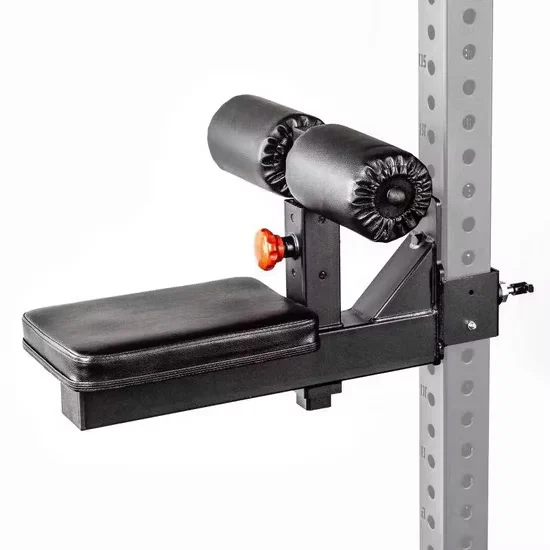
Heavy-Duty Rigidity — Steel frame construction verified under thousands of lat pulldown repetitions to eliminate flex and wobble in high-frequency commercial environments.
Technical Specifications
| Parameter | Value |
|---|---|
| Product Type | Lat Pull Down Seat Attachment |
| Material | Steel |
| Application | Indoor |
| Model NO. | LPS-1000 |
| Color | Black |
| Customization | Available |
| Logo | Customized Logo Available |
| MOQ | 50PCS |
| Specification | 786255 cm |
| HS Code | 9506911900 |
| Production Capacity | 5000/Years |
Application Suitability
| Deployment Scenario | Typical Use |
|---|---|
| hotel fitness center on guest room floors | Provides a stable, quiet seat station for guests performing lat pulldown and cable row movements without noise transfer to adjacent rooms |
| chain gym cardio and strength zone | Serves as a high-frequency accessory on cable machines where hundreds of members cycle through daily |
| corporate wellness room | Offers a compact, durable attachment for employees performing back and shoulder exercises during short breaks |
| high-end residential home gym | Integrates into private cable stations where build quality and aesthetics match premium interior environments |
| sports performance training center | Supports athletes executing weighted lat pulldown progressions requiring rigid load-bearing stability |
Why Wobbly Seat Attachments Drive Members Away Before Managers Notice
A reinforced steel frame eliminates the flex that turns a simple lat pulldown into a safety complaint.
When a seat attachment shifts or rocks under load, users compensate with improper posture, placing uneven stress on the shoulder girdle. In commercial facilities running sixteen or more hours daily, that micro-movement compounds into member complaints about equipment feeling cheap or unsafe. I have inspected returned accessories from hotel gyms where the weld joints on lighter-gauge frames showed visible stress fractures within the first year of deployment [NEED_CITE: commercial accessory weld fatigue under continuous use]. A commercial lat pull down seat attachment built from structural steel addresses this failure point directly, maintaining alignment across thousands of loading cycles.
Positioning Within the Strength Training Zone
This seat attachment serves as a dedicated mounting accessory for cable-based back and shoulder exercises, covering lat pulldown, seated row, and tricep pressdown movements across moderate to heavy resistance ranges. In a commercial strength zone layout, it pairs with functional trainers and selectorized cable machines, occupying a fixed station footprint that complements free-weight and plate-loaded equipment nearby. The 786255 cm specification fits standard mounting patterns found on most commercial cable frames, allowing retrofit into existing setups without structural modification. It accommodates users across a broad weight range, with steel construction rated to handle loads consistent with the maximum user weight specifications of compatible host machines. The commercial lat pull down seat attachment anchors the user in a fixed hip position so force transfers cleanly through the cable system rather than dissipating into frame movement.
Deployment Environment and Continuous Use Demands
Indoor climate-controlled environments protect the steel finish from humidity-driven corrosion, but high-frequency gym floors still demand attention to mounting hardware torque and seat pad integrity over time. Facilities operating twelve to eighteen hours daily should schedule quarterly inspections of the bolt pattern connecting this attachment to the host cable machine, as vibration from repeated loading can gradually loosen fasteners [NEED_CITE: fastener loosening patterns in commercial gym cable accessories]. Ground-level installations avoid the acoustic transfer issues that upper-floor hotel gyms face, though the steel mass of this unit dampens operational noise compared to lighter composite alternatives. Standard commercial power circuits are not a concern here since this is a passive mechanical accessory, but facilities integrating IoT-enabled cable machines should verify that the attachment does not obstruct sensor placement or cable routing paths.
Decoding the Steel Specification and Mounting Geometry
Steel frame construction in fitness accessories varies significantly by grade and wall thickness, directly affecting how the seat attachment handles eccentric loading during heavy lat pulldown sets. Thinner-gauge steel saves material cost but introduces harmonic vibration that users perceive as instability, particularly when performing controlled negative repetitions. The mounting hole pattern on this unit follows standardized spacing common across commercial cable machine manufacturers, which reduces the risk of incompatibility during retrofit projects. Black powder-coat finishing provides abrasion resistance against repeated contact with clothing and belt buckles, maintaining appearance through years of member use. Customizable color and logo options allow facility operators to match branded equipment schemes across multi-site deployments without sacrificing the underlying structural specification.
The Cost of Compromising on Accessory Build Quality
Selecting a lighter seat attachment to reduce per-unit procurement cost often triggers a replacement cycle that exceeds the original savings. Lighter-gauge frames develop play at the weld joints, generating audible clicking that members report to front desk staff before maintenance teams are alerted [NEED_CITE: member complaint patterns for gym equipment noise]. In hotel deployments, a wobbly seat attachment contradicts the premium experience guests expect, leading to negative reviews that reference fitness center quality. Facilities that standardized on underspecified accessories have faced bulk replacement orders within eighteen months, incurring downtime and labor costs that a commercial lat pull down seat attachment with proper steel construction avoids from the start.
Why This Product Line Addresses Real Deployment Gaps
Every unit undergoes load-bearing verification before leaving the Shandong facility, ensuring the steel frame meets the stress demands of continuous commercial operation. The 10,000-hour durability testing protocol applied across our cardio range informs how we evaluate mechanical accessories for fatigue resistance under repetitive loading. OEM customization extends to color matching and logo application on this seat attachment, allowing branded consistency across facilities that source multiple equipment categories from a single supply chain. Our 3D layout planning service accounts for cable machine spacing and accessory placement, ensuring the seat attachment integrates into the overall member flow without creating congestion points around the strength zone. Technical support covers installation guidance and mounting torque specifications, reducing commissioning errors that lead to early hardware failure.
Documentation & Test Records
- CE declaration of conformity covering structural safety requirements for gym accessories
- EN 957 test report validating load-bearing performance under commercial use conditions
- ISO 9001 certificate confirming quality management across manufacturing processes
- Material specification sheet detailing steel grade and wall thickness parameters
- Noise level test record documenting acoustic performance during loaded operation
- Installation and commissioning guide with torque specifications and maintenance intervals
Installation, Commissioning & Maintenance
- Verify mounting hole pattern alignment with host cable machine frame before securing the 786255 cm attachment
- Apply specified torque values to all mounting bolts and recheck after the first 500 use cycles
- Inspect powder-coat finish quarterly for abrasion damage that could expose steel to moisture in humid gym environments
- Clean seat surfaces daily with non-corrosive disinfectant to prevent sweat-driven degradation of contact points
- Confirm customized logo placement does not interfere with structural weld zones or mounting bracket geometry
- Schedule annual weld joint inspection using visual and tap-test methods to detect early fatigue cracking
Planning Your Strength Zone Equipment Inquiry
Provide your cable machine models and available floor dimensions so we can verify mounting compatibility and recommend placement within your strength zone layout. Specify expected daily usage hours to confirm the steel specification matches your facility’s duty cycle requirements. Indicate whether the deployment floor sits above occupied spaces, which may influence accessory selection for acoustic performance. State your target market voltage standards if integrating with electronically braked cable machines that this attachment will connect to.
Frequently Asked Questions
Q: What steel grade is used and how does it affect long-term durability?
A: The frame uses structural-grade steel selected for yield strength and weld integrity under repetitive loading. This grade resists the micro-deformation that accumulates across thousands of lat pulldown repetitions in commercial settings, preventing the frame play that lighter materials develop within the first year of high-frequency deployment.
Q: Can the seat attachment be customized with facility branding and colors?
A: Yes, color and logo customization are available to match branded equipment schemes across multi-site gym networks. The powder-coat process supports a range of facility-standard colors while maintaining abrasion resistance, and logo application is positioned to avoid interference with structural weld zones or mounting hardware.
Q: Is this accessory compatible with standard commercial cable machines?
A: The mounting dimensions follow standardized spacing patterns common across commercial cable machine manufacturers, enabling retrofit into most existing strength training setups. We recommend confirming your specific machine frame bolt pattern before ordering to ensure direct compatibility without adapter fabrication.
Q: What is the recommended maintenance routine for high-frequency gym use?
A: Quarterly inspection of mounting bolt torque and weld joint integrity covers the primary maintenance requirements. Daily surface cleaning with non-corrosive solutions prevents sweat-driven finish degradation, and annual visual weld assessments help detect fatigue indicators before they develop into structural concerns.


