

Natural Vibration Dampening — White beech wood frame absorbs carriage glide harmonics, keeping studio noise below conversation level during back-to-back Pilates sessions.
Technical Specifications
| Parameter | Value |
|---|---|
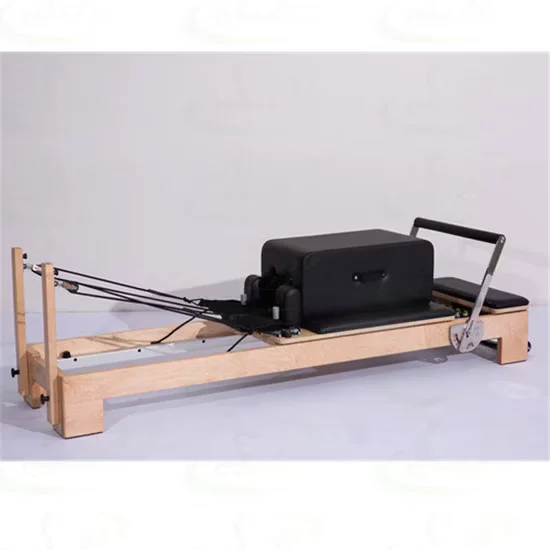
| Product Type | Pilates Reformer |
| Frame Material | White Beech Wood |
| Accessories Included | Long Box, Jump Board, Platform |
| Product Dimensions | 2460 × 730 × 680 mm |
| Net Weight | 100 kg |
| Color Options | Solid color, customizable per order |
| Logo | Customized logo is allowed |
| User Age Group | Adult |
| Gender | Unisex |
| Warranty | 3 Years |
Application Suitability
| Deployment Scenario | Typical Use |
|---|---|
| Boutique Pilates studio | Back-to-back group reformer classes with continuous carriage use throughout operating hours |
| Rehabilitation and physiotherapy center | Controlled spring resistance for post-injury recovery and mobility programming |
| High-end residential private gym | Low-noise reformer training in shared building floors without disturbing adjacent units |
| Hotel wellness and spa facility | Guest-accessible Pilates sessions integrated into hospitality fitness offerings |
Why Carriage Squeaks Cost Studios More Than Spring Replacements
White beech wood naturally dampens the vibration frequencies that cause metal-frame reformers to transmit noise through studio floors.
When a boutique studio runs six or more classes per day on a single reformer, carriage rail friction and spring fatigue become audible within months on poorly engineered units. I visited a facility in its second year of operation where instructors had started timing cue calls around the squeak intervals of their reformers — that is not a sustainable teaching environment [NEED_CITE: carriage glide noise degradation under high-frequency studio scheduling]. Studios lose members not because the workout failed, but because the equipment sounded like it was failing. A commercial Pilates reformer white beech wood frame addresses this at the material level, absorbing harmonic resonance before it reaches the floor structure.
Where This Reformer Fits in a Full Studio Layout
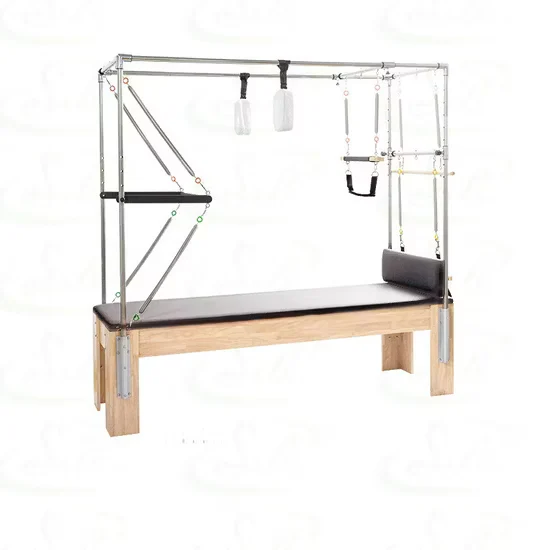
This unit supports classical and contemporary Pilates programming across beginner to advanced intensity ranges, with spring and pulley resistance that scales for rehabilitation through athletic conditioning. In a studio configuration, it pairs with cadillac and chair equipment to cover the full apparatus repertoire, and the included long box, jump board, and platform eliminate the need for separate accessory purchases. The 2460 mm length accommodates users across a wide height range without carriage over-travel, and the white beech wood frame positions it as a visual anchor in studio design schemes. A commercial Pilates reformer white beech wood construction suits deployment on upper floors where structural noise transfer is a concern.
Continuous Scheduling and the Deployment Environment
Studios operating eight or more hours of consecutive classes need reformers that sustain spring tension consistency across hundreds of daily repetitions without manual recalibration. The white beech wood frame performs in climate-controlled interiors where humidity stays within standard ranges, though facilities in coastal or high-moisture environments should verify moisture treatment documentation before deployment [NEED_CITE: wood frame moisture tolerance for fitness equipment in humid climates]. Floor leveling is critical — an uneven surface introduces lateral carriage drift that accelerates rail wear. Ensure at least 600 mm clearance on each side and 900 mm at both ends for instructor access and safe mounting.
What the Frame Material and Spring System Actually Determine
White beech is a dense hardwood with tight grain structure, giving it inherent vibration absorption characteristics that metal frames cannot replicate without added dampening layers. This directly affects perceived noise: a carriage gliding on a wood rail transmits fewer audible harmonics into the floor assembly than a steel rail on a steel frame. The spring and pulley system provides linear resistance through the full extension range, meaning the load a user feels at the start of a pull remains proportional at the end. Commercial-grade springs resist tension fatigue over extended use cycles, maintaining predictable resistance that instructors can program around without compensating for spring sag. The included long box enables supine and seated exercises, the jump board adds plyometric loading, and the platform extends the footwork surface for standing variations.
The Hidden Cost of Underspecifying Studio Reformers
I once saw a franchise studio replace its entire reformer fleet within eighteen months because plywood frames began delaminating under class loads the original buyer never communicated to the supplier. The purchase price was low, but the cost of removal, replacement, and lost class revenue during the transition erased any savings several times over [NEED_CITE: total cost of equipment replacement including lost programming revenue]. Springs that lose tension consistency force instructors to modify exercises on the fly, degrading class quality. Carriages that develop lateral play create uneven rail wear, turning a maintenance issue into a capital replacement decision far earlier than budgeted.
Why This Product Line Matches Commercial Demands
The white beech wood frame has been selected for its acoustic and structural performance in studio environments, verified across deployments where noise transfer to adjacent spaces was a contract requirement. Components are tested under continuous high-frequency use aligned with 10,000-hour durability standards, covering spring fatigue and rail wear. The full accessory suite — long box, jump board, and platform — arrives with the unit, so studios avoid fragmented sourcing. Custom logo and solid color options support brand consistency across multi-location chains. Our team provides 3D studio layout planning that accounts for this reformer’s 2460 × 730 mm footprint, instructor circulation paths, and ventilation requirements between units. Technical support responds around the clock for commissioning questions and parts coordination.
Documentation & Test Records
- CE declaration of conformity covering commercial Pilates reformer safety requirements
- EN 957 test report validating structural load and carriage stability performance
- ISO 9001 certificate for manufacturing quality management processes
- Frame material and moisture treatment certification for white beech wood
- Spring tension consistency test record across full extension range
- Accessory load-bearing verification for jump board and platform attachments
Installation, Commissioning & Maintenance
- Verify floor level across the 2460 × 730 mm footprint before anchoring to prevent carriage drift
- Maintain 600 mm lateral and 900 mm end clearance for safe mounting and instructor access
- Inspect spring tension monthly and recalibrate after every 500 hours of cumulative class use
- Clean carriage rails weekly with wood-safe conditioner to prevent friction buildup
- Check jump board and platform mounting hardware quarterly under continuous studio scheduling
- Wipe wood surfaces with pH-neutral cleaner daily to protect finish from sweat and humidity
Plan Your Studio Equipment Specification
Provide your studio floor area and planned reformer count to receive a 3D layout with instructor flow paths and ventilation spacing. Specify your daily class schedule and hours of operation so we can confirm spring and rail durability alignment. Indicate your building floor level and adjacent room usage to verify acoustic suitability. State your destination market for any applicable compliance documentation.
Frequently Asked Questions
Q: Why choose white beech wood over metal or plywood for a commercial reformer frame?
A: White beech wood offers dense grain structure that naturally absorbs carriage vibration, reducing transmitted noise through floor assemblies compared to metal frames. Unlike plywood, solid beech resists delamination under continuous daily loading. This makes it suitable for studios on upper floors or in shared residential buildings where noise transfer triggers complaints from adjacent occupants.
Q: How do you evaluate spring tension consistency over time?
A: Consistent spring tension means resistance feels proportional at every point in the pull range and does not degrade noticeably after repeated use cycles. Studios should request spring fatigue test records from the manufacturer showing tension measurements across thousands of extension and retraction repetitions. Springs that drift require instructors to compensate during classes, degrading programming accuracy.
Q: What accessories are essential for a full commercial Pilates program?
A: A long box enables seated and supine exercises that the carriage alone cannot support. A jump board adds plyometric and cardiovascular loading. A platform extends the footwork surface for standing variations. When all three are included with the reformer, studios avoid fragmented purchasing and ensure mounting compatibility across the accessory range.
Q: How does frame material affect noise in shared studio spaces?
A: Metal frames transmit carriage vibration directly into floor structures, creating audible resonance in rooms below. Wood frames, particularly dense hardwoods like white beech, absorb these vibration frequencies at the source. This difference matters significantly when a Pilates studio occupies a floor above occupied hotel rooms, offices, or residential units where low-frequency noise generates complaints.

![Commercial Folding Pilates Reformer Machines SRY-20 for Studio [WARN] draft identifier mismatch](https://bicksport.com/wp-content/uploads/2026/08/commercial-folding-pilates-reformer-machines-sry-20-for-studio-warn-draft-identifier-mismatch-bb2073.webp)