

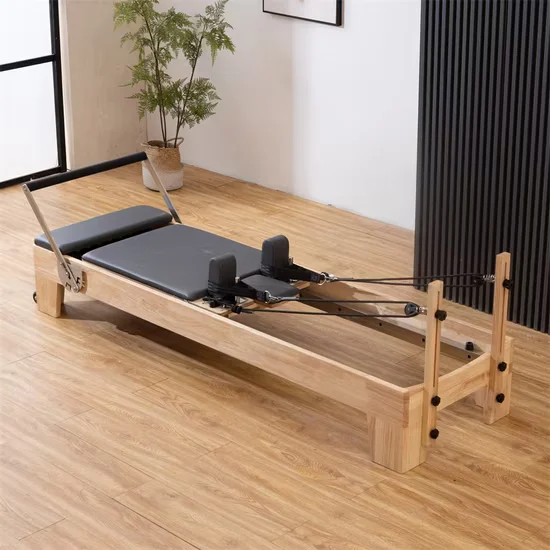
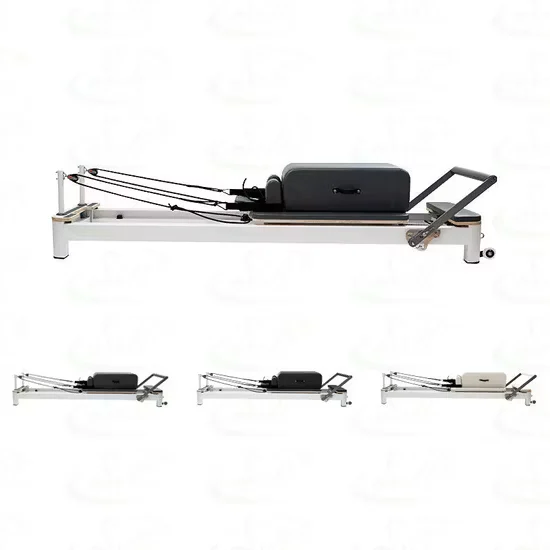
Low-Noise Aluminum Carriage Glide — Full aluminum frame eliminates the flex-induced rattle common in studio environments, delivering a stable, quiet reformer platform for high-frequency class rotations.
Technical Specifications
| Parameter | Value |
|---|---|
| Product Type | Pilates Reformer |
| Model NO. | SRY-12 |
| Frame Material | Aluminum Alloy |
| Net Weight | 90 kgs |
| Dimensions | 2570 x 730 x 270 mm |
| Included Accessories | Long Box, Jump Board, Platform |
| Color Options | Solid Color (customizable) |
| Logo | Customized Is Allowed |
| User Suitability | Adult, Unisex |
| Warranty | 3 Years |
| Origin | China |
| HS Code | 9506911900 |
Application Suitability
| Deployment Scenario | Typical Use |
|---|---|
| Yoga and Pilates studios | Group reformer rooms accommodating high-frequency class schedules and instructor-led sessions |
| Corporate wellness centers | Multi-discipline wellness programming combining Pilates conditioning with mobility and recovery work |
| High-end residential home gyms | Personal practice environments requiring aesthetic consistency and minimal mechanical noise |
| Boutique fitness studios | Reformer-based programming in shared or mixed-use wellness spaces adjacent to occupied rooms |
Why Acoustic Performance Defines Studio Equipment Selection
Aluminum frame construction dampens vibration transmission at the source.
When studio owners deploy reformers with steel frames or loose carriage tolerances, the rhythmic clicking of pulley wheels and frame resonance during jump board sequences becomes audible across the room. In shared commercial spaces or hotel fitness floors, that noise travels through structural connections into adjacent rooms, generating complaints that front desk staff log before maintenance teams even notice [NEED_CITE: vibration transmission in shared wellness facility floor structures]. The aluminum alloy frame of this Pilates reformer provides inherent damping characteristics that reduce high-frequency vibration propagation, keeping the carriage glide quiet even during repetitive class cycles where dozens of repetitions compound minor mechanical imperfections into noticeable sound.
Reformer Programming Density and Studio Zone Integration
This reformer covers the full Pilates discipline spectrum — from classical mat-equivalent spring work to plyometric jump board sequences and long box progressions. In a studio cardio zone, it complements stationary cycling and rowing stations by providing resistance-based mobility and core stability programming that those modalities cannot address. The 2570 mm footprint suits dedicated reformer rooms where units are arranged in parallel rows with instructor sightlines from the front or center. With a 90 kg frame weight, the unit maintains stable floor presence without requiring permanent anchoring, supporting multi-purpose rooms where equipment is reconfigured between class formats. The accessory ecosystem — long box, jump board, and platform — enables instructors to program comprehensive sessions from a single commercial Pilates reformer aluminum yoga studio deployment without sourcing additional specialized units.
Continuous Class Rotation and Studio Environment Constraints
In a fully booked studio running four to six reformer classes daily, each unit accumulates hundreds of carriage cycles per day. The aluminum frame and carriage rail system must maintain alignment through thermal expansion, humidity fluctuation, and the repetitive lateral forces generated during standing platform work. Noise propagation in these environments depends on floor construction and adjacent room occupancy; ground-floor studios on concrete slabs dampen transmission effectively, while upper-floor installations on timber or suspended structures require additional isolation considerations [NEED_CITE: acoustic isolation requirements for upper-floor fitness studio deployments]. The unit’s voltage-free design eliminates electrical interference with building management systems and simplifies deployment across international markets without voltage compatibility concerns. Adequate spacing between units — typically 600 mm laterally and 900 mm at head and foot — allows safe passage and prevents carriage handles from contacting neighboring frames during wide-stance exercises.
Frame Dynamics and Carriage Glide Engineering
The choice between aluminum and steel framing extends beyond weight differences. Aluminum alloy absorbs high-frequency vibration through its crystalline structure, reducing the harmonic resonance that makes steel frames transmit pulley noise and spring vibration into the floor. For a commercial Pilates reformer aluminum yoga studio installation, this material property translates to a carriage glide that remains audibly consistent from the first morning class through evening sessions without the progressive rattling that develops in lighter-gauge steel frames. The 90 kg unit weight reflects frame density sufficient to anchor the platform during jump board plyometrics — where users generate forces exceeding their body weight on the carriage — without requiring floor bolting. The three-spring-plus configuration typical of this class provides progressive resistance that instructors modulate by adding or removing springs, allowing the same unit to accommodate rehabilitation clients working at minimal load and athletic users performing high-resistance unilateral leg work. The included long box enables supine and prone pulling movements, the jump board converts the reformer into a horizontal plyometric device, and the platform extends the working surface for standing and kneeling exercises.
What Specification Shortcuts Cost After Six Months
Studios that select reformers based on initial unit cost without evaluating frame rigidity and carriage tolerance encounter predictable failures. Frames that flex under lateral loading develop carriage wobble within the first high-volume season, forcing instructors to avoid standing sequences that challenge balance. Pulley systems with inadequate bearing specification begin to produce grinding noise that escalates through the class schedule, prompting members to request equipment swaps or cancel bookings [NEED_CITE: carriage bearing failure patterns in high-frequency studio reformer deployments]. Accessories sourced separately often reveal mounting incompatibility — the jump board bracket does not align with the frame rail, or the long box lacks the secure attachment mechanism needed for dynamic pulling movements. These issues compound: a reformer that cannot reliably support the full accessory range forces the studio to purchase additional specialized units, negating any initial cost advantage and consuming floor space that revenue-generating class capacity requires.
Engineering Verification and Deployment Support
Each unit undergoes frame weld inspection and carriage glide testing before shipment, verifying that rail alignment holds within tolerance through repetitive load cycles. The aluminum frame is validated for continuous studio-class operation where daily carriage cycles number in the hundreds across group sessions. Our engineering team provides 3D studio layout planning that accounts for this reformer’s 2570 x 730 mm footprint, establishing equipment spacing that maintains instructor sightlines and safe participant passage during class transitions. Custom color and logo options allow facility branding consistency across the equipment fleet without compromising the frame’s structural specification. OEM customization extends to accessory configuration, enabling studios to specify the exact combination of long box, jump board, and platform that their programming demands. Technical support remains available around the clock for installation queries, spring tension calibration, and carriage alignment adjustment as units settle into their deployment environment.
Documentation & Test Records
- Frame material certification and weld quality inspection documentation
- EN 957 compliance records for load rating and structural integrity verification
- ISO 9001 quality management system certification covering production processes
- Accessory load rating documentation for jump board and platform attachments
- Carriage glide mechanism noise assessment under continuous operation cycles
- Assembly and commissioning guide with spring configuration reference charts
Installation, Commissioning & Maintenance
- Position on level flooring with 600 mm lateral clearance and 900 mm clearance at head and foot for safe participant movement
- Verify floor load capacity supports the 90 kg unit weight plus dynamic forces during jump board exercises
- Conduct initial carriage alignment check and spring tension calibration before first class session
- Inspect pulley wheels and rail contact surfaces monthly for wear accumulation and debris buildup
- Clean aluminum frame and carriage rails weekly with non-corrosive solution to prevent sweat residue accumulation
- Rotate spring sets quarterly to distribute fatigue evenly across the resistance configuration
Deployment Planning and Equipment Specification Inquiry
Provide your studio square footage and target unit count to receive a 3D layout that optimizes reformer spacing, instructor positioning, and participant flow for your specific room geometry. Specify your daily class schedule and average occupancy so we can confirm that the carriage mechanism and spring configuration match your operational intensity. For upper-floor installations or spaces adjacent to noise-sensitive rooms, share your floor construction details so we can assess acoustic transmission and recommend appropriate isolation measures. Confirm whether your facility requires specific branding application or accessory combinations beyond the standard long box, jump board, and platform configuration included with this commercial Pilates reformer aluminum yoga studio platform.
Frequently Asked Questions
Q: How does aluminum framing affect noise compared to steel in a studio environment?
A: Aluminum alloy dampens high-frequency vibration through its material properties, reducing the harmonic resonance that transmits pulley and spring noise into floor structures. In studios running back-to-back classes, this damping effect keeps carriage operation audibly consistent throughout the day, whereas lighter steel frames progressively develop rattling as carriage tolerances widen under continuous use.
Q: What should I evaluate when assessing carriage glide smoothness for class programming?
A: Test the carriage under loaded conditions — place weight equivalent to your heaviest client and cycle through full-range repetitions at the speed your fastest classes demand. Listen for irregularity in the glide sound, feel for lateral play when applying side force, and verify that the carriage returns smoothly to the stopper without binding at any rail position.
Q: What do the included accessories enable for session design?
A: The long box allows supine and prone pulling movements that target posterior chain and upper back musculature. The jump board converts the reformer into a horizontal plyometric platform for lower-body power development. The platform extends the working surface for standing, kneeling, and side-lying exercises that require stable footing beyond the carriage boundary.
Q: What studio layout factors affect reformer zone performance?
A: Maintain minimum 600 mm between units laterally so participants can mount and dismount safely during class transitions. Ensure instructor sightlines reach every station from the teaching position. Consider ceiling height for jump board sequences where participants leave the carriage, and verify that HVAC airflow reaches the reformer zone without creating drafts that affect participant comfort.
Q: What maintenance does continuous commercial use require?
A: Inspect pulley wheels monthly for flat spots and bearing smoothness. Clean carriage rails weekly to remove sweat residue and particulate accumulation that accelerates wear. Check spring attachment points quarterly for metal fatigue at the hook interface. Replace springs showing visible deformation or inconsistent resistance return to maintain reliable programming across all resistance levels.

![Foldable Aluminium Alloy Pilates Reformer for Home Use Fitness [WARN] draft identifier mismatch](https://bicksport.com/wp-content/uploads/2026/08/foldable-aluminium-alloy-pilates-reformer-for-home-use-fitness-warn-draft-identifier-mismatch-fb4f8b.webp)