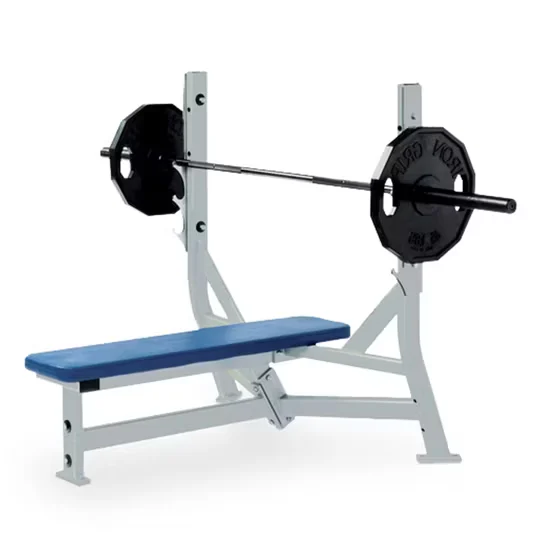
![Commercial Strength Fitness Gym Equipment Smith Machine [WARN] draft identifier mismatch](https://bicksport.com/wp-content/uploads/2026/08/commercial-strength-fitness-gym-equipment-smith-machine-warn-draft-identifier-mismatch-46ea7d.webp)
10,000-Hour Durability — Reinforced steel frame and commercial-grade components tested for continuous high-frequency use in demanding gym environments.
Technical Specifications
| Parameter | Value |
|---|---|
| Product Type | Smith Machine |
| Material | Steel |
| Product Dimensions | 134022662384mm |
| Net Weight | 215kg |
| Power Source | Manual |
| Exercise Part | Whole Body |
| Folded | Unfolded |
| Age Group | Adult |
| Gender | Unisex |
| Certification | ISO9001, CE |
| Production Capacity | 500pieces Per Month |
Application Suitability
| Deployment Scenario | Typical Use |
|---|---|
| hotel fitness center on guest room floors | 24/7 access strength training zones requiring low noise transfer |
| chain gym cardio zone | high-frequency whole body training between cardio stations |
| corporate wellness room | guided barbell exercises for all employee fitness levels |
| high-end residential home gym | safe, space-efficient alternative to free weight racks |
| sports performance training center | athlete-grade loading for controlled compound movements |
Why Frame Failures Occur Before the Warranty Expires
Structural fatigue in light-duty equipment leads to costly replacements in commercial facilities.
When a commercial smith machine gym equipment unit sits on a busy gym floor, the cumulative stress from hundreds of daily repetitions exposes every welding joint and bearing. Light-duty frames often develop micro-fractures that progress to visible deformation within months, forcing facility managers into emergency procurement cycles. I’ve seen international gym chains replace entire strength zones because the initial equipment specs were rated for home use rather than continuous public operation [NEED_CITE: structural load requirements for commercial strength equipment in high-traffic venues].
Positioning Within the Strength Training Zone
The commercial smith machine gym equipment serves as a fixed-path compound movement station, covering squats, presses, rows, and shrugs within a single footprint. In a balanced facility layout, it complements free weight racks and cable stations by offering guided barbell trajectories that reduce spotter requirements. This unit fits medium-to-high traffic zones where user turnover is rapid and supervision may be limited. The 1340*2266mm footprint accommodates users across a wide height range while maintaining safe clearance for loading and unloading plates. The guided path mechanism collects repetition data through optional sensor integration, though the primary value is mechanical safety rather than digital tracking.
Continuous Operation and Spatial Requirements
Facilities running this commercial smith machine gym equipment for 16+ hours daily must verify that linear bearings and guide rods maintain smooth travel under repetitive loading cycles. Unlike motorized cardio units, this equipment generates impact noise primarily during barbell racking and plate loading, so floor isolation pads reduce structural vibration transfer to adjacent rooms. The 2384mm height requires ceiling clearance verification, particularly in hotel fitness centers on upper floors where HVAC ductwork may intrude. Proper ground leveling ensures the frame distributes load evenly across all contact points, preventing lateral drift during heavy lifts. Ventilation requirements are minimal compared to cardio zones, but adequate spacing around the unit supports member flow and safe plate handling [NEED_CITE: spatial planning standards for commercial strength equipment deployment].
Manual Drive System and Load Path Engineering
The manual power source eliminates motor failure points entirely, relying on the user’s force output against gravitational resistance. The steel guide rod system constrains barbell travel to a vertical plane, reducing stabilization demands compared to free barbell work. Linear bearings within the carriage assembly must maintain low friction coefficients across thousands of cycles; sealed designs prevent dust and chalk accumulation from degrading smoothness. The 215kg net weight reflects substantial steel mass, which contributes to frame rigidity during heavy eccentric loading phases. Unlike pneumatic or hydraulic resistance systems, the gravitational load path delivers consistent resistance regardless of movement velocity, making this commercial smith machine gym equipment predictable for progressive overload programming. The unfolded configuration prioritizes stability over portability, appropriate for permanent installation in commercial environments.
The Hidden Costs of Underspecified Components
Selecting frames rated below commercial duty cycles results in guide rod deflection under heavy loads, creating uneven wear patterns and eventual binding. Facilities that skip floor leveling find that frame stress concentrates on specific welds, accelerating fatigue failure at connection points. Bearing maintenance intervals shorten dramatically when chalk dust infiltrates unsealed assemblies, producing grinding noises that drive members to competitor gyms. Voltage mismatches don’t affect this manual unit, but facilities expanding their cardio zones must ensure electrical infrastructure supports motorized equipment on the same circuit without breaker trips. Procurement decisions based solely on upfront cost often generate replacement expenses within the first operational year [NEED_CITE: total cost of ownership analysis for commercial gym equipment selection].
Why This Product Line Addresses Facility Pain Points
Every commercial smith machine gym equipment unit undergoes 10,000-hour durability testing on bearings and frame joints before shipment. The reinforced steel construction meets ISO 9001 quality management standards and carries CE conformity marking for European market deployment. Sub-35dB operation applies to our cardio lineup, but this strength unit’s manual drive eliminates motor noise entirely, leaving only impact sounds that proper floor padding manages. OEM customization covers frame color and upholstery to match facility branding without compromising structural specifications. The 3D layout planning service accounts for this unit’s 1340*2266mm footprint plus required safety margins for plate storage and user approach paths. 24/7 technical support addresses bearing replacement questions and guide rod lubrication schedules to extend service intervals.
Documentation & Test Records
- CE declaration of conformity for European market access
- EN 957 test report verifying structural integrity and safety
- ISO 9001 certificate covering manufacturing quality systems
- Noise level test report for impact sound characterization
- Durability test record documenting bearing and frame performance
- Installation and commissioning guide with spare parts list
Installation, Commissioning & Maintenance
- Verify ceiling clearance exceeds 2384mm plus overhead safety margin before positioning
- Level the 1340*2266mm base using adjustable feet to distribute load evenly
- Install floor isolation pads beneath contact points to reduce vibration transfer
- Lubricate linear bearings and guide rods per schedule in the commissioning guide
- Inspect weld joints and fastener torque quarterly during high-frequency operation
- Clean chalk and dust accumulation from guide rods weekly to maintain smooth travel
Inquiry Guidance for Facility Planning
Provide your strength zone square footage and intended unit count to receive a 3D layout that accounts for safe clearance around each commercial smith machine gym equipment station. Specify daily operating hours and expected user volume to confirm that bearing and frame specifications match your duty cycle. Identify deployment floor levels and adjacent occupied spaces to determine impact sound isolation requirements. Confirm target market voltage standards for any accompanying cardio equipment that shares the facility electrical system. Indicate whether console data integration is needed for member tracking across your equipment fleet.
Frequently Asked Questions
Q: What are the key differences between a commercial and a light-commercial smith machine?
A: Commercial units use heavier-gauge steel and sealed bearings rated for continuous public use, while light-commercial frames prioritize cost reduction and may develop guide rod play under high-frequency loading. Frame mass and weld penetration depth typically distinguish the two categories.
Q: How does the guided barbell path improve safety compared to free weights?
A: The constrained vertical travel plane eliminates the need for a spotter during heavy lifts, as the barbell cannot drift forward or backward. Safety catches engage automatically if the user fails to complete a repetition, preventing barbell drops.
Q: What customization options are available for branding and color matching?
A: OEM services include frame powder-coating in facility brand colors, upholstery material and color selection, and logo application on visible frame surfaces. Console UI customization applies to motorized equipment in the broader product line.
Q: What are the spatial requirements and ceiling height needed for installation?
A: The unit requires 1340*2266mm floor space plus clearance for user approach and plate loading on all accessible sides. Ceiling height must exceed 2384mm with additional margin for overhead exercises and HVAC infrastructure.
Q: How do I maintain the linear bearings and guide rods for smooth operation?
A: Weekly cleaning removes chalk dust and debris from guide rod surfaces. Periodic lubrication per the commissioning guide maintains low friction. Inspect bearings for play or grinding noises quarterly and replace worn components promptly.
![Plate Loaded ISO-Lateral Bench Press Commercial Gym Equipment [WARN] draft identifier mismatch](https://bicksport.com/wp-content/uploads/2026/08/plate-loaded-iso-lateral-bench-press-commercial-gym-equipment-warn-draft-identifier-mismatch-5afafa.webp)
![Senrui Rogers PRO Power Squat Rack Commercial Gym Strength Equipment [WARN] draft identifier mismatch](https://bicksport.com/wp-content/uploads/2026/08/senrui-rogers-pro-power-squat-rack-commercial-gym-strength-equipment-warn-draft-identifier-mismatch-fe7720.webp)