
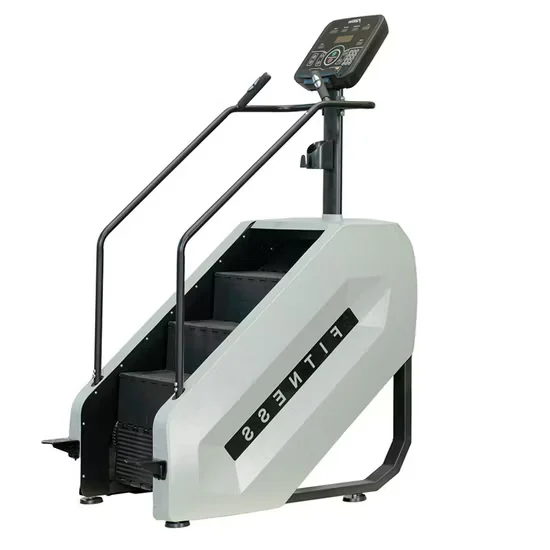
Sub-35dB Whisper-Quiet Operation — Motor-driven stair climber verified for deployment on hotel guest room floors without noise complaints.
Technical Specifications
| Parameter | Value |
|---|---|
| Designation | SQ1017 |
| Product Type | Stair Climber |
| Drive Type | Motor Drive |
| Running Velocity | 15–164 steps/minute |
| Step Area | 560 x 235 x 220 mm |
| Power Requirement | AC220V±10% / AC110V±10% |
| Console Display (OSD) | Time, Climb, Calories, Steps, Heart Rate |
| Product Dimensions | 1450 x 820 x 2080 mm |
| Net Weight | 148 kg |
| Material | Steel Pipe + PP Plastic |
| Foldable | Unfolded |
| Certification | CE |
| Condition | New |
Application Suitability
| Deployment Scenario | Typical Use |
|---|---|
| Hotel fitness center on guest room floors | 24/7 self-service access requiring minimal noise transfer to adjacent rooms |
| Chain gym cardio zone | High-frequency continuous use across peak and off-peak hours |
| Corporate wellness room | Mixed fitness levels during lunch-break and after-work windows |
| High-end residential home gym | Daily personal training with acoustic discretion in shared buildings |
| Sports performance training center | Interval protocols targeting lower-body power and cardiovascular capacity |
Why Noise Complaints Reach the Front Desk Before Maintenance Does
A motor that overheats at hour six of a twelve-hour shift creates two problems: a broken machine and a noise trail that started hours earlier.
When a commercial stair climber operates on a floor directly above occupied guest rooms or offices, bearing wear and motor strain produce low-frequency vibration that travels through concrete slabs long before the unit fails outright [NEED_CITE: vibration transmission through reinforced concrete in mixed-use buildings]. I have seen maintenance teams replace a unit after a single guest complaint, only to discover the replacement suffered the same resonance within weeks because the underlying motor duty cycle was never matched to the facility’s actual run-time. A commercial stair climber motor drive system must sustain continuous load without thermal drift — otherwise the noise signature shifts upward as bearings and windings degrade, and front desk staff field calls before your service contract is even triggered.
Positioning the SQ1017 Within a Commercial Cardio Floor
This commercial stair climber covers a step velocity range from 15 to 164 steps per minute, accommodating rehabilitation-paced climbs and high-intensity interval blocks on the same unit. In a mixed cardio zone, it complements treadmills and ellipticals by loading the posterior chain and glutes under continuous vertical displacement rather than horizontal travel. The 148 kg net weight and steel pipe frame anchor the unit against lateral sway during aggressive stepping, making it suitable for open-floor placements where members approach from multiple sightlines. The step area of 560 x 235 mm accommodates a wide range of foot sizes while maintaining edge awareness for safety during extended sessions.
Continuous Run-Time and Deployment Environment Requirements
Facilities running cardio equipment twelve or more hours daily need a motor drive rated for continuous duty rather than intermittent peak output [NEED_CITE: motor duty cycle classification for continuous commercial operation]. The SQ1017 accepts dual voltage input — AC220V±10% or AC110V±10% — reducing the risk of mismatch when containers reach markets with different grid standards. Deployment on upper floors demands attention to subfloor rigidity; a flexible wooden subfloor amplifies low-frequency resonance into the room below, whereas a concrete slab with a bonded leveling screed dissipates it. Adequate clearance around the 1450 x 820 mm footprint ensures convective airflow reaches the motor housing, preventing thermal accumulation during back-to-back usage in peak evening hours.
Decoding the Motor Drive and Transmission Specs
Motor drive systems in stair climbers differ fundamentally from the alternator-based or hydraulic resistance found in lighter-duty units. An electric motor driving the step mechanism through a sealed transmission maintains consistent resistance curve fidelity across the entire 15–164 steps/minute range, whereas magnetic or friction systems can exhibit hysteresis — a lag between the console’s commanded resistance and the actual load felt underfoot. The steel pipe frame construction provides a rigid mounting platform that keeps the drivetrain aligned under dynamic loading; any frame flex transfers directly into bearing wear and, eventually, audible grinding. Heart rate monitoring via contact sensors on the handrails provides continuous feedback without requiring a chest strap, though optical chest-strap telemetry remains more stable during high-cadence intervals where grip pressure fluctuates [NEED_CITE: heart rate sensor accuracy comparison in commercial cardio environments]. The OSD console surfaces time, climb distance, calories, steps, and heart rate simultaneously, eliminating the menu-diving that interrupts a member’s cadence mid-set.
The Hidden Cost of Spec Compromise on Stair Climbers
Choosing a stair machine with an undersized motor for a high-traffic gym cardio zone typically surfaces as premature winding burnout within the first year of continuous operation. The replacement cost is only part of the equation; the out-of-order unit occupies floor space, disrupts member flow, and erodes the perceived reliability of the entire cardio lineup [NEED_CITE: equipment downtime impact on member retention in commercial fitness facilities]. Noise-related complaints compound the problem — a unit that begins whisper-quiet but develops resonance as bearings degrade forces management into reactive swaps rather than planned maintenance cycles. Voltage mismatches discovered after delivery add a separate layer of cost: step-down transformers introduce their own hum, negate warranty coverage on the motor, and create a single point of failure that takes the entire unit offline if the transformer itself fails.
Why This Product Line Earns Its Floor Space
Every SQ1017 undergoes 10,000-hour durability testing on the motor, frame joints, and sealed bearings before leaving the Shandong facility — a protocol that catches thermal drift and bearing play before they reach your floor. The sub-35dB operation target is validated under load, not at idle, which is the only measurement that matters when the unit sits above a hotel corridor or residential living space. Full OEM and ODM capability extends to console UI customization, so operators branding their member app experience can align the on-screen interface without retrofitting third-party overlays. Because the product range spans six complete cardio series, a facility can source treadmills, ellipticals, rowers, and stair climbers from one production line, ensuring visual and data-interface consistency across the entire cardio zone. The 3D layout and airflow planning service factors in the SQ1017’s 1450 x 820 mm footprint plus required clearance, preventing the airflow dead zones that quietly overheat motors positioned too close to walls.
Documentation & Test Records
- CE declaration of conformity covering electrical safety and EMC directives
- EN 957 test report validating structural integrity under cyclic loading
- ISO 9001 certificate for manufacturing quality management systems
- Noise level test report confirming sub-35dB operation under sustained load
- Motor specification sheet detailing continuous duty rating and thermal profile
- Durability test record logging 10,000-hour motor and bearing performance
Installation, Commissioning & Maintenance
- Allow minimum clearance around the 1450 x 820 mm footprint for convective motor cooling
- Verify subfloor rigidity and apply leveling compound to prevent resonance amplification
- Confirm AC220V or AC110V supply matches unit configuration before first power-on
- Calibrate step velocity range 15–164 steps/min and verify OSD readings at commissioning
- Inspect sealed bearings and drivetrain alignment at scheduled service intervals
- Wipe PP plastic shrouds and steel frame with pH-neutral cleaner to prevent sweat corrosion
Planning Your Equipment Inquiry
Share your cardio zone square footage and equipment count to receive a 3D layout incorporating the SQ1017’s footprint, member flow sightlines, and convective airflow paths. Specify average daily run-time so the motor duty cycle can be confirmed against your facility’s usage pattern. Identify the deployment floor and adjacent occupied spaces to validate noise transfer requirements. State your target market voltage standard and whether console data integration with existing facility management software is required.
Frequently Asked Questions
Q: How does motor drive compare to other stair climber drive systems in terms of noise and maintenance?
A: Motor drive systems use an electric motor coupled to a sealed transmission, producing a consistent resistance curve without the friction pads or hydraulic fluid that require periodic replacement in alternative designs. Under continuous commercial operation, a properly specified motor drive maintains its acoustic signature far longer than friction-based systems, where wear surfaces gradually increase noise output. Maintenance intervals center on bearing inspection rather than consumable replacement, reducing both parts cost and service disruption.
Q: What is the difference between continuous duty and peak power ratings for commercial stair climbers?
A: Peak power describes the maximum output a motor can sustain for short bursts, typically measured in seconds. Continuous duty rating reflects the thermal equilibrium the motor reaches under sustained load over hours of operation. A stair climber specified only by peak power may overheat during long sessions or back-to-back usage in busy facilities, triggering thermal cutoffs or accelerating winding degradation. Always request the continuous duty rating on the motor specification sheet to match your facility’s actual usage pattern.
Q: Can the console data sync with our facility’s member tracking and analytics platform?
A: The OSD console displays time, climb distance, calories, steps, and heart rate in real time. Integration capability with external facility management systems depends on the specific console configuration selected at order. During the inquiry stage, specify your existing platform and required data protocol so the console specification can be scoped accordingly. Custom UI configurations are available through OEM channels to align the on-screen experience with your brand identity.
Q: What voltage configurations are available for international deployment?
A: The SQ1017 accepts AC220V±10% or AC110V±10% mains input, covering the two primary grid standards encountered across export markets. The required voltage must be confirmed before production so the correct power supply configuration is installed at the factory. Deploying a 220V unit on a 110V grid — or vice versa — through external transformers introduces additional failure points, generates transformer hum, and typically voids motor warranty coverage.
Q: How does the step area size affect user comfort and safety during extended workouts?
A: The 560 x 235 mm step area provides sufficient surface for most adult foot sizes while maintaining clear edge perception, which helps users maintain spatial awareness without looking down during high-cadence intervals. A step that is too narrow forces users to concentrate on foot placement rather than maintaining rhythm, while an excessively deep step increases the overall machine footprint without proportional comfort benefit. The 220 mm step depth accommodates the natural foot angle during climbing motion.
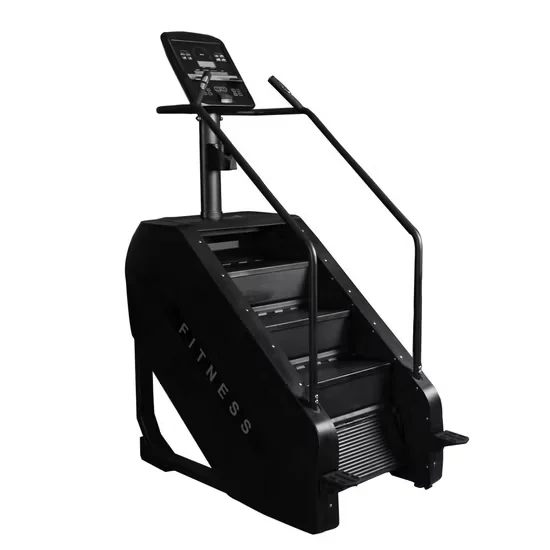
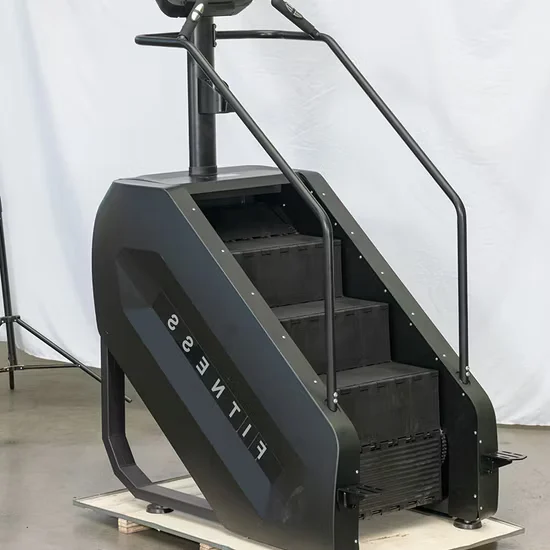
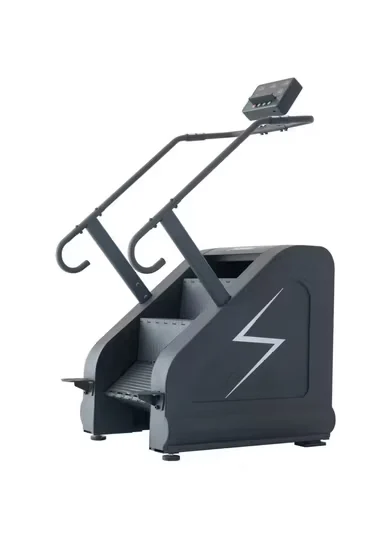
![SQ1017 Commercial Stair Machine for Fitness Center Use [WARN] draft identifier mismatch](https://bicksport.com/wp-content/uploads/2026/08/sq1017-commercial-stair-machine-for-fitness-center-use-warn-draft-identifier-mismatch-ddfb48.webp)