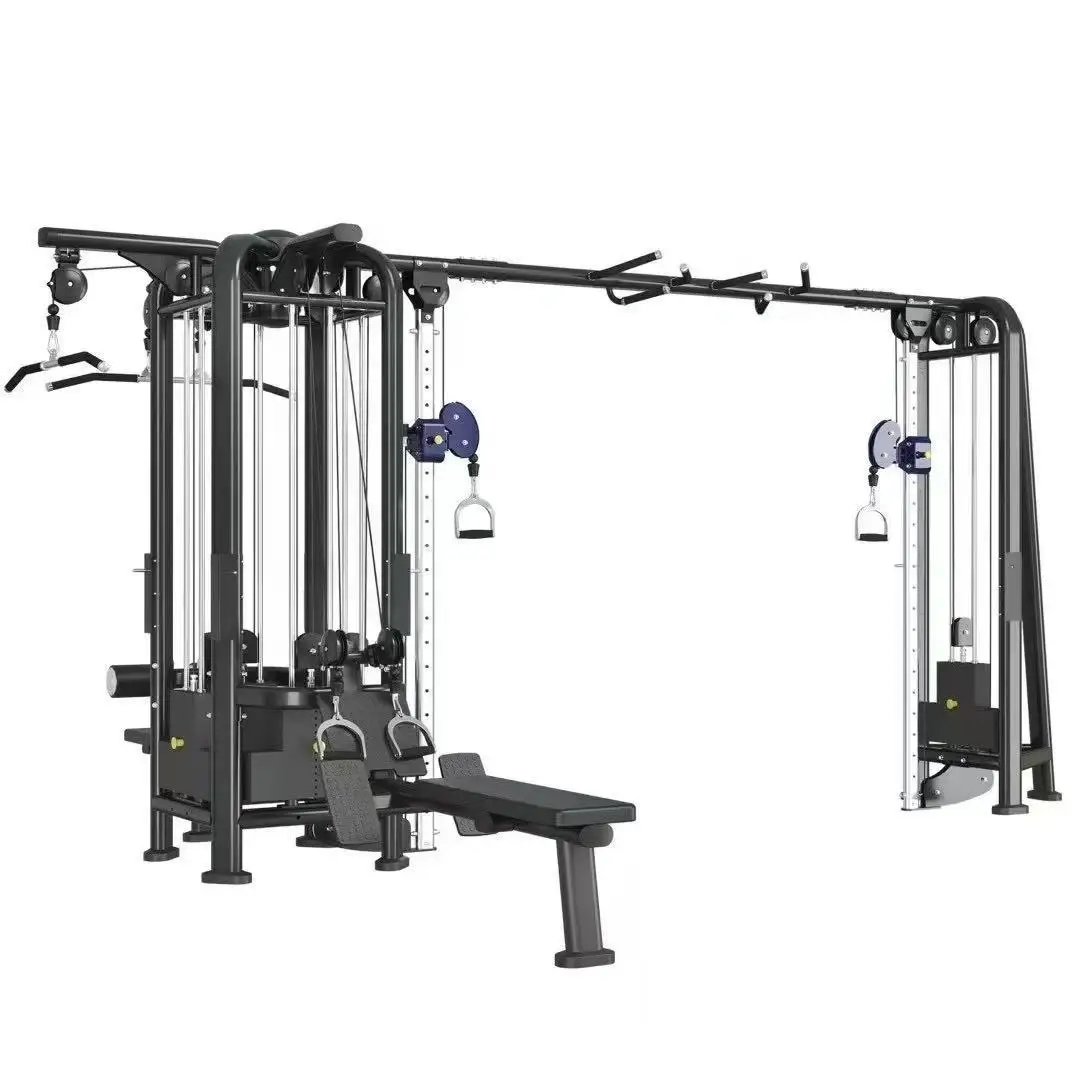
![Commercial Smith Machine Squat Rack Power Cage Strength Equipment [WARN] draft identifier mismatch](https://bicksport.com/wp-content/uploads/2026/08/commercial-smith-machine-squat-rack-power-cage-strength-equipment-warn-draft-identifier-mismatch-4dbfde.webp)
Engineered Stability — 3mm steel frame tested for 10,000 hours of continuous high-frequency use across commercial deployments.
Technical Specifications
| Parameter | Value |
|---|---|
| Designation | PX1070B |
| Product Type | Commercial Smith Machine / Power Cage / Squat Rack |
| Material | Steel |
| Tube Thickness | 3mm |
| Product Dimensions | 2000 × 2000 × 2200 mm |
| Net Weight | 220 kg |
| Frame Color | Customized (Yellow, Black, Orange, Pink, etc.) |
| Cushion Color | Customized (Yellow, Black, Orange, Pink, etc.) |
| Certification | CE |
| Age Group | Adult |
| Gender | Unisex |
| Appliance | Gymnasium, Home |
| Trademark | Myoung |
| Origin | China |
Application Suitability
| Deployment Scenario | Typical Use |
|---|---|
| chain gym strength zone | primary multi-station rig for squats, presses, and racked deadlifts under heavy daily traffic |
| hotel fitness center | compact all-in-one station where floor space limits separate squat rack and bench purchases |
| corporate wellness room | supervised strength sessions for employee fitness programs with fixed weight paths |
| high-end residential home gym | personal training environment where equipment consolidation reduces footprint |
| sports performance training center | controlled barbell tracking for athlete programming with external spotter elimination |
What Frame Rigidity Reveals About Long-Term Gym Floor Reliability
A 3mm steel tube chassis prevents lateral sway during maximal compound lifts.
When commercial facilities deploy squat racks and multi-station rigs, frame oscillation under load becomes the first failure point members notice. Welds fatigue, uprights flex, and guide rails bind after months of daily use. Facilities that specify lighter gauge steel to reduce upfront costs often face premature replacement cycles that interrupt member retention [NEED_CITE: structural fatigue benchmarks for commercial strength equipment]. The PX1070B addresses this by maintaining dimensional stability through reinforced steel construction and a 220 kg total mass that anchors the unit without relying solely on floor bolting.
Positioning Within the Strength Training Zone
This commercial smith machine power cage squat rack serves as the anchor station in multi-user environments where squat racks, benches, and cable systems compete for floor space. It covers barbell pressing, squatting, and rack pulls within a single 2000 × 2000 mm footprint. The unit complements free-weight platforms and isolation machines by providing fixed-path bar control for high-traffic periods when spotters are unavailable. Users from novice to advanced load ranges benefit from the guided vertical track, and the frame accommodates athletes across a wide height spectrum without requiring adjustment between sets.
Continuous Load Cycles and Facility Environment Requirements
Strength equipment in commercial gyms operates under cyclical peak loads rather than continuous motor-driven duty cycles. Frame stress concentrates during eccentric lowering and lockout phases, demanding structural integrity across thousands of daily repetitions. The 220 kg chassis mass dampens vibration transmission to adjacent flooring, reducing disturbance in multi-story facilities where strength zones sit above occupied spaces [NEED_CITE: vibration isolation standards for multi-floor gym deployment]. Adequate ceiling clearance of 2400 mm or more accommodates overhead pressing and pull-up attachments, while level flooring with anti-vibration pads prevents micro-movement that accelerates weld fatigue over time.
Steel Gauge, Weld Integrity, and Load Path Engineering
The 3mm tube thickness defines how the frame distributes force from loaded barbell sleeves through the uprights into the base. Thinner wall tubing in light-commercial units deforms laterally under asymmetrical loads, causing guide rails to bind and bushings to wear prematurely. Commercial-grade 3mm steel maintains cross-sectional rigidity, ensuring the bar travels smoothly along its fixed path regardless of load magnitude. The welded joints at high-stress intersections — where uprights meet the base and where guide brackets anchor — must penetrate fully through the tube wall to prevent crack initiation. Powder-coated finishes protect against corrosion from humidity and cleaning agents in high-traffic environments.
The Hidden Cost of Underspecifying Structural Components
Facilities that procure strength equipment based on visual similarity rather than material specifications often discover the difference when guide rails develop play within the first year. Bar wobble during heavy squats signals bushing degradation and weld micro-fractures that compromise user safety. Replacing an entire rig disrupts member schedules, requires floor anchoring rework, and generates disposal logistics for decommissioned steel [NEED_CITE: comparative replacement frequency by frame gauge in commercial deployments]. Specifying adequate tube thickness and mass from the outset eliminates this cycle, particularly in 24-hour facilities where equipment turnover never fully ceases.
Why This Product Line Addresses Deployment Pain Points
The 3mm frame construction undergoes durability testing aligned with 10,000-hour operational benchmarks established for commercial cardio and strength families. Customizable frame and cushion colors allow facilities to match existing visual identity systems without sourcing from multiple vendors. The 2000 × 2000 × 2200 mm envelope is factored into 3D layout planning that accounts for safe clearance zones, member flow paths, and ventilation requirements around high-exertion stations. OEM customization extends to logo placement, color matching, and specification adjustments at flexible minimum order quantities. Technical support covers installation guidance and spare parts sourcing for long-term operational continuity.
Documentation & Test Records
- CE declaration of conformity for European market compliance
- EN 957 test report validating structural load capacity
- ISO 9001 certificate covering manufacturing quality systems
- Noise and vibration level assessment for multi-floor deployment
- Durability test record documenting weld and bushing endurance
- Spare parts list with replacement bushings and fastener specifications
Installation, Commissioning & Maintenance
- Maintain 600 mm clearance on all sides for safe loading and unloading within the 2000 × 2000 mm footprint
- Anchor base plates to level concrete subfloor using supplied hardware to prevent lateral migration under load
- Inspect guide rail bushings quarterly and replace when bar play exceeds 2 mm to maintain tracking precision
- Wipe down frame and guide rails weekly with non-corrosive cleaner to remove chalk residue and sweat accumulation
- Torque-check all structural fasteners at six-month intervals following manufacturer specification sheet
Equipment Selection and Deployment Planning
Provide strength zone square footage and planned unit count to receive a 3D layout addressing clearance zones, member circulation, and ventilation planning around high-exertion stations. Specify anticipated daily user volume and peak-hour traffic to confirm the frame gauge and mass align with operational intensity. Identify deployment floor level and adjacent occupied spaces to determine whether supplemental vibration isolation pads are required beneath the 220 kg chassis. Confirm target market plug and voltage requirements if integrating powered accessories such as lighting or digital displays.
Frequently Asked Questions
Q: What differentiates a commercial-grade power cage from a residential squat rack in structural terms?
A: Commercial units use thicker steel tubing, typically 3mm or greater, and heavier overall mass to withstand continuous daily use across diverse user weights. Residential racks prioritize portability and cost, often using 2mm or thinner walls that deform under frequent heavy loading. The higher mass and reinforced weld patterns in commercial rigs prevent guide rail play and frame oscillation that develop within months in high-traffic environments.
Q: How should I determine the appropriate footprint for a multi-station strength rack in my facility?
A: Measure the designated zone and allocate at least 600 mm clearance on every side of the 2000 × 2000 mm frame for safe plate loading and user movement. Consider adjacent equipment sightlines so members can monitor form without obstructing pathways. Ceiling height must exceed the tallest attachment point plus overhead pressing range. 3D layout planning accounts for these variables alongside ventilation and emergency egress requirements.
Q: What customization options are available for frame and cushion colors, and how does that affect lead time?
A: Frame and cushion colors are fully customizable to match facility branding, with options including yellow, black, orange, pink, and custom RAL codes. Confirming color selection during the quotation phase allows production to proceed without delay. Custom color runs follow standard manufacturing timelines of 20-25 days once specifications are locked, with OEM logo and finish adjustments processed concurrently.
Q: What routine maintenance does a guided barbell system require to remain operational?
A: Guide rail bushings should be inspected quarterly for wear and replaced when lateral bar movement becomes perceptible. Structural fasteners require torque verification every six months to counteract vibration loosening. Frame surfaces need regular cleaning to prevent chalk and sweat corrosion, particularly in humid environments. Keeping a spare bushing and fastener kit on-site eliminates downtime while awaiting replacement shipments.
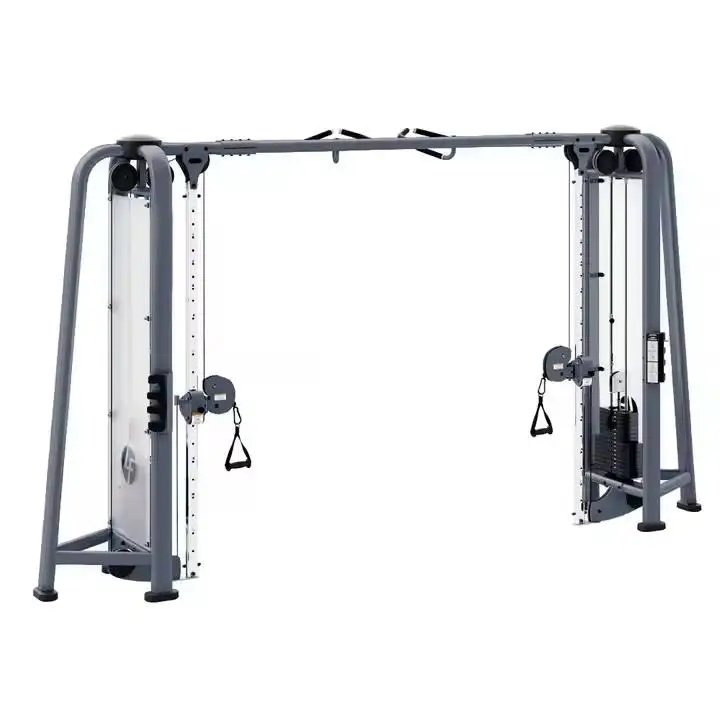
![Shandong Dezhou Factory Commercial Multi Functional Power Rack Smith Machine [WARN] draft identifier mismatch](https://bicksport.com/wp-content/uploads/2026/08/shandong-dezhou-factory-commercial-multi-functional-power-rack-smith-machine-warn-draft-identifier-mismatch-2fea45.webp)