
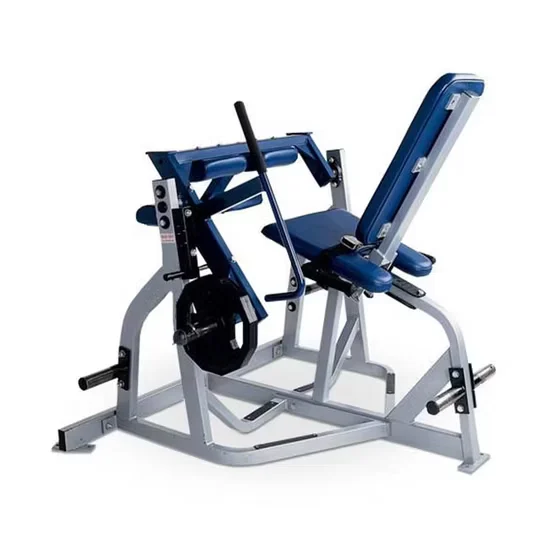
Engineered for Continuous Load — Commercial Seated Leg Curl Machine tested for 10,000+ hours of high-frequency use, eliminating premature bearing failure in busy gym environments.
Technical Specifications
| Parameter | Value |
|---|---|
| Product Type | Seated Leg Curl Machine |
| Power Source | Manual |
| Resistance Type | Manual weight stack |
| Frame Material | Steel |
| Product Dimensions | 1440 x 1695 x 1481 mm |
| Net Weight | 103 kg |
| Max User Weight | 180 kg |
| Foldable | Unfolded |
| Certification | ISO 9001, CE |
| OEM/ODM | Available (Color, Console UI, Specs) |
| Age Group | Adult |
| Gender | Unisex |
| Appliance | Community, Gymnasium, Professional Gym and Club |
Application Suitability
| Deployment Scenario | Typical Use |
|---|---|
| Chain gym cardio zone | High-frequency hamstring isolation and leg conditioning |
| Hotel fitness center on guest room floors | Quiet operation for 24-hour access without noise complaints |
| Corporate wellness room | Durable construction for varied employee usage patterns |
| High-end residential home gym | Compact footprint with commercial-grade durability |
| Sports performance training center | Precise resistance for athlete rehabilitation and conditioning |
Why Equipment Downtime Drives Member Attrition Faster Than Poor Programming
Bearing wear and structural loosening in manual resistance equipment create maintenance spikes that close down training zones.
When a facility deploys strength equipment rated for light commercial duty in a high-traffic gym, the pivot points and guide rods experience accelerated wear. [NEED_CITE: duty cycle classification for commercial strength equipment bearings] The result is a machine that develops play in the movement arm, generating noise and inconsistent resistance delivery. Members notice the degradation before maintenance logs it, and they migrate to facilities where the commercial seated leg curl machine operates smoothly without rattling or sticking mid-repetition.
I saw this pattern repeat across multiple deployments in Southeast Asia — gym chains that sourced equipment based on initial cost, only to face cascading bearing replacements within the first year. The manual resistance system eliminates motor burnout risks, but the pivot joints and weight stack guide rails still demand commercial-grade materials and precision machining. When those components are underspecified, the equipment becomes a liability rather than an asset.
Positioning Within the Strength Training Zone
This commercial seated leg curl machine targets hamstring isolation and knee flexion strength, complementing compound movements like squats and deadlifts. In a facility layout, it pairs with leg extension and leg press stations to create a complete lower-body training cluster. The seated configuration accommodates users across a broad height range, with adjustable seat positioning and thigh pad alignment. The manual resistance system provides consistent load delivery without electronic drift, making it suitable for rehabilitation protocols where precise weight increments matter.
Operational Load and Facility Infrastructure Requirements
Equipment in this category typically sees 8-12 hours of daily use in commercial gyms, with peak load during morning and evening rush periods. [NEED_CITE: commercial gym equipment utilization patterns and maintenance intervals] The steel frame construction and 103kg net weight provide stability during heavy loading, but floor leveling remains critical — uneven surfaces transfer lateral stress to the pivot bearings. The manual power source eliminates electrical circuit requirements, simplifying deployment in retrofit spaces where dedicated power runs are unavailable. However, the footprint of 1440 x 1695mm requires adequate clearance for weight stack travel and user entry/exit on both sides.
Manual Resistance Mechanics and Durability Engineering
The manual weight stack system uses a selector pin engaging steel plates, with guide rods ensuring vertical travel alignment. Unlike motor-driven resistance, this approach eliminates electronic control boards and power supply failures — common failure points in light commercial equipment pushed beyond rated duty cycles. The commercial seated leg curl machine relies on sealed bearings at the pivot axis, tested for continuous rotation under load. The steel frame welds undergo EN 957 static load testing, verifying structural integrity at maximum user weight plus resistance load. [NEED_CITE: EN 957 test procedures for strength training equipment] Seat adjustment mechanisms use pin-lock positioning, which maintains repeatability across thousands of adjustment cycles without developing slop.
The Cost of Underspecified Components in High-Traffic Deployments
Facilities that source equipment based on upfront pricing often discover that guide rods bend under repeated off-center loading, causing the weight stack to bind mid-travel. Pivot bearings without proper seals ingest dust and sweat residue, accelerating wear and generating grinding noises that signal impending failure. When these issues surface across a fleet of ten or twenty units, the maintenance burden becomes unsustainable — technicians spend more time on reactive repairs than preventive schedules. [NEED_CITE: commercial gym maintenance cost analysis for strength equipment] The commercial seated leg curl machine addresses this through reinforced pivot geometry and accessible lubrication points, but the specification gaps in lower-tier equipment create operational blind spots that only emerge after deployment.
Why This Product Line Addresses Deployment Gaps
Sub-35dB operation matters even for strength equipment when the weight stack returns generate impact noise that transmits through floor structures. The 10,000-hour durability testing protocol covers the pivot bearings and guide rod systems that typically fail first in manual resistance machines. Full OEM/ODM capability extends to frame color and console UI where applicable, allowing facility branding consistency across mixed cardio and strength zones. The six-series product family means a single sourcing relationship covers treadmills, bikes, ellipticals, rowers, stair climbers, and strength stations — simplifying procurement and spare parts logistics. Free 3D layout planning accounts for equipment spacing, member flow, and sightline considerations specific to the commercial seated leg curl machine footprint and user access patterns.
Documentation & Test Records
- CE declaration of conformity for European market compliance
- EN 957 test report covering static and dynamic load verification
- ISO 9001 certificate documenting manufacturing quality systems
- Durability test record for pivot bearings and guide rod assemblies
- Steel frame weld inspection and structural load documentation
- Spare parts list with replacement intervals and sourcing codes
Installation, Commissioning & Maintenance
- Verify floor levelness within 3mm across the 1440 x 1695mm footprint before anchoring
- Maintain 600mm clearance on weight stack side for service access and plate travel
- Grease pivot bearings and guide rods per manufacturer schedule using specified lubricant grade
- Inspect selector pin engagement and cable tension monthly to prevent stack binding
- Clean seat upholstery and frame contact points daily to prevent sweat corrosion
- Check frame bolt torque at 90-day intervals to maintain structural rigidity
Equipment Selection and Deployment Planning
Provide your strength zone square footage and target equipment count to receive a 3D layout that accounts for the commercial seated leg curl machine clearance requirements and member circulation paths. Specify expected daily usage hours and peak load periods to confirm the manual resistance system matches your duty cycle. Identify deployment floor level and adjacent occupied spaces to verify noise transmission stays within acceptable thresholds. Confirm whether you need OEM customization for frame color or branding elements to maintain visual consistency across your facility.
Frequently Asked Questions
Q: How does manual resistance compare to plate-loaded equipment for commercial deployment?
A: Manual weight stack systems offer faster weight changes and enclosed moving parts, reducing pinch-point risks in unsupervised environments. Plate-loaded equipment requires users to handle loose plates, which increases liability and slows throughput during peak hours. The selector pin mechanism in this commercial seated leg curl machine enables rapid load adjustment without compromising safety or requiring staff supervision.
Q: What maintenance intervals apply to the pivot bearings and guide rods?
A: Sealed pivot bearings typically require inspection every 90 days, with lubrication applied per manufacturer specification. Guide rods should be cleaned monthly to remove dust accumulation that causes binding. The commercial seated leg curl machine uses accessible grease fittings, allowing maintenance without partial disassembly — a critical factor when facilities operate extended hours and cannot afford prolonged equipment downtime.
Q: How does seat adjustment accommodate different user heights?
A: The seat and thigh pad use pin-lock positioning across multiple increments, allowing users to align the pivot axis with their knee joint. Proper alignment prevents shear forces on the knee and ensures the resistance vector matches the intended movement pattern. The commercial seated leg curl machine adjustment range covers typical adult anthropometry without requiring tools or staff assistance.
Q: What OEM customization options are available for facility branding?
A: Frame color, upholstery material, and logo placement can be customized to match facility visual identity. Where console interfaces exist, UI customization covers branding elements and language settings. The commercial seated leg curl machine OEM process includes sample approval before production runs, ensuring color accuracy and finish quality meet specification before full batch commitment.
![Plate Loaded Reverse Hyper Extension 5073 for Commercial Gyms [WARN] draft identifier mismatch](https://bicksport.com/wp-content/uploads/2026/08/plate-loaded-reverse-hyper-extension-5073-for-commercial-gyms-warn-draft-identifier-mismatch-f3c294.webp)


