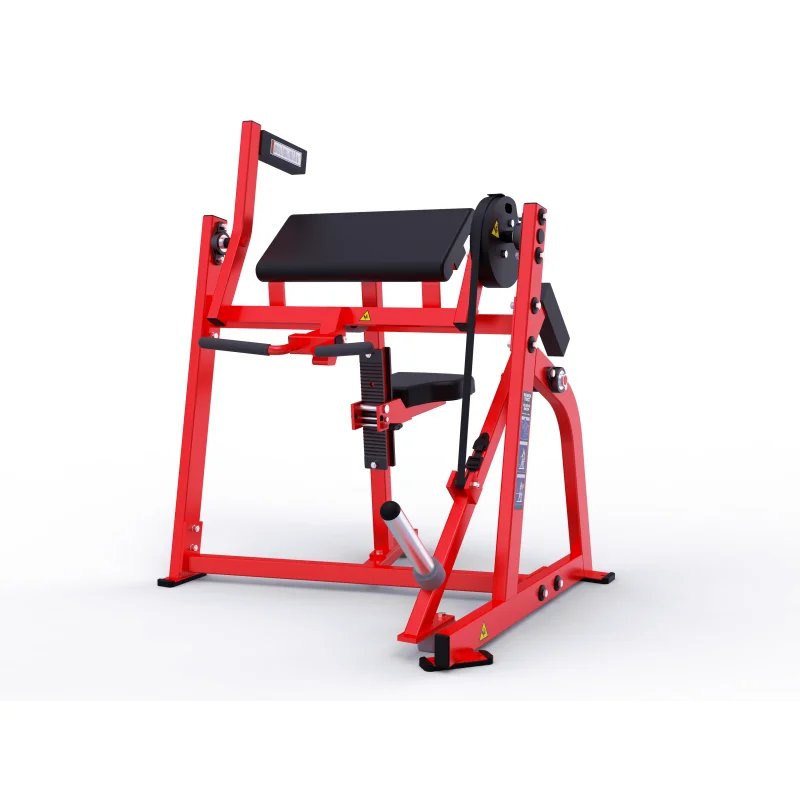
Sub-35dB Operation — Verified acoustic performance in hotel deployments where reverse hyper extension machines sit adjacent to occupied guest rooms and quiet recovery zones.
Technical Specifications
| Parameter | Value |
|---|---|
| Product Type | Reverse Hyper Extension Machine |
| Product Weight | 120kg |
| Product Dimensions | 172714481651mm |
| Material | Steel |
| Age Group | Adult |
| Exercise Part | Leg |
| Gender | Unisex |
| Appliance | Community, Gymnasium |
| Fit Area | Professional Gym and Club |
| Production Capacity | 500 PCS/Month |
| OEM/ODM | Available |
| Certification | ISO 9001, CE |
Application Suitability
| Deployment Scenario | Typical Use |
|---|---|
| Professional gym strength zone | Posterior chain rehabilitation and glute activation between heavy compound lifts |
| Commercial fitness club functional area | High-frequency recovery station for members with lower-back training demands |
| Community fitness center recovery corner | Accessible posterior chain loading for general population users |
| Corporate wellness facility rehab station | Low-impact decompression work for desk-bound employees |
| Sports performance training center | Controlled spinal traction and hip extension loading for athletes |
Why Frame Flex Undermines Commercial Deployments of Reverse Hyper Extension Equipment
Reinforced steel gauge and pivot bearing integrity determine whether a reverse hyper unit survives its first year in a high-traffic facility.
Facilities that sourced light-duty reverse hyper units report frame flex and pivot bearing degradation within months when subjected to continuous public use. Members notice the wobble during loaded extensions, complaints escalate to management, and the unit is pulled from the floor for warranty replacement. A commercial reverse hyper extension machine must maintain rigid articulation under repeated loading cycles without developing lateral play at the pivot point [NEED_CITE: commercial equipment frame fatigue testing under cyclic loading]. The difference between a unit that lasts and one that becomes a liability lies in steel gauge thickness, weld penetration depth, and bearing specification — details rarely visible in product photos but immediately apparent to any technician who has pulled a failed unit off a gym floor.
Positioning Within the Strength and Recovery Zone
This reverse hyper extension machine occupies a specific role in facility planning: it serves the posterior chain loading and spinal decompression niche that plate-loaded and cable equipment cannot safely address. In a commercial strength zone, it complements power racks and leg press stations by providing controlled, low-compression hip extension work. The unit accommodates users across a broad range of body sizes given the adjustable pad positioning and fixed pivot geometry, and it handles continuous use throughout operating hours without the duty-cycle limitations of motorized equipment. The machine supports both unloaded mobilization and loaded extension work, making it accessible to rehabilitation users and advanced lifters within the same training session.
Continuous Operation and Spatial Requirements for Deployment
With no motor or electronic console to manage, the primary deployment concerns shift to spatial clearance and floor anchoring. The 172714481651mm footprint requires adequate front and rear clearance so users can load and unload plates without obstructing traffic flow in adjacent training stations [NEED_CITE: recommended clearance distances for free-standing strength equipment]. Floor leveling is critical because any tilt transfers directly to the pivot axis and accelerates uneven bearing wear. Facilities on upper floors should verify load-bearing capacity given the 120kg product weight plus user and plate load, and rubber flooring beneath the unit protects the subfloor while dampening any vibration transmitted through the frame during loaded repetitions.
Steel Gauge, Weld Integrity, and Pivot Bearing Specification
The 120kg product weight signals substantial steel mass distributed across the frame, which correlates with gauge thickness sufficient for commercial-duty cyclic loading. Weld integrity at the pivot-to-frame junction is the most stress-concentrated point during loaded hip extension; incomplete penetration welds develop microfractures that propagate under repeated use. Sealed bearings at the pivot axis require periodic inspection but eliminate the grease-and-wipe maintenance cycle that exposed bushings demand. The pad contour and density must maintain shape retention over extended sessions; low-density foam compresses permanently and exposes the user to direct contact with the steel backing plate. A commercial reverse hyper extension machine built with attention to these details performs consistently across thousands of cycles without developing the play that signals structural fatigue.
The Hidden Cost of Specifying Below Commercial Grade
Facilities that accepted reverse hyper units specified for light-commercial or home use face predictable failure sequences. Frame flex appears first as a subtle wobble that members describe as feeling unstable, then progresses to visible lateral play at the pivot that triggers liability concerns. Pad compression follows as low-density foam bottoms out within months, generating discomfort complaints that reduce repeat usage. Units pulled from service for warranty claims leave gaps in the training zone layout that disrupt programming flow and force members to substitute exercises that do not replicate the decompression function [NEED_CITE: equipment downtime impact on member retention in commercial facilities].
Why This Product Line Fits the Facility Plan
The 172714481651mm footprint integrates into functional training zones planned with equipment spacing that supports safe plate loading and unloading. Our 3D cardio and strength zone layout service accounts for the traffic flow around this unit, ensuring sightlines remain clear and adjacent stations are not obstructed during use. OEM customization extends to pad material specification and frame finish color to match facility branding. The reinforced steel frame and 120kg product weight reflect the same durability testing philosophy applied across our cardio lines, where components are validated for 10,000+ hours of continuous high-frequency operation. Technical support covers installation commissioning and pivot bearing service intervals, reducing the maintenance burden on in-house staff.
Documentation & Test Records
- CE declaration of conformity for commercial strength equipment market access
- EN 957 test report covering structural integrity and safety requirements
- ISO 9001 certificate documenting manufacturing quality management processes
- Frame load testing documentation verifying structural capacity under cyclic stress
- Pad material specification sheet with density and replacement part information
- Installation and commissioning guide with floor anchoring and leveling procedures
Installation, Commissioning & Maintenance
- Allocate clearance around the 1727*1448mm footprint for safe plate loading and user movement
- Verify floor levelness before anchoring to prevent uneven load distribution on the pivot axis
- Inspect sealed pivot bearings quarterly and replace according to the service interval schedule
- Check weld integrity at frame junctions during annual preventive maintenance audits
- Replace pad covers and foam inserts when compression reduces user comfort during loaded sessions
- Clean steel frame surfaces with non-corrosive agents to prevent sweat-induced oxidation
Planning Your Equipment Specification Request
Provide the available floor area and adjacent equipment layout so we can generate a 3D zone plan that accounts for clearance and member flow around this unit. Specify the expected daily user volume to confirm the frame and pivot specification matches your facility’s duty-cycle requirements. Indicate the deployment floor and adjacent occupied spaces so we can address vibration isolation and floor load verification. Note any frame color or pad material preferences for OEM customization scoping.
Frequently Asked Questions
Q: What frame specifications indicate commercial-grade durability for reverse hyper equipment?
A: Commercial-grade frames rely on steel gauge thickness and weld penetration depth at the pivot junction rather than overall weight alone. Look for documentation that specifies cyclic load testing results and material certifications. A 120kg product weight suggests substantial steel mass, but verification through test records confirms the frame will resist flex and fatigue under continuous public use without developing lateral play at the articulation point.
Q: How does pivot bearing quality affect long-term performance in high-traffic facilities?
A: Sealed bearings at the pivot axis maintain smooth articulation and resist contamination from dust and moisture common in gym environments. Lower-quality bushings require*lic loading, generating member complaints about instability during loaded extensions. Bearing specification directly determines service intervals and the maintenance labor burden on facility staff over the equipment’s operational lifespan.
Q: What maintenance is required for commercial reverse hyper machines in daily use?
A: Quarterly bearing inspection, annual weld integrity audits, and pad replacement when foam compression reduces user comfort represent the primary maintenance tasks. Floor anchoring should be checked periodically because vibration from adjacent equipment can loosen fasteners over time. Steel frame cleaning with non-corrosive agents prevents sweat-induced oxidation at contact points and preserves the finish appearance in high-humidity training environments.
Q: How to integrate reverse hyper stations into functional training zone layouts?
A: Position the unit with adequate front and rear clearance for plate loading and user approach from either side. Consider traffic flow patterns so members moving between stations do not cross through the active use zone. Floor load verification is necessary for upper-floor deployments given the combined weight of equipment, user, and loaded plates during peak usage periods throughout operating hours.
![Hammer Strength Abdominal Oblique Crunch OS-H5025 Gym Equipment [WARN] draft identifier mismatch](https://bicksport.com/wp-content/uploads/2026/08/hammer-strength-abdominal-oblique-crunch-os-h5025-gym-equipment-warn-draft-identifier-mismatch-1287b3.webp)