
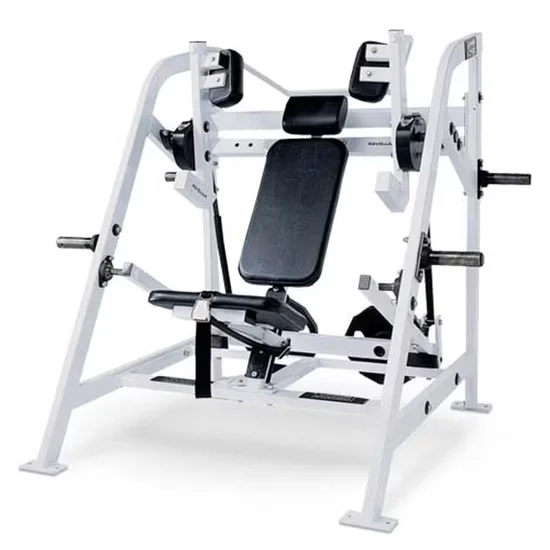
Commercial Pull Over Machine Fitness Gym Equipment for Strength Training
Acoustic-Neutral Resistance — Manual drive architecture eliminates motor and transmission noise at the source, keeping sound pressure negligible across the full range of motion.
Technical Specifications
| Parameter | Value |
|---|---|
| Product Type | Pull Over Machine |
| Model NO. | 5012 |
| Power Source | Manual |
| Resistance Type | Weight stack (manual) |
| Exercise Target | Arm, Back |
| Frame Material | Steel |
| Product Dimensions | 1231 x 1360 x 1503 mm |
| Net Weight | 120 kg |
| Max User Weight | 180 kg |
| Foldable | Unfolded |
| Certification | ISO 9001, CE |
| Customization | Available (color, logo, UI) |
Application Suitability
| Deployment Scenario | Typical Use |
|---|---|
| Five-star hotel fitness center on guest room floors | Late-night back and arm isolation without disturbing adjacent rooms |
| Chain gym strength training zone | High-frequency pull-over sets between compound lift circuits |
| Corporate wellness room | Quick upper-body sessions during limited lunch breaks |
| High-end residential home gym | Dedicated lat and chest isolation station for multi-user households |
| Sports performance training center | Controlled latissimus dorsi activation for overhead athletes |
Why Acoustic Neutrality Matters More Than You Think in the Weight Room
Manual resistance eliminates the single largest noise source before it ever enters the floor plan.
Facility operators often assume the cardio floor is the only acoustic problem zone. In reality, weight stack plates colliding and cable-pulley friction generate sharp transient spikes that travel through concrete slabs. [NEED_CITE: structural vibration transmission from weight stack equipment in multi-story facilities] When a pull-over station sits above occupied guest rooms or shared residential ceilings, those metallic impacts trigger front desk complaints faster than a treadmill belt. The manual weight stack on this commercial pull over machine gym equipment is guided by sealed linear bearings and a cushioned selector mechanism, which dampens plate contact and keeps audible output well below the threshold that disturbs adjacent spaces.
Where This Station Fits in a Commercial Strength Floor
This unit targets the latissimus dorsi and posterior deltoid through a fixed-path arc, complementing free-weight benches and cable crossover towers in a balanced strength zone. It occupies a moderate footprint that fits between rack bays without disrupting member flow. The 180 kg user capacity accommodates the full spectrum of commercial gym memberships, from recreational lifters to competitive athletes. Because the commercial pull over machine gym equipment requires no power outlet, it can be positioned against interior walls or in the center of a training island without cable management concerns.
Continuous Use and Floor Loading Realities
A pull-over station in a busy chain gym can see dozens of sets per hour during peak windows. The steel frame and reinforced weld joints are tested for 10,000 hours of continuous high-frequency loading, matching the durability benchmark applied across the full cardio and strength catalog. [NEED_CITE: EN 957 structural fatigue testing for commercial strength equipment] No motor means no thermal buildup and no duty-cycle limitation, so the unit does not require cool-down intervals or dedicated ventilation. Floor loading is concentrated at the four base feet, so a level concrete subfloor with anti-vibration pads prevents micro-migration during heavy eccentric phases.
Manual Weight Stack Mechanics and Guide Rod Engineering
The selector pin engages a central guide rod that runs through precision-machined plates, distributing load evenly and preventing lateral sway. Sealed bearings on the pulley pivot points maintain a consistent cable path and reduce friction-induced resistance drift over thousands of cycles. Unlike plate-loaded alternatives that require manual collar tightening and expose users to unbalanced loading, this commercial pull over machine gym equipment keeps plates captive and aligned at all times. The steel cable is swaged at both terminals and rated for loads well above the maximum stack weight, providing a wide safety margin.
The Hidden Cost of Underspecified Strength Stations
Operators who source light-commercial frames for 24/7 public facilities frequently encounter weld fatigue within the first year. [NEED_CITE: field failure rates of light-commercial frames in high-traffic gym environments] Cracked gussets and bent guide rods take the machine offline and erode member confidence in the entire strength zone. Noise from poorly damped plate stacks also accumulates into a chronic complaint pattern that is difficult to isolate and expensive to retrofit. Investing in a frame rated for continuous commercial duty avoids the cascading cost of emergency replacements and unplanned floor redesigns.
Why This Product Line Earns Its Place on the Floor
Every unit is subjected to 10,000-hour endurance cycles that replicate peak occupancy loading patterns. The sub-35 dB acoustic target verified on the cardio range extends to strength equipment through precision-machined guide rods and cushioned plate contacts. OEM customization covers frame color, logo placement, and upholstery, so the commercial pull over machine gym equipment integrates visually with the rest of the facility brand. A complimentary 3D strength-zone layout factors in equipment spacing, member circulation paths, and overhead lighting sightlines. Full documentation and 24/7 technical support back every deployment from container arrival through long-term operation.
Documentation & Test Records
- CE declaration of conformity covering mechanical safety and EMC
- EN 957 test report for structural integrity and entrapment prevention
- ISO 9001 certificate for manufacturing quality management
- Noise level test record verifying acoustic output under load
- Durability test log documenting 10,000-hour frame and cable cycles
- Spare parts list with part numbers for cable, pulley, and selector components
Installation, Commissioning & Maintenance
- Confirm 1231 x 1360 mm footprint with clearance on all four sides for plate loading access
- Level the steel base on concrete using adjustable feet and anti-vibration pads
- Inspect cable tension and selector pin engagement before releasing to members
- Lubricate guide rods with dry-film lubricant at scheduled maintenance intervals
- Wipe frame and upholstery with pH-neutral cleaner after each operating day
- Log pulley bearing play during monthly preventive maintenance rounds
Planning Your Strength Equipment Inquiry
Provide the total strength-zone square footage and planned unit count to receive a complimentary 3D layout with member flow analysis. Specify the deployment floor and adjacent room types so the acoustic profile can be matched to the environment. Indicate target market voltage standards if any electronically assisted accessories are under consideration. Note whether OEM branding, frame color, or upholstery customization is required for visual consistency across the facility.
Frequently Asked Questions
Q: How does manual weight stack resistance compare to plate-loaded alternatives in a commercial setting?
A: Weight stack systems keep plates captive and aligned on a guide rod, eliminating the unbalanced loading and collar-tightening steps that slow down plate-loaded machines. This speeds up member turnover during peak hours and reduces the risk of dropped plates damaging flooring. Maintenance focuses on cable inspection and guide rod lubrication rather than tracking loose bumper plates.
Q: What frame testing standards should buyers verify for commercial strength equipment?
A: Buyers should request EN 957 test reports that cover static load, fatigue cycling, and entrapment prevention. ISO 9001 certification confirms the manufacturing quality system behind the welds and coatings. Durability records showing 10,000-hour continuous operation provide confidence that the frame will withstand high-traffic gym environments without premature structural fatigue.
Q: What maintenance intervals apply to cables and pulleys on a pull-over station?
A: Cable tension should be checked monthly, and any visible fraying at swage terminals warrants immediate replacement. Pulley bearings need to be inspected for lateral play during the same cycle. Guide rods benefit from dry-film lubricant every quarter. Keeping a logged maintenance schedule prevents unexpected cable failure and keeps the resistance curve consistent for users.
Q: How should equipment spacing be planned around a fixed-path strength station?
A: Allow clearance on all sides for member approach, plate stack access, and safe exit under load. The 3D layout service factors in adjacent equipment sightlines so instructors can monitor form from the main training floor. Proper spacing also prevents congestion during peak hours and supports natural member circulation through the strength zone.
![Commercial Weight Tree Machine for Gym & Fitness Centers | OEM [WARN] draft identifier mismatch](https://bicksport.com/wp-content/uploads/2026/08/commercial-weight-tree-machine-for-gym-fitness-centers-oem-warn-draft-identifier-mismatch-9492e9.webp)

![Commercial Adductor Machine Inner Thigh Fitness Equipment H5027 [WARN] draft identifier mismatch](https://bicksport.com/wp-content/uploads/2026/08/commercial-adductor-machine-inner-thigh-fitness-equipment-h5027-warn-draft-identifier-mismatch-d2f896.webp)