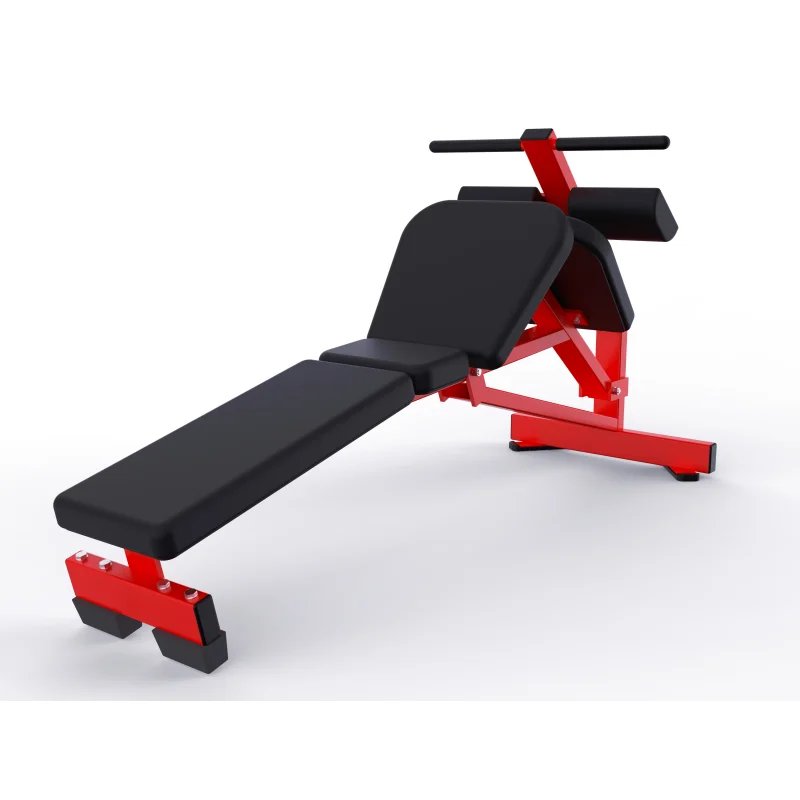
Heavy-Duty Linear Motion — Reinforced steel frame and commercial-grade bearings engineered to withstand 10,000+ hours of continuous high-frequency use in demanding gym environments.
Technical Specifications
| Parameter | Value |
|---|---|
| Product Type | Linear Leg Press Machine |
| Model NO. | 5039 |
| Frame Material | Steel |
| Resistance Type | Plate-loaded |
| Guide System | Linear guide rail |
| Exercise Part | Leg (Lower Body) |
| Target Demographic | Adult, Unisex |
| Product Dimensions | 237515001475mm |
| Net Weight | 250kg |
| Certification | ISO 9001, CE |
Application Suitability
| Deployment Scenario | Typical Use |
|---|---|
| chain gym cardio zone | High-frequency lower body strength training for general membership |
| corporate wellness room | Accessible unisex leg training for employees during work breaks |
| community fitness center | Durable equipment serving diverse age groups and fitness levels |
| hotel fitness center on guest room floors | Stable, controlled resistance training without excessive noise transfer |
Structural Integrity Under Continuous Commercial Loads
Facility managers frequently deal with equipment breakdowns that disrupt member routines and inflate maintenance budgets. The commercial linear leg press machine addresses this by prioritizing structural resilience over cosmetic features, ensuring the frame and moving parts endure the punishing duty cycles of public access facilities.
When a community gym or hotel fitness room operates from early morning until late night, the cumulative stress on pivot points and guide rails is immense. Inferior welding or undersized bearings often lead to lateral play, creating a grinding sensation that members immediately notice and complain about [NEED_CITE: bearing load ratings for commercial fitness equipment]. This unit utilizes reinforced steel construction and commercial-grade linear bearings designed to maintain a smooth motion path even after years of heavy, repetitive loading.
Positioning Within the Strength Training Zone
This equipment provides a highly stable, controlled environment for targeting the quadriceps, hamstrings, and glutes without the spinal loading associated with free-weight squats. It complements free-weight racks and functional trainers by offering a safer, more accessible option for members recovering from injury or those new to resistance training. Its substantial footprint requires dedicated floor space, making it a centerpiece in the lower body training section of a commercial gymnasium.
Environmental and Operational Requirements
Deploying a 250kg steel machine requires careful consideration of floor loading and spatial arrangement to ensure member safety and equipment longevity. The linear guide rail system demands a level foundation; any floor unevenness can introduce binding or accelerated wear on the carriage bearings [NEED_CITE: floor levelness standards for heavy gym equipment]. While plate-loaded systems avoid the electrical failures of motorized units, the physical handling of weight plates necessitates adequate clearance around the unit for safe loading and unloading. Proper spacing also facilitates airflow, which is essential for member comfort during intense lower body sessions.
Engineering the Linear Motion Path
The core of this machine’s performance lies in its linear guide rail system, which dictates the smoothness and consistency of the resistance. Unlike angular or pivot-based leg presses, a true linear path ensures that the resistance vector remains constant throughout the entire range of motion, providing predictable muscle engagement. The use of heavy-duty steel for the main frame minimizes flex under maximum load, ensuring that energy transfer from the user to the weight stack is direct and efficient. Commercial-grade sealed bearings at the pivot points and carriage are critical here; they resist dust and sweat ingress, which are primary causes of friction and eventual mechanical failure in high-traffic environments.
The Cost of Compromised Specifications
Selecting equipment based on initial price rather than structural specifications often leads to significant long-term losses. Frames constructed from lighter-gauge tubing can develop micro-fractures at the weld points under repetitive heavy loading, creating dangerous failure points. Similarly, non-commercial bearings will degrade rapidly, transforming a smooth press into a jerky, noisy operation that drives members away [NEED_CITE: member retention correlation with equipment reliability]. The downtime required to repair or replace these components far outweighs the initial savings.
Advantages of the HuiYang Product Line
This unit benefits from a manufacturing philosophy rooted in vertical integration, ensuring quality control from the CNC machining of the frame to the final assembly. The reinforced steel construction is validated through rigorous durability testing protocols that simulate years of commercial abuse. While this specific machine focuses on mechanical reliability, our broader cardio portfolio offers IoT-enabled consoles and sub-35dB operation, allowing facility operators to source a complete, cohesive equipment package. The substantial weight and dimensions of this unit are factored into our complimentary 3D layout planning, ensuring optimal spacing and member flow within your specific floor plan.
Documentation & Test Records
- CE declaration of conformity for European market compliance.
- EN 957 test report verifying safety and structural stability.
- ISO 9001 certificate confirming manufacturing quality management.
- Durability test records for frame and bearing assemblies.
- Material specification sheets for steel components.
Installation, Commissioning & Maintenance
- Requires a level, reinforced concrete floor to support the 250kg static weight plus dynamic loads.
- Ensure minimum 1000mm clearance on all sides for safe plate loading and member egress.
- Initial assembly must verify parallel alignment of the linear guide rails to prevent binding.
- Periodic inspection of carriage bearings and guide rail lubrication is required to maintain smooth operation.
- Regularly check all structural fasteners for proper torque, especially after the first month of heavy use.
Equipment Selection and Deployment Planning
To optimize your facility’s strength zone, provide the total square footage and intended user volume for a customized 3D layout and airflow plan. Specify the expected daily usage hours to ensure the equipment’s durability rating aligns with your operational demands. Clarify the specific demographic you serve to confirm the suitability of the unisex design and weight capacity. Finally, detail any adjacent noise-sensitive areas to determine if supplementary vibration dampening measures are necessary for this heavy steel unit.
Frequently Asked Questions
Q: What is the primary biomechanical difference between a linear and an angular leg press?
A: A linear leg press moves the sled in a straight horizontal or slightly angled line, which often requires the user to push directly against gravity or a horizontal vector, providing a highly consistent resistance profile. An angular (often 45-degree) press uses gravity on a sled, where the effective load changes slightly through the range of motion. The linear design is often preferred for its stability and controlled motion path, which is critical in high-traffic commercial environments where user form varies significantly.
Q: How does frame construction quality impact long-term maintenance costs?
A: The frame is the structural backbone; if it flexes or develops weld fractures under heavy commercial loads, the entire machine becomes unsafe and requires costly replacement. High-quality commercial frames use thicker-gauge steel and reinforced welding techniques to withstand 10,000+ hours of continuous use without deformation [NEED_CITE: structural fatigue testing in commercial fitness equipment]. Investing in robust construction upfront minimizes downtime and prevents expensive emergency repairs that disrupt member satisfaction.
Q: What are the maintenance requirements for the linear guide rail system?
A: The linear guide rails require regular inspection for debris accumulation and periodic lubrication to ensure the carriage moves without friction or binding. Sealed commercial bearings should be checked for play or grinding noises, which indicate wear and necessitate replacement. Proper maintenance prevents uneven wear on the rails and ensures the smooth, controlled motion essential for user safety and equipment longevity in a busy gymnasium.
Q: How much space should be allocated for a leg press station in a commercial layout?
A: Beyond the machine’s physical dimensions of 237515001475mm, you must account for safe operational clearance. This includes space for members to load and unload weight plates, enter and exit the unit safely, and for airflow around the station. A minimum of 1000mm clearance on the loading sides and rear is recommended to prevent congestion and ensure compliance with safety standards for member flow in a commercial setting.
Q: Plate-loaded vs. weight stack: which is better for a 24/7 community fitness center?
A: Plate-loaded units like this linear leg press are generally more durable and cost-effective for 24/7 unsupervised access because they lack the complex cable and pulley systems of weight stacks that can fray or jam. They allow advanced users to load heavier weights incrementally and are easier to maintain. However, weight stacks offer quicker weight changes and are safer for beginners, so the choice depends on the primary demographic and staffing levels of your facility.
![Srh-71 Plate Loaded Squat Machine for Commercial Gym Use [WARN] draft identifier mismatch](https://bicksport.com/wp-content/uploads/2026/08/srh-71-plate-loaded-squat-machine-for-commercial-gym-use-warn-draft-identifier-mismatch-bbf084.webp)
![V-Squat Machine MTS-8012 Commercial Gym Equipment Hammer Strength [WARN] draft identifier mismatch](https://bicksport.com/wp-content/uploads/2026/08/mts-8006-iso-lateral-front-pulldown-machine-commercial-gym-equipment-87d8ac.webp)