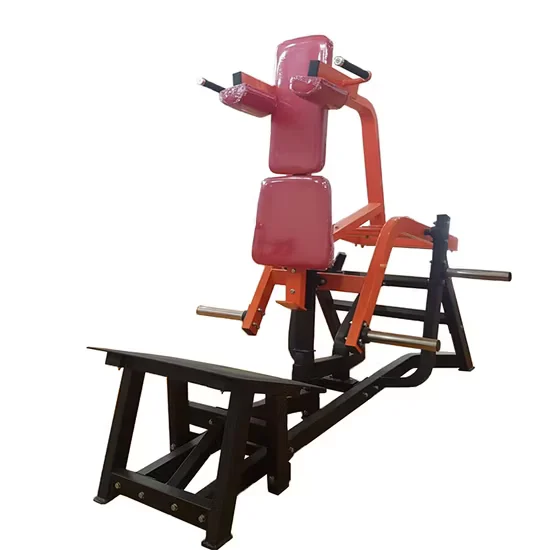
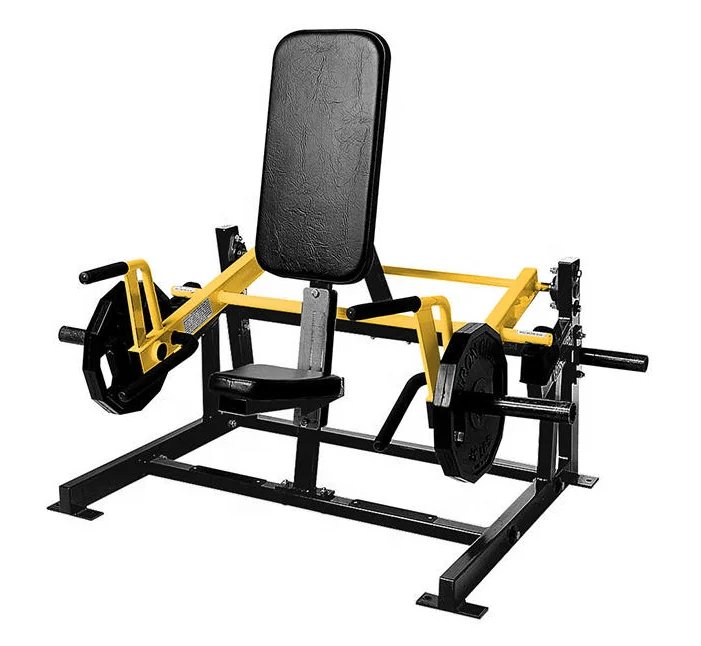
Continuous Operation Readiness — Reinforced steel frame and pivot assemblies engineered for high-frequency gym environments where machines run throughout operating hours.
Technical Specifications
| Parameter | Value |
|---|---|
| Product Type | ISO-Lateral Leg Curl |
| Model NO. | 5029 |
| Exercise Part | Leg |
| Material | Steel |
| Product Dimensions | 1550×1300×800 mm |
| Net Weight | 128 kg |
| Certification | ISO 9001, CE |
| OEM/ODM | Available |
Application Suitability
| Deployment Scenario | Typical Use |
|---|---|
| Chain gym strength zone | High-frequency hamstring isolation between compound lifts |
| Hotel fitness center | Guest self-service strength training with minimal instruction needed |
| Corporate wellness room | Quick-circuit leg training during limited lunch-break sessions |
| Community fitness center | Shared-use hamstring work across varied fitness levels |
| Sports performance training center | Unilateral leg conditioning for athletes requiring balanced development |
Why Strength Machines Fail First in 24/7 Gym Environments
Pivot-point wear and frame flex under repeated loading separate commercial-grade equipment from light-commercial alternatives within months.
Gym operators often discover that strength machines rated for light-commercial duty cycles develop noticeable play at pivot bearings when subjected to continuous public use. The commercial ISO-lateral leg curl machine addresses this with a reinforced steel frame and sealed pivot assemblies designed for facility environments where equipment sees back-to-back usage throughout operating hours [NEED_CITE: commercial strength equipment duty cycle standards for continuous operation]. I remember inspecting a batch of leg curl units at a chain gym where the pivot bushings had worn oval-shaped within half a year — the frames were flexing enough during heavy sets that pad alignment drifted, and members started avoiding the machine. Equipment downtime in a busy strength zone costs more than the replacement itself.
Where This Leg Curl Fits in a Commercial Strength Layout
This commercial ISO-lateral leg curl machine targets hamstring isolation with independent arm movement, allowing users to train each leg without cross-interference from the opposite side. In a strength zone layout, it pairs naturally with leg extension and leg press stations to cover the full lower-body movement spectrum. The machine suits moderate-to-high density deployment where multiple users cycle through within peak hours, and its pad geometry accommodates a broad range of user heights without manual adjustment beyond seat positioning. The independent arm design also means the unit can collect per-leg resistance data when integrated with compatible facility tracking systems.
Operational Load and Facility Environment Requirements
A machine like this in a chain gym typically sees eight to twelve hours of daily use with minimal rest between sets, meaning pivot bearings and pad surfaces endure continuous mechanical cycling. The 128 kg net weight and 1550×1300 mm footprint require level flooring with adequate anchoring clearance to prevent frame migration during heavy eccentric phases. Ventilation around the unit matters less than with motorized cardio, but pad material breathability and sweat resistance become critical when multiple users rotate through within minutes [NEED_CITE: pad material degradation rates in high-use commercial gym environments]. Power is not a concern here since the unit is plate-loaded or weight-stack driven, but deployment planners should confirm ceiling height clearance for the full range-of-motion arc and ensure adjacent equipment spacing allows safe entry and exit.
Steel Frame and Independent Arm Mechanism Explained
The ISO-lateral design means each arm operates on its own pivot axis, eliminating the mechanical linkage that forces both legs through identical movement paths on traditional bilateral machines. This independent articulation requires precise bearing alignment at each pivot point — any misalignment introduces lateral play that users feel as wobble during the concentric phase. The steel frame construction must resist torsional flex when a user loads one side significantly heavier than the other, which is common during rehabilitation or corrective training. Frame rigidity at the pivot-to-base junction determines whether pad tracking remains consistent over thousands of repetitions. Sealed bearings at these junctions prevent contamination from dust and chalk residue that accumulates in strength zones [NEED_CITE: bearing specification requirements for ISO-lateral strength equipment].
The Hidden Cost of Underspec’d Pivot Hardware
Light-commercial leg curl machines frequently use unsealed bushings at pivot points to reduce manufacturing cost, but these wear noticeably faster under continuous gym traffic. Once bushings develop play, the pad no longer tracks the intended arc — users feel uneven resistance and the machine develops an audible clunk at direction changes. Operators often respond by pulling the unit from the floor for repair, which means downtime during peak membership hours. In facilities running multiple shifts, this cycle repeats every few months unless the original specification included sealed bearings and adequate frame cross-section at stress junctions. Pad material compounds the problem: low-density foam compresses permanently under repeated loading, creating pressure points that members notice within weeks [NEED_CITE: pad compression set testing standards for commercial strength equipment].
Why This Product Line for Your Facility
The commercial ISO-lateral leg curl machine is manufactured in a vertically integrated facility covering frame welding, CNC machining, assembly, and quality testing under one roof. Each unit undergoes durability verification on pivot assemblies and frame welds before shipment. The ISO-lateral mechanism is tested for smooth independent arm travel under asymmetric loading conditions. OEM customization extends to frame color, pad material, and weight stack configuration to match facility branding and specification requirements. When planning a strength zone, the 1550×1300 mm footprint allows layout engineers to calculate precise spacing for safe user circulation and equipment maintenance access. Technical support covers installation guidance and spare parts logistics around the clock.
Documentation & Test Records
- CE declaration of conformity for commercial strength equipment
- EN 957 test report covering static and dynamic load verification
- ISO 9001 certificate for manufacturing quality management
- Frame weld inspection and durability test record
- Pivot bearing lifecycle test documentation
- Pad material specification and wear resistance data sheet
Installation, Commissioning & Maintenance
- Maintain minimum clearance around the 1550×1300 mm footprint for safe user entry, exit, and plate loading
- Level the steel frame on solid flooring using adjustable feet to prevent pivot binding under load
- Verify weight stack cable routing and tension on first commission before releasing to members
- Inspect pivot bearings quarterly for play and lubricate per the maintenance schedule
- Wipe pad surfaces after peak usage periods to prevent sweat-driven material degradation
- Check frame bolt torque at all structural junctions during semi-annual preventive maintenance
Specifying for Your Deployment
Share your strength zone floor plan and equipment count so we can generate a 3D layout showing circulation clearance and member flow around this ISO-lateral leg curl unit. Specify expected daily user volume so we can confirm pivot bearing and pad material selections match your facility’s duty cycle. Indicate whether you need weight-stack or plate-loaded configuration, and whether OEM branding or pad color customization applies to your project.
Frequently Asked Questions
Q: How does ISO-lateral movement differ from a traditional bilateral leg curl?
A: ISO-lateral means each arm pivots independently, so one leg can curl without mechanically forcing the other through the same arc. This allows unilateral training and reveals strength imbalances that a fixed bilateral linkage would mask. For facilities serving athletes or rehabilitation clients, this independent operation provides training data that a standard leg curl cannot deliver.
Q: What determines frame durability in a commercial leg curl machine?
A: Frame durability depends on steel cross-section thickness at pivot junctions, weld penetration depth, and bearing specification at every moving interface. Frames that flex under asymmetric loading develop premature bearing wear and pad misalignment. Commercial-grade units use reinforced gussets at stress concentrations and sealed bearings rated for thousands of load cycles.
Q: How often do pads need replacement in high-traffic gym environments?
A: Pad lifespan depends on foam density, upholstery material, and daily user volume. Low-density foam compresses permanently within months under continuous use, creating uneven pressure surfaces. High-density closed-cell foam with commercial-grade vinyl covers extends service intervals noticeably. Operators should inspect pad surfaces quarterly and replace when compression becomes visible or members report discomfort.
Q: What OEM customization is available for facility branding?
A: OEM options include frame color, pad upholstery color and material, weight stack configuration, and logo placement on the frame. Console or plate shroud graphics can also be customized to match facility branding guidelines. Minimum order quantities are flexible to accommodate single-facility orders as well as multi-site rollouts.
Q: What maintenance does the independent arm mechanism require?
A: The ISO-lateral pivot bearings should be inspected for lateral play at regular intervals, typically quarterly in high-traffic facilities. Cable tension on weight-stack versions needs periodic verification to ensure consistent resistance delivery. Pivot bolt torque at frame junctions should be checked during semi-annual maintenance to prevent progressive loosening under repeated eccentric loading.

![Hammer Strength ISO-Lateral Leg Press OS-H5031 Commercial Gym Equipment [WARN] draft identifier mismatch](https://bicksport.com/wp-content/uploads/2026/08/hammer-strength-iso-lateral-leg-press-os-h5031-commercial-gym-equipment-warn-draft-identifier-mismatch-d73196.webp)